
When the weather turns hot, your own kitchen can quickly become a test of patience - especially once flies start circling everywhere.
As soon as the sun regularly pours through the window, it only takes a few overripe pieces of fruit, a bin lid left slightly ajar or a plate that wasn’t quite cleared, and the insects begin buzzing low across the room. Many people then reach, frustrated, for a fly swatter or insect sprays - and are left wondering why the nuisance still won’t shift. Yet in many cases, a simple item from the recycling can be enough to slow a swarm down for good.
Why an empty bottle attracts flies so strongly
Most kitchens lay out an ideal buffet for flies: sugary juice residues, fruit peel, the smell from the bin, damp food waste. On hot summer days these scents intensify, and the insects breed quickly. A single female can lay hundreds of eggs over her short lifespan. Within just a few days, the kitchen can feel “infested”, even if it started with only a handful of flies.
This is exactly where the bottle trick comes in. Instead of leaving potential food sources dotted around the kitchen, you concentrate the attraction in one clearly defined place - a homemade bait that draws flies in but offers almost no way back out.
"A plastic bottle works a bit like a large, transparent funnel: getting in is easy, getting out is rare."
The narrow neck lets flies crawl or fly inside with little effort because the smell of the sweet bait pulls them in. Once inside, they struggle to locate the small opening again. The clear sides make it worse: flies navigate towards light and repeatedly hit the walls or rim rather than heading straight back to the exit.
There’s another detail that makes the method even more effective: add a little washing-up liquid to the bait and it breaks the water’s surface tension. The flies can’t stay on top of the liquid, slip in and sink. That keeps the bait effective for longer, without live insects managing to fight their way out.
How to build a DIY plastic bottle fly trap in five minutes
For this improvised fly catcher you only need a few everyday items most households already have. It looks basic, but in day-to-day use it tends to work surprisingly well.
What you need for the fly bait
- 1 empty plastic bottle (for example, an old fizzy drink or water bottle)
- 1 permanent marker for marking a line
- 1 knife or sturdy pair of scissors
- 1 sweet bait (for example, overripe fruit, sugar water, apple cider vinegar, honey solution)
- a few drops of washing-up liquid, ideally scented
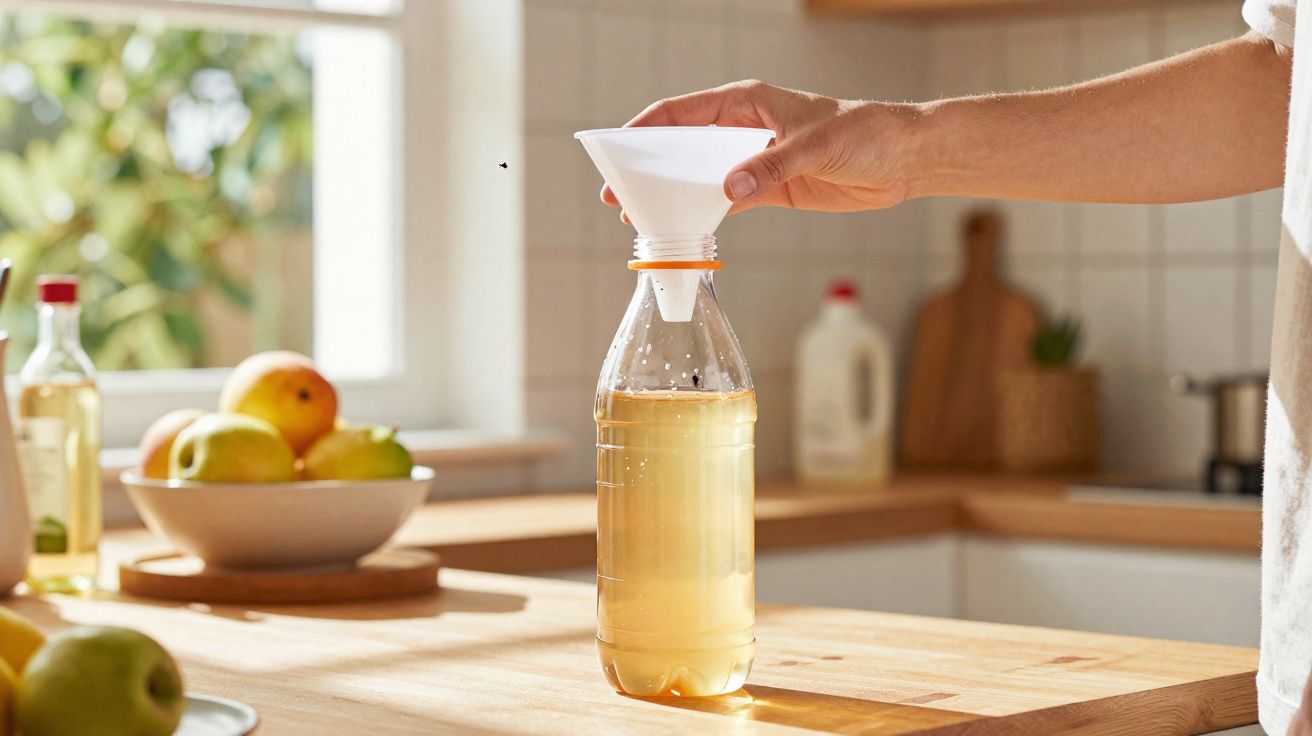
First, use the marker to draw a line just below the neck of the bottle - where the straight cylindrical section narrows. Carefully cut the bottle along this mark. You can remove and discard the cap straight away; you won’t need it.
Now turn the top section upside down and place it into the bottom section like a funnel. This creates a stable insert with a narrow entrance that doesn’t shift easily. If the plastic is a bit flimsy, a thin strip of tape can help keep everything firmly in place.
Now for the heart of the setup: the bait. Pour a small amount of liquid into the bottom - a depth of 1–2 cm is enough:
- a piece of overripe banana, lightly mashed, with a little water
- a mix of water with sugar or syrup
- a splash of apple cider vinegar diluted with water
- honey or jam remnants dissolved in warm water
Finally, add a few drops of washing-up liquid and gently stir. The smell draws flies in, while the washing-up liquid stops them from landing on the surface.
"In under five minutes, you have a working fly bait - with no poison, no spray mist and no specialist equipment."
The best place to put the bottle bait in the kitchen
Placement has a major impact on results. The ideal spot is where flies already like to linger: near the fruit bowl, by the bin, close to the sink or next to a kitchen caddy/compost container. What matters is keeping a bit of distance from your main food-prep area, so you don’t end up drawing flies closer to meals and plates.
Popular everyday locations include:
- on top of the fridge, set slightly towards the back
- on a kitchen windowsill
- in the back corner of a worktop run
- directly beside the inner caddy for food waste
If you’re expecting visitors, simply place the bottle so it’s not in the main line of sight - for instance behind a kitchen radio or a pot plant. Flies follow the scent, not the look of the trap.
How often you should replace the bait
With the first warm days, you’ll quickly see how well the trick works: after only a few hours, the first insects usually end up in the bottle. Depending on how heavy the problem is, the contents can fill up fairly fast.
Once lots of dead flies collect, the liquid turns cloudy or an unpleasant smell develops, it’s time to change it. In practice that often means every few days - and with a serious infestation, even daily.
To empty it safely:
- Carry the bottle carefully to the sink or toilet.
- Pour out the contents, ideally slowly to avoid splashing.
- Rinse the bottle thoroughly with hot water.
- If you like, wash it again with a little washing-up liquid.
- Mix a fresh bait and slot the top section back in.
"Using several baits in different places speeds up the effect, especially in large kitchens or open-plan kitchen–dining spaces."
Further measures that noticeably boost success
Bottle bait works best when the rest of the kitchen stays as unattractive to flies as possible. Small routines make a big difference here. If you store fruit where it’s visible, it helps to check it regularly and remove any bruised or overripe pieces quickly.
These habits are also useful:
- change bin liners more often, not only when they are completely full
- keep food waste in a closed container where possible
- quickly rinse out jars and bottles that still contain juice or fizzy drink residue
- wipe down worktops with a damp cloth in the evening to remove sticky patches
- don’t leave dirty dishes sitting in the sink overnight
If you want to go further, you can add natural scents that flies tend to find less appealing. Many households report that fresh herbs such as basil, mint or lavender on the windowsill can deter bothersome insects slightly. It’s not a miracle cure, but as an addition to the bottle it can be worth trying.
Risks, limits and sensible add-ons
The bottle trick works mechanically and avoids harsh chemicals. That’s a clear advantage for families with children or pets - as long as the bottle isn’t left somewhere it invites play. If you have small children at home, it’s better to position the bait higher up or in a corner that adults can reach easily but children cannot.
That said, the method does have limits. With a very heavy fly problem - for example if there’s livestock nearby outdoors, or organic waste is being stored incorrectly - a simple kitchen bait will eventually reach its ceiling. In those situations you’ll need a broader approach: better bin management, clean drains, fly screens on windows, and, if necessary, additional traps in living areas.
One useful variation is to set up several bottles with different baits. Some swarms respond more to fruit scent, others more to vinegar or very sweet syrups. With a bit of experimentation, you can usually find out which mix attracts the flies in your home most reliably.
There’s also an interesting educational side to it: many parents build the bottle bait together with their children. It can make the topic of insects feel less unpleasant, demonstrate clearly how powerful smells are, and give a sense of control back in an irritating everyday situation - without expensive specialist products or sharp, lingering sprays.




Comments
No comments yet. Be the first to comment!
Leave a Comment