
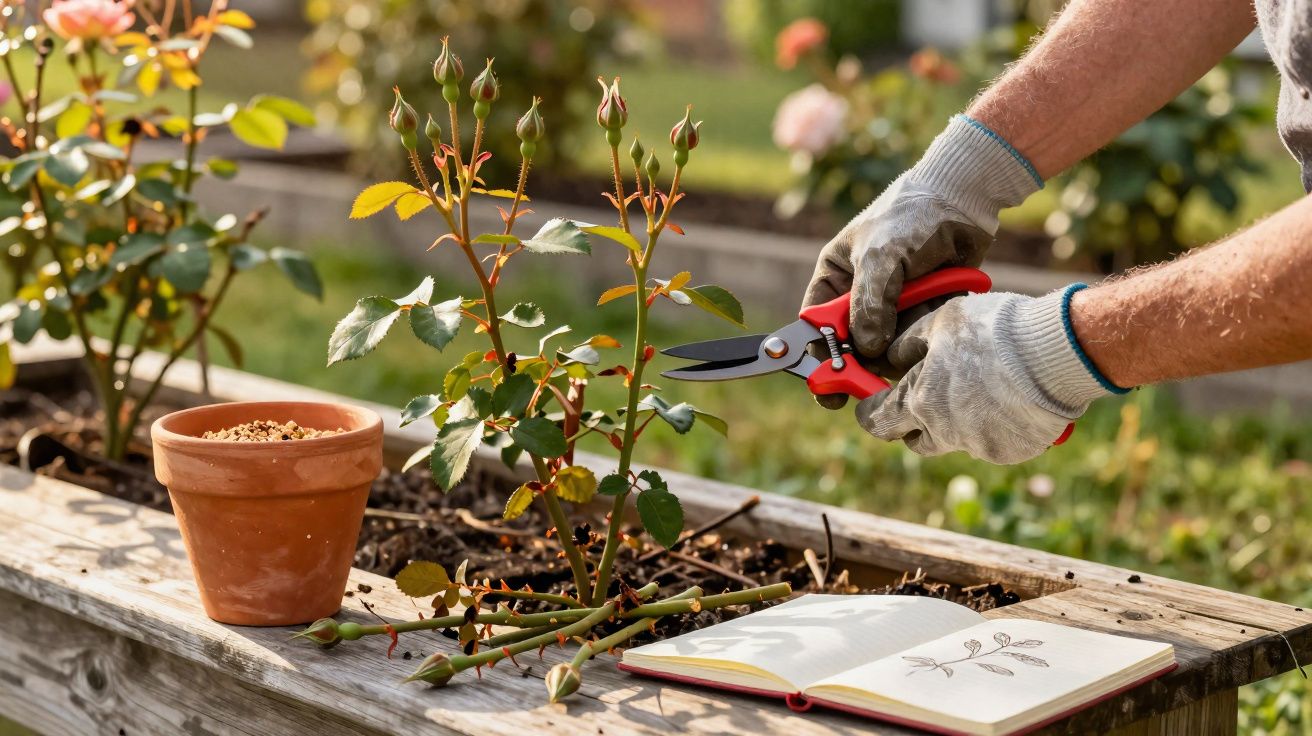
Plenty of amateur gardeners end up spoiling their roses with well‑meant pruning - one straightforward professional approach in spring makes all the difference.
Each year it looks the same: winter has passed, the secateurs come out, and when in doubt people give the bush a decisive chop. A few weeks later comes the disappointment - sparse flowers, struggling shoots, lopsided shrubs. A seasoned nursery grower tackles the job very differently and shows how thoughtful spring care can make roses sturdier, healthier and far more free‑flowering.
Why the usual rose pruning so often disappoints
A lot of gardeners prune on autopilot. One stem removed here, another shortened there - as long as it looks tidy. The plant’s response is often unexpected, and rarely in a good way.
An overly harsh or haphazard cut drains a rose bush’s energy, weakens its framework and noticeably reduces flowering.
Cutting back too hard forces the rose into an extreme restart. It may survive it, but the shrub can take a long time to regain shape. With weaker or older plants, that often results in thin, reluctant new growth.
The opposite mistake is pruning too timidly because you’re worried about taking “too much”. That leaves lots of spindly, low‑vigour shoots that carry few blooms and crowd the centre of the bush. Moisture then lingers inside, fungal diseases spread easily, and the plant looks messy and congested.
The outcome is predictable: fewer flowers, more leaf problems and a shape that looks neither elegant nor robust. This is exactly where a professional nursery grower’s method starts.
The professional method for rose bushes: observe first, cut second
The key difference isn’t a “secret schedule” but the way you look at the plant. A nursery grower doesn’t begin with the secateurs - they begin with a few calm seconds of observation.
They check:
- Which shoots are vigorous, strong and well positioned?
- Where is there dead wood, and where are there blackened or dried sections?
- Which branches are rubbing together or crossing awkwardly?
- How open - or how “blocked” - is the centre of the shrub?
The aim is not “remove as much as possible”, but to create a balanced structure. The rose should have air and light in the middle, and its shoots should be guided to grow outwards rather than competing and squeezing each other.
The core rule of the professional approach: strong wood stays; weak, dead and disruptive wood goes - and every cut follows a clear plan.
In practical terms, that means:
- Strong, well‑placed main canes remain.
- Any wood that looks dead or clearly damaged is removed completely.
- Thin shoots that would hardly carry flowers are taken out as well.
- Branches that cross or rub must go - usually the weaker one.
- Every shoot you keep is shortened just above an outward‑facing bud.
This encourages the shrub to open outwards. Light reaches the centre, rain dries more quickly, and the plant puts its energy into sturdy, flower‑bearing growth rather than a tangled mass of twiggy shoots.
Getting the timing right in spring
Technique matters, but so does when you do it. Prune too early and a late frost can damage fresh growth. Leave it too late and you cut away energy the rose has already spent.
A reliable guide is the buds. When they noticeably swell and take on a faint green tinge - and hard frosts are no longer expected - you’re in the ideal window. In many areas that falls between late winter and early spring.
If you can already see small, soft shoots on the stems, all is not lost. In that case, prune a little more gently and leave more length. Roses are more forgiving than many people assume - as long as the cuts are made with intention.
Step by step: how to prune roses properly
Before you make a single cut, it helps to walk around each bush. Looking from every angle makes it easier to spot what truly gets in the way and what forms the plant’s underlying framework.
Specific cutting steps for healthy roses
- First, remove any dead, blackened or clearly diseased twigs right down at the base.
- Take out very thin shoots - about matchstick thickness or less - without hesitation.
- In the centre of the shrub, remove crossing growth so the middle stays open.
- For shrub roses, keep three to five strong, well‑spaced main shoots.
- Shorten each of those shoots to just above an outward‑facing bud.
Clean cuts with sharp secateurs are essential. The cut surface should slope slightly so water can run off; an extreme angle isn’t necessary. Leave roughly 1 centimetre of “safety margin” between the bud and the cut edge so the bud doesn’t dry out.
The right height depends on the plant’s vigour
A strongly growing shrub can cope with a braver cut. Depending on variety and habit, you can reduce it to roughly 20 to 30 centimetres. Weaker roses or newly planted ones should be left a bit longer so they can build enough leaf area to support themselves.
Every rose has its own character - if you cut them all to the same height, you take away their natural shape.
Many professional gardeners describe it as a “conversation” with the plant: you don’t force it into a rigid template; you read its structure and encourage its growth rather than breaking it.
Spring mistakes you should stop making
Three common slip‑ups show up again and again in home gardens. Avoid them and you’ll improve your results immediately.
- Random shortening: cutting shoots “somewhere” without considering buds, direction and overall framework leads to chaotic growth.
- Leaving old wood: fear of bold action means tired, ageing canes remain, even though they barely carry blooms.
- Cutting too close to the bud: if you cut right against the bud, it can dry out and fail to break reliably.
Blunt or dirty tools also cause more harm than most people realise. Ragged cut surfaces seal more slowly, and pathogens get an easier entry point. Sharpening and cleaning properly before the season prevents a lot of trouble.
What roses urgently need after pruning
Pruning is a small strain on the plant. After that comes the rebuilding phase - and you can support it deliberately.
- In dry weather, water the root area thoroughly.
- A thin layer of well‑rotted compost or a dedicated rose fertiliser provides nutrients.
- A loose mulch of bark humus or other organic material helps the soil retain moisture for longer.
The combination of well‑planned pruning, a nutrient boost and a light mulch often produces a visible leap in growth within a few weeks.
Afterwards, keep a watchful eye on the new shoots. If they start strongly, evenly and point outwards, that’s a good sign the pruning was right. Any individual weak water shoots can be removed later or lightly shortened so energy goes into the strongest parts.
What this method changes in the garden in practical terms
When you move from quick “cutting back” to a more observant, targeted approach, you soon notice your whole perspective on roses shift. The shrub stops feeling like a high‑maintenance worry and starts behaving like a predictable, rewarding ornamental plant.
In concrete terms, that means:
- less stress on the plant thanks to considered interventions,
- sturdier shoots that hold flowers better,
- a more open crown where fungal spores have poorer chances,
- and often noticeably more buds in early summer.
If you’re new to roses, you can apply the approach from the start. Young plants, in particular, develop a stable foundation with a good formative prune in the first few years - something you benefit from for a long time. With old, over‑aged shrubs, it’s worth spreading the process over two to three years so you don’t overwhelm the rose in one go.
For beginners, it can help to treat one or two bushes differently in spring: prune one as you usually would, and another using the professional method described above. By summer, the side‑by‑side comparison typically makes it very clear which route delivers better flowers, a calmer shape and a healthier overall look.






Comments
No comments yet. Be the first to comment!
Leave a Comment