
Many home gardeners face the same spring dilemma: which flower will deliver maximum colour in borders and pots-with the least possible effort?
Even though garden centres tempt us with endless choices, seasoned gardeners regularly return to one understated, feather-light cottage-garden favourite. One small packet of seed can turn balcony troughs, beds and patios into months of bloom, without fussy maintenance or specialist know-how.
The “misty” marvel: why Nigella damascena (love-in-a-mist) deserves a spot in your soil now
The plant in question is Nigella damascena, widely known as love-in-a-mist. Its delicate flowers appear to float inside a veil of fine, thread-like foliage-giving the whole plant a soft, hazy look, as if a light floral mist has settled over the border.
Love-in-a-mist flowers from June right through to September, providing steady colour-ideal if you’re short on time but still want a garden with impact.
Gardeners value Nigella damascena because it is tough, straightforward and surprisingly undemanding. It copes well with cooler spring conditions, asks for very little attention, and suits everything from traditional cottage gardens to narrow terraced-house plots and simple containers on a balcony.
Why love-in-a-mist is so useful (and so easy to live with)
Love-in-a-mist earns its place on several counts:
- Long flowering season: typically June to September
- Excellent as a cut flower: lasts around 10 days in a vase
- Attracts bees and other pollinators
- Works in borders, pots and raised beds
- Often self-seeds, returning the following year with minimal help
That combination makes it especially appealing if you want a lively, colourful garden but can’t spend your week weeding, pricking out seedlings and watering constantly.
A further bonus: because Nigella damascena has such airy foliage, it threads beautifully between heavier plants. It can soften the edges of shrubs, add lightness among perennials, or slip neatly between vegetables without looking bulky.
Sow now: the simplest way to get Nigella damascena growing
The best time to sow starts in early spring, as soon as the ground is no longer frozen. In many areas you can begin in March, or a little later depending on local weather. If you sow in stages, you’ll get a longer, more even display.
Direct sowing in the border-the easiest option
If you have open ground, direct sowing is the most convenient approach:
- Loosen the soil and remove large stones and roots.
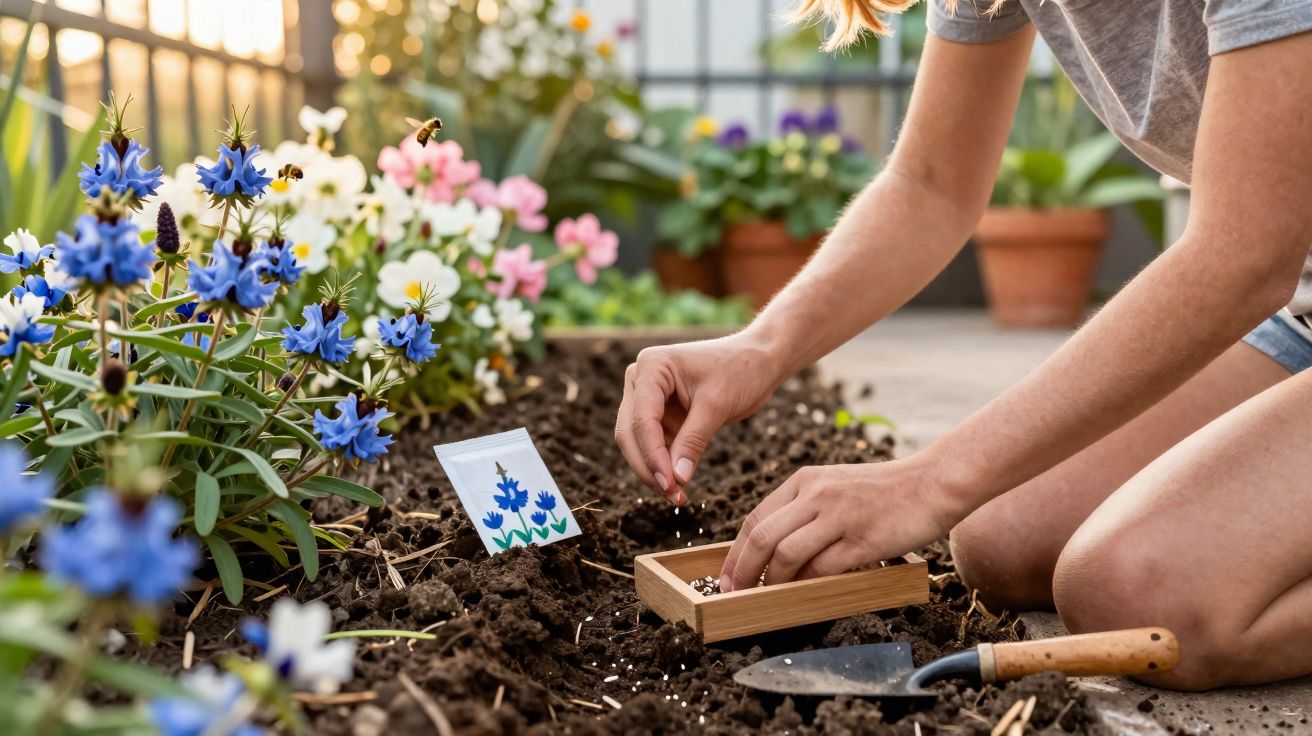
- Scatter the fine seed thinly over the surface-avoid sowing too densely.
- Dust with a light covering of soil or compost; do not bury deeply.
- Water in gently-aim for moist soil, not soggy ground.
There’s no complicated routine required. A bright spot and a loose, free-draining soil are enough. For an extended season, sow a few short rows every 2–3 weeks.
Sowing in trays and pots for balconies and compact spaces
Only got a patio or balcony? You can still grow love-in-a-mist with ease by starting it in shallow trays or boxes:
- Fill a shallow tray or box with multi-purpose compost.
- Sprinkle the seeds over the surface, then lightly dust with compost.
- Water until the compost is evenly moist.
- Keep the container bright, but out of fierce midday sun.
Once the seedlings are sturdy and have developed a few true leaves, thin them or move small clumps into their final positions. Many gardeners use this stage to plug gaps in borders or to fill individual pots on the patio.
The right spot: sun, spacing and soil conditions
Love-in-a-mist prefers sun and a soil that is poor to moderately fertile. It dislikes waterlogging, so free-draining ground and containers with drainage holes are especially important.
| Factor | Recommendation for Nigella damascena |
|---|---|
| Light | Full sun; at least partial shade |
| Soil | Loose, well-drained; not constantly wet |
| Plant spacing | 20–30 cm so plants can bush out |
| Containers | Drainage holes essential; avoid very small pots |
If you crowd plants, you’ll usually get weaker stems and fewer flowers. With a little breathing space, Nigella damascena forms airy “clouds” of bloom and fine foliage that look striking between roses, perennials-or even tucked among vegetables.
Minimal care, months of flowers
Once established, love-in-a-mist generally needs only occasional watering during extended dry spells. Feeding is rarely necessary in average garden soil; too many nutrients tend to produce leafy growth at the expense of flowers.
Snipping off faded blooms regularly (deadheading) encourages fresh buds-one quick job with a big payoff.
This deadheading habit fits neatly into everyday life: cutting a few stems for the house also stimulates the plant to keep flowering outdoors.
Succession sowing and self-seeding
Many gardeners don’t sow Nigella damascena just once. Sowing a small amount every few weeks creates several “waves” of plants that flower one after the other, keeping the display lively well into late summer.
If you allow a few seed pods to mature towards the end of summer, the seeds often drop and produce new plants the following year-no extra seed packet required. If you’d rather prevent self-seeding, simply cut the developing seed heads before they fully ripen.
As an extra practical note, self-seeded seedlings are usually easy to recognise and lift while small. If they appear somewhere inconvenient, you can gently move tiny clumps to a better spot on a cool, damp day.
Love-in-a-mist as a cut-flower and décor favourite
The slender flowering stems are ideal for cutting. In a simple glass vase they last about 10 days, especially if you change the water regularly. The fine foliage adds a light, romantic quality to mixed bouquets.
The decorative seed pods that follow the flowers are equally valuable. Many people dry them for arrangements or use them in modern table displays. Mixed with grasses, roses or sunflowers, Nigella damascena can look far more expensive than it actually is.
Extra value for bees and other pollinators
The flowers draw in bees, hoverflies and other pollinators. That makes love-in-a-mist an excellent choice if you want a more wildlife-friendly garden without committing space to a full wildflower meadow.
And if you grow vegetables such as tomatoes, courgettes or soft fruit, the additional pollinators can improve the chances of a good harvest.
Practical tips for beginners and busy gardeners
To keep sowing simple (rather than turning it into a science project), a few everyday habits help:
- Push the seed packet into the pot as a label so you don’t forget what you sowed.
- Use a watering can with a fine rose so the seed isn’t washed away.
- If late frosts threaten, move containers close to a wall for shelter or cover with horticultural fleece.
- Avoid poking around in the soil-seedlings do better when left undisturbed.
If you’re unsure whether older seed will still germinate, test a pinch in a small pot. If seedlings appear after 2–3 weeks, you can sow the rest with confidence.
Which varieties are worth growing-and what to pair them with
In shops you’ll most often find mixes in white, pale blue and violet. For beginners, these standard blends are more than sufficient. Sown in groups, they look cohesive and combine beautifully with roses, lavender, daisies, calendula, and herbs such as sage and thyme.
If you enjoy using flowers indoors, place Nigella damascena near a seating area or by the back door in pots. When stems are only a few steps away, you’re much more likely to cut them for the vase-a small detail that often decides whether you actually make use of your flowers.
The maths is refreshingly simple: one inexpensive packet of Nigella damascena seed and a few minutes of spring sowing can give your garden, balcony or courtyard months of colour, life and ready-to-cut blooms.



Comments
No comments yet. Be the first to comment!
Leave a Comment