
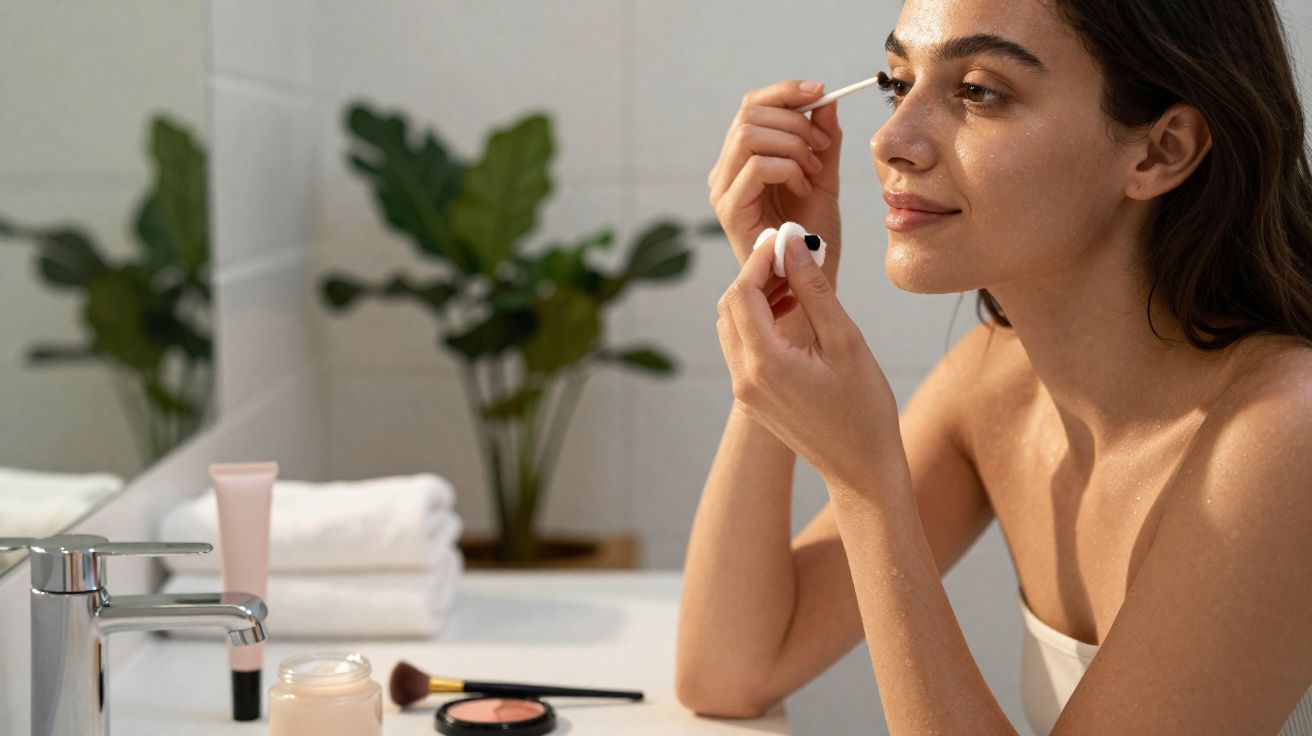
Clean wings, deep black and lashes curled just enough. Two hours later, under the lift’s unforgiving neon light, the story had changed: a grey veil on the lids, mascara marks beneath the eyes, and a faint greasy sheen where the concealer had once looked perfect. The skin itself looked healthy - smooth, full and dewy. The eye make-up, though, looked as if it had been through a gale.
More and more people are putting skin care first and make-up second. Serums, rich eye creams, facial oils… then liner, shadow and mascara on top. And that is exactly where things begin to slide. Quite literally.
The odd truth is that the better moisturised your skin is, the more likely your eye make-up is to move. And no, that is not just in your head.
Why moisturised skin makes eye make-up misbehave
Watch anyone getting ready for a night out and the routine is usually the same. A generous sweep of cream is pressed around the eyes, a radiance-boosting serum goes on, perhaps a drop of face oil for that glass-skin finish. The skin absorbs it all, looking fresh, soft and alive. Then come the eyeliner, the shimmery shadow and the mascara. For a few minutes, everything looks as though it belongs in a campaign image.
Then real life intervenes: warmth from the Tube, a bit of sweat, blinking, perhaps an absent-minded rub of the eyes. Suddenly, the colour that should have stayed neatly at the lash line has drifted into the crease. That comforting, moisturising layer has become a tiny slide for pigments and waxes. Well-hydrated skin is good for the complexion, but for make-up it can be a little… unreliable.
One make-up artist refers to it as “the moisturiser mafia”: it is running the show underneath, whether your liner approves or not. Creams and oils naturally form a barrier over the skin. That is excellent for hydration. It is less helpful for products that are meant to set and stay put. The eye area is warm, constantly in motion when you talk or smile, and full of tiny folds that trap product. When that delicate zone is extra dewy, formulas do not grip - they glide. The more slip on the skin, the less chance your liner or shadow has of anchoring. That is why an expertly moisturised under-eye can send mascara smudging south by lunchtime.
Think of the eyelid as a miniature dance floor. When it has a light satin finish, make-up can hold and move in a controlled way. When it becomes slick from rich creams or balms, every particle of pigment is just waiting for heat and gravity to nudge it elsewhere. Eye creams are often packed with emollients - such as squalane, shea butter and plant oils - plus humectants like glycerine and hyaluronic acid, which draw in and retain water. The result is plump skin with a thin film on top. That film then blends with the waxes and oils in eyeliner, shadow and mascara. Instead of drying down and fixing in place, the products emulsify together - which is a polished way of saying your look slowly starts to melt.
How to stop eye make-up sliding on moisturised skin
One small habit can change everything: separation. Skincare first, then a pause, then make-up. Moisturise your face and eye area, then leave it for 10 to 15 minutes. Let the creams sink in and allow the shine to settle a little. If you are in a hurry, even three quiet minutes while the kettle boils are better than nothing.
Before you reach for eyeliner, gently press a clean tissue over the eyelids and under-eyes. Do not rub. Just blot. The aim is not to strip the skin of hydration, but to lift away the excess sitting on the surface. Then apply a small amount of eye primer or a long-wear concealer to the lids. Tap it in lightly. Wait a few seconds. You are creating a slightly grippy, velvety middle layer that respects your skin care but tells your make-up: stay there.
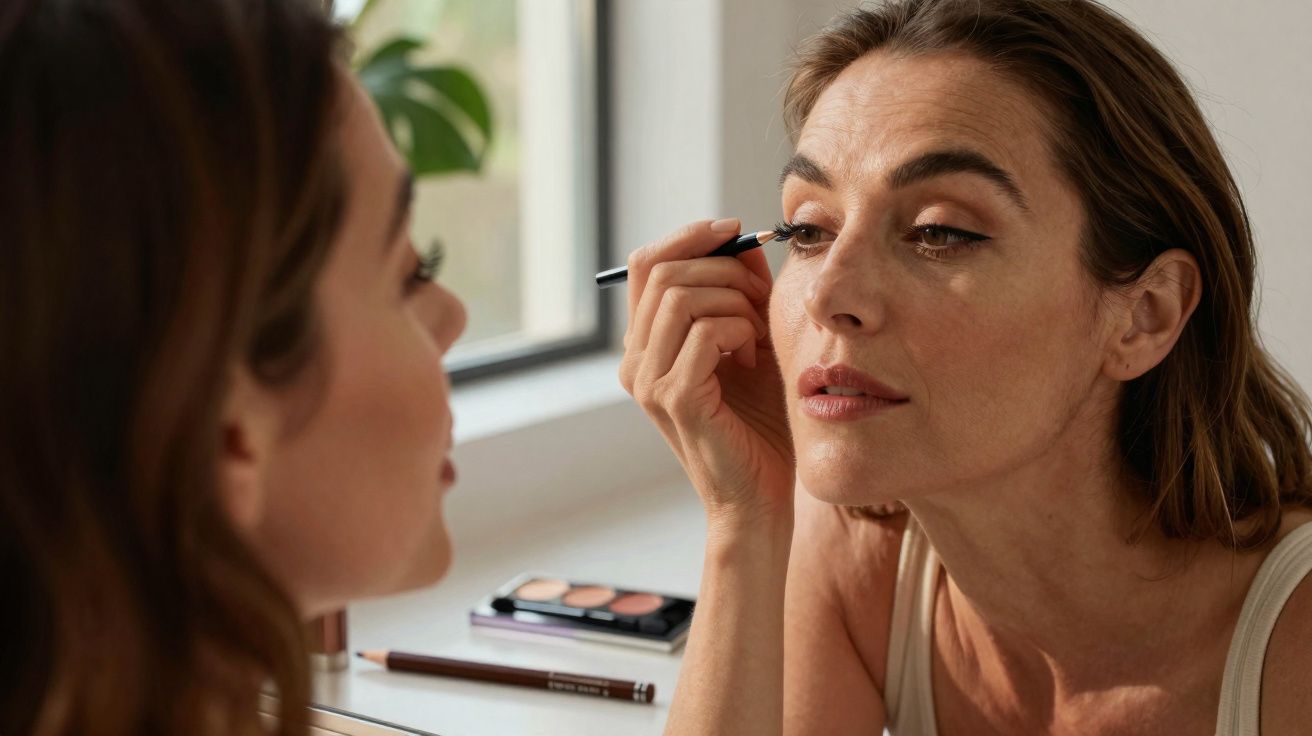
On the lower lash line, less is more. A hard, creamy pencil dragged across a dewy lower lid is almost guaranteed to smear. Try tightlining the upper waterline instead, or use a slim angled brush to press a little shadow into the outer third of the eye. You still get definition, but you keep product away from the most oily, most tear-prone area. That small bit of distance can buy you hours of wear.
If you wear sunscreen around the eyes, the same rule applies: let it settle before you add colour. Many people rush straight from SPF to mascara, but a short pause can make a surprising difference. The goal is not to pile everything on at once; it is to give each layer a moment to do its job before the next one arrives.
There is also real value in choosing formulas that suit the day you are about to have. A balm-heavy routine may feel indulgent on a quiet morning at home, but it can be too much if you are heading into heat, humidity or a long commute. A lighter gel cream in the morning and richer textures at night often works better than using the same rich product every time.
There is a quiet embarrassment many people feel about “messy” under-eyes, as though they have done something wrong because their concealer creases or their mascara wanders. A reality check is needed: your skin is alive, warm and moving, and you blink thousands of times a day. Of course product migrates.
Instead of blaming your face, look at the way you layer products. If you apply a rich eye cream, then a glow primer, then a creamy concealer, and finish with a soft kohl pencil, you are practically inviting movement. Try changing one step at a time. Perhaps swap to a gel-based eye cream in the morning rather than a balm. Perhaps use a tubing mascara instead of a traditional one. Perhaps powder only the sides of the nose and the inner corners, rather than the whole eye area. Small changes often matter far more than a complete overhaul.
If you are trying to make your make-up last through a full day, it helps to think about your surroundings. A hot office, a sweaty journey, an air-conditioned room that dries everything out - all of these alter the way moisturisers and make-up behave together. A quick read of your day can guide your choices: a richer cream for a calm indoor day, a lighter gel texture when you know you will face sun, heat or long hours. You are not just doing make-up; you are planning for weather, light and time.
The upside of a little smudge
There is an irony that is hard to miss. The very routines that give you bouncy, youthful skin - regular moisturising, gentle eye creams, supporting the skin barrier - are also the ones that make crisp eyeliner more difficult to keep in place. And yet, when you look back at photographs, the looks that age best are rarely the ultra-matte, frozen ones. They are the faces where you can still see a bit of glow, a touch of movement and some life.
We have all had that moment when you catch your reflection at 5 p.m. and think, “Goodness, how long has that smudge been there?” It stings for a second, then you wipe it away, pat with a fingertip, maybe even laugh at yourself. Those small imperfections say something honest: you have been out in the world, blinking, talking and lightly sweating through the day. Sometimes make-up that shifts a little is not a failure. It is proof that you are not a mannequin. You are a person.
The aim is not bulletproof perfection, but learning the small, practical habits that make your products work with well-moisturised skin instead of fighting against it. Once you understand that slip comes from the interaction between oils, creams and pigments, you can start adjusting texture by texture, step by step. Lighter eye cream here, a bit of primer there, tubing mascara instead of a classic formula, or a subtle dusting of powder in just the right place.
As more people fall in love with skin care, this tension between glow and grip will only become more noticeable. Sharing what genuinely works - the real fixes, not the fantasy of a 12-step routine - is how habits gradually improve. You may find that discussing your smudged-liner woes with a friend reveals a trick you had never considered. Or that accepting a softly lived-in line feels more like you than a razor-sharp wing ever could.
Key points at a glance
| Key point | Detail | Why it matters |
|---|---|---|
| Hydration versus hold | Moisturisers and oils leave a slippery film that lets pigments move | Explains why make-up can smudge even when products claim to be long-lasting |
| Prep and pause | Let skin care absorb, blot, then prime the lids lightly | A simple change that can noticeably improve wear time |
| Texture choices | Switch to lighter eye creams and smarter formulas around the eyes | Offers practical options without abandoning skin care benefits |
FAQ:
- Why does my eyeliner smudge more when I use eye cream? Eye creams often contain oils and emollients that leave a thin film on the skin. When eyeliner sits on top of that film, it does not fully set and mixes with the cream as the skin warms up, so it moves more easily.
- Should I stop using moisturiser around my eyes to keep make-up in place? No. The eye area is delicate and needs hydration. Use a lighter, gel-based formula in the morning, allow it to absorb, blot away any excess, then apply a primer or long-wear base before your make-up.
- What kind of eyeliner stays best on well-moisturised skin? Waterproof gel liners, liquid liners that dry down completely and long-wear pencils usually grip better. Tightlining the upper waterline also reduces contact with the most moisturised, mobile areas.
- How can I stop mascara from smudging under my eyes? Avoid using rich creams directly beneath the lower lash line, choose a tubing mascara and do not heavily coat the lower lashes. A tiny amount of powder where the lashes touch the skin can also help.
- Is there a way to fix smudges during the day without ruining my make-up? Yes. Use a dry cotton bud to lift the smudge first, then tap a little concealer or powder over the area. Gentle, precise movements help preserve the rest of your make-up.




Comments
No comments yet. Be the first to comment!
Leave a Comment