
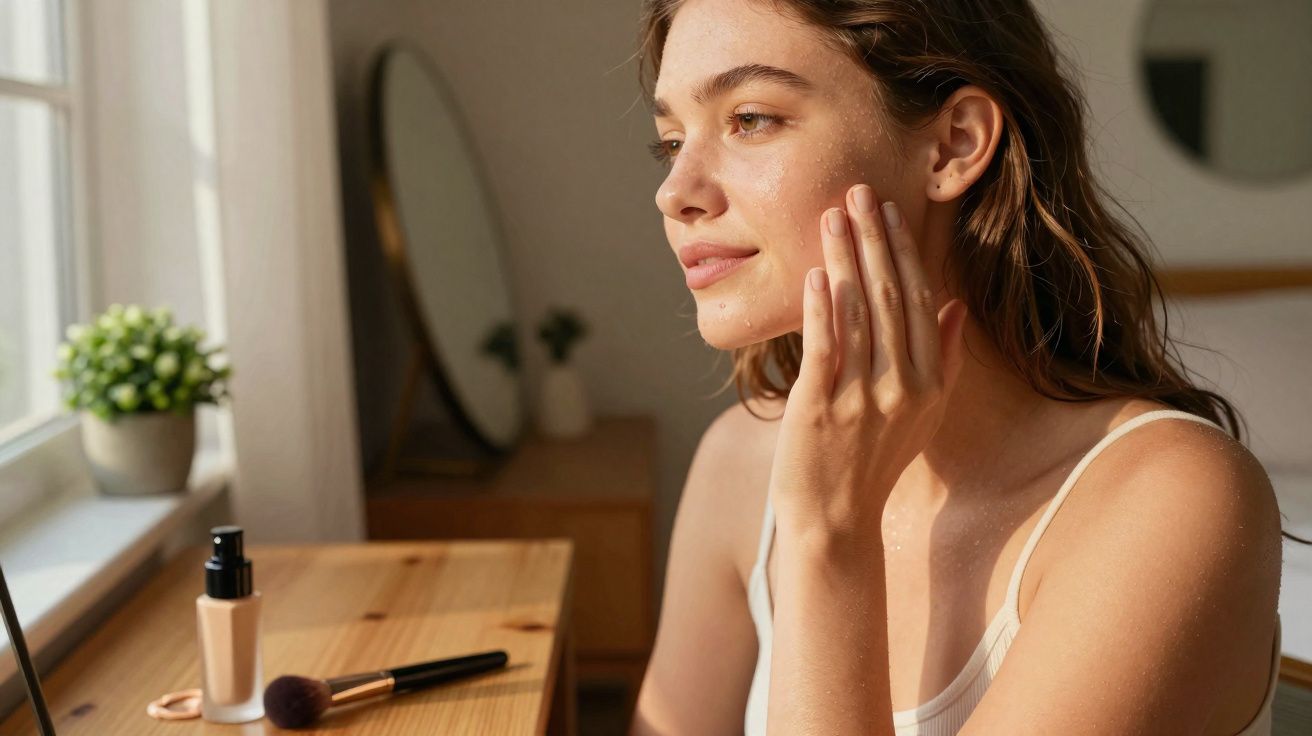
The woman in the mirror is doing everything “right”.
Her foundation brush is expensive, the sort beauty creators recommend in tutorials. She works it in circles, checks the lighting, then leans closer. From a distance, her skin seems perfect. Up close, there is a faint texture clinging to the sides of her nose, a visible line along the jaw, and a small patch the brush missed entirely.
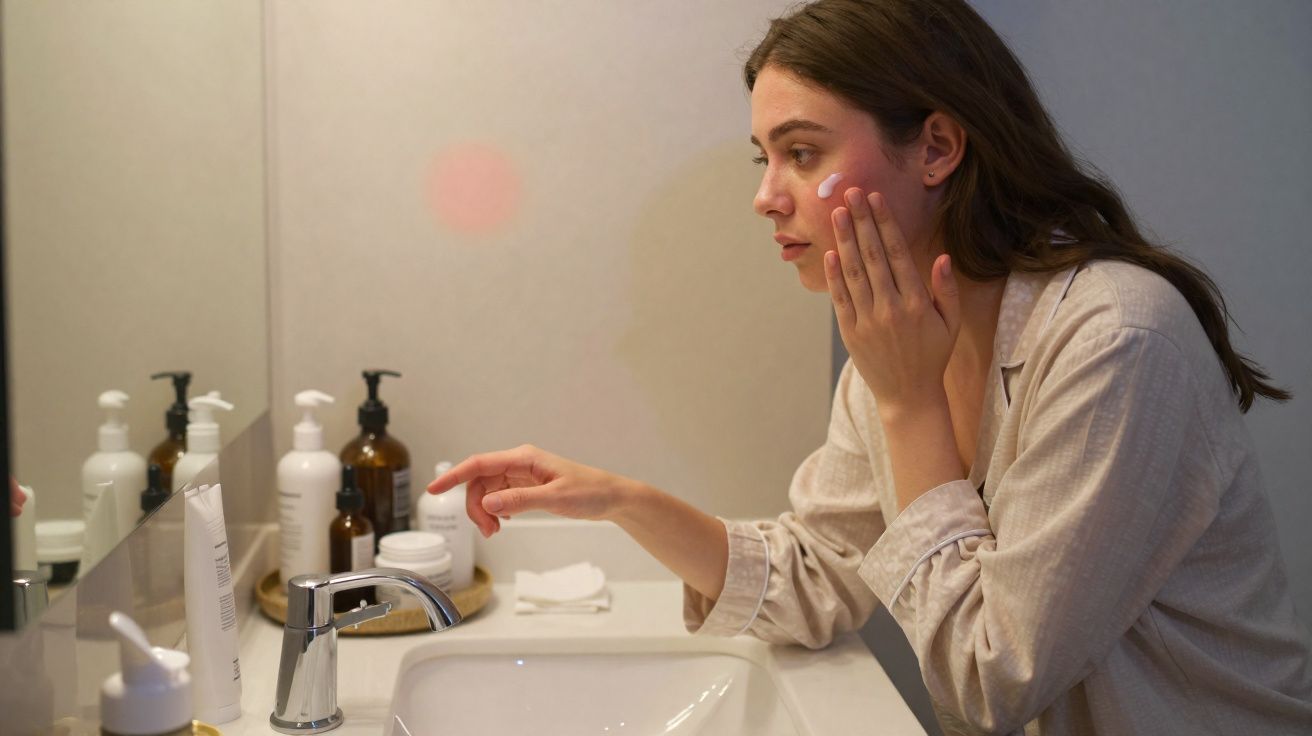
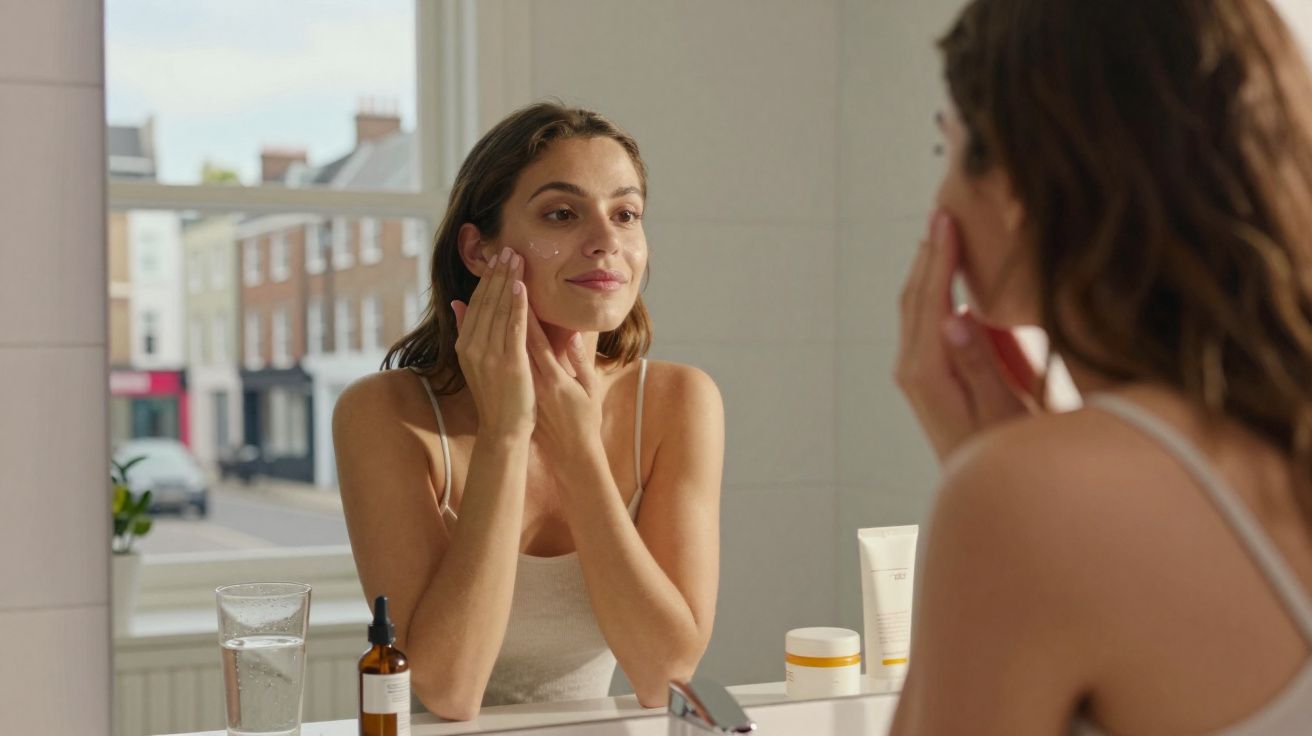
She exhales, sets the brush down on the basin, and on a whim dots a little foundation on with her fingertips instead. Three soft presses, a touch of warmth, a small rolling motion. All at once, the product disappears into her skin rather than sitting on top of it.
She leans back and blinks. Same foundation. Same face. A completely different finish.
That one tiny change can alter the whole makeup result.
Why foundation with fingers can beat the “perfect” brush
The first surprise when you switch to applying foundation with fingers after years of using brushes is how quickly it seems to vanish into the skin.
You expect smudges and fingerprints. Instead, you get a soft-focus finish that feels less like makeup and more like skin. There is no rasping sound from bristles and no fine lines left behind. Just the quiet, slightly untidy motion of tapping and pressing product into your own face.
Makeup artists often talk about “melting” or “fusing” foundation. Fingers quite literally do that. They warm the formula, loosen it slightly, and encourage it to sink into the skin’s natural texture rather than sitting on the surface like paint.
At a brightly lit hotel bathroom before a wedding, a friend of mine once unpacked a complete brush kit like a seasoned professional.
She began buffing in her foundation while a cluster of us crowded around one foggy mirror. Under the warm yellow lighting, it looked immaculate. Then we stepped outdoors for photographs, and the daylight was unforgiving. You could spot the brush marks near her hairline and a little dry patch above her top lip.
She laughed, dabbed a bit more foundation onto her fingertip, and gently tapped only those areas. No tools, no fuss. In under a minute, the streaks were gone and her base looked like her own skin again. Nobody mentioned her makeup after that. They simply said, “Your skin looks incredible.”
Brushes are excellent for placing product neatly and creating a polished, airbrushed effect.
They work well when you need speed and coverage, but they mostly stay on the surface. Bristles glide over fine facial hair, pores, and tiny dry patches, and sometimes those features become more obvious rather than less.
Fingers, by contrast, have natural curves and warmth. They follow the shape of the face, dip into hollows, and press product into smile lines instead of letting it gather there. You can feel where the skin is drier or more textured and adjust as you go. Even the best synthetic brush cannot sense that in the same way.
There is also a practical advantage: fingers are always with you. If you are redoing your base in a taxi, in a powder room, or during a hectic morning, you do not need a full kit to make your foundation look smoother. A clean hand and a small amount of product are often enough.
How to apply foundation with fingers without making a mess
Begin with less product than you think you need. One small pump on the back of your hand is usually enough for the whole face.
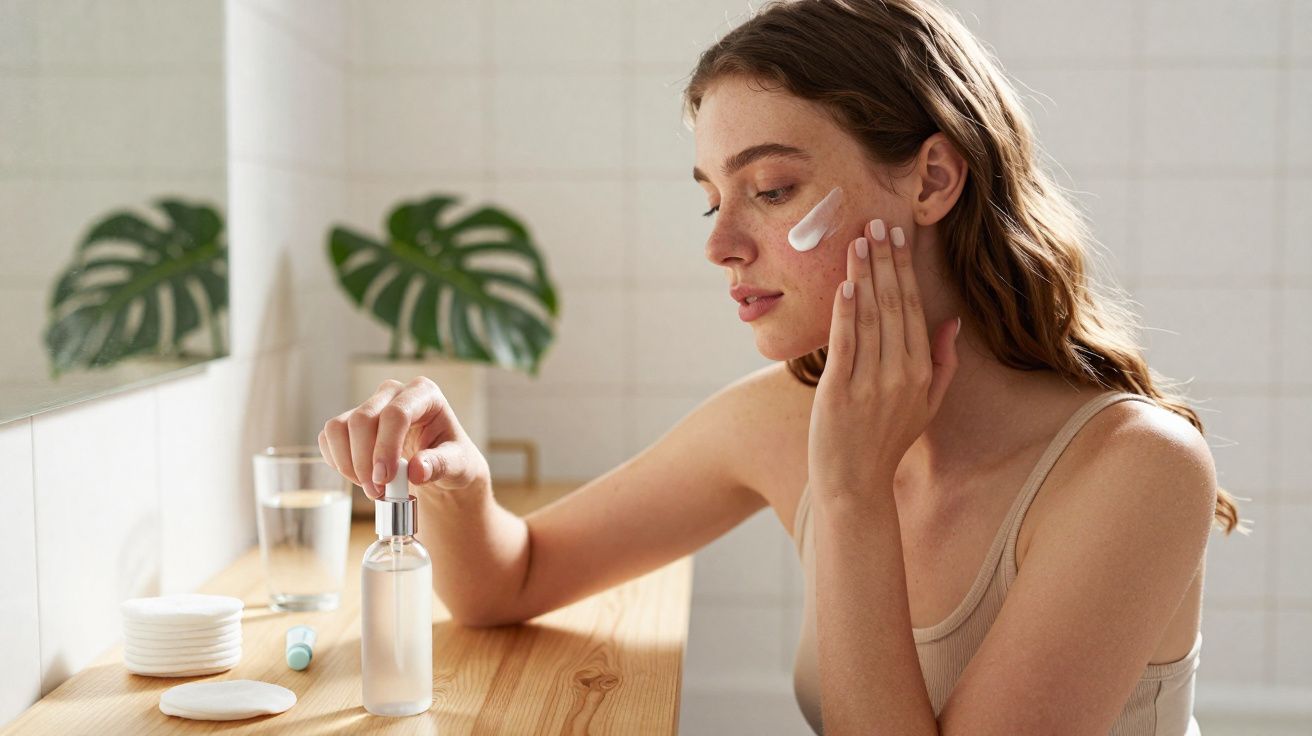
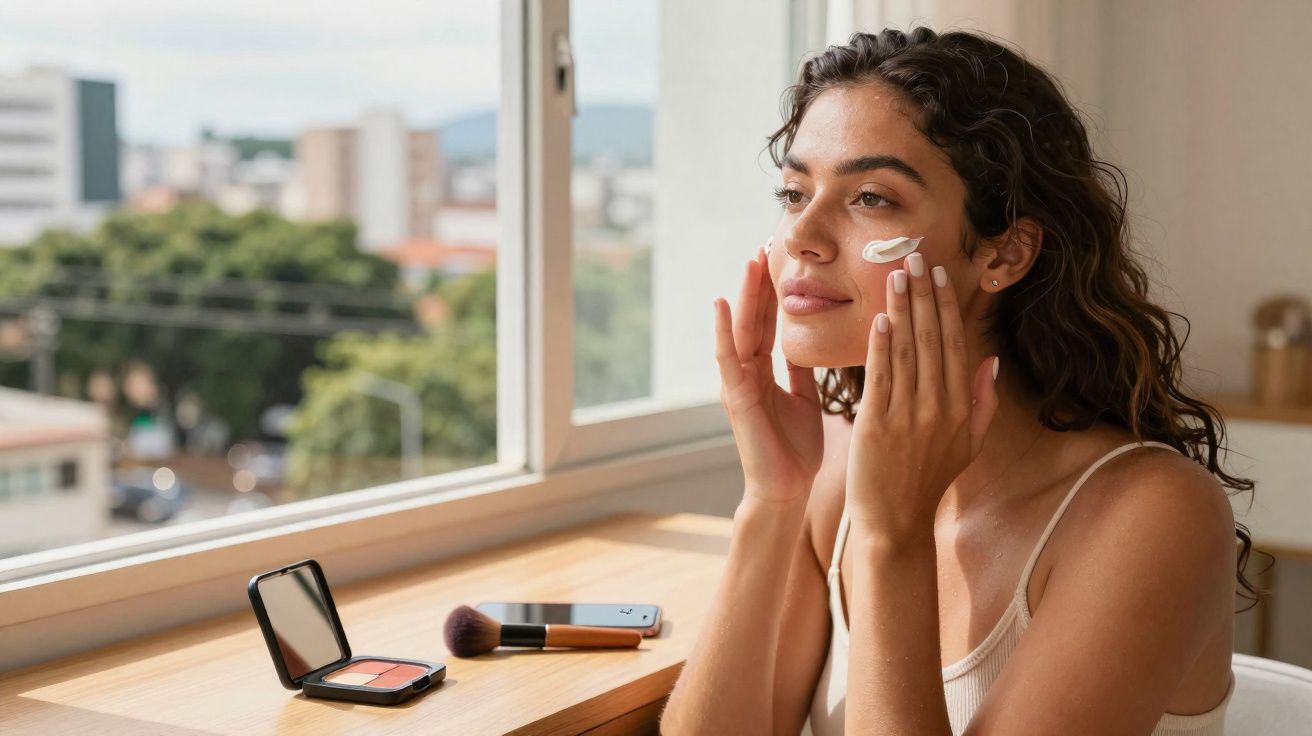
Use your ring and middle fingers, much as you would for eye cream. Place small dots on the central areas where redness and shadows tend to sit: the sides of the nose, around the mouth, the middle of the forehead, and under the eyes. Then, rather than rubbing, tap and press.
The movement matters. Tap, tap, then a gentle press. Roll your fingertip very slightly across any stubborn patches. Let your fingers rest on the skin for half a second so the warmth can soften the foundation. Blend what remains out towards the edges of the face, where you normally want less coverage.
Most people who say they dislike finger application have one thing in common: they rub the product as though they are in a hurry to apply moisturiser.
That can drag the foundation around, leave faint streaks, and create areas where the skin underneath shows through more than intended. It can also disturb the skincare beneath, especially if you have already applied a rich cream or sunscreen.
Work in sections instead. One cheek, then the other, then the forehead, then the chin. Use clean fingers and a small amount of product, and keep the movement light. If a section looks too heavy, use bare fingertips to tap away the excess. Let us be honest: nobody does this with perfect patience every single day, but once you see how much better it looks, you will be inclined to slow down at least for occasions that matter.
Your hands are the most instinctive beauty tool you own. They understand the contours of your face better than a brush ever could.
It helps to keep a simple routine in mind when you apply foundation this way:
- Start in the centre of the face, where most coverage is usually needed.
- Tap and press instead of rubbing, so the finish stays natural.
- Warm the product slightly between two fingers before using it on dry or textured areas.
- Use clean, bare fingers at the end to remove excess from the nose and jaw.
- Leave the outer edges of the face with the lightest amount of product for a seamless blend.
On paper, that may sound fussy. In real life, it often takes less time than fishing a brush out of your makeup bag and then cleaning it afterwards.
For the smoothest result, wash and dry your hands properly before you begin, and keep your nails short enough that they do not scratch the skin. If your base tends to cling to dry areas, a tiny amount of extra moisturiser beforehand can help, but always give it time to settle so the foundation does not slide about.
It is also worth matching the method to the formula. Sheer and medium-cover foundations usually blend beautifully with fingers, while thicker matte bases may benefit from a final press with a damp sponge. You do not have to commit to one tool forever; many people use their fingertips for placement and then tidy the edges with a clean brush or sponge.
When foundation with fingers gives you that “I woke up like this” finish
There is a particular kind of confidence that comes from checking your reflection in a car mirror in daylight and seeing no harsh edges.
Foundation applied with fingers often lands in that sweet spot between “bare skin” and full glamour. The coverage is there, but it looks settled and lived-in from the start instead of needing an hour to blend into place. It is the sort of base that gets through coffee, a rushed commute, and an unexpected video call without constant top-ups.
On a practical level, it also changes how you think about foundation. You stop painting a mask and start editing the skin you already have. With every tap, you learn your own face better. And you begin to notice which areas need help and which areas can finally be left alone.
| Key point | What it means | Why it helps |
|---|---|---|
| Warmth from the fingers | Softens and loosens the foundation as it is applied | Creates a smoother blend and fewer obvious edges |
| Greater control over the product | You can feel where the skin grips or absorbs the formula | Makes it easier to use just the right amount and avoid a heavy finish |
| Targeted application | Precise tapping on redness and dry patches | Helps conceal without adding weight and saves time day to day |
Common questions
- Will foundation applied with fingers clog my pores more than a brush?Not if your hands are clean and you remove your makeup properly at night. What tends to clog pores is a mix of heavy formulas, sweat, pollution and skipped cleansing, not the fact that you used fingers instead of a tool.
- Can I use my fingers with full-coverage foundation?Yes, but work in very small amounts and use plenty of tapping. Apply a light layer first, then build coverage only where you need it, such as around the nose or on blemishes.
- Is finger application hygienic for acne-prone skin?It can be, provided you wash your hands immediately before applying and avoid touching other surfaces halfway through. Some dermatologists even prefer fingers to old, unwashed brushes that may harbour bacteria.
- What kind of foundation works best with fingers?Liquid and cream formulas respond especially well to warmth. Very thick or ultra-matte textures may take a little more patience, but they can still be softened with finger heat and, if necessary, finished with a damp sponge.
- Do I still need brushes if I use my fingers?You do not have to choose only one method forever. Many people apply foundation with their fingers, then lightly smooth the edges with a clean brush or sponge. On an easy morning, fingers alone can absolutely do the job.
Comments
No comments yet. Be the first to comment!
Leave a Comment