
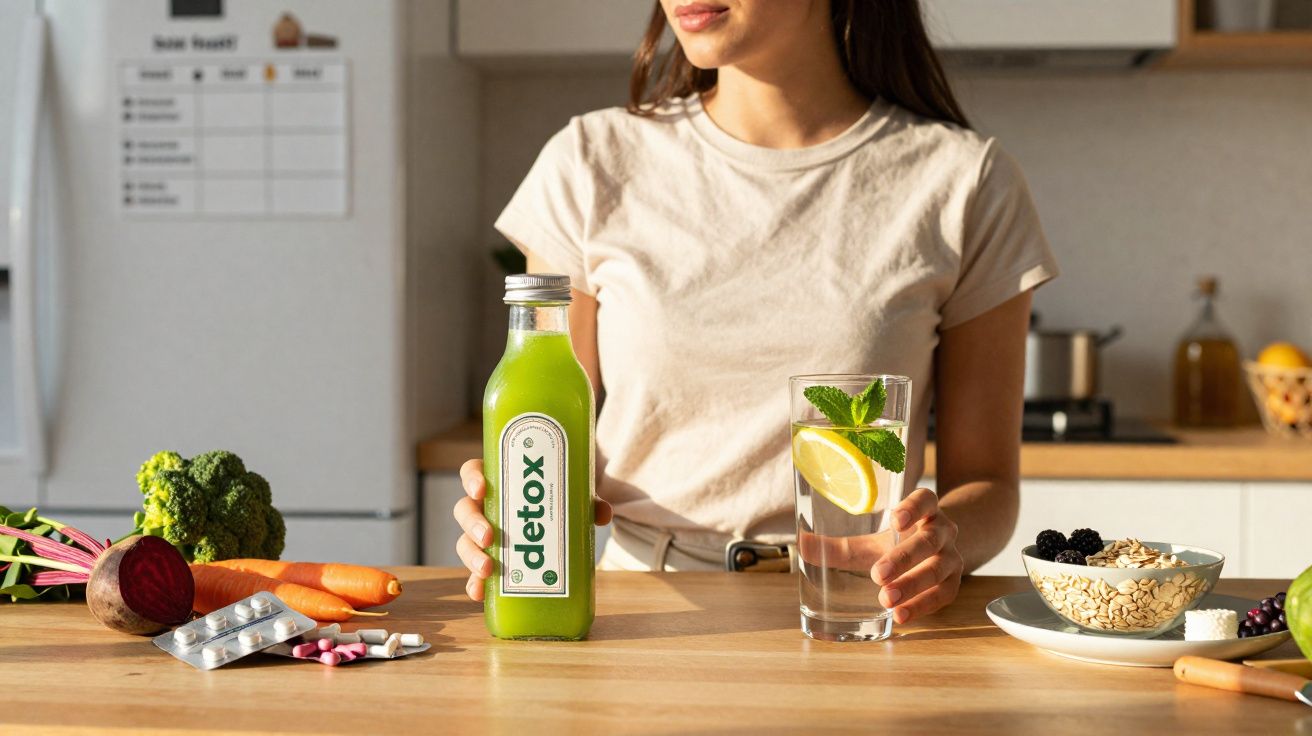
It often begins on a Sunday evening, usually right after you’ve eaten the last square of chocolate you absolutely did not mean to finish. You catch yourself in the dark television screen, your hand hovering over the biscuit tin, and declare: “That’s it. I’m doing a detox.” Perhaps you look it up online. Perhaps you message a mate who once did a nine-day juice cleanse and swore they felt incredible. Before long, your feed is packed with lemon-water dares, vivid green bottles costing more than your monthly rent, and influencers who seem to wake up radiating health.
By Monday morning you are in the kitchen, staring at a blender full of spinach and disappointment, wondering whether this is what well-being is meant to feel like. Your head is pounding, your stomach is in a mood, and coffee has suddenly been cast as the villain. Somewhere beneath the noise, a small voice asks whether any of this is doing anything at all, or whether you are simply punishing yourself for being human. That is where the real story of “detox” starts.
The alluring promise of the detox reset
Detox plans sell a very neat fantasy: that the body is basically a blocked drain, and if you swallow the right fluorescent liquid for a few days, all the “toxins” will be washed away and you will emerge clean, renewed and somehow morally improved. It is such a persuasive idea because it offers a shortcut, a fresh start, a way to erase every late-night takeaway in one triumphant act of willpower. Slow, dull change does not excite us; we want a reset button we can hit on Monday and boast about by Friday. Companies understand this perfectly, and they package the fantasy in glass bottles, pale labels and reassuring handwritten fonts.
The snag is that nobody can ever quite define what these supposed “toxins” are. If you ask a detox brand for specifics, you usually get airy language about “impurities” and “cellular waste” rather than named substances your GP would actually recognise. It sounds scientific until you interrogate it. Then you realise you are paying £7 a bottle to solve a problem that has never properly been identified, let alone shown to exist in the way they claim.
There is also the question of guilt. Detox culture quietly feeds off the idea that we have been “bad” and need to earn our way back to being good. So the more miserable the plan sounds - no coffee, no carbs, no pleasure - the more virtuous it appears. That is not wellness. That is punishment served in a smoothie glass.
What your body is actually doing while you “detox”
The plain truth is less glamorous: your body is already running a round-the-clock detox system, and it does not need a monthly subscription. Your liver, kidneys, lungs, skin and gut are constantly sorting, filtering and moving waste out of your body. You do not wake up suddenly full of “toxins” like an overstuffed bin that has been ignored for a week; it is an ongoing process, ticking over while you scroll, commute and search for the keys you swore you left in your coat. If those organs genuinely stopped doing their job, you would not feel mildly sluggish. You would be in hospital.
That does not mean the body never struggles, or that lifestyle is irrelevant. It means the aim is not to flush out mysterious poisons in a three-day sprint, but to support the systems already doing the work. Think of it less as a deep clean and more as looking after the cleaners. Regular meals, enough water, proper sleep, less alcohol and fewer cigarettes are not glamorous, but they are exactly the sort of thing your liver quietly appreciates.
The “detox symptoms” that sound dramatic but are not mystical
A lot of detox programmes simply ride on top of very ordinary reactions to eating less and drinking less caffeine. Headaches on day two of a juice cleanse? That is usually caffeine withdrawal, not some dramatic “toxin release”. Feeling lighter and “cleaner” by day three? More likely you have lost water, some glycogen and a chunk of what was sitting in your digestive system. Of course you feel different - you have mostly stopped eating.
There is also a curious pride some people take in feeling dreadful at the start, as though misery proves the cleanse is working. We have all heard the boast: “The first two days were awful, so you know it is powerful.” In reality, your body is simply adapting to stress. That grotty, shaky, slightly metallic sensation in your mouth is not magic; it is your system running on empty and waiting for you to stop being daft and feed it like a functioning adult.
The detox trends that waste your time and money
Some detox fashions are merely pointless. Others are full-blown performance art. At the dafter end of the market are detox teas, which are basically laxatives in wellness clothing. Yes, the scales may show a lower number for a short while. No, that is not your body “flushing toxins” - it is just losing water and spending far too much time in the loo, wondering why your stomach sounds like a haunted washing machine.
Then there are foot pads and detox patches that claim to draw “impurities” out through your skin overnight. The brown residue people proudly display in the morning is often nothing more than oxidation, moisture, or ingredients in the pad reacting with sweat. It is a bit like admiring a fake tan stain on your bedsheets and deciding it must mean the product has extracted poisons. The theatre is in the prop, not in your biology.
The glow that comes from cutting out food
Juice-only or soup-only detoxes occupy a slightly trickier space. On one side, they do make people drink more, often eat more vegetables than usual - even if they are blended beyond recognition - and pay closer attention to how they feel. On the other, they strip out protein, fats and proper fibre, and turn eating into a brief performance rather than a long-term relationship. The weight you lose is rarely the sort that stays away once you remember how bread works.
And let us be honest: hardly anyone does this every day. The people who insist they do “a three-day juice reset every month” usually manage it once, perhaps twice, and then quietly drift away feeling a bit embarrassed and a bit relieved. What remains is yet another tale of “failure” that has nothing to do with willpower and everything to do with the fact that the plan is unrealistic for an actual human life that includes birthdays, deadlines and chips.
What genuinely helps your body’s natural detox systems
Here is the awkward bit. The things that truly support the body’s detox processes rarely come with flashy branding or a celebrity discount code. They look a lot like common sense - the sort of advice your nan and your GP would both back without hesitation. Nobody goes viral for saying, “Have a glass of water and go to bed.” But that is the sort of thing that quietly changes how the body feels from the inside out.
Hydration is the least glamorous but one of the most effective habits. Your kidneys need water to filter waste from the blood and pass it out as urine; when you are short of fluids, that whole process slows down. You do not need to force yourself to two litres by lunchtime; steady drinking through the day, especially around salty meals and alcohol, is what helps. Pale-ish urine is a useful rough guide - not crystal-clear like champagne.
Food that helps the clean-up crew
Supporting the liver and gut is about eating real, varied food, not just immaculate green juices. Protein gives the liver the raw materials it needs to process and package unwanted compounds. Colourful fruit and vegetables provide antioxidants that help reduce the everyday wear and tear on your cells - berries, peppers, carrots and leafy greens all count. Fibre from oats, beans, nuts and whole grains keeps digestion moving so waste does not linger longer than necessary.
Alcohol matters too. You do not need to become a saint, but your liver will always prioritise clearing booze before it handles anything else. That big “detox weekend” immediately after a heavy night out? It would be kinder to your body to build in a few alcohol-free days, eat properly before drinking, and alternate drinks with water. Less dramatic, far more useful.
A proper reset also includes sleep and stress. If you are running on too little sleep, living on adrenaline and treating meals like an afterthought, your body is already under strain. Regular rest and a calmer routine will not generate a glossy before-and-after picture, but they do a great deal more for how you feel than any cleanse ever will. And if you have a medical condition, are pregnant, take regular medication, or have a history of disordered eating, restrictive detox plans are especially unhelpful; speaking to a qualified health professional is the sensible route.
Why we keep chasing “clean”
Detox is not only about physical health. It speaks to a deeper wish to feel morally clean, to wipe away not just pizza but also regret, stress and poor decisions. The language is almost religious: purity, sin, cleansing, redemption through suffering. If you have ever staggered through day two of a juice cleanse while fantasising about toast, you will know it feels like penance. You are not merely hungry; you are atoning.
The awkward reality is that life is messy, and bodies are too. Some weeks you will live on cereal and cheese. Some nights you will drink too much and wake up with a mouth that tastes like coins. None of that makes you toxic, broken or in need of a spiritual purge. It simply means you are human, and probably tired, in a world where food and drink are woven into almost everything we do.
Detox culture pretends you can step outside that reality for three saintly days and return perfect. Real progress looks far less theatrical: slightly less alcohol here, a bit more sleep there, an extra vegetable hidden in the pasta sauce. It is deeply unromantic. It also tends to work.
When a reset can help, without the nonsense
There is a way to use that urge for a “reset” without getting pulled into the spectacle. A short, gentle refresh can be useful if you have genuinely gone off track and feel bloated, sluggish and a bit fed up with yourself. Not as punishment, but as a way to interrupt the loop. Think: a few days of regular meals, no takeaways, very little alcohol, early nights, and the phone down an hour before bed. No powders, no potions, no theatrical weigh-ins.
Some people find it helpful to set a simple rule: no alcohol Monday to Thursday, cook at home five nights this week, or have a glass of water with every coffee. The crucial thing is that it must be doable in ordinary life, not just in a Pinterest fantasy. If your “reset” turns you into someone who cannot go out for dinner, cannot share birthday cake and cannot relax, then it is not a reset. It is a short-term prison.
The tiny habits that outlast any seven-day cleanse
If you want a version of detox that actually lasts, focus on changes so small they nearly seem pointless. A ten-minute walk after supper to help digestion and blood sugar. Swapping one sugary drink a day for water or tea. Going to bed half an hour earlier three nights a week. None of these will win you followers on Instagram, but over months they quietly change how your body handles the ordinary load.
There is real relief in admitting that no magic juice is coming to save you - and that you do not need saving anyway. Your body is not a rubbish tip waiting for a bin lorry; it is a living system doing its best with what you give it. The most powerful “detox” is not a product, but the decision to stop swinging between shame and sainthood. Somewhere in the middle lies a way of eating, drinking and living that feels less like punishment and more like respect.
The uncomfortable truth that also sets you free
The truth about detox diets is almost boringly ordinary. The wild claims, the frightening before-and-after images, the idea that your insides are coated in “sludge” that only one particular drink can clear - that is marketing, not medicine. What truly helps does not glow in a bottle and does not arrive in a three-day parcel; it happens gradually, almost invisibly, during weeks when nobody is watching and no hashtag is involved. It looks like broadly consistent choices made by a person who is allowed to be imperfect.
The biggest waste of time is not only the money spent on detox plans; it is the energy spent believing your body is poisonous unless you are suffering. Once you let go of that story, there is room for a kinder one: that you can feel better without punishing yourself, and that health can mean flexibility rather than fear. Perhaps the real cleanse we need is from the notion that wellness must hurt. The next time you find yourself staring at a green juice with a pang of guilt, you might simply put it down, drink some water, eat a proper meal and trust your body to keep doing what it has been quietly doing all along.






Comments
No comments yet. Be the first to comment!
Leave a Comment