
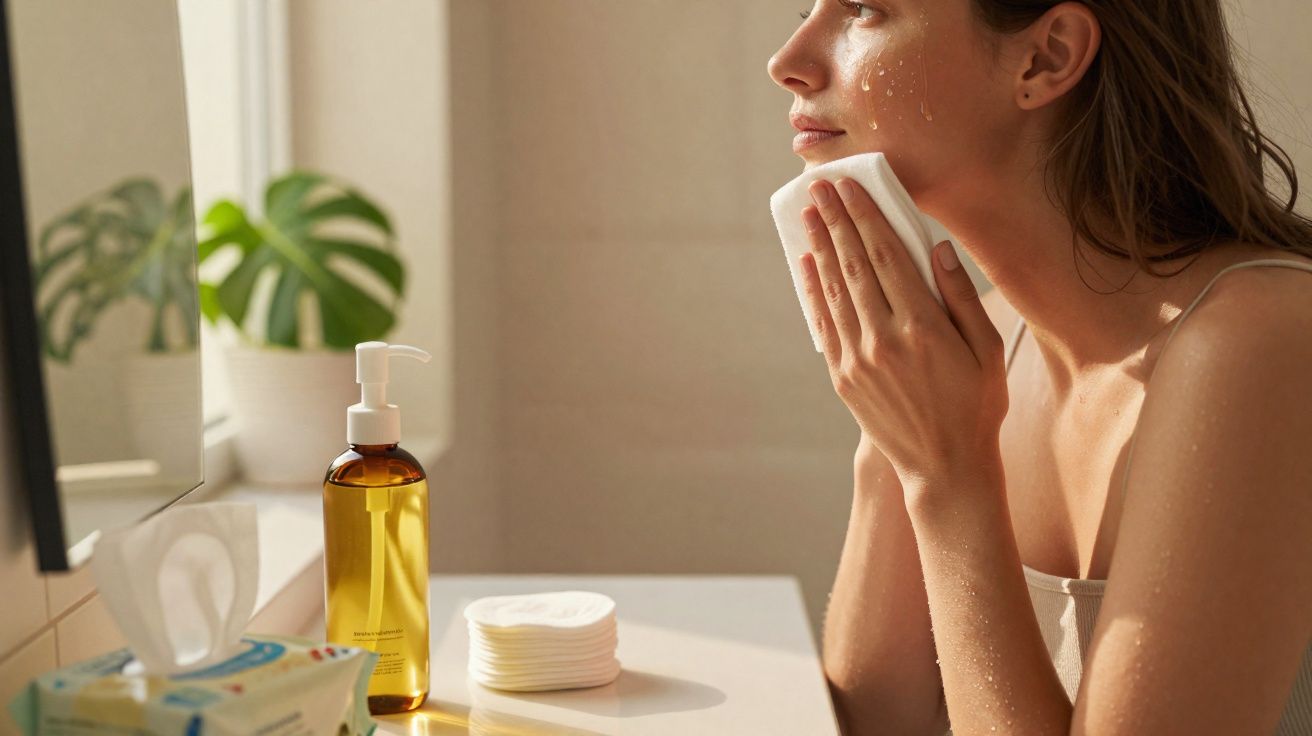
The woman in the bathroom mirror looks exhausted.
Not because of her day, but because of her cotton pad. She presses, rubs and drags her eyeliner off as though she is scrubbing a casserole dish. Mascara smudges, foundation slips away, and her cheeks flush in front of her own eyes. She blames her “sensitive skin” and reaches for the richest cream she owns, as if hydration alone can undo it all.
On social media, the whole routine would take ten seconds under a soft-focus filter. In real life, it feels much rougher. The pad gives off a faint squeak against her skin. Her eyes sting slightly. She tells herself it is normal, that properly clean skin should feel a bit raw.
What she cannot see is the quiet damage building underneath.
Why harsh makeup removal can silently wound your skin
The real issue is usually not the make-up itself. It is the way many of us take it off every night without thinking. For a lot of people, “removing make-up” means rubbing until the cotton pad is spotless. No slip. No patience. Just friction and a vague sense of guilt at 11.43 pm.
That friction is tiny, almost impossible to notice. Even so, your skin records every single pass. Your cheeks flush, the sides of your nose start to sting, and your eyelids ache a little. Over months and years, that routine turns into a low-level assault on the skin barrier. You do not notice the gradual shift from normal skin to “I react to everything now”. But your skin does.
We call it cleansing. Your skin often calls it micro-abrasion.
On a humid Wednesday evening, a 29-year-old graphic designer I spoke to described her routine like a confession. She wore long-wear foundation, waterproof mascara and matte lipstick. She also used only one thing to remove everything: a strong micellar water packed with alcohol and rough cotton pads.
“I rub until my skin squeaks,” she said, laughing, then she stopped. Her cheeks were permanently pink, but not in a healthy, flushed way. Over the previous two years, she had suddenly started to feel burning after showers, become intolerant of products she once loved and develop red patches around her nose that never quite disappeared.
Her dermatologist did not blame hormones or stress alone. He pointed to her nightly battle with make-up. The pads, the pressure and the harsh formula had slowly trained her skin to stay on alert. The diagnosis had a name: chronic skin sensitivity caused by barrier damage.
Here is what is really happening beneath the surface. Your skin barrier is a thin, intricate layer of lipids and cells, much like a brick wall that keeps irritation, pollution and moisture loss at bay. When you remove make-up by rubbing hard with aggressive cleansers, you are not simply lifting off pigment. You are stripping away protective lipids, disrupting the microbiome and creating invisible micro-tears.
The more you strip it back, the more porous that wall becomes. Once the barrier is weakened, irritants and allergens get in more easily. The result is redness, stinging, itchy patches, tightness after washing and even small breakouts that look like acne but are not quite the same. You begin changing products constantly, convinced you are “allergic to everything”, when the problem often started with the way you remove make-up.
It is a bit like sanding the same patch of a wooden table night after night. Eventually, the varnish vanishes. Then the wood itself starts to suffer. Skin behaves in a similar way.
How to remove makeup without punishing your face
The most protective method is almost absurdly gentle. Instead of scrubbing, you let the product do the work. That usually means a balm, oil or milky cleanser that dissolves make-up before you ever reach for a towel. Warm a small amount between your fingers, massage it over dry skin and leave it for 30 to 60 seconds so it can break down pigment and sunscreen.
The massage matters. Small circular movements, especially around the nose and along the jawline, help lift make-up without force. Around the eyes, use your ring finger to glide softly from the inner corner to the outer corner, as if you were smoothing silk. Then add a little lukewarm water to emulsify the cleanser and rinse it away, or use a soft, damp cloth pressed gently to the skin rather than dragged across it.
When the texture is right, the make-up simply lets go. No burning. No squeaking. Just clean, calm skin that does not feel as though it has been through a fight.
This is where daily habits quietly work against us. Many people still rely on face wipes as their main cleanser, even if they would not admit it. They feel convenient, especially after a late night or a long commute. The issue is the combination: rough fibres, repeated rubbing and, often, drying ingredients that remain on the skin instead of being rinsed away.
Pressure is another problem. We underestimate how hard we press. Around the eyes in particular, some people scrub at mascara as though they are erasing pen marks. That is how you end up with broken lashes, irritated eyelids and that stubborn pinkness that no concealer can completely hide.
We have all had that moment when we are exhausted, standing over the sink, deciding whether to “do it properly” or simply sweep a pad across the face and hope for the best. Those shortcut nights, repeated again and again, are what build into long-term sensitivity. Not one dramatic mistake, but a quiet habit.
One dermatologist I spoke to summed it up in a single sentence:
“Your make-up remover should feel like skincare, not punishment.”
Once you start seeing make-up removal as skincare, the rules change. You begin checking labels: fragrance-free if your skin is reactive, pH-balanced if your face feels tight after washing, richer textures if you wear waterproof or long-wear formulas. You also think differently about tools: soft microfibre cloths instead of coarse towels, reusable pads with smooth fibres rather than scratchy cotton.
If you have eczema, rosacea or a history of stinging after cleansing, it can also help to introduce changes one at a time. That way, you can see what actually improves your skin rather than changing everything at once and never knowing what made the difference.
- Choose a gentle oil, balm or milk as your first step, especially if you wear SPF or long-wear make-up.
- Limit cotton pads and wipes to occasional use rather than making them your everyday option.
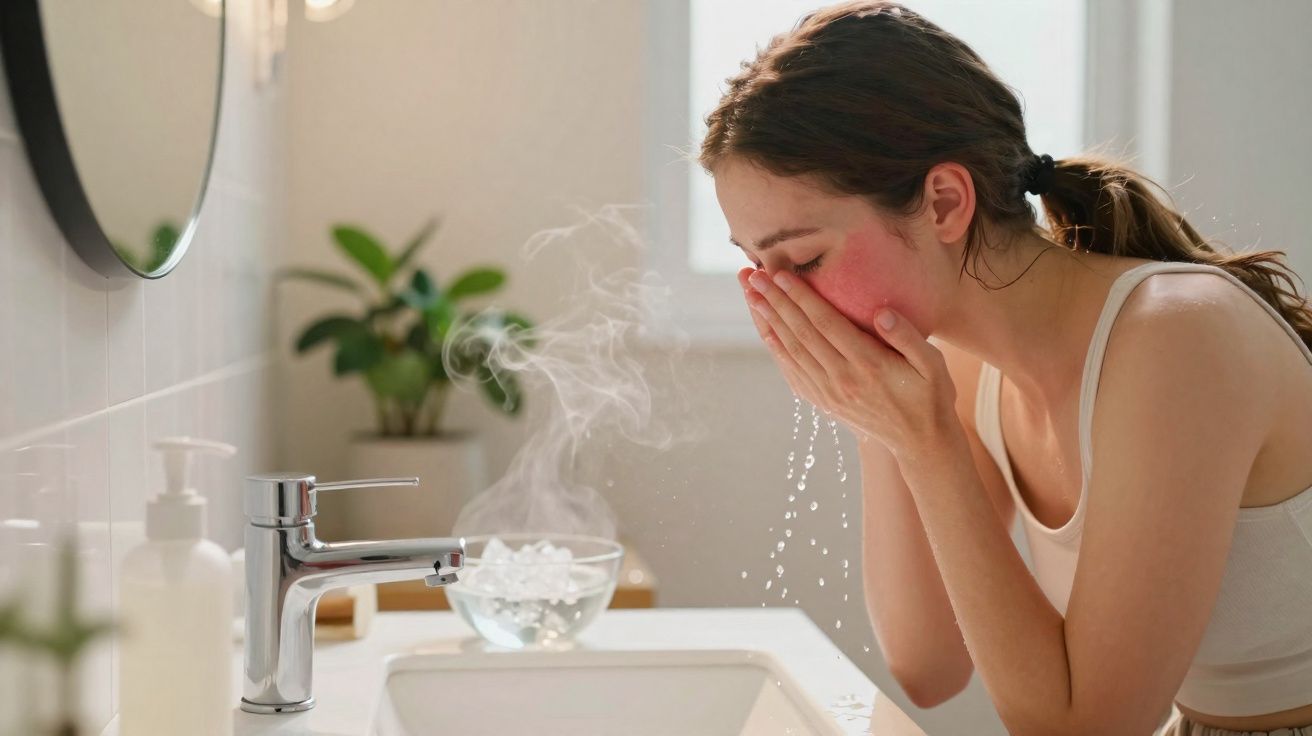
- Use lukewarm water only; hot water makes redness and tightness more obvious.
- Pat your face dry, and do not rub when removing product.
- Pay attention to warning signs: stinging, burning and intense tightness are not what “clean” should feel like.
Rethinking “clean” so your skin can settle down
There is another layer to this story: our relationship with the idea of being “clean”. Many people have been taught that skin should feel stripped, matte and almost squeaky after cleansing. Any trace of slip or moisture is treated as residue. That belief encourages the over-cleansing, double-wiping and triple-rubbing habits that weaken the skin barrier over time.
True cleanliness feels different. Clean skin feels soft, not tight. It keeps a slight, comfortable film on the surface, especially at night. You should be able to move your face without feeling it pull. That may seem wrong at first if you are used to that harsh clean-slate sensation. But that lingering comfort is what helps protect you from sensitivity flare-ups the next day.
When you begin treating make-up removal as a gentle conversation with your skin instead of a battle, the small changes build up. The redness does not hang around quite as long. The burning around the nose settles. The list of products you “cannot tolerate” gradually gets shorter. And that is often where real skincare progress begins.
Quick guide to gentle makeup removal
| Key point | Detail | Why it matters |
|---|---|---|
| Nightly friction damages the barrier | Repeated rubbing with harsh products causes micro-tears and loss of lipids | Helps explain sudden, long-term sensitivity and redness |
| Gentle textures do the heavy lifting | Oils, balms and milks dissolve make-up so you do not need force | Gives you a practical way to cleanse thoroughly without irritation |
| “Clean” should not sting or burn | Comfort after cleansing is a sign of a healthier skin barrier | Offers a simple way to judge whether your routine needs changing |
FAQ
How do I know if my make-up remover is too harsh?
Redness, burning, tightness or stinging after wiping are clear warning signs. If your face feels better ten minutes after applying cream than it does straight after cleansing, your remover is probably too aggressive.Are make-up wipes really that bad for sensitive skin?
Used occasionally, they are fine. Used every night, the rubbing and residue they leave behind can gradually weaken the skin barrier, especially if your skin is already fragile.Can oil cleansing cause breakouts?
It depends on the formula. Non-comedogenic oils and rinseable balms usually do not clog pores when they are fully removed. Breakouts more often happen when cleansing is not rinsed away properly, or when heavy, occlusive ingredients are left on the skin.Is double cleansing necessary every night?
If you wear heavy make-up or SPF, a two-step cleanse can help, provided both steps are gentle. Light make-up or minimal sunscreen often only need one well-formulated cleanser.How long before my skin barrier starts to recover?
With gentler removal and soothing products, many people notice less tightness and burning within two to three weeks. Deeper improvements in sensitivity can take four to eight weeks of consistent care.




Comments
No comments yet. Be the first to comment!
Leave a Comment