
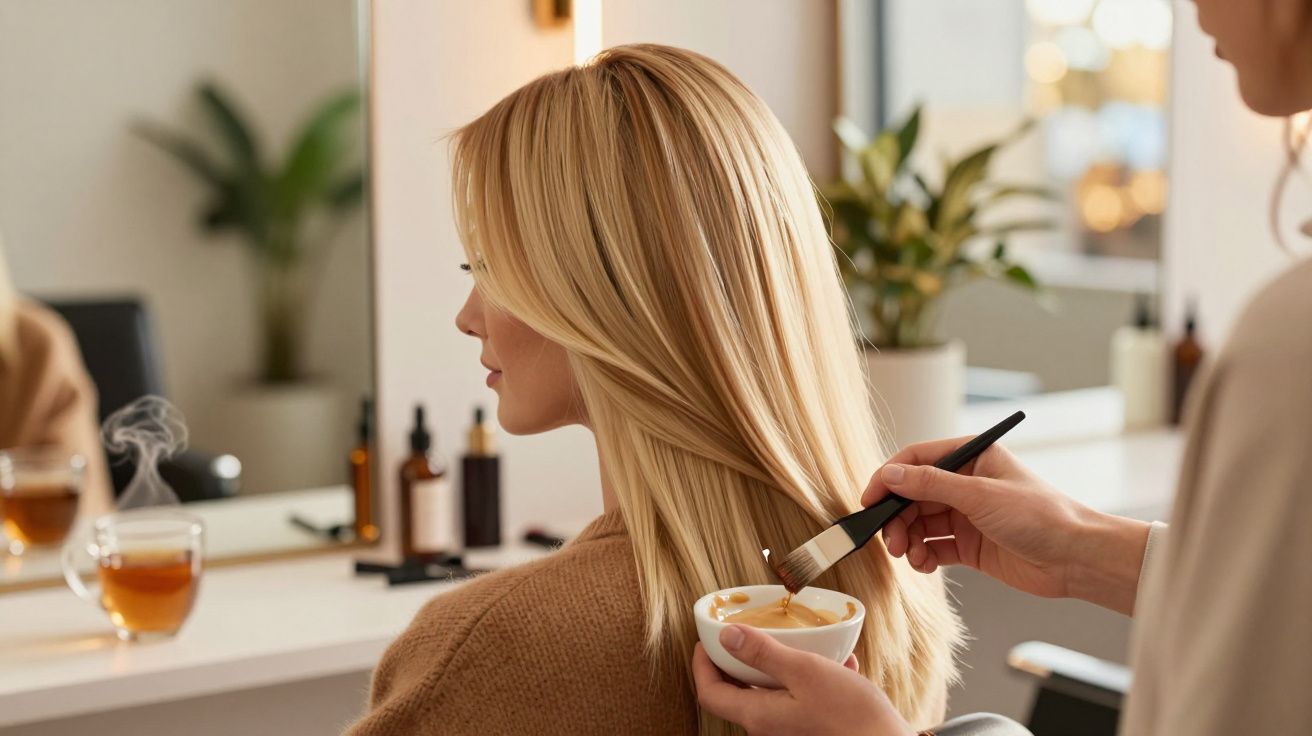
Soft light, muted warmth and absolutely no brassiness: a new blonde is quietly taking over winter colour appointments from London to Los Angeles.
Every year, frosty platinum and sunshine gold jostle for the spotlight. This season, though, a more understated, moodier blonde is edging ahead. Suede blonde-inspired by the plush, velvety tones of natural suede leather-brings brightness around the face without harsh contrast or high-maintenance, stripy highlights.
What is suede blonde and why everyone wants it now
Suede blonde lives in the middle ground between cool beige and gentle honey. It’s not icy, and it’s not overtly golden-and that careful balance is precisely what makes it feel modern.
Picture suede blonde as a softened, mineral-leaning blonde: a diffused brightness that complements winter skin rather than competing with it.
Colourists often describe it as neutral, earthy tones layered over a slightly deeper base. The aim is to mimic how real suede looks in daylight: not a flat cream and not yellow, but a mix of beige, sand and soft fawn.
During winter, skin can appear a little less luminous and hair often looks more matte. In that light, high-contrast blondes can suddenly read as too stark against a paler complexion. Suede blonde solves the problem by adding lightness while keeping the overall effect gentle, wearable and lived-in.
The mood: rich, wearable, not “overdone”
Unlike the platinum waves that dominate summer feeds, suede blonde is designed to feel effortless-appropriate for Monday meetings as much as Sunday brunch. It’s particularly flattering on shoulder-length bobs, long layers and curtain fringes, because the multi-tonal finish reflects light as the hair moves.
The words professionals keep coming back to are “natural”, “mineral” and “velvety”. Nothing should look banded or obviously highlighted. Instead, the root area is softened, the mid-lengths are subtly warmed, and the ends catch the light without tipping into an overly bright, almost neon blonde.
How colourists create suede blonde in the salon
Achieving this shade is less about one magic formula and more about a smart plan. Placement, depth and the final finish matter just as much as which colour line is used.
Suede blonde depends on controlled lightening, softened roots, and a careful blend of warm and cool tones that never slips into orange or dull grey.
Also trending / related reads
- Light line colour is shaping up to be the biggest hair trend for spring–summer 2026
- A former Google and Amazon engineer warns that AI is about to replace half of human software developers
- A hairdresser shares the trick to spacing out colour appointments
- Hairstyles after 70: the best haircut to look younger
- A terrace covered in moss? This under-£3.50 product from Action can replace a pressure washer (and changes everything)
- French nuclear power enters a genuine “golden age” as a third company submits a reactor for safety approval
- Cyprien (from “The 12 O’Clock Quiz”) is close to revealing the “Mysterious Star”-here are the clues for the eighth star
- France claims it already has “the next move” with a world-first designed to protect 9.2 billion phones from quantum attacks
The smudge technique: the secret to soft roots
At the centre of suede blonde is one key method: root smudging (often shortened to a “smudge”). After lifting selected sections, the colourist applies a gloss or toner at the root area and blends it gently into the lighter pieces.
- Roots remain slightly deeper and more natural-looking.
- There’s no harsh start-and-stop line where highlights begin.
- Regrowth appears softer, meaning you can leave longer between appointments.
That smudged transition creates the “where does the colour even start?” illusion that reads as polished and expensive. Rather than obvious foils, you get a seamless melt from scalp through to the ends.
Why less lightening gives a richer result
With suede blonde, the goal isn’t maximum brightness. Colourists will often resist taking hair as light as a client initially requests-and that’s usually for the best.
By preserving depth through the mid-lengths and underneath, the lighter pieces on top look brighter by comparison. If everything is pushed too pale, the result can look flat and one-note; a slightly deeper base adds dimension and that suede-like softness.
| Aspect | Classic bright blonde | Suede blonde |
|---|---|---|
| Overall tone | Very light, often cool or very warm | Beige-neutral with muted warmth |
| Root contrast | Regrowth line often looks obvious | Root area is smudged and blurred |
| Maintenance | Frequent touch-ups | Longer gaps between appointments |
| Effect in winter light | Can appear stark or flat | Soft, velvety depth with movement |
Who suede blonde suits best
This trend is more adaptable than it looks. Because it’s built around balance rather than extremes, suede blonde can be adjusted for different natural shades and a wide range of skin tones.
By skin tone
- Fair skin: A neutral beige with a whisper of warmth helps prevent the face looking washed out.
- Medium skin: Slightly deeper caramel-beige ribbons add glow without clashing with undertones.
- Deep skin: A deeper suede blonde-closer to bronde-can frame the face while keeping the roots rich and dark.
One rule tends to hold true: the shade should echo something you already have in your natural hair or brows. That’s what keeps the result believable.
By starting hair colour
If you’re naturally blonde, suede blonde is often straightforward-think partial highlights paired with a gloss. Brunettes can absolutely achieve it too, but typically across several carefully paced sessions to protect the hair fibre.
Many colourists are stepping away from dramatic, one-visit transformations and favouring gradual, layered lightening that keeps hair feeling soft and touchable.
A note on consultations (and why the patch test matters)
Because suede blonde relies on nuance, your consultation is where the look is truly made. Expect your colourist to talk about your natural base, previous colour history, and how warm or cool your hair tends to lift.
In the UK, reputable salons may also recommend (or require) a patch test before lightening and toning services, particularly if you’re new to the salon or trying a different colour line. It’s a small step that can prevent a big problem-and it helps your appointment run smoothly.
Keeping suede blonde glossy through winter
Cold weather, central heating and steamy showers can lift the cuticle and dull blonde tones quickly. Because suede blonde is all about shine and movement, aftercare isn’t optional-it’s part of the look.
At-home care that makes a visible difference
- Apply a hydrating mask once or twice a week to combat dryness from lightening and heat styling.
- Alternate a gentle, sulphate-free shampoo with a colour-safe formula to reduce toner fade.
- Keep purple shampoo to occasional use so the shade doesn’t drift into a flat grey.
- Always use heat protection before blow-drying or straightening, especially on lightened ends.
Some salons now offer “detox” or chelating treatments to remove mineral build-up from hard water. For suede blonde, these can bring back clarity and brightness without any additional lightening.
What to ask for at your next appointment
People often arrive with an Instagram photo and leave disappointed because the language used in the chair is too vague. With suede blonde, being specific helps your colourist tailor the idea to your hair.
Bring photos that show the tone, the depth at the root, and the placement. Useful words include “muted”, “beige”, “smudged roots” and “soft contrast”.
You might ask for:
- a neutral-beige blonde with subtle warmth around the face
- a root smudge or shadow root to soften regrowth
- highlights that are only a few levels lighter than your base, rather than a dramatic leap
- multi-tonal lowlights to avoid a flat, single-colour finish
It’s normal for the service to include lightening, a gloss or toner, and often a bonding treatment to help protect the hair. With suede blonde, healthy-looking texture is as important as the colour itself.
Key terms you’ll hear in the chair (suede blonde keywords)
Salon jargon can sound intimidating. Knowing a few terms makes it easier to steer your appointment and understand the plan.
- Gloss / toner: A demi-permanent colour used to refine tone and boost shine without heavy lightening. Essential for getting beige and warmth just right.
- Root smudge / shadow root: A blurred, slightly deeper root that melts into lighter lengths for a softer grow-out.
- Balayage: Hand-painted lightening for a soft, sun-kissed result rather than foiled stripes.
- Dimension: The interplay of lighter and darker strands that stops hair looking like one solid block of colour.
Risks, trade-offs and realistic expectations
Even though suede blonde looks softer than full platinum, it still involves chemical lightening. Some dryness is possible-especially on fine hair or hair that’s already coloured. A skilled colourist will recommend realistic lift levels and may suggest building towards the shade over a couple of appointments.
There’s also an ongoing time commitment. Root smudges and toners fade, usually over six to eight weeks. If your natural hair is significantly darker, regular gloss appointments help keep that balanced suede tone on track. Skipping maintenance won’t ruin everything, but the colour may drift warmer or cooler than intended.
For anyone who likes flexibility, suede blonde is ideal for subtle seasonal adjustments. You can keep the same base, brighten a few pieces for spring, then tone them back to a deeper beige ahead of autumn. The overall story stays consistent-only the lighting changes.






Comments
No comments yet. Be the first to comment!
Leave a Comment