
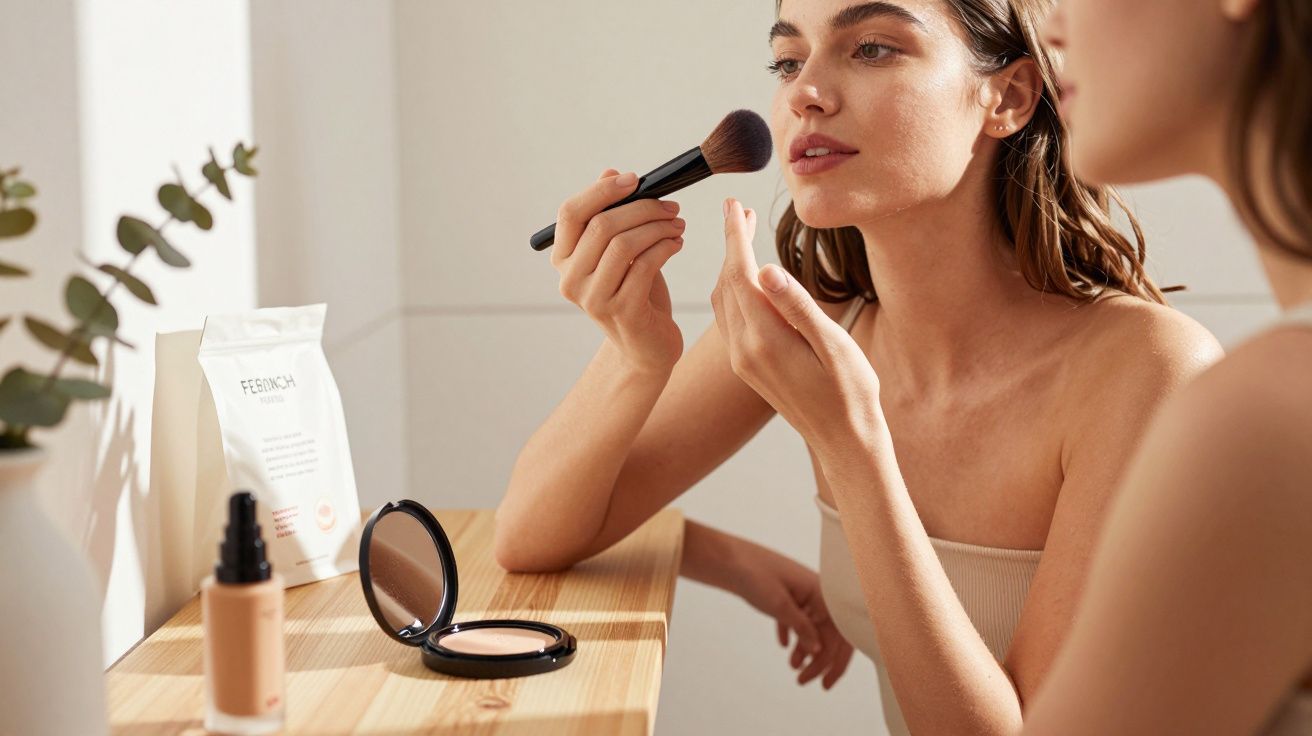
What began as a side project from a skincare-first brand has become a genuine talking point: a 100% naturally pigmented compact powder that claims eight hours of comfortable wear with a matte, even-looking complexion. Sold in a refillable case, it is reportedly being bought at a pace of one unit every 20 seconds in France.
La Rosée compact powder: the skincare brand’s powder that outgrew foundation
Known in France for gentle, pared-back skincare, La Rosée extended into colour cosmetics in 2025 with a small “care-make-up” range. The move was a measured gamble-and it paid off quickly. Their compact powder, designed more like a treatment step than a simple finishing veil, rose to the top of French chemist (pharmacy) sales for tinted powder.
Instead of behaving like a heavy base, the powder is intended to sit lightly on the skin: offering coverage while still feeling like part of a skincare routine. Many wearers now describe it as a “replacement foundation” for day-to-day use, keeping liquid foundation mainly for evenings out or special occasions.
This compact is designed to soften the look of imperfections, rein in shine and keep skin feeling comfortable across a full working day-without the mask-like effect often associated with classic foundation.
In French pharmacies, it is priced at around €18.90 (roughly £16), placing it firmly in the middle: more than many supermarket powders, but less than a number of premium counter options.
How a pharmacy powder became a bestseller
Its rapid rise comes down to a few converging trends. First, it is anchored in the pharmacy channel, which carries significant credibility in France for skincare and dermo-cosmetics. Secondly, it meets the direction many routines are taking: lighter textures, fewer layers, and products that aim to treat as they beautify.
La Rosée positions it as a “compact care powder” with an ultra-fine, weightless feel-make-up results with skincare-like sensorial comfort. The brand states that one unit sells every 20 seconds, making it the leading tinted powder in French pharmacies.
A formula built around active ingredients
Much of the appeal lies in a formula designed to deliver several benefits at once: a matte finish, a natural look, comfortable wear, and more responsible sourcing. The pigments are described as 100% of natural origin, intended to help minimise the risk of irritation and to reassure consumers who prefer to avoid synthetic colourants.
La Rosée highlights the following ingredients:
- Mica – adds a soft radiance without a thick, overtly “make-up” result.
- Zinc PCA – recognised for anti-seborrhoeic properties and used to help regulate excess sebum.
- Upcycled rice starch – absorbs shine and supports a smoother-looking finish.
- Hyaluronic acid – helps maintain hydration for a more comfortable feel on the skin.
- Organic plant oils – provide nourishment, helping the powder avoid catching on dry patches.
The formula is also presented as non-comedogenic, an important reassurance for people prone to breakouts who often avoid powder for fear of clogged pores.
The aim is not “camouflage at all costs”, but skin that still looks like skin-just with less visible pores and reduced shine.
Choosing a shade (and avoiding the “powder line”)
To keep the finish as seamless as intended, shade choice matters. When testing at home, it helps to check the colour in natural daylight and blend down the jawline towards the neck so the face and body stay consistent. If you are between two shades, a slightly lighter option tends to read more like “even skin”, while a deeper tone can double as a soft bronzing effect.
Skin prep makes the difference
Although the formula includes hydrating and nourishing components, powder still sits best on well-prepped skin. Applying a moisturiser (and letting it settle) reduces the chance of the product clinging to dehydration. This is especially relevant around the nose, chin and any areas where skin texture can look more pronounced under mattifying products.
Application: from full-face veil to targeted touch-ups
Used thoughtfully, the powder can replace foundation on days when skin is behaving well, or it can top a light base for extra polish. La Rosée recommends applying it to clean, well-moisturised skin to help it glide on evenly rather than catching on dry areas.
Step-by-step for an even complexion
The brand’s method is simple and controlled:
- Use a fluffy brush and pick up a small amount of product.
- Tap off the excess to prevent overloading the skin.
- Buff gently in circular motions from the centre of the face outwards.
- Build coverage gradually where redness or marks are more noticeable.
It can also be used only where needed-on the T-zone, for example, or on specific areas-acting as a precise mattifier over skincare, a tinted serum, or a light BB cream.
For a sun-kissed effect, La Rosée suggests selecting a warmer shade and sweeping it where the sun would naturally hit: the forehead, nose, cheekbones and chin, much like a bronzing powder.
What clinical tests say about shine and texture
To support the performance claims, La Rosée reports clinical testing results. According to the brand, shine was reduced by 47% from the first application. Every tester reportedly observed a more matte complexion, smoother-looking skin texture, and a more even tone with a naturally luminous finish.
Eight hours of wear, nearly half the shine reduced on contact, and a finish designed to read as skin-not make-up.
The eight-hour wear claim mirrors a typical working day. Those who need longer-lasting results-particularly in heat or humidity-may still prefer a top-up in the afternoon or to pair it with a setting spray.
Refill, reuse: the eco angle
The compact is designed to be refillable, reflecting the wider shift away from single-use plastic packaging in beauty. Buying refills rather than replacing the entire compact each time reduces packaging waste and can lower the cost over the long term.
| Feature | Benefit for users |
|---|---|
| Refillable compact | Less waste, lower long-term cost |
| Natural-origin pigments | Appeals to those seeking “cleaner” formulas |
| Non-comedogenic | Better suited to acne-prone and sensitive skin |
| Active skincare ingredients | Comfort and care while wearing make-up |
Who this kind of powder is really for
This hybrid format is aimed at people who want streamlined routines and multi-tasking formulas. Those with combination or oily skin are likely to appreciate the mattifying, pore-blurring effect most. People with dry or mature skin may enjoy the hydration-focused ingredients too, but will generally get the best result by prepping with a richer moisturiser to avoid a visibly powdery finish.
Anyone looking for full, high-coverage foundation results may find the effect too natural. It is better suited to those who want a more unified tone and softened imperfections rather than total concealment.
Real-life use scenarios
On a busy weekday, a routine might be: hydrating serum, light moisturiser with SPF, then a sweep of the La Rosée powder. The payoff is speed-fewer layers, fewer textures, and less chance of midday shine.
For evenings out, some wearers keep their usual liquid foundation and apply the powder with a lighter hand only on the nose, forehead and chin. Used this way, it works as an on-top mattifier rather than a full extra layer, helping to avoid a cakey look under artificial lighting.
Key terms worth unpacking
Two ingredients commonly prompt questions: Zinc PCA and upcycled rice starch. Zinc PCA is the zinc salt of pyrrolidone carboxylic acid; in skincare it is used to help manage sebum and reduce the greasy film that can develop on the surface, and it is widely found in products formulated for oily and acne-prone skin.
Upcycled rice starch refers to a powder derived from rice by-products that might otherwise be discarded. In cosmetics, it functions as a natural mattifying and texturising agent-absorbing oil while supporting waste reduction across the supply chain.
Together with hyaluronic acid, which helps retain water in the upper layers of the skin, these choices reflect a broader shift: make-up borrowing from skincare science to deliver comfort and performance with a lighter, more breathable look-persuading some people to quietly retire their everyday foundation.


Comments
No comments yet. Be the first to comment!
Leave a Comment