
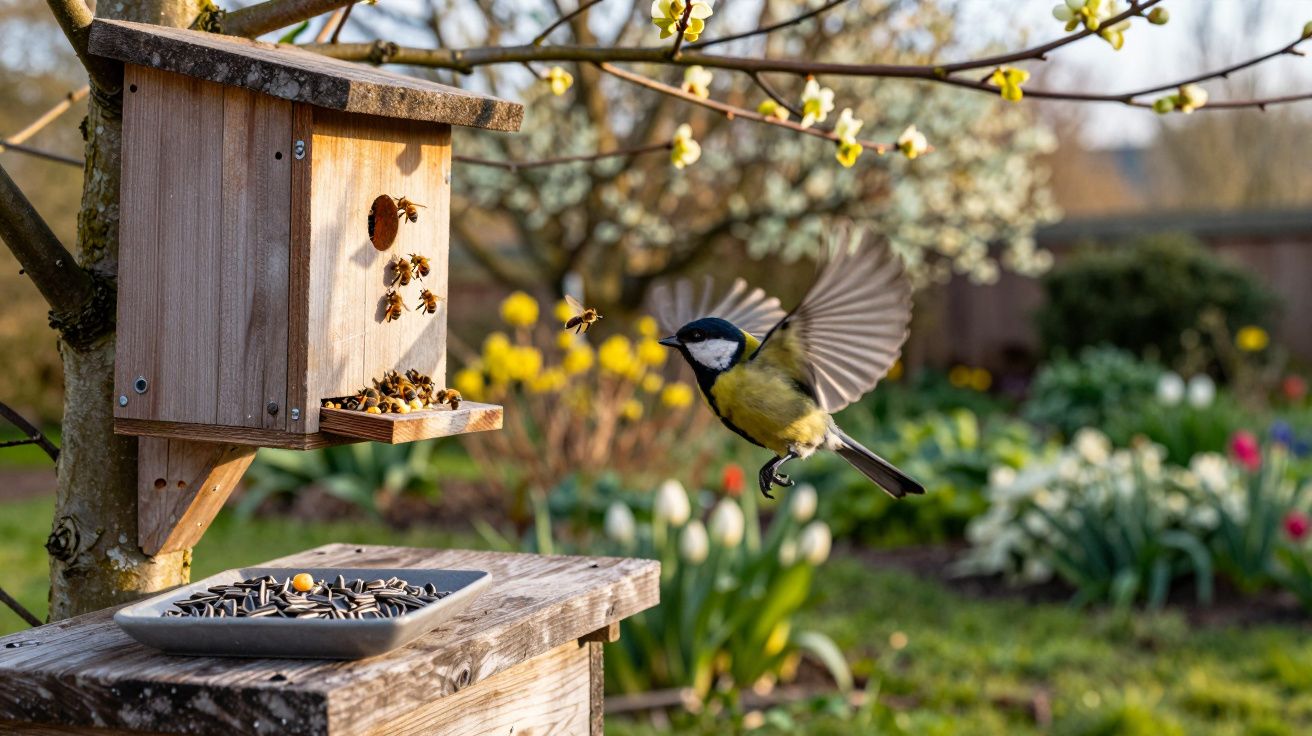
While many of us are still waiting for the first properly mild days, a quiet race is already under way. Invasive hornet queens are on the move, scouting fresh nesting sites, at exactly the same time as a small, familiar garden bird starts claiming breeding territory. If you act thoughtfully now, you can give your honey bees a genuine head start-without poisons and without spending a fortune on traps.
Why March matters in the fight against the Asian hornet (Vespa velutina)
The Asian hornet (Vespa velutina) has spread quickly across much of mainland Europe and is now being recorded in more and more places, including parts of the United Kingdom. It preys heavily on honey bees and other pollinators, often hovering at hive entrances and picking off returning foragers. A single large colony can consume several kilograms of insects over a season.
The decisive window opens when overwintered queens become active in late winter and early spring. At that point they look for sheltered spots-within hedges, sheds, outbuildings, roof eaves and similar nooks-and begin a small “primary nest”. If the queen makes it through this early stage undisturbed, the colony can expand into a mature nest with thousands of workers later in the year.
If you only react in high summer, you are up against a well-drilled force. If you start in March, you disrupt the colony before it properly exists.
Most specialists agree that complete eradication of the Asian hornet is unlikely. Its adaptability, along with the lack of a dedicated natural predator, makes that goal unrealistic. All the more interesting, then, is a native ally already living in many gardens: the tit.
Tits: an underestimated garden ally against Asian hornet pressure
Blue tits, great tits and coal tits are among the most common garden birds. They may look unassuming, but in spring they do a huge amount of behind-the-scenes work: they raise their chicks on a diet dominated by insects, larvae and spiders.
During the peak feeding period, a single tit family can make several hundred trips a day between nest and foraging ground. That translates into thousands of caterpillars, beetle larvae and other small invertebrates being removed from the garden. And if a hornet nest sits within range, hornet larvae can also end up on the menu-particularly when they are exposed or the nest is already weakened.
Ornithologists regularly note great tits investigating hornet nests. They tend to peck at damaged or abandoned nests, pulling out larvae and scavenging dead insects. It is not dramatic, but it can reduce the number of larvae that survive to become new queens later in the season.
Tits won’t solve the hornet problem, but they can push it down a notch-and that notch can make a real difference to bee colonies.
It remains important to keep expectations realistic. Tits are opportunistic hunters: they take what is plentiful and easy to reach. Even so, a strong local tit population increases overall predation pressure on hornet brood where access is possible, which can weaken reproduction over time.
Turn your garden into a tit magnet by March
If you want tits to be established when March arrives, the essentials are territory, shelter and nest sites. If you only start supporting them in April or May, many birds will already have settled elsewhere.
Choosing and positioning nest boxes properly (for tits)
- Material: untreated, durable timber (for example larch or oak); avoid flimsy decorative boxes
- Entrance hole: 26–32 mm diameter (around 25–30 mm suits most tit species)
- Height: 2–5 metres above ground-well above easy reach for cats
- Aspect: ideally east or south-east, sheltered from strong winds and harsh midday sun
- Timing: install by mid-March at the latest, and ideally in February
Hang the box with a slight forward tilt so rain does not run inside. Nest boxes on pale, sun-baked walls can overheat; a position in a tree or dense shrub is usually kinder.
Feeding strategy: help early, then taper off on time
In late winters when natural food is scarce, targeted supplementary feeding can make a difference. Keep it simple and good quality:
- sunflower hearts or whole sunflower seeds
- unsalted nuts, such as tested, high-quality peanuts
- plant-based fat balls or “tit rings” without palm oil
From the end of March, gradually reduce high-energy winter foods and then stop. This encourages birds to switch to hunting insects-exactly what supports the broader aim, because only insect-hunting birds will ever take hornet larvae when opportunities arise.
A living garden beats a sterile lawn
Tits need structure: cover, foraging surfaces and a steady supply of invertebrates. If every leaf is cleared and every corner is “tidied”, you remove precisely what sustains them. A more effective approach is a blend of managed areas and wilder patches.
| Garden element | Benefit for tits |
|---|---|
| Hedges of native shrubs (for example hazel, elder, hawthorn) | Shelter, insect-rich habitat, later-season berries |
| Mature trees, dead wood, log or branch piles | Natural cavities; overwintering sites for insects |
| Wildflower meadow instead of close-cropped lawn | More insects; less disturbance from constant mowing |
| Shallow water dish or small pond | Drinking and bathing, especially in dry springs |
Avoiding pesticides is central. Chemicals do not only reduce the insects tits rely on; residues can also accumulate in birds themselves. A “perfect” lawn without dandelions and daisies is, from a tit’s perspective, a desert.
What tits can do-and what they cannot
In the best case, several pairs of tits will use your garden as their breeding territory. When that happens, they forage continuously and noticeably reduce insect numbers around the house. Their diet commonly includes:
- caterpillars that damage fruit trees
- aphids and other sap-sucking pests
- small spiders and beetle larvae
- hornet larvae or dead hornets, when easily accessible
This broad hunting behaviour does more than help honey bees: it supports overall garden balance. However, the Asian hornet remains highly resilient. It can fly long distances, establish nests elsewhere, and persist regardless of what happens in one garden.
The tit is one layer of a strategy-not the whole strategy. If you keep bees, you need multiple lines of protection at once.
How beekeepers can integrate tits into an Asian hornet protection plan
Beekeepers often ask how to use natural helpers without drifting into false reassurance. A sensible approach combines several measures:
- put up tit nest boxes within 20–50 metres of the apiary
- plant or maintain hedges and shrubs as visual screening so hornets find hives less easily
- check tall trees and rooflines for nests, especially from early summer onwards
- report and arrange removal of large nests via specialist contractors or local services
Tits reduce pressure indirectly by cutting hornet brood in places and moments where it is exposed. Professional nest removal targets established colonies once they have already gained strength. Used together, these measures complement each other well.
Two practical extras that strengthen your March advantage
First, make monitoring part of the routine. Walk your garden and nearby hedges on mild March days and look for repeated queen flight paths to sheds, eaves or dense shrubs. Early detection of a primary nest is far easier to deal with than a mature nest later in summer, and it also helps you decide where screening vegetation or water points will do the most good.
Second, keep nest-box hygiene in mind for the long term. After the breeding season (typically autumn), clean out old nesting material and check drainage and fixings. A well-maintained box is more likely to be occupied early next spring-right when early predation pressure matters most.
Risks and limits: where caution is needed
If you encourage tits, be aware of a few pitfalls. Nest boxes placed too close together can make it easier for predators such as cats or martens to target them. Climbing ladders to inspect boxes carries obvious fall risks. Over-enthusiastic feeding can also lead to dirty feeders where disease spreads quickly-cleanliness and moderation matter.
A separate, serious risk arises when householders attempt to destroy hornet nests themselves. Large nests high in trees or attached to buildings can be genuinely dangerous. Proper protective equipment, experience and, in some cases, permissions are required. Tits cannot replace that work; they only take a little pressure off the system.
How your garden changes over the years
If you shape your garden consistently to support tits over several seasons, you will often notice a quiet shift: more birdsong at dawn, fewer heavy aphid outbreaks in early summer, and a richer mix of insect life. Hornets may still appear, but huge colonies are less likely to establish right on the house when the habitat is less favourable and early losses accumulate.
Think of it as a set of small adjustments working together. Every tit that removes a handful of hornet larvae, every hedge that nudges hornet activity away from the immediate hive area, and every queen or primary nest found early changes the starting conditions. The Asian hornet will not vanish, but the load on honey bees and other pollinators can be reduced.
If you care about bees, the solution is not only at the hive. A simple nest box in a tree, a wilder strip at the back of the garden and a shallow dish of water can all influence how much stress your colonies face in summer. The tit’s contribution is not flashy-it is quiet-and that is precisely why it can be so effective.





Comments
No comments yet. Be the first to comment!
Leave a Comment