

After a summer of sunshine, sea air and hot tools, fine hair can look frazzled by the time autumn arrives. One smart bob cut, however, offers a stylish reset without forcing you into a dramatic chin-length chop.
The swinging bob is steadily turning into the haircut of choice for anyone whose ends feel dry, brittle and limp at the close of summer. Backed by stylists and embraced by celebrities, this bob is designed to restore bounce, shine and the illusion of volume-while still keeping a little length through the front.
What makes the swinging bob different
At a quick glance, the swinging bob could pass for another polished short cut. Look more closely and it’s clearly engineered with delicate, fine hair in mind, using shape and internal technique rather than blunt weight.
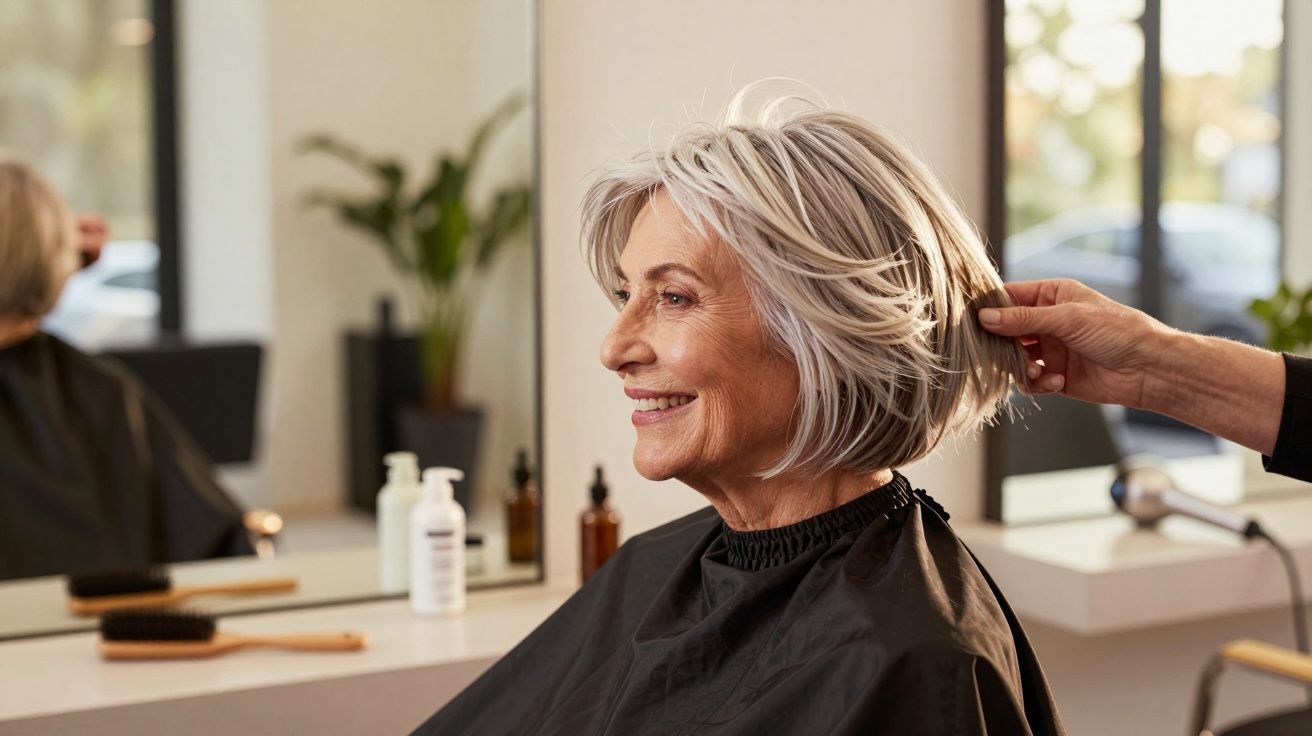
The swinging bob is a layered, slightly angled bob that trims away damaged length while adding lift and “swing” at the back.
Rather than being cut all to one length, the back is built with carefully placed internal layers. Those layers create a rounded, light silhouette, helping thin hair appear fuller and more buoyant. From there, the outline subtly travels forward, leaving longer sections to frame the face.
That gentle forward angle achieves two things at once: it keeps the overall finish soft and flattering, and it lets your hairdresser remove several centimetres where hair is typically most parched and split-right at the ends.
Why early autumn is the perfect moment for a reset
By the start of autumn, it’s common to notice hair feeling coarse, snaggy and more prone to snapping. UV exposure, salt water, chlorine and wind all pull moisture from the cuticle. Because fine hair has a smaller diameter, that wear and tear tends to show faster than it does on thicker strands.
Most stylists will tell you the same thing: no treatment mask can genuinely mend split ends. If the ends are split, the practical fix is to remove them. The swinging bob offers a tidy, on-trend way to do exactly that-without sacrificing style.
How the swinging bob is structured in the salon
Hair professionals often describe this shape as both clean-lined and gentle: the cut is precise, but it moves easily. A typical swinging bob is constructed like this:
- Back of the head: generously layered to create lift and a visible “swing” as you move
- Side view: subtly angled forward, with the nape shorter and the front slightly longer
- Front pieces: longer strands around the jawline or just below, adjusted to suit face shape
- Parting: most often worn to the side for a glamorous, slightly asymmetric effect
- Finish: relaxed, soft waves rather than tight curls or ultra-straight styling
On fine, damaged hair, a layered back reduces heaviness where it matters, while the longer front keeps a flattering frame around the face.
In practice, many hairdressers style it with a side parting and big, brushed-out waves-the kind of red-carpet finish that amplifies the movement that inspired the name “swinging bob”.
Why the swinging bob suits fine, damaged hair
Fine hair commonly sits flat at the roots and looks wispy at the ends. A traditional blunt bob can be sleek, but it may also highlight a lack of density. The swinging bob is intended to rebalance that, adding shape where fine hair tends to collapse.
Key benefits for fragile hair
| Hair concern | How the swinging bob helps |
|---|---|
| Split, dry ends | Enough length is removed to cut away the most compromised areas. |
| Lack of volume | Back layering creates lift and a rounder, fuller-looking outline. |
| Flat roots | A shorter nape plus layers encourages the hair to spring up rather than fall flat. |
| Ageing hair | Movement and face-framing pieces soften features and create a fresher effect. |
This cut also works particularly well on naturally straight hair or hair with a slight wave. Even a small bend in the strand is enough to activate the layers-especially if you style with a round brush or a curling iron.
How it compares with other trending bobs
Right now, there’s no shortage of bob variations: micro bobs, French bobs, sharp razor-cut bobs and ultra-short nape bobs all have their moment on catwalks and social feeds. Each shape solves a different styling brief.
Nape bob for a bold neckline statement
A nape bob, cropped high at the back of the neck, is ideal if you’re happy to go shorter and you want to show off your posture and neckline. It’s especially flattering on oval or longer faces because it keeps attention on the bone structure and elongates the overall silhouette.
Compared with that option, the swinging bob tends to feel less risky. It reveals less of the neck, and the added length through the front provides more flexibility-particularly if you’re hesitant to go very short in a single appointment.
Bombshell lob for keeping more length
At the longer end of the spectrum sits the bombshell lob (a longer bob), usually finishing around the collarbones or just above the shoulders. It can suit rounder or more mature faces because the length creates a vertical line that can visually slim and lift the face.
Think of the swinging bob as the in-between: shorter and bouncier than a lob, yet softer and more forgiving than a sharp, blunt bob.
If your ends are extremely fragile, a stylist may recommend stepping down gradually-moving from long hair to a bombshell lob first, then progressing to a swinging bob once you feel comfortable losing a little more length.
Who should ask for a swinging bob
This cut can be adapted to many face shapes, but it’s particularly flattering for:
- Fine to medium hair that looks short on volume
- Hair stressed by sun exposure, colouring, or frequent heat styling
- Oval, heart-shaped or softly square face shapes
- Anyone who prefers movement and softness over rigid, straight lines
People with very curly or coily hair can still wear a version of it, but the approach needs adjusting. The angle usually has to be gentler, and layers must be placed carefully to avoid a triangular outline. Seeing a stylist experienced with textured hair makes a noticeable difference.
Styling tips to keep the swinging bob “swinging”
The cut creates most of the shape, but the styling keeps it looking intentional and healthy:
- Apply a lightweight volumising mousse or root spray to damp hair.
- Blow-dry with a round brush, lifting at the back of the head to encourage height.
- Add loose waves with a large-barrel curling iron, directing curls away from the face.
- Finish with texturising spray through the mid-lengths for movement, avoiding heavy oils at the roots.
If your hair is recovering from damage, heat protection is non-negotiable. A thermal spray before blow-drying or curling helps reduce fresh breakage-particularly on the fragile face-framing sections.
Maintenance, trims and realistic expectations
Because the swinging bob relies on its silhouette, upkeep matters. Most stylists suggest a trim every 6–8 weeks so the shape stays crisp and split ends don’t creep up the hair shaft and undo the progress.
It’s also worth being clear about what the haircut can and can’t do. It won’t increase the number of hairs on your head, so it can’t create true density. What it can do is redistribute weight and improve movement, helping fine strands sit closer together so the hair looks thicker. Pair that with gentle care-less aggressive shampooing, reduced heat, and occasional strengthening treatments-and the visual improvement can still feel striking.
A helpful addition to your routine is to book your trim alongside a gloss or bond-supporting treatment (where suitable). While split ends must be cut off, maintaining smoother lengths between appointments can make the shine and “swing” more consistent.
Key terms: layers, graduation, and how to ask for a swinging bob
Two words come up repeatedly with this haircut: layers and graduation. Layers refer to sections cut at different lengths within the interior to create texture and adjust bulk. Graduation is the gradual build-up from shorter to longer lengths-often used at the nape to lift the outline.
The swinging bob uses both ideas: graduation at the back creates elevation, while soft layers stop the shape looking heavy or boxy. If you’re nervous about a big change, your stylist can start with a longer, subtler swinging bob and then sharpen the angle and shorten the back over a couple of appointments.
To make the consultation easier, ask for:
- A slightly angled bob with a graduated, layered back for lift
- Longer face-framing pieces that sit around the jawline (or just below)
- A finish that supports loose waves and movement rather than a blunt, solid edge
Picture two outcomes. In the first, long hair that’s been faded by the sun is left as it is, and the split ends continue travelling upwards, making the whole length look increasingly sparse. In the second, the same person chooses a swinging bob, loses several centimetres, and gains a compact, glossy shape. The amount of hair hasn’t changed-but the second option almost always appears healthier, thicker and more controlled.
For anyone dealing with fine, damaged hair, that exchange-slightly less length for noticeably more life-is exactly what the swinging bob is made to deliver.




Comments
No comments yet. Be the first to comment!
Leave a Comment