
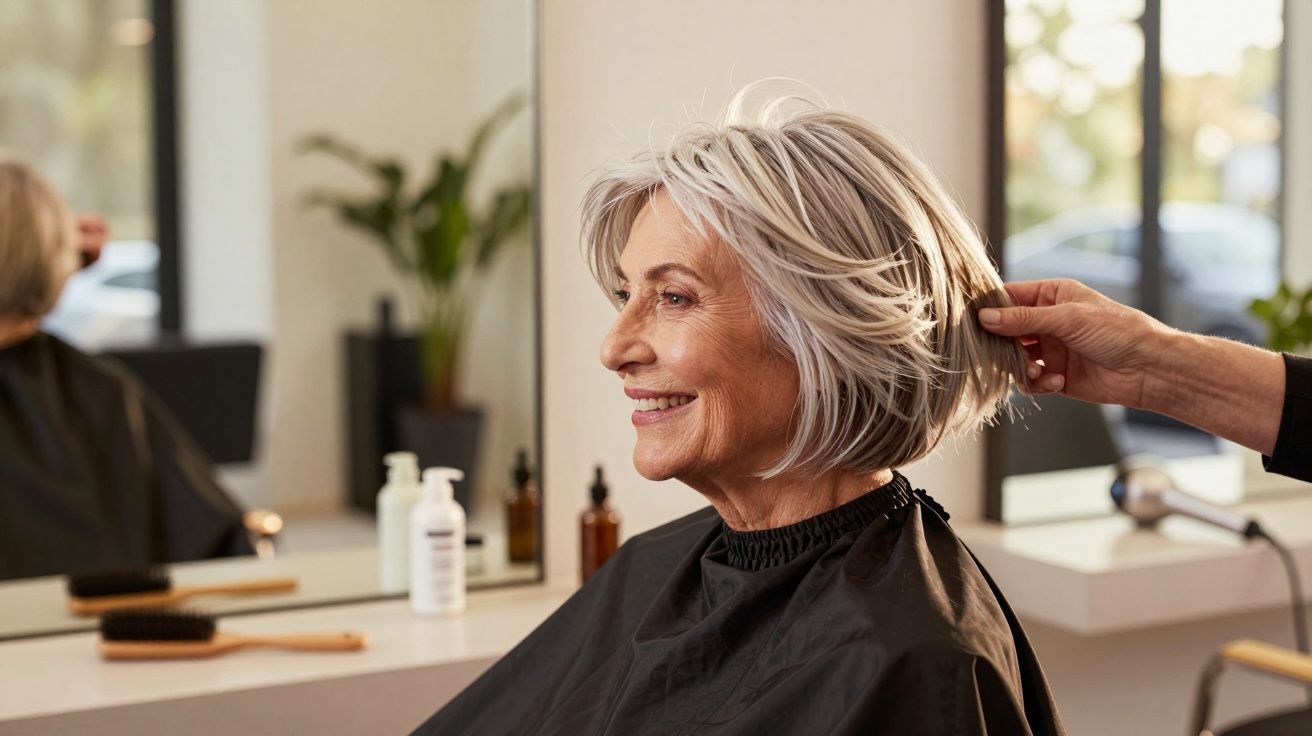
In spring 2026, a new short haircut is set to take centre stage in UK salons: the Trixie Cut. Created in leading salons and widely described as a softer, more contemporary evolution of the classic Pixie, it’s being praised for making fine, thinning hair-and grey or white strands-look fresher and more lifted. The best part: it’s designed to flatter without demanding complicated day-to-day styling.
What the Trixie Cut really is (and how it differs from a Pixie)
At its heart, the Trixie Cut blends two concepts: the familiar overall shape of a Pixie and a targeted layering method that plays precisely with length and transitions. The result is a short style that doesn’t feel ultra-cropped; instead, it’s intentionally a touch longer, softer, and easier to move.
Typical features of the Trixie Cut include:
- extra length at the sides and around the cheekbones
- a soft nape (not shaved out or harshly tapered)
- strongly layered, carefully refined ends
- plenty of texture-visible movement through the hair
That combination keeps the haircut from looking severe. Compared with a traditional Pixie (which can be very short and sometimes read as “hard” on the face), the Trixie Cut drapes more gently and frames the features without losing the impression of fullness.
At its core, the Trixie Cut is a soft, layered short haircut that places volume exactly where it often starts to disappear after 70.
Why the Trixie Cut can make women over 70 look more youthful
As we age, hair commonly becomes finer at the crown and around the temples. Many women notice the same frustrating pattern: the top falls flat, while the sides drop heavily and can drag the face downward. The Trixie Cut is designed to counter that imbalance.
Targeted lift without the “helmet” look
With gentle layers and deliberate texturising, your stylist builds lift mainly through the crown and the front. The ends are lightly “roughed up” (in a controlled way) so the hair sits with more grip and naturally lifts away from the scalp rather than clinging to it.
What this changes visually:
- the hair appears denser overall
- the head shape looks more balanced and proportional
- the entire style feels lighter and less weighed down
Many clients describe the effect as a subtle “mini lift”, because the relationship between face shape and hairstyle looks brighter, fresher, and more awake.
Soft face-framing pieces that discreetly blur fine lines
Another reason the Trixie Cut is considered so rejuvenating is the way it works with facial contours. Slightly longer, softly thinned strands along the cheekbones act almost like a gentle filter:
- fine lines on the cheeks are partially covered
- the face looks softer and more harmonious
- attention is drawn away from stronger lines around the forehead and mouth
On grey or white hair, the layered ends can also create a beautiful light play. Different sections reflect light at different strengths, adding depth-so the face can appear subtly “lifted”, like a real-time soft-focus effect.
How to describe the Trixie Cut in the salon
Although many stylists now recognise the name, a clear explanation still matters. If you simply ask for “short but modern”, you may walk out with a standard Pixie rather than the softer, more textured finish that defines the Trixie Cut.
The secret is the balance: short, but not ultra-short-layered, but not stringy-soft, yet still structured.
Helpful points to cover during your consultation:
- Say you want a modern Pixie-inspired cut, but with slightly more length at the sides.
- Specify that the nape should stay soft, not shaved or tightly clipped.
- Emphasise that you want lift at the crown without a “helmet” silhouette.
- Explain whether you prefer the style to look understated or a bit bolder.
- Mention glasses and hearing aids, so the cut sits comfortably and neatly around them.
A reference photo makes a big difference-ideally showing a woman with grey or white hair, so proportions and light-reflection effects are realistic rather than “idealised” for darker, thicker hair.
Original addition: If you have a strong cowlick at the front or a tricky hairline, mention it before the cut starts. The Trixie Cut can be adapted with a slightly longer fringe area or altered parting so the style falls into place naturally-especially important if you want the promised “wash-and-wear” ease.
Everyday styling: minimal effort, noticeable impact
Short hair puts some women off because it can feel like it needs daily blow-drying and constant shaping. With a well-cut Trixie Cut, the routine is usually much simpler.
| Step | What to do |
|---|---|
| 1. Dry | After washing, squeeze the hair gently with a towel-don’t rub. |
| 2. Base | Work a small amount of volumising spray or mousse into the roots at the crown. |
| 3. Blow-dry | Briefly blow-dry with your fingers against the direction of growth to build lift. |
| 4. Structure | Rub a tiny amount of wax or paste between your fingertips and lightly “mess up” the ends. |
| 5. Finishing touches | Smooth and shape the pieces around the eyebrows and cheekbones so they frame the face. |
If you’d rather avoid blow-drying altogether, a strong cut often allows for partial drying or air-drying, then finishing with a small amount of product. The style actually benefits from a slightly undone, textured finish.
To keep the shape crisp, many professionals recommend a trim every 5 to 7 weeks. Leave it too long and the sides can become heavy again-undoing that lifted, face-flattering effect.
Original addition: If you wear hats frequently or want a style that behaves well in wet British weather, ask for texture that’s concentrated through the ends rather than too much short layering at the crown. That way, the cut springs back more easily after being flattened, and you’ll still get movement without constant reworking.
Who the Trixie Cut suits best
The Trixie Cut isn’t limited to one hair type, but it can be especially effective in certain situations.
Ideal for fine, grey, or white hair
Fine hair often responds brilliantly to layering and texture, because the added airiness creates the impression of more fullness. On white or grey hair, the light-reflection through the layered ends tends to be stronger, which can enhance the youthful look.
It also works well on gently curly or wavy hair-the natural movement supports the cut’s texture. With very thick, coarse hair, your stylist simply needs to thin and shape carefully so the result doesn’t look overly solid or bulky.
Face shapes and personal style
The Trixie Cut can be tailored to different face shapes:
- Rounder faces often benefit from extra height at the crown and slightly longer, narrower side pieces.
- Narrower faces can keep the top a bit flatter while allowing the sides to fall fuller for balance.
If your wardrobe is classic, you can wear the cut softer-sleeker strands and less product. If you enjoy a more daring look, you can encourage separation at the ends, highlight the fringe area, or add subtle colour accents in silver, beige, or cool blonde.
Preparing yourself for the change
Switching to a short haircut after years of longer hair can feel strange at first. These practical steps make the transition easier:
- Before the appointment, pin your hair up under a scarf to get used to seeing more of your face.
- Take your glasses to the appointment-the frame changes how the outline of the cut reads.
- If you’re unsure, start with a slightly longer version, then go shorter at the next visit once you feel confident.
Many women notice a knock-on effect: necklines, collars, and earrings become more visible and start to matter more. A simple pair of earrings or a modern scarf can underline the cut’s fresh, youthful impression.
Care, products, and common pitfalls
To keep a Trixie Cut looking polished, maintenance matters-especially because mature hair is often drier, particularly through the lengths.
Choose a lightweight shampoo for sensitive or mature scalps, paired with a conditioner that softens without weighing hair down. Avoid heavy oils at the roots, as they quickly collapse volume. A better option is a tiny amount of serum worked only through the ends.
A frequent mistake is using too much styling product. Wax, gel, and paste should be applied sparingly-if in doubt, start with less and add more only if needed. The goal is movement and airiness, not a stiff, stuck-down shape.
If you wear coloured pieces, subtle highlights around the face can amplify the brightening, rejuvenating effect. For natural grey or white hair, using a purple/silver shampoo occasionally can reduce yellow tones and support the clean, elegant finish that makes this short haircut look so refined.




Comments
No comments yet. Be the first to comment!
Leave a Comment