
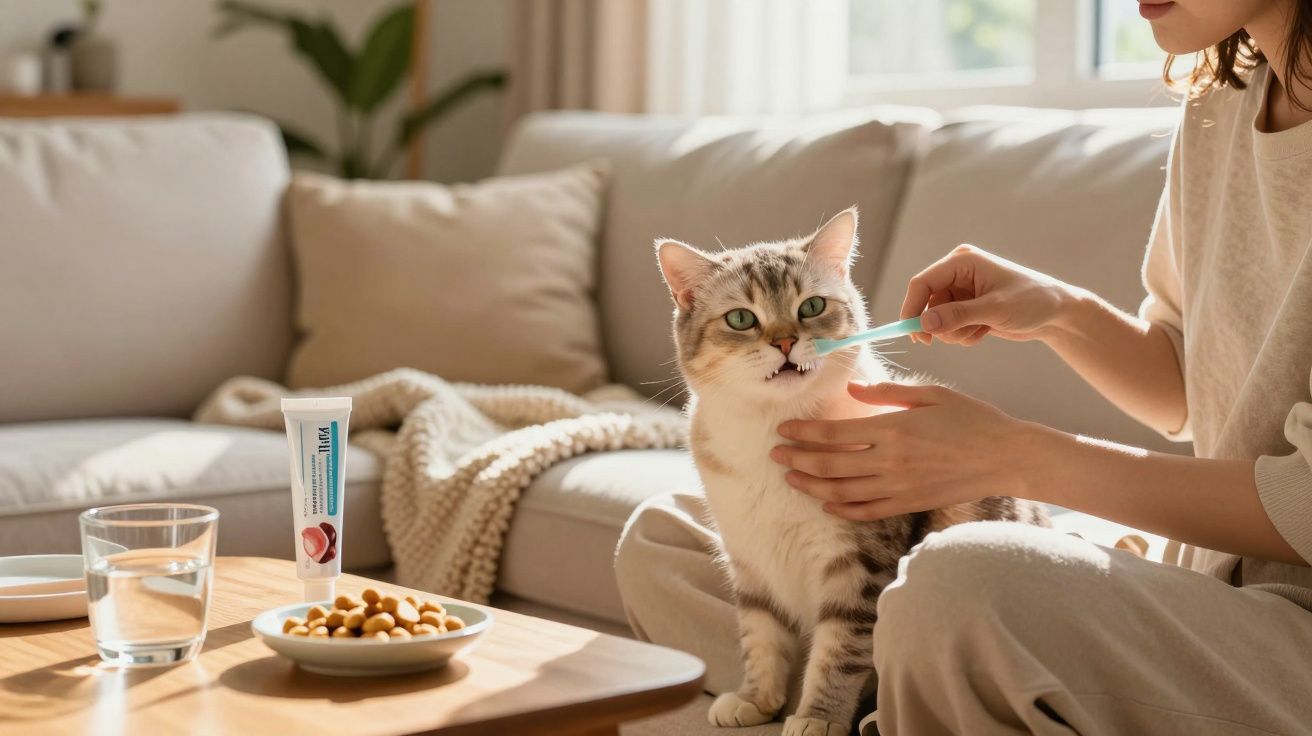
Spring sunshine, a cat perched on the windowsill - and then a blast of breath from a feline mouth that could flatten every daffodil in the garden. Anyone who has ever tried to brush their house cat’s teeth will know the routine: hissing, claws, and a rapid retreat under the sofa. With a few well-chosen tools and a calm, patient approach, however, dental care can slot into everyday life surprisingly well - with hardly any drama and without shredded forearms.
Brushing teeth without a warzone: how to start smart
The biggest mistake is trying to go from zero to full-on brushing in one go. You hold the cat still, push the brush straight into the mouth, and the relationship around toothbrushing is damaged for weeks. A gradual approach works far better: your four-legged companion first needs to learn that hands near the mouth aren’t dangerous - ideally, they even lead to something pleasant.
The more positively your cat experiences being touched around the mouth, the more readily they’ll accept a brush and toothpaste later on.
To begin with, it’s enough to gently lift the lips for a moment each day, lightly run a finger over the teeth, and reward the whole thing with a treat. Only when that is tolerated without resistance is it time to introduce real brushing equipment.
The right toothbrush for cats: choose your finger over a handle
An old human toothbrush is usually a quick failure with cats. The bristles tend to be too firm, the head too large, and the movements harder to control - which can make gums sore and leave your cat suspicious of every future attempt.
Silicone finger toothbrush: gentle and precise for cat dental care
Soft silicone finger toothbrushes are particularly effective for cats. They slip over your index finger like a thimble, giving you far more control and allowing small, careful movements.
- soft material that protects sensitive gums
- small contact area, ideal for a cat’s narrow mouth
- better tactile feedback: you can feel when your cat tenses up or seems uncomfortable
If you want to take an especially cautious first step, offer the finger brush dry at first. Let your cat sniff and lick it, then briefly stroke along the canine teeth. The aim is for the contact to feel like a mild massage rather than an attack.
Cat toothpaste: meaty, not minty
Most cats dislike classic mint or menthol flavours. Toothpaste containing fluoride - the kind used by humans - is also off-limits for animals. Instead, use veterinary toothpastes made specifically for cats, often with an enzymatic effect. These enzymes help loosen plaque and reduce bacterial activity.
To encourage cooperation, many products come in flavours such as poultry, liver, or fish. From your cat’s point of view, that’s closer to a treat than a medical procedure.
Before you brush at all, let your cat lick the toothpaste from your finger or directly from the brush - creating a clear association: “This tastes good, so I don’t need to be scared.”
Once the taste is accepted, start with short, gentle circular motions on the outer surfaces of the teeth. At the beginning, just a few seconds is more than enough.
Passive dental care via food and snacks
Some days, any direct handling of the mouth simply won’t happen. Some cats are naturally wary; others are unsettled by vet visits, moving house, or new animals in the home. For those periods, it helps to have a “Plan B” that uses natural chewing behaviour.
Special dental-care kibble and snacks
Standard dry food often crumbles as soon as the cat bites, which means it barely rubs the tooth surface and does little for dental hygiene. Dental-care products for cats are designed differently: the kibble is larger and has a fibrous internal structure, so it yields in a controlled way when bitten and stays in contact with the teeth for longer, creating a cleaning effect.
- Size: large enough that the cat must chew rather than simply swallow
- Structure: slightly porous or fibrous to create a “scrubbing effect” on tooth surfaces
- Calories: ideally lower in energy to help prevent weight gain
Many vets suggest not using these kibbles as the sole diet, but as a targeted supplement - for example, a small portion daily in place of part of the usual ration.
Liquid additives in drinking water
For very resistant or deeply suspicious cats, special liquid preparations added to drinking water can be useful. They contain active ingredients that limit bacterial growth in the mouth and slow down plaque formation.
A few millilitres in a freshly filled bowl each day is often enough to noticeably reduce bad breath.
It’s important to follow the manufacturer’s dosing instructions and to keep an eye on whether your cat continues to drink normally. If water intake drops significantly, the flavour may be too strong - in that case, switch products or stop using it.
Why consistent dental care for cats makes such a difference
Tartar and gum inflammation are among the most common health issues in older cats. They can be painful, reduce appetite, lead to weight loss, and create ongoing stress. Mouth bacteria can also enter the bloodstream and place extra strain on the heart, kidneys, and other organs.
Regular at-home care can push back the point at which professional tartar removal becomes necessary - or reduce how often it’s needed. Since these procedures are usually done under anaesthetic, any step that delays them is worthwhile.
| Measure | Effect | When it’s useful |
|---|---|---|
| Finger toothbrush + toothpaste | Removes fresh deposits, massages gums | Ideal for cooperative cats |
| Dental-care kibble / snacks | Mechanical cleaning through chewing | As a supplement or on “bad days” |
| Water additive | Reduces bacteria, slows plaque build-up | For very resistant or older cats |
Routine over rarity: keeping your cat calm
Even the best toothbrush achieves little if it comes out once every few months. The goal is a steady routine that fits everyday life. Many owners do well brushing once a day or every other day - ideally at a time your cat is already relaxed, such as after eating or in the evening on the sofa.
Helpful ground rules:
- Never restrain with force - it damages trust in the long term.
- Better to brush very briefly on many days than rarely for a long time.
- Use a calm voice and link every bit of cooperation with something positive.
- Start early: kittens usually accept mouth handling more quickly.
Dental care shouldn’t feel like a fight to your cat. It should feel like a short, predictable part of the day - as normal as filling the bowls or grooming the coat.
When the vet needs to step in - and why that isn’t failure
Even with good home care, stubborn tartar can still build up. Common warning signs include strong, persistent bad breath; clearly brown or yellow deposits; drooling; holding the head to one side while eating; or suddenly refusing food despite being normally keen.
At that point, your cat needs professional help. The vet will check whether any teeth need extracting, assess the gums, and decide whether an anaesthetic dental clean is appropriate. Going early spares your cat significant pain - and usually keeps costs more manageable than leaving dental disease to worsen for years.
Practical extra tips for a calmer cat (and owner)
Some dental-care terms sound more complicated than they really are. Professionals use “plaque” to describe the soft, uncalcified layer of food residue and bacteria that forms on teeth every day. If it isn’t removed, minerals settle into it and it hardens into tartar. That’s exactly what brushing, dental-care kibble, and water additives are designed to tackle: removing plaque before it can set solid.
If you live with a very timid cat or a former stray, “medical training” can help too - meaning slow, bite-sized practice sessions. Today you only touch the mouth briefly; tomorrow you lift the lip slightly; the day after you simply show the brush. Each stage is rewarded with food, play, or gentle fuss. Stress stays low, and your cat keeps the sense that they have control.
When you combine these building blocks - gentle active toothbrushing, thoughtfully chosen snacks, discreet support via drinking water, and regular veterinary checks - you give your house cat a real chance of keeping healthy teeth into old age. And, as a bonus, sofa time becomes far more pleasant when the first yawn no longer hits you with an awful wave of breath.



Comments
No comments yet. Be the first to comment!
Leave a Comment