
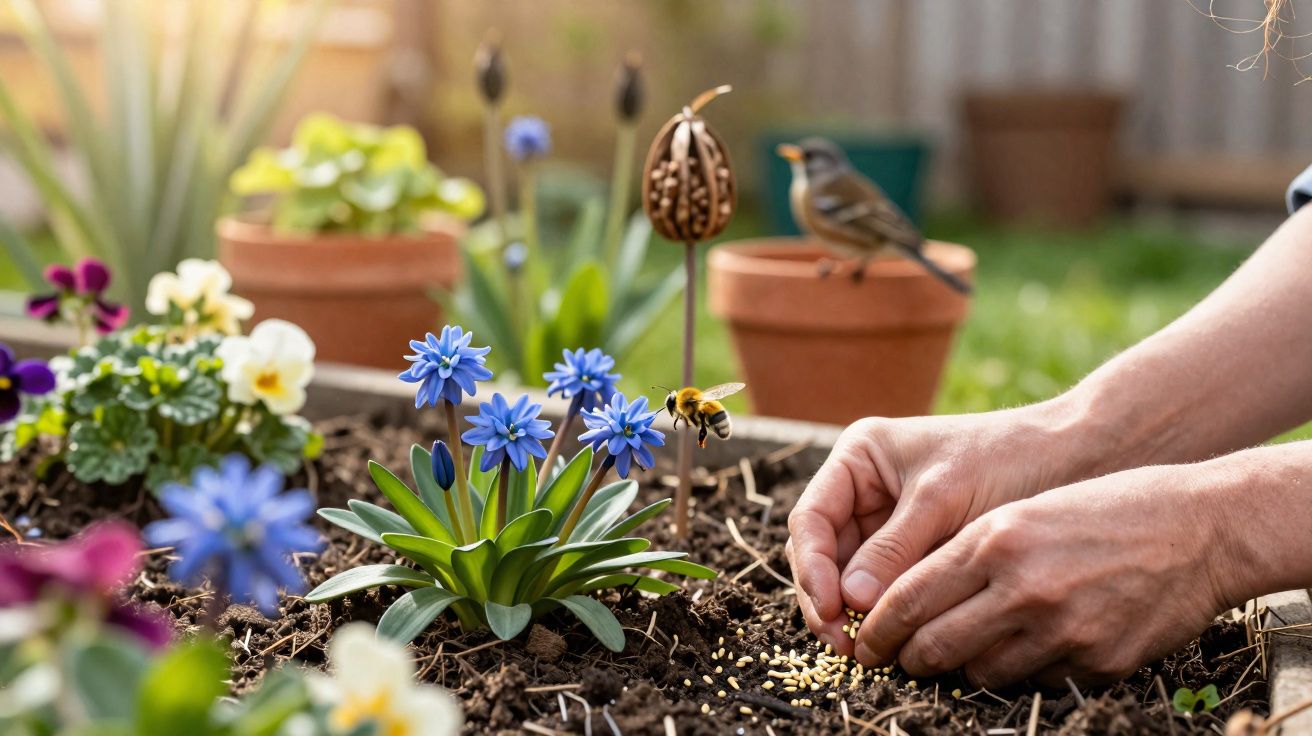
March brings back brighter days, the lawn starts to stir, and borders that looked fine in autumn can suddenly appear flat and worn once winter has done its worst.
It’s tempting to reach for pricey bedding plants or quick-fix chemical feeds, but a humble packet of seeds can transform a tired patch into something airy, colourful and full of life by early summer.
Love-in-a-mist (Nigella damascena): a delicate annual for soft, colourful drifts on bare soil
The standout for this early-spring moment is love-in-a-mist, known botanically as Nigella damascena. It’s a classic cottage-garden annual that has quietly fallen out of favour, even though it suits modern gardening perfectly: it’s inexpensive, straightforward to grow, good for wildlife and tougher than it looks.
Sow it in March, leave it alone for a short while, and it pays you back with feathery foliage and intricate, star-like flowers.
Love-in-a-mist makes a light, lacey mound that reads like a haze of green smoke around the front of a bed. From that fine foliage, upright stems appear, each carrying a curious flower in sky blue, soft pink or crisp white. The bloom is framed by thread-thin leaves, which is exactly what gives the plant its “misty” look.
Why love-in-a-mist suits busy gardeners
Plenty of ornamentals ask for staking, constant feeding, or regular pinching out. Love-in-a-mist is far less demanding: once the seeds have sprouted, it largely gets on with the job.
- It fills tricky gaps between shrubs at speed.
- It reduces some weed growth simply by shading the soil.
- It manages in average to poor ground, provided it isn’t waterlogged.
- It flowers for weeks, particularly if you sow little and often through spring.
That combination makes it a strong choice for low-maintenance borders, shared gardens in rented homes, or compact urban plots where time and budget are tight.
How to sow love-in-a-mist from March: sun, drainage and an easy method
Across the UK (and in many parts of North America), March is an excellent time to sow love-in-a-mist outdoors. The soil is still cool, but workable-and that gentle start suits the seed.
If you provide sunshine and free-draining soil, most of the work is already done.
Choosing the right position
Aim for a spot with full sun for most of the day. It will tolerate light shade, but you’ll get far more flowers in brighter conditions. Soil fertility isn’t the key issue; drainage is. If you have heavy clay that sits wet, the plant’s fine taproot can rot.
Where soil is on the heavy side, open it up with a fork and work a little coarse sand or fine gravel into the top 10–15 cm. You’re not trying to create rich compost-just a looser texture that lets excess water move through.
Sowing directly into the ground (the simplest approach)
Love-in-a-mist resents being moved. It develops a single taproot, and once that root has taken hold, transplanting often fails. For that reason, direct sowing is by far the easiest route.
- Lightly rake over the area to remove stones and break up larger clumps.
- Sprinkle the seed thinly where you want it-swirls, patches or loose lines all work well.
- Rake again very lightly so the seed is only just covered.
- Gently firm the surface with the back of a rake or your hands.
- Water using a fine rose so the seed isn’t displaced.
In cool spring weather, germination typically takes 2–3 weeks. Until seedlings appear, keep the surface lightly moist so it doesn’t dry out completely.
Using plug plants for a quicker start
Some garden centres sell nigella as small plug plants. This can bring flowering forward by a couple of weeks, but handling matters.
Ease each plant out of its cell without breaking up the root ball, then set it into prepared ground at the same depth it sat in the tray. If your soil is heavy, backfill with garden soil mixed with a little sand, and water gently around the base.
A flower that supports bees in spring and feeds birds in winter
The charm of love-in-a-mist isn’t only visual. In a wildlife-friendly garden, it earns its keep.
Each bloom offers fuel for pollinators, and each dried seed head turns into a cold-season larder for birds.
Nectar and pollen for early pollinators
As the weather warms, bees and other insects emerge needing food. Nigella flowers offer nectar and accessible pollen, and their starry, open shape gives honeybees, bumblebees and hoverflies a convenient place to land and feed.
Sown near fruit trees, soft fruit bushes or a vegetable plot, it can make a noticeable difference. More pollinators working your love-in-a-mist often means more visits to nearby apple blossom, courgette flowers, or raspberry canes only a few metres away.
Seed pods that add structure-and a winter snack
After flowering, love-in-a-mist forms large, balloon-like seed pods patterned with fine lines. As they dry, they become lantern-shaped pods packed with hard black seeds.
Try not to cut everything down. Left standing, the pods do two useful jobs: they provide shape and height in late autumn, and they supply food for finches and other small birds during colder months.
Why gardeners leave the seed heads standing
| Reason | Benefit |
|---|---|
| Winter food | Seeds help support birds when insects and berries are scarce. |
| Self-seeding | Dropped seed produces next year’s plants at no cost. |
| Structure | Dried pods add height and interest as other plants die back. |
Turning one sowing into a self-sustaining display
Once established, love-in-a-mist often behaves like an easy-going, well-mannered guest-returning year after year with very little encouragement.
Let a few plants set seed fully and you may never need to buy another packet.
As pods split, seeds fall into small cracks and crumbs of soil and many survive the winter, sprouting the following spring. Over time you may notice drifts of nigella shifting slightly each year, threading through perennials or even between vegetables.
If it becomes too dense, thin seedlings in early spring by gently pulling a few out, or moving some while they are still very small. That quick task keeps the planting airy and controlled without turning into a major job.
Combining nigella with other plants for a vibrant, living garden
From a design perspective, love-in-a-mist is unusually adaptable. Its soft, airy outline works in both neat beds and more relaxed, naturalistic schemes.
Pair it with bold, upright shapes such as alliums, foxgloves or salvias to sharpen contrast and make each plant read more clearly. In a veg patch, it sits happily around taller crops like tomatoes or beans, drawing pollinators in without smothering the main stems.
Some gardeners also use nigella as a repeating “signal” plant in pollinator corridors. Planted at intervals along a path or fence, it helps guide insects across the garden, increasing overall bee and butterfly activity from one area to the next.
Practical tips, small risks and simple checks
Seed packets can sound cryptic, but a few terms are easy to translate into real-life checks. “Well-drained soil” simply means that after heavy rain, water shouldn’t sit on the surface for more than a few hours. If puddles linger, raise the planting area slightly or incorporate grit.
“Hardy annual” means the plant completes its life cycle in a single year, yet seedlings can tolerate light frosts. That’s why March sowing is usually safe even when nights remain chilly.
There are also a couple of minor cautions. Love-in-a-mist can self-seed enthusiastically, so in very small gardens you may prefer to remove some seed heads before they fully ripen. The plant is mildly toxic if eaten in quantity, so it shouldn’t be grown as fodder for pets or livestock, although normal handling is not a problem.
For families, the seed heads can become a simple nature activity: cut a few for dried arrangements, shake them to hear the seeds rattle, or open one to see the tidy rows inside-while leaving plenty standing to help local birds through winter.
Two extra ways to enjoy love-in-a-mist: cut flowers and container growing
Love-in-a-mist also works as a light, informal cut flower. Pick stems when the blooms are fresh and just opening for a delicate, airy look in a vase; for drying, wait until the pods have fully formed, then hang small bunches upside down in a warm, ventilated place.
If you’re short on ground space, you can grow Nigella damascena in containers, provided drainage is excellent. Use a pot with generous holes, add a gritty layer at the base, and choose a free-draining compost mix. In pots, keep watering even-enough to prevent the compost drying completely, but never so much that the container stays saturated.





Comments
No comments yet. Be the first to comment!
Leave a Comment