
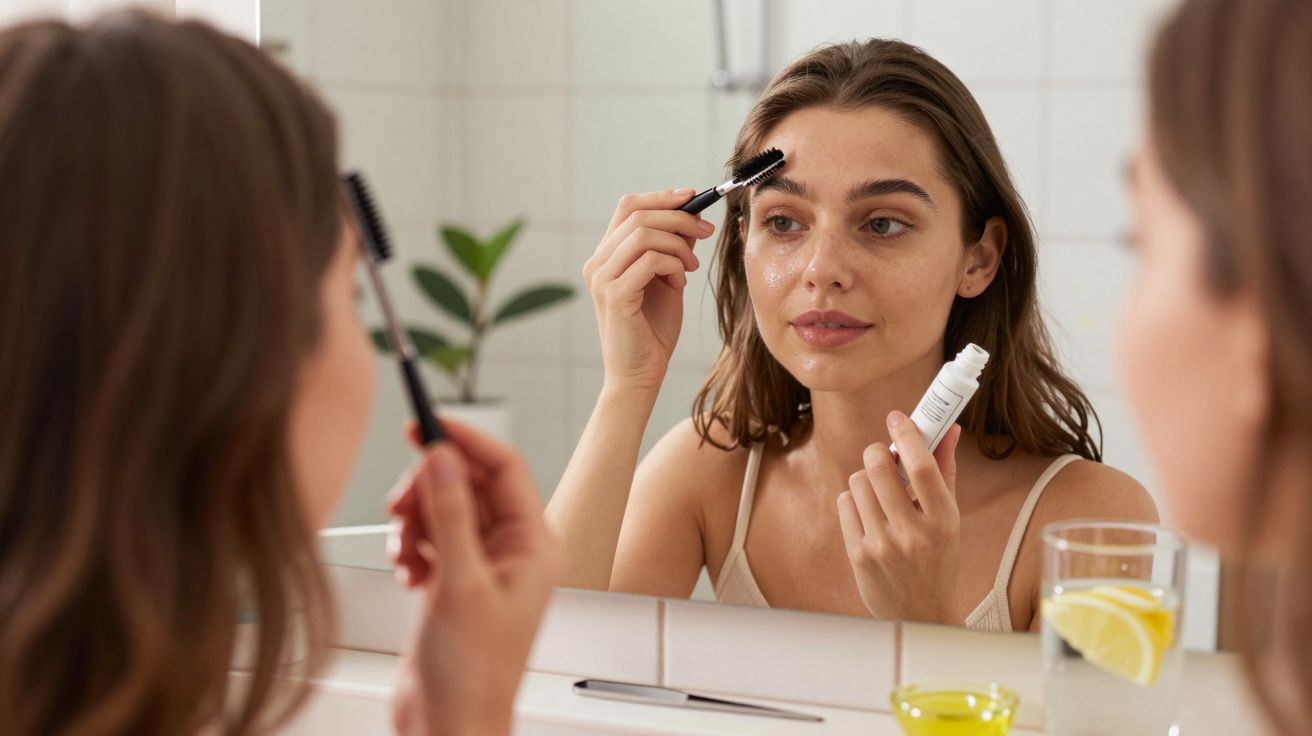
Between TikTok’s ultra-skinny arches, plus bleached brows on red carpets, it’s no surprise so many people are staring in the mirror wondering why their eyebrows won’t just grow back properly. Whether your brows are sparse after years of plucking or they were never especially dense to begin with, a handful of consistent, low-effort habits can rebuild volume over time-without booking a single salon appointment.
Why thin brows are back - and why you might regret them
Beauty trends are famously cyclical. Thick, brushed-up “boy brows” ruled much of the 2010s, yet since late 2025 ultra-fine, Y2K-inspired arches have been creeping back across TikTok and Instagram. In parallel, more celebrities have been experimenting with bleached brows that make hairs almost vanish under bright lights and camera flash.
In photos, these looks can be dramatic; day to day, they often feel less forgiving. Eyebrows frame the face, balance the forehead and visually anchor the eyes. When brows become too thin or too pale, other features can suddenly appear harsher and more exposed-prompting many people to miss softer, fuller brows again.
Eyebrows aren’t merely decoration. They influence your whole expression, shaping how rested, kind or stern you seem.
The encouraging part: even if you’ve gone too far with tweezers, most brows can recover noticeable density with time, patience and targeted care. You won’t wake up tomorrow with Cara Delevingne’s brows, but you can move much closer to your own natural best.
Eyebrow regrowth begins with a truce: Step 1 - put down the tweezers
The first step is straightforward, but it can feel ruthless: stop over-plucking. Hair follicles need relief from repeated trauma so they can return to a healthier growth cycle. Practically, that means allowing an awkward “wild regrowth” period-even when hairs appear in places you’d rather they didn’t.
How long to pause hair removal
- 3–4 weeks: early, softer regrowth, especially if you normally groom weekly.
- 6–8 weeks: a clearer, more accurate view of your natural brow line emerges.
- 3–6 months: deeper follicles that had slowed down may start producing visible hairs again.
If you genuinely can’t stop grooming altogether, limit removal to hairs that are obviously outside your natural brow zone-such as a lone hair at the temple or high on the forehead. Avoid reshaping the inner edge or the top line, because these areas heavily influence how full your brows look.
The everyday “just one more” tweeze is usually more harmful to brow density than a single big shaping session.
Step 2 - brush your brows like you brush your hair
With the tweezers on pause, add a small but surprisingly effective ritual: daily brushing. Use a clean spoolie (a mascara-wand style brush) and treat your brows as a miniature scalp.
Why brushing helps
- Boosts circulation: light friction increases blood flow around the root, supporting growth.
- Instant volume: lifted hairs cover tiny gaps and create the impression of more density.
- Trains the shape: repeated brushing encourages hairs to sit in a more consistent, flattering direction.
Use short, controlled movements: brush upwards from the base, then slightly outwards towards the tail. Do this on clean skin in the morning, and again at night before you apply any treatment. Skip aggressive scrubbing, which can irritate the skin or snap fragile hairs.
A practical hygiene note: wash your spoolie regularly (with gentle soap and warm water) and let it dry fully. A dirty brush can transfer oil, product build-up and bacteria back onto the brow area.
Step 3 - feed the follicles with targeted care
Just like lashes and scalp hair, brows respond best to consistent, focused care. Most routines fall into two lanes: cosmetic serums and natural oils-many people use both.
| Type | What it does | Best for |
|---|---|---|
| Peptide-based serum | Supports the hair growth cycle and reinforces the hair shaft. | Weak, easily broken brow hairs. |
| Fortifying gel | Coats hairs, offers light hold and gradual conditioning. | Anyone new to brow care who wants a 2-in-1 styling product. |
| Castor or argan oil | Nourishes the skin and improves shine and flexibility. | Dry skin, brittle brows, budget-friendly routines. |
Apply your chosen product at night to clean, dry skin. With a cotton bud or fine brush, trace a thin line along the hairs and any sparse patches. Then massage gently with your fingertip for 30 seconds to support absorption and encourage circulation.
Brow treatments almost never deliver dramatic changes in a week. Most people notice a meaningful shift after six to eight weeks of nightly use.
If you’re prone to sensitivity, patch test new products first and avoid letting oils migrate into your eyes. Consistency matters more than using a large amount.
Step 4 - master the “hair by hair” make-up trick
While you’re waiting for regrowth, make-up can bridge the gap between your current brows and your goal shape. The trick is to imitate individual hairs, rather than filling everything in like a blocky stencil.
Build a believable brow in three moves
- Sketch the outline: with a fine brow pencil close to your natural hair colour, lightly define the lower edge of the brow-staying within your natural limits.
- Add hair strokes: using the same pencil or a micro-tip pen, draw short, upward strokes through sparse zones, following your real growth direction.
- Fix with tinted gel: brush a lightly tinted gel through the hairs to merge real and drawn strokes, add texture and keep the shape in place.
Look for products described as “micro-tip”, “precision” or “pen-like”. Very creamy pencils are more likely to smudge and create the dreaded “Sharpie” effect. Work slowly, step back from the mirror, and assess both brows together-the goal is sisters, not identical twins.
Setting realistic expectations for regrowth
Not every eyebrow can return to teenage thickness. After years of aggressive waxing or threading, some follicles can become permanently inactive. Hormonal shifts, certain medications, and health conditions such as thyroid disorders can also reduce density.
Dermatologists often group regrowth into three broad outcomes:
- Temporary thinning: brows rebound within a few months once picking and over-plucking stop.
- Partial loss: the main shape returns but remains slightly patchy, particularly at the tails.
- Permanent gaps: some areas stay sparse and may require long-term make-up or professional treatments.
If you see almost no regrowth after six months of gentle care, or if your brows are shedding in clumps, it’s sensible to consult a dermatologist or trichologist. They can look for underlying causes and talk through options such as prescription serums or, in some cases, brow transplants.
Helpful definitions: density, shape and texture
When professionals assess brows, they usually separate three elements: density, shape and texture. Knowing the difference helps you focus your efforts.
- Density: how many hairs you have per area. The nightly habits mainly target this.
- Shape: where the brow begins, arches and ends. This can be refined with careful grooming and make-up.
- Texture: how thick, straight, curly or coarse each individual hair is. Brushing and nourishing care can improve this.
Someone can have thin brows with lovely shape and texture, needing only a modest lift in density. Another person may have plenty of hair but an uneven outline that benefits more from professional mapping than from growth products.
When to consider professional treatments
If you’re still underwhelmed after months of home care, professional options can help-each with advantages and trade-offs.
- Brow lamination: a salon service that smooths and sets hairs upwards to mimic extra volume; results typically last around six weeks.
- Tinting: darkens fine, pale hairs so the brow looks fuller without creating new growth.
- Microblading or brow tattooing: semi-permanent pigments designed to resemble hairs; choosing a skilled artist is essential, and there are small but genuine risks of infection or allergic reaction.
Even if you choose one of these routes, your home habits still count. Healthier skin and stronger existing hairs tend to produce more natural-looking results and can help professional work last longer.
Two overlooked supports: nutrition and skin care around the brow
Regrowth isn’t only about what you put on the brows-your baseline health and skin routine can influence how well follicles perform. A diet with adequate protein, iron, zinc and omega-3 fats supports hair production generally; if you suspect a deficiency (especially iron), it’s worth discussing blood tests with a clinician rather than guessing with supplements.
Also consider what’s happening around the brows: harsh exfoliants, strong retinoids placed too close to the brow line, or overzealous cleansing can leave the skin irritated and the hairs more prone to breakage. Keeping the area calm, moisturised and protected from excessive sun exposure creates a better environment for consistent growth.
Four simple gestures done nightly-backing off the tweezers, brushing, nourishing and faking hair by hair-rarely go viral, yet they steadily rebuild the brows that extreme trends keep trying to erase.





Comments
No comments yet. Be the first to comment!
Leave a Comment