
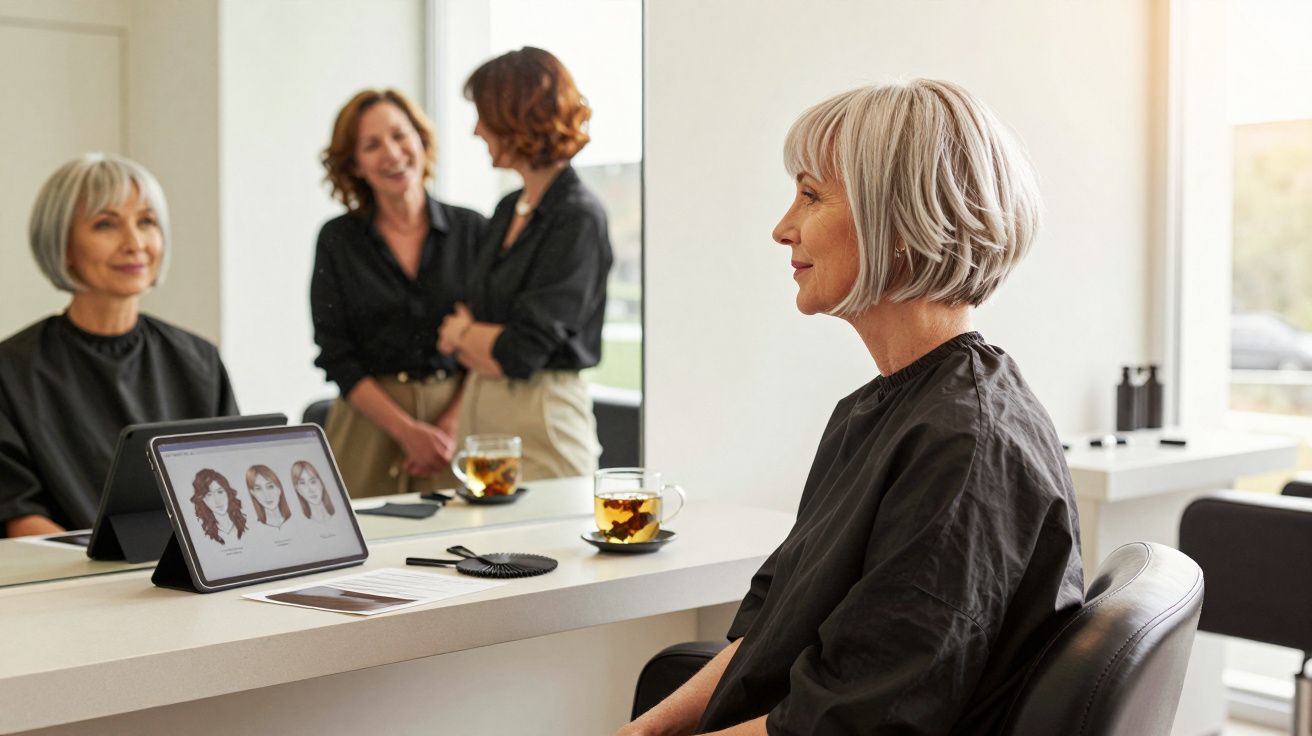
Between face-framing hairstyle trends and the expectation that we should rub out every hint of ageing, the boundary has become oddly blurred. Hairdressers insist a new fringe can “lift” your features, while Instagram filters quietly reset what 50, 60 or 70 is supposed to look like. The result is a nagging question: when does a smart, updated cut stop being a refresh and start becoming age denial?
Why hair after 50 turns into a public debate about women over 50
Hair choices have always felt personal, yet after a certain birthday they’re treated like a public statement. Women over 50 are still regularly given a list of things they “should” or “shouldn’t” wear, show, dye, cut or embrace. Add social media’s obsession with “10-years-younger” haircuts and the pressure intensifies.
When every hairstyle is marketed as a youth potion, picking a cut can feel like a character judgement instead of a practical choice.
At the same time, ageing does change hair in tangible ways. After menopause, hormones can shift; texture often becomes drier; and density may reduce. Styles that once felt reliable can suddenly look weighed down, flatter than before, or unintentionally ageing. That’s why many stylists lean on layered bobs, soft fringes and precisely placed highlights that genuinely brighten and sharpen the face.
So the real issue isn’t only which cuts are flattering, but whether the chase for a younger look ends up reinforcing a culture that struggles to accept older faces at all.
The cuts stylists say can “take 10 years off”
Certain shapes can subtly lift the face or soften strong features. They are not miracles, but they can change how light falls on the skin, how the jawline reads, and how tiredness shows up on camera.
The modern short bob
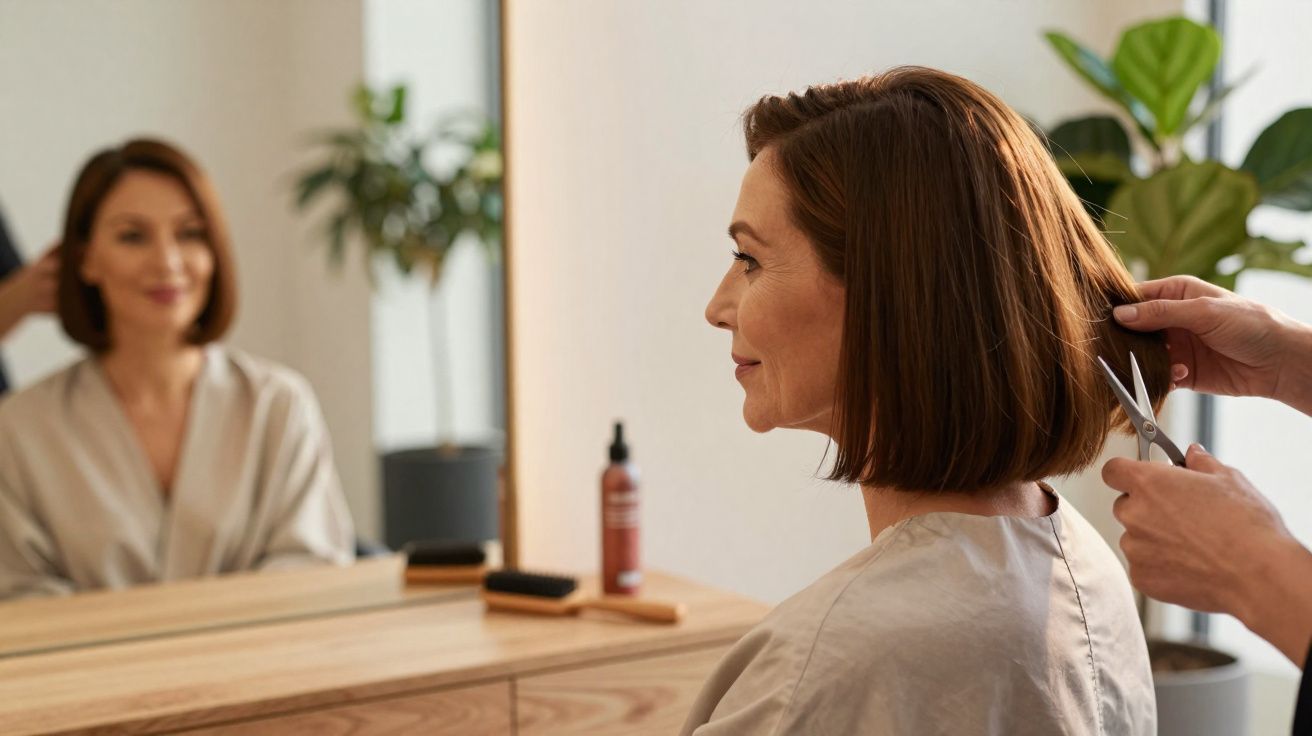
A bob that sits at the jaw, or just below it, is one of the most frequently recommended cuts for women over 50. It trims away thin, stringy ends and pulls focus back towards the eyes, cheekbones and lips.
- Length: from mid-neck to jaw level
- Texture: loose movement, blunter ends softened with micro-layers
- Face effect: a cleaner jawline and less emphasis on heaviness around the lower face
This approach is particularly useful when the ends have become finer. Raising the baseline can make the hair look thicker and more deliberate, rather than like it has simply been left to grow.
Soft, curtain or wispy bangs
Fringes are back for many women in their 50s and 60s-just not the heavy, school-uniform fringe. The current versions are lighter and airier, often parted in the middle or grazing just below the eyebrows.
They can make a high forehead appear shorter, soften the look of horizontal lines and draw attention towards the eyes.
A well-shaped fringe can function like a naturally flattering filter, without pretending you’re someone else.
Curtain bangs (slightly centre-parted and blended into the sides) are often easier to live with, simpler to grow out, and more forgiving across different face shapes. They suit grey, blonde or dark hair, but they do need regular trims to stop them looking bulky or clumped.
Layered shoulder-length cut
If you’re not ready for a big chop, a layered lob (long bob) around shoulder length can add bounce and movement. It’s often kinder to wavy or slightly curly hair, which can look wide or bulky when it’s left very long and cut in one blunt line.
Layering must be customised, though. Too many layers can make already-thinning hair appear even sparser. Many stylists now use “invisible layers”-subtle internal cutting-to remove weight without leaving obvious steps.
Face shape and lifestyle matter as much as age
Age is only one factor. A crisp bob might work brilliantly in a city office yet be irritating if you swim daily or spend hours gardening. A fringe that demands blow-drying each morning can be a poor fit for someone with arthritis, limited energy, or a packed caring schedule.
| Face shape | Often flattering cuts after 50 |
|---|---|
| Oval | Most styles suit; consider a textured bob or longer layers with a soft fringe |
| Round | Longer bobs below the chin, a side parting, gentle height at the crown |
| Square | Waves, a side-swept fringe, shapes that soften the jawline |
| Heart | Chin-length bobs, curtain bangs, jaw-grazing layers to balance the forehead |
| Long | A fringe to reduce vertical length, fuller sides, medium length |
Hair condition should steer the decision at least as much as trends. Very dry hair may look healthier (and feel better) with a shorter, well-nourished cut than by clinging to length. Likewise, a thinning crown can sometimes be improved with careful layering and colour placement, rather than cutting everything off in one go.
The pressure to look younger at any cost
The wording around these trends can be loaded. Labels such as “anti-ageing hairstyle” or “age eraser” imply that visible ageing is a flaw to correct. That hits differently for women in their 50s and 60s who may be juggling work, caring responsibilities and health changes at the same time.
The real issue isn’t whether a hairstyle can refresh you-it’s whether chasing youth is starting to set the terms for your self-worth.
Dermatologists and psychologists often note that relentless focus on “looking younger” can skew body image. When every grey strand or new line feels like failure, salon visits stop being enjoyable and become another source of stress.
Money plays a part too. Regular colouring, smoothing services, extensions and corrective appointments can be costly. Marketing that promises dramatic age reversal can push clients into frequent spending-fuelled by the fear of “letting themselves go”.
Embracing grey while still looking sharp
One of the clearest counter-trends is choosing to go grey intentionally, then supporting that choice with a strong, purposeful cut. Instead of disguising silver, many women style it with confidence.
Grey reflects light differently, and it can look dull if the cut lacks definition. Cleaner outlines or deliberate layers often look better than in-between, half-grown styles. Some opt for a salt-and-pepper pixie; others prefer a sleek silver bob with a crisp parting.
Gloss treatments and blue-violet shampoos can help prevent yellow tones, making the grey appear designed rather than neglected.
What “looking younger” tends to mean on a mature face
When someone says a cut makes a person “look ten years younger”, they usually mean something quite specific. Often, the style:
- shifts volume away from the jawline so the face looks lighter
- adds movement and shine, which we instinctively connect with health and energy
- tones down harsh contrast (for instance, very dark blocks of colour against fair skin)
- softens severity created by dated shapes or grown-out layers
Ageing itself doesn’t disappear; a face still carries the story of decades lived. What changes is the way tiredness, sagging or dullness is framed. Many women aren’t trying to erase age-they simply want to look like a well-rested, polished version of themselves.
Questions to ask your stylist before a drastic change
If you rush into a crop because a headline promised miracles, it can go wrong. It’s usually better to treat the appointment as a consultation rather than a quick transaction.
- How will this cut look as it grows out over the next three months?
- What time and tools will I realistically use each morning?
- Will it work with my glasses, natural texture and neck length?
- Which features will it emphasise?
- Can we change it in stages instead of doing everything at once?
A thoughtful stylist may also ask about medication, hormonal changes, recent stress, or illness-all of which can affect shedding and breakage. They might recommend strengthening treatments before heavy layering or bleaching.
Trade-offs, risks and realistic expectations
Every flattering cut comes with compromises. A sharp pixie can reduce styling time but usually needs trims every 4–6 weeks. A fringe can beautifully frame the eyes yet may separate or misbehave in humidity. Colouring can cover greys, but it may increase dryness and sometimes irritate the scalp.
The most helpful mindset is to treat hair decisions as experiments, not as verdicts on your value-or your youth.
There can be an emotional downside as well when change is triggered by upheaval: a break-up, redundancy or bereavement. In those moments, hair can become a substitute for control. Stylists often mention clients who regret very short cuts made in the middle of a crisis. Waiting a week before a major change-or starting with a smaller shift in length or colour-can reduce the chance of that regret.
Practical examples: three women, three approaches
Three everyday scenarios show how different priorities shape the “right” decision.
A 52-year-old manager with fine, limp hair chooses a chin-length bob with subtle highlights. The extra texture creates the impression of more volume, and the slightly lighter tone softens the look of dark circles. She appears fresher on video calls, while still feeling like herself.
A 63-year-old retiree, exhausted by fortnightly root touch-ups, transitions into her natural grey with a short, layered crop. The cut brings out her bone structure and brightens her eyes; friends comment less on age and more on how “free” she looks.
A 58-year-old carer who is constantly busy keeps a shoulder-length, low-maintenance cut with long layers. Once she’s confident she can manage the extra styling, she adds a fringe later. The change is gradual and suits her routine, rather than being dictated by a trend.
Beyond age: hair as part of overall wellbeing
Hair after 50 is influenced by far more than the scissors. Sleep, nutrition, hormones and stress all play a role. Low iron or vitamin D, thyroid problems and certain medications can thin hair or alter texture-so what looks like a “bad cut” may actually be a health signal.
If shedding becomes sudden or severe, it can be worth speaking to a GP or a trichologist, particularly if you notice scalp irritation, patchiness, or rapid change. Good scalp care, gentle products and realistic styling can make almost any cut look better.
Youthful energy tends to come less from trying to look 35 again and more from feeling comfortable, cared for, and visible exactly as you are now.


Comments
No comments yet. Be the first to comment!
Leave a Comment