
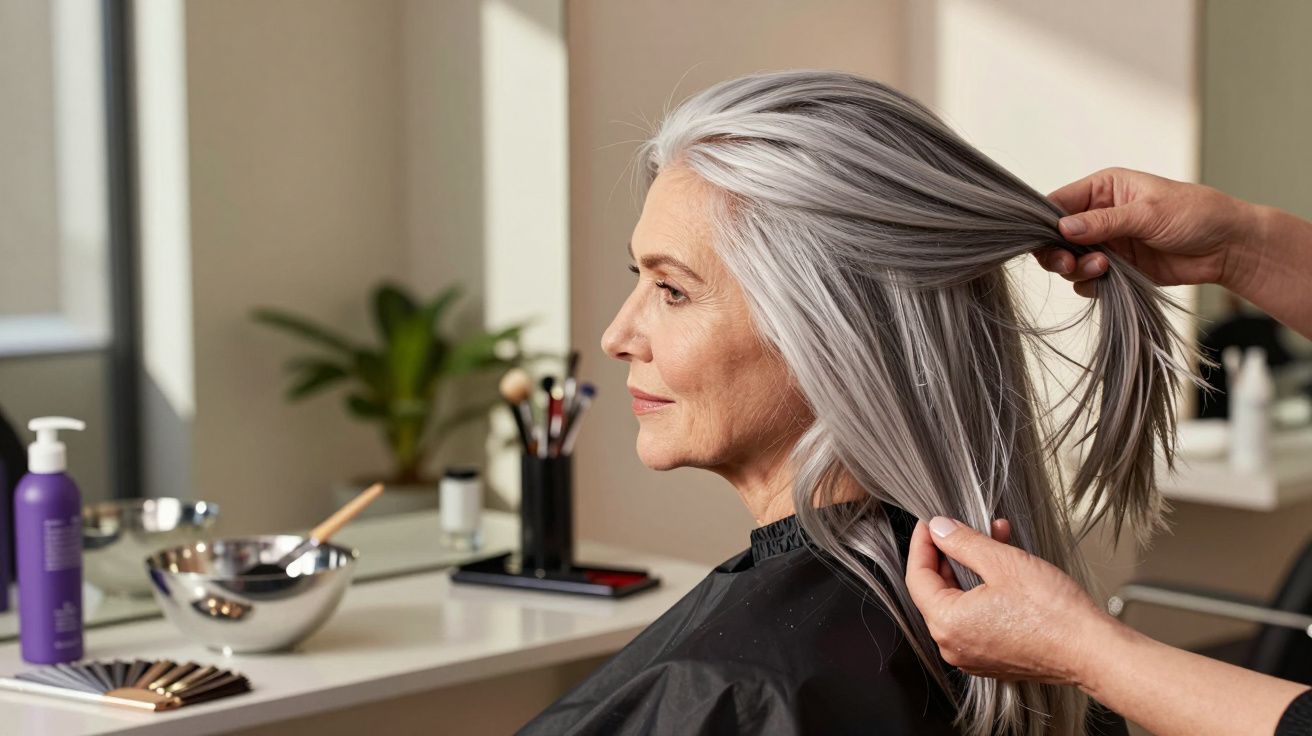
Grey strands often arrive gradually once you hit 50, and many people notice their hair feels less lively-drier, flatter and not quite as glossy as it did in their forties.
Rather than trying to conceal every white hair, increasing numbers of women are choosing to elevate their natural salt-and-pepper pattern. One salon technique leading the way is the silver gloss: a soft, light-reflective colour service designed to make grey hair look smoother, brighter and more intentional-without creating a stark regrowth line.
Silver gloss for grey hair: what it is (and what it isn’t)
A silver gloss is a semi-permanent or demi-permanent colour service that enhances shine and refines the tone of grey without completely covering your natural shade.
Instead of “painting over” white hair, it subtly shifts the overall cast and increases light reflection-more like applying a flattering filter than doing a full recolour.
A silver gloss works with your salt-and-pepper placement rather than against it, which is why the finish reads polished and sophisticated.
In many salons, a colourist will use a liquid, translucent formula that largely sits on the outside of the hair rather than driving pigment deep into the cortex. That’s what keeps the result soft-and why the grow-out is typically so discreet.
Why grey hair can look duller after 50
When melanin production slows, hair loses pigment and turns white or grey-but the shift isn’t only about colour. The fibre itself often changes too:
- Grey hair is frequently drier and more coarse.
- It can become more porous, so it grabs colour unevenly.
- It reflects less light, which can make it appear matte and flat.
- Heat styling and sun exposure can push it yellow more quickly.
This is why grey can sometimes read as “tired” rather than chic. Often, the real culprit isn’t the presence of grey-it’s a lack of shine and a mix of tones that don’t feel harmonious across the head.
How a silver gloss makes grey hair look younger
Many top colourists now put shine at the top of the list when working with grey hair, particularly after 50.
The most flattering grey isn’t automatically darker or lighter-it’s cleaner, brighter and more even-looking from roots to ends.
A silver gloss is usually aimed at three main improvements.
1) Brightening and lifting the root area
A professional will typically keep the root close to your natural grey level-or make it a touch brighter around the face.
When the lightest pieces sit near the face, the overall impression becomes “deliberate grey” rather than faded colour. The effect can look fresher and more lifted, without resorting to harsh bleach or a full head of highlights.
2) Blending salt-and-pepper sections so they look intentional
Greying is rarely uniform: you might be much whiter at the temples, deeper at the back, or streaky around the crown.
A silver gloss won’t erase that two-tone character, but it can soften the transitions so the whole pattern looks coordinated rather than patchy.
3) Choosing undertones that flatter your skin
Grey isn’t one single shade. It can lean icy, smoky, violet, blue-or even slightly beige.
The right silver gloss undertone can make your skin look brighter, teeth appear whiter, and facial features seem more defined.
A colourist may fine-tune your tone along these lines:
| Skin undertone | Flattering silver gloss direction |
|---|---|
| Cool (pink or rosy) | Blue-based or soft violet silver |
| Neutral | Balanced smoky silver (neither overly blue nor yellow) |
| Warm (golden or olive) | Soft pearl or gently beige silver, avoiding extreme icy tones |
Silver gloss vs permanent colour: a helpful extra distinction
If you’ve been colouring for years, it helps to know where a silver gloss sits in the menu. Permanent dye is designed for stronger coverage and a more defined root line over time. A silver gloss, by contrast, focuses on tonal refinement and shine, then fades gradually.
That “fade-softly” behaviour is exactly why it can be such an appealing option when you want your grey hair to look better-without committing to regular root touch-ups.
What to ask your colourist for after 50
If you’re fond of your grey but it’s starting to look lifeless, a silver gloss can be the sweet spot between full colour and going completely untouched.
In the chair, being specific helps. These are useful ways to describe what you want:
- “I want to keep my natural grey, but I’d like it brighter and shinier.”
- “Could we use a silver gloss to blend my salt-and-pepper rather than cover it?”
- “Please avoid dark roots-I want my root to stay as light as my natural grey.”
- “Which undertone would suit me best: cool, blue, violet or a softer pearl?”
Most professionals work with salon-only gloss systems that allow bespoke mixing. The aim isn’t to leave looking “platinum blonde”, but to walk out with a refined grey that looks deliberate, even and well cared-for.
How long does a silver gloss last?
Because gloss services are usually semi-permanent or demi-permanent, they wear away gradually rather than leaving a hard regrowth line.
Typically, you can expect around 4 to 8 weeks of noticeable benefit, depending on:
- how frequently you wash your hair
- whether you swim or spend long periods in the sun
- the products you use at home
Many people book a repeat gloss every 6 to 10 weeks, often less often than classic root appointments.
Caring for glossy grey hair at home
Shiny grey after 50 depends as much on aftercare as it does on colour-hydration is what keeps that glow going.
Hydration and protection come first
Grey hair-especially when it’s been toned or glossed-usually responds best to products aimed at coloured or drier lengths:
- Wash with a gentle sulphate-free shampoo to help preserve the gloss.
- Use a conditioner made for coloured or dry hair.
- Apply a nourishing mask once or twice weekly for softness and elasticity.
- Always use a heat-protectant spray before blow-drying or straightening.
Well-hydrated hair reflects more light and holds silver tones more attractively, so improving texture tends to make the colour look better immediately.
Keeping unwanted yellow tones under control
Grey and white hair can pick up yellowing from pollution, nicotine, heat styling and even certain hair sprays.
Using a pale violet (often called “purple”) shampoo occasionally can neutralise those warmer casts. The key is restraint: using it every wash can leave hair looking a little dull or overly toned.
For most people, once every one to two weeks is enough to keep silver shades crisp without shifting them bluish.
Reducing heat and preventing damage
Excessive heat can roughen the cuticle. That roughness scatters light, which makes hair appear flatter.
Small changes can make a visible difference:
- Turn down the temperature on styling tools.
- Swap straighteners for air-drying plus a styling cream on some days.
- Avoid repeatedly passing over the same section of hair.
These tweaks help protect both the gloss tone and the hair’s natural shine.
Who suits a silver gloss on grey hair?
A silver gloss is often a strong choice if you:
- have around 30% grey or more and don’t want full coverage
- feel your natural grey looks flat, slightly yellow or uneven
- want a low-maintenance colour approach with soft regrowth
- are moving from permanent dye towards natural grey
If you’re stepping away from decades of root touch-ups, a silver gloss can be the low-drama bridge between dyed hair and natural grey.
A colourist can use glossing strategically to blur the boundary between darker, previously dyed mid-lengths and lighter natural roots as you grow old colour out-helping you avoid the off-putting “half-and-half” stage.
A safety and planning note before you book
Even though gloss services are generally gentle, it’s still worth discussing sensitivities, previous box dye use and any scalp issues with your colourist. If you’ve had reactions in the past, ask about a patch test and make sure your appointment includes time for a proper consultation.
It’s also helpful to bring photos of grey you like-especially if you’re aiming for a particular finish (icy, smoky, pearl or beige). “Grey” is a broad brief; references help your colourist tailor the silver gloss to your hair history and skin tone.
Key terms to know before your appointment
Salon terminology can be opaque, so these quick definitions make it easier to communicate:
- Semi-permanent colour: mostly sits on the hair’s surface, fades over several shampoos, and rarely lightens your natural shade.
- Demi-permanent colour: lasts longer than semi-permanent, uses a gentle developer, and can subtly deepen or refine tone without dramatic lightening.
- Gloss / glaze: common marketing terms for shine-focused, usually translucent colour services that prioritise tone and reflection over strong coverage.
- Undertone: the subtle tint within a colour (ashy, violet, blue, beige) that changes how it complements your skin.
Knowing these words makes it easier to ask for what you actually want: luminous, tailored grey that respects your natural hair rather than overwriting it.
A realistic scenario: transitioning at 55 using silver gloss
Imagine someone who has dyed their hair brown for 20 years and now has roughly 60% grey at the roots. The mid-lengths remain dark from old colour, the ends feel dry, and a clear root line appears after only three weeks.
A colourist might recommend gently lifting the darker lengths a little, then applying a silver gloss all over. This would soften the contrast, introduce a cool or neutral silver tone, and restore shine to the dulled brown.
Over the next few months, repeat gloss appointments would gradually steer the overall look closer to the person’s natural grey-without any abrupt “before and after” shock. The end result is low-maintenance, polished grey hair that looks modern and intentional rather than simply “giving up” on colour.




Comments
No comments yet. Be the first to comment!
Leave a Comment