
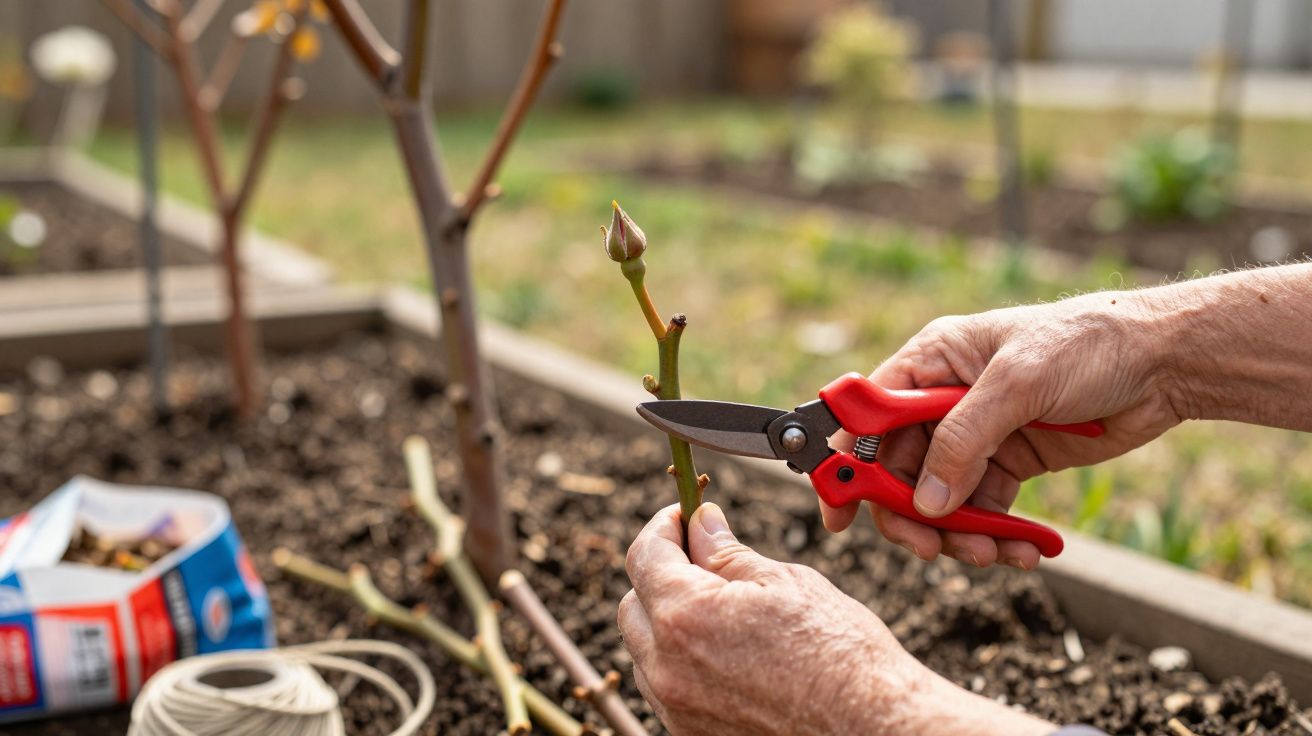
The border looks bare, the shrubs appear dejected, and there’s dead wood and faded shoots everywhere. It’s no surprise many gardeners feel the urge to cut everything back hard and make it look “tidy” in spring. With roses, though, that instinct often backfires quickly. If you start hacking in March without a plan, you can easily remove the very shoots that are already setting up next season’s buds.
Why radical March pruning ruins the rose display
In many garden centres, rose bushes are presented as if they’ve been trimmed with a ruler: all stems level, nothing unruly, everything “clean”. That look sticks in the mind, and plenty of hobby gardeners try to recreate it at home. So every stem gets shortened to the same length-often cut very low down. The plant may look neat afterwards, but the flowering is frequently disappointing.
Roses are not hedge plants. Their stems store energy and carry the starting points for new flowering side shoots. Cut too low and you remove a large share of the plant’s reserves.
Most blooms form on last year’s shoots-cut them off and you’re sawing away your flowers before they even have a chance to appear.
Typical consequences of an over-hard March pruning session include:
- Far fewer buds and smaller blooms
- The rose has to rebuild new wood first, instead of getting straight on with flowering
- The root system is weakened because the plant burns through stored reserves
- Large cuts create ideal entry points for fungal diseases such as black spot, powdery mildew and rust
- Late frosts can badly damage newly stimulated growth
Many people only notice the impact weeks later-when other roses are powering ahead and their own shrub is mostly leaf growth with very few buds.
The often-overlooked key to rose pruning: the “eyes rule”
The crucial detail in rose pruning is the so‑called eyes-the buds on the stem. These are small swellings beneath the bark from which new shoots and flowers will later develop. If you ignore them and cut “by feel”, you almost inevitably remove too much.
That’s why experienced gardeners use a simple rule of thumb: count the eyes on each stem before you pick up the secateurs. For bed roses and shrub roses, this is a widely used guide:
| Stem strength | Recommended number of eyes to leave |
|---|---|
| Very strong stem | Leave 4–5 eyes |
| Medium stem | Leave 3–4 eyes |
| Thin, weak stem | Leave no more than 2 eyes; often better to remove entirely |
Count from the base of the stem upwards. Make the cut just above the final eye you intend to keep, leaving a few millimetres of wood above the bud. Angle the cut slightly and slope it away from the eye so rainwater runs off and the bud is not left sitting wet.
Leaving three to five eyes per stem strikes the balance: enough strength for vigorous new growth, without producing a wild broom of thin, weak shoots.
Why the outward-facing eye makes the difference for rose pruning
It’s not only the number of eyes that matters-their direction matters too. Ideally, choose an eye that points outwards. That encourages new growth to develop away from the centre of the bush, keeping the middle open and airy.
This helps limit fungal problems because foliage dries faster after rain and air circulates more freely. At the same time, the plant forms a pleasing open shape rather than a dense, poorly ventilated tangle.
Before you cut: identify the rose type to avoid the classic mistakes
Before the blades start clicking, it’s worth a quick reality check: what kind of rose is actually growing in the bed? A huge number of pruning errors happen because all roses are treated the same.
Distinguish repeat-flowering and once-flowering roses
Repeat-flowering roses bloom several times through the season. They produce flowers largely on young wood and usually tolerate the classic late-winter/early-spring prune in March well.
Once-flowering roses, by contrast, deliver their full show only once a year-usually in early summer-and mainly on last year’s wood. If you cut these roses back hard in March, you remove the very growth that would have carried the flowers, leaving the shrub with little to no bloom for most of the season.
- Repeat-flowering roses: prune in late winter/early spring, using the eyes rule
- Once-flowering roses: thin out only, and prune after flowering, not before
Climbing roses: keep the framework, guide the side shoots
With climbing roses, a radical cutback can be particularly destructive because it wrecks the plant’s structure. The main framework-several strong, well-woody canes-should stay in place.
A typical March routine for repeat-flowering climbing roses:
- Select three to five strong, healthy main canes and secure them to the support.
- Remove old, dried, diseased or dead stems right at the base.
- Cut side shoots on the main canes back to two to three eyes, again making a slight angled cut above an outward-facing eye.
Each side shoot you leave with two to three eyes can later carry a whole cluster of flowers-provided it isn’t cut unnecessarily short.
Practical method: how to work along a rose bush in March
If you snip your way through the border at random, it’s easy to miss important details. A consistent approach works better-plant by plant:
- Sharpen and disinfect secateurs: clean cuts heal faster and pathogens are less likely to spread.
- Remove old and diseased wood: anything blackened, rotten or dead should go right back to the base.
- Thin crossing growth: stems that rub will wound each other; at each crossing, keep the better-placed stem and remove the other.
- Count the eyes: on every remaining healthy stem, count the target number of eyes first-then cut.
- Check the cut angle: always slightly sloped, a few millimetres above the chosen eye.
Done this way, it may take a few extra minutes, but you finish with a healthier, better-structured rose bush.
Common myths about rose pruning-and what’s really going on
Many gardeners rely on how things look, or on long‑standing neighbourly advice. Three misconceptions come up again and again:
- “The shorter you cut, the more flowers you get”: only partly true for very vigorous varieties, and even then only to a point. Roses still need enough wood as an energy reserve.
- “Cut every stem to the same height”: it looks tidy, but it encourages unnatural growth and weakens the plant. Varied stem lengths improve stability and distribute flowers more evenly.
- “Thick stems should always be cut back hardest”: strong stems can-and often should-keep more eyes, because they carry much of the flowering load later.
Timing: when is the right moment in March?
The calendar alone isn’t the best guide. It’s safer to take your cue from what’s happening outdoors. Many professionals use forsythia flowering as a signal: when those yellow shrubs open, it’s usually a safe moment to prune bed roses and repeat-flowering shrub roses.
If the rose buds still look completely dormant, wait a little. If they are already noticeably swollen, prune gently and avoid experiments. In colder, exposed areas, the best timing can slip into April.
Extra care after pruning: soil, feeding and protection
A neat prune on its own doesn’t guarantee abundant flowering. Once you’ve finished cutting, it’s worth paying attention to soil and ongoing care:
- Loosen the soil: gently cultivate the top layer without damaging roots so more air reaches the root zone.
- Apply organic feed: well-rotted compost or a dedicated rose fertiliser supports strong new growth.
- Add a thin mulch layer: bark humus or shredded prunings helps retain moisture and buffers temperature swings.
- Inspect the cuts: on very thick stems, check after a few days. If the cut has frayed, clean it up with a sharp blade.
If you garden in an area prone to frost, leave a few extra centimetres of stem. Should late frost damage the tips, you can trim back a little later without losing the entire shoot.
Hygiene and disposal: a small step that prevents big problems (added)
How you handle the prunings matters. Collect fallen leaves and removed diseased material and dispose of it responsibly-especially anything showing black spot or mildew. Leaving infected debris under the bush can reintroduce spores when conditions warm up.
Also avoid moving straight from one rose to another with dirty blades. A quick wipe with disinfectant between plants is a simple habit that can reduce disease transfer across the bed.
Training and spacing: helping the rose hold its shape (added)
After pruning, take a moment to look at spacing and supports. For shrub roses, aim for an open centre with evenly spaced stems so light reaches all sides. For climbing roses, tie main canes in a fan or near-horizontal position where possible; this can encourage more flowering side shoots along the length of the cane rather than only at the top.
Why it pays to look closely at the buds
Once you start paying real attention to the rose’s eyes, you quickly realise how much information those small swellings contain. You can see where the plant is truly active, which stems look vigorous, and which show little life. Over time, you develop a feel for how each variety grows in your own garden.
For hobby gardeners who don’t know every rose by name, this observation is often more valuable than any generic instruction. Whether it’s a bed rose, shrub rose or climbing rose: if you count the eyes in March instead of cutting on guesswork, you’ll usually be rewarded in summer with noticeably more flowers-and healthier plants too.






Comments
No comments yet. Be the first to comment!
Leave a Comment