
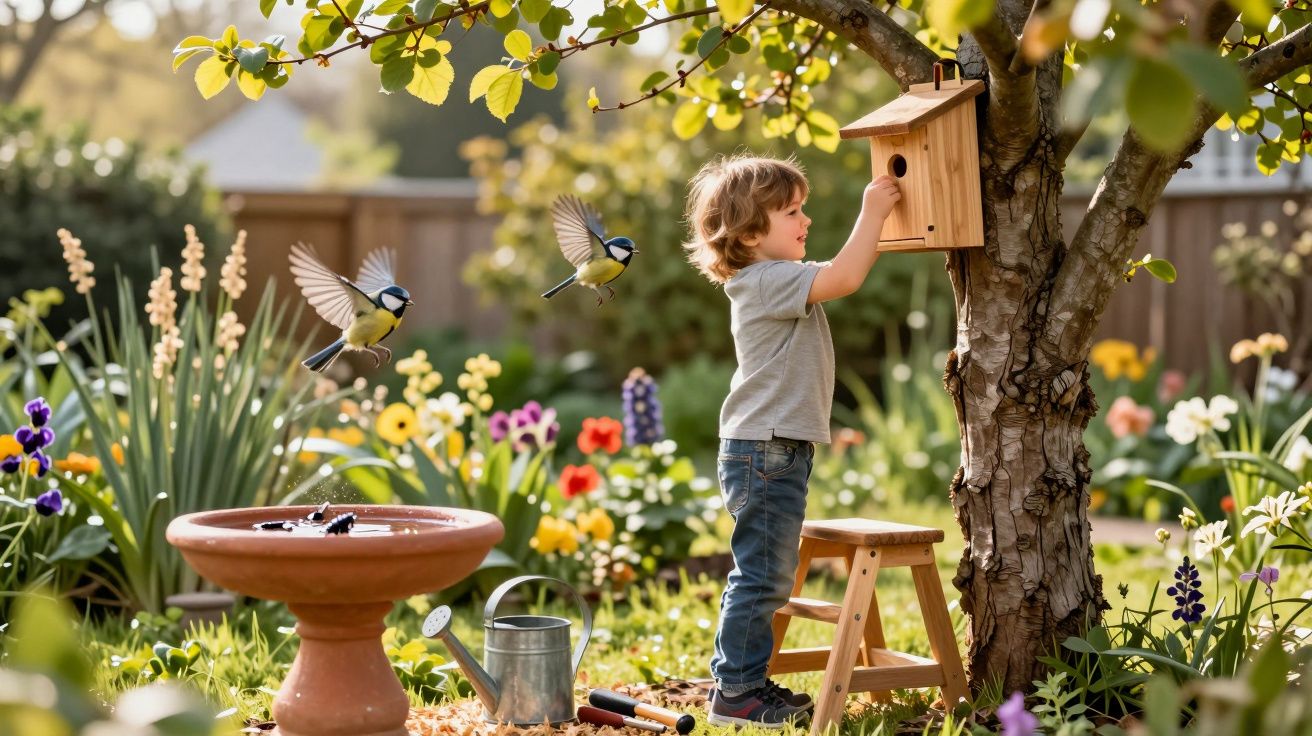
Anyone who has watched a tit up close-either feeding its chicks or darting through branches in pursuit of insects-quickly realises what these birds bring to a garden: constant movement, real vitality and, almost as a side benefit, natural pest control. With a few purposeful tweaks, an ordinary plot can become a safer place for wildlife while helping you rely less on chemical solutions.
Why tits do your garden so much good
Tits are far more than colourful visitors at a feeder. They consume vast numbers of aphids, caterpillars and other garden pests that weaken fruit trees, roses and vegetable plants. During the breeding season, a single pair can deliver several hundred caterpillars a day to their nestlings.
If you encourage tits, you automatically reduce the need for chemical treatments in the garden-and strengthen the natural balance.
In many residential areas, old trees with natural cavities are scarce. That shortage puts tit populations under pressure because safe nesting sites are harder to find. A bird-friendly garden can act like a small lifeboat amid gravel gardens, steep roofs and heavily sealed surfaces.
There is another benefit too: birds in the garden are proven to be calming. Many people find that watching them reduces stress and increases their sense of connection to nature. Tits are often quite confiding, regularly coming close to the house and easy to observe from a window or balcony-an ideal starting point for children and adults who want to learn more about wildlife right on their doorstep.
The ideal nest box for tits (blue tit, great tit and more)
The single most important step for attracting tits long term is putting up a suitable nest box-but not every off-the-shelf wooden box meets what they actually need.
Materials and construction
- Untreated wood: Durable timbers such as larch or oak work best, left untreated and free from varnishes or paint. That helps prevent harmful substances from getting into the nest.
- Sufficient wall thickness: Around 2 cm of wood insulates far better than thin plywood, protecting chicks from both heat and cold.
- Removable roof: A lid that opens makes cleaning after the breeding season much simpler.
- No perch: The once-common little peg below the entrance mainly helps predators such as cats and magpies, so it is better omitted.
The entrance size is especially important, because it determines who can move in.
| Species | Recommended entrance hole diameter |
|---|---|
| Blue tit and other small tit species | approx. 28 mm |
| Great tit and slightly larger species | approx. 32 mm |
This keeps larger competing species out and lowers the chance of, for example, sparrows taking over the box.
How to hang a nest box properly
Even the best nest box is far less useful if it is installed in the wrong place. Tits are sensitive to disturbance and to obvious risks.
- Height: Aim for at least 2 m above the ground-higher is often better-so cats and martens have little chance.
- Direction: East or south-east is ideal. That gives gentle morning sun, while offering protection from the fiercest midday heat and prevailing westerly winds.
- Quiet surroundings: Avoid constant door-slamming and do not place it right beside a terrace. Often, a few metres away from seating areas is enough.
- Weather protection: A slightly overhanging roof, plus a trunk or wall behind the box, helps reduce driving rain and draughts.
The best time to put a box up is late winter to very early spring, when birds are actively searching for nesting sites. If you only install it in May, you will often miss the first brood. Leave it in place: many tits return to the same box in following years.
Extra tip for UK gardens: if you have frequent cat activity, consider fitting a simple predator guard (such as a metal entrance plate) and placing the box where nearby branches do not provide an easy launch point. It supports the same goal as correct height and positioning-reducing avoidable predation pressure.
A garden where tits genuinely feel at home
One nest box alone rarely leads to a lasting, healthy population. The wider garden needs to provide food, shelter and varied structure.
More insects, more tits
In spring, the main diet of wild tits consists largely of caterpillars, beetles and spiders. A “sterile” garden removes their food base.
Less perfection, more life: a slightly “untidy” garden produces the best tit kitchen.
Practical changes that can show results quickly:
- Create a wildflower area, or at least a strip of native wild plants, rather than keeping everything as short ornamental lawn.
- Use no pesticides, or only very targeted, minimal applications.
- Leave leaf piles and deadwood corners as refuges for insects and tiny creatures.
- Plant hedges of native shrubs such as dog rose, elder or blackthorn.
These features provide food and cover from birds of prey. Tits generally prefer not to cross wide, open spaces; instead, they hop between shrubs and trees as “stepping stones” on the way to the nest box.
Water and food as a bonus
In dry summers, small birds can become stressed quickly if there are no puddles, streams or damp spots nearby. A shallow dish of fresh water helps enormously. It should be:
- only a few centimetres deep at most,
- positioned in partial shade,
- cleaned and refilled daily.
Feeding is sometimes debated. Many experts now support year-round feeding, provided it is high quality and kept hygienic. Tits especially enjoy:
- sunflower seeds (hulled or in shell),
- peanuts sold specifically as bird food,
- high-energy suet blocks,
- in winter, classic suet balls without nets (better in holders).
One crucial point: nets can become traps if birds-or even hedgehogs-get tangled. Sturdy metal or wooden feeders are a safer choice.
Extra hygiene note: where several birds share feeders and water, disease can spread more easily. Rotating feeder locations, cleaning them regularly, and removing wet or mouldy food helps keep your feeding station beneficial rather than risky.
What can easily go wrong when supporting tits
Good intentions can still lead to problems. Common pitfalls include:
- A box in blazing midday sun: the brood can overheat, and chicks may die in the nest.
- Constant disturbance from people and pets: boxes above the barbecue area, by the front door or next to a trampoline often stay empty.
- Poor hygiene: if a box is not cleaned for years, parasites and germs build up-tits will avoid it.
- Old or sharp metal parts: rusty nails, protruding screws or sharp-edged entrance holes can injure wings.
After the breeding season-usually from late summer onwards-a quick check is worthwhile: remove old nesting material and clear heavy dirt, but avoid harsh cleaners. A dry brush and a little hot water are sufficient.
How children benefit from a tit-friendly garden
A garden visited regularly by tits becomes an outdoor classroom. Children can watch adults bringing food tirelessly, learn different calls and quickly begin to tell species apart.
If you like, you can install a second box slightly lower with a hinged side panel. Under adult supervision, it allows a brief look inside when the adult birds are out of sight-only very rarely, and with great restraint during the breeding period. Many conservation organisations publish clear guidance on when such checks are tolerable for the birds and how to do them responsibly.
More ideas for a bird-friendly outdoor space
What helps tits usually supports other species too. A few additions can increase diversity in your garden:
- Nesting aids for solitary bees on a sunny house wall.
- A mixed hedge line of dense shrubs as a screen and nesting habitat for various birds.
- A small, shallow pond edge with marginal plants where birds can drink safely.
- Sensible lighting: avoid permanent garden lighting, as artificial light disrupts insects and can stress birds.
If you make changes step by step, the shift is often obvious: first a few tits appear, then sparrows, robins or blackbirds follow. A well-placed nest box, a more natural garden, a reliable water source and thoughtful feeding can turn your plot into a long-term magnet for feathered visitors-showing just how powerful the simple measure of “the right box in the right place” can be.




Comments
No comments yet. Be the first to comment!
Leave a Comment