
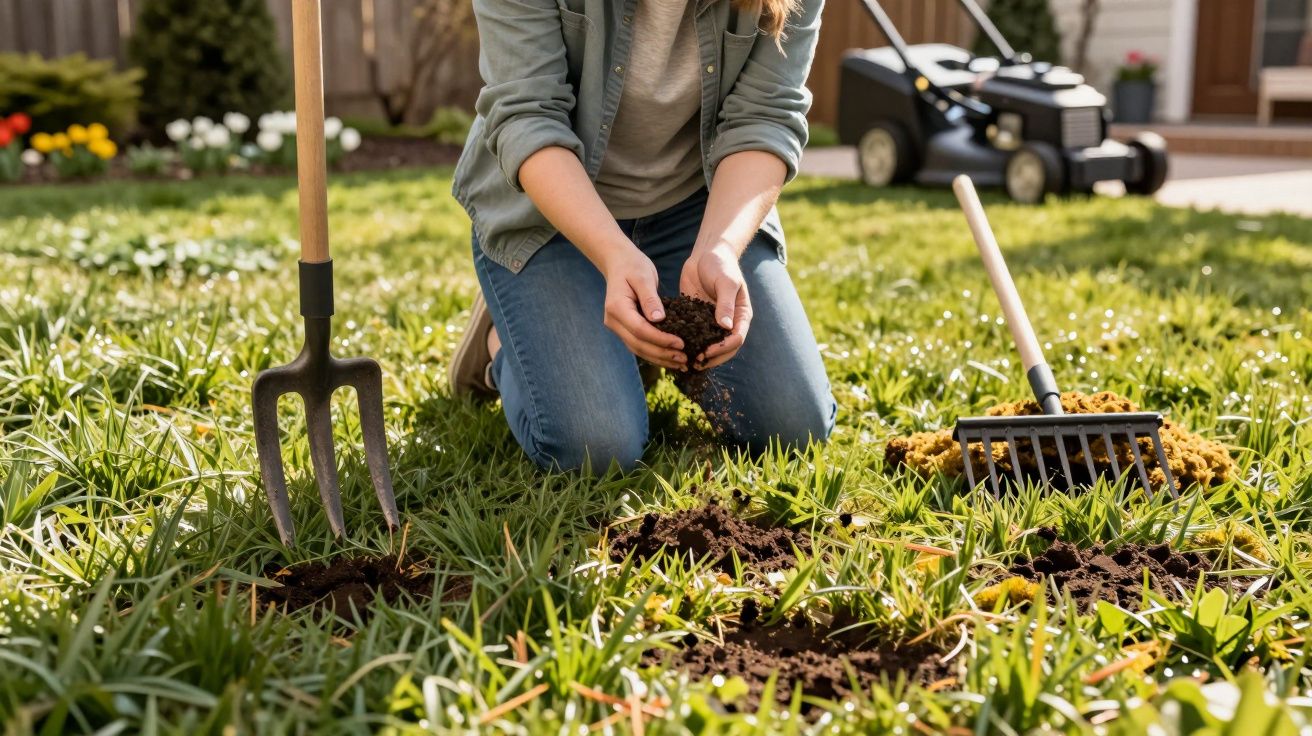
Bare patches, yellowing, and a squelchy surface underfoot.
Many people reach for chemical moss killers on autopilot at this time of year. Garden professionals tend to recommend a different approach: if you tackle three straightforward jobs in March, you can thicken the lawn noticeably, push moss right back and improve the soil for the long term - without any specialist products.
Why lawns suffer after winter (and why moss appears)
After months of rain, occasional snow and weak sunlight, the ground is under real strain. Water collects in dips, the turf becomes thatchy and the soil gets compressed. That’s when moss spreads quickly - not as the “enemy”, but as a warning sign that conditions suit it better than grass.
Moss in a lawn almost always means the soil is compacted, poorly aerated and usually too damp or too shady.
Rather than treating the green with moss killers, it pays to focus on the cause. Compacted soil holds water like a sponge. Grass roots are starved of oxygen, stay shallow and weak, and growth slows. Moss, on the other hand, tolerates these conditions and fills the gaps.
This is exactly what March lawn care targets: loosen the soil, let excess water drain away, and get air down to the roots. Once that happens, grass has the advantage again.
The March routine for a denser lawn: 3 jobs that beat moss
The most effective sequence is: 1. Aerate to relieve compaction and improve airflow. 2. Topdress to feed and improve soil structure. 3. Rake out moss and thatch, then start mowing higher.
Doing these in order matters: aeration creates channels, topdressing fills and improves them, and raking removes the material that blocks light and air at the surface.
Task 1: Aerate the lawn with a garden fork or aerator
The key step is aerating the soil. On small areas, a standard garden fork is enough. On larger lawns, a dedicated aerator (including hollow-tine types) or a hire machine from a DIY shop can make the job quicker.
How to aerate with a garden fork (for most home gardens)
- Wait until the ground is no longer frozen and isn’t waterlogged.
- Push the fork tines about 8–10 cm into the soil.
- Gently lever the handle back or to the side so the ground cracks open slightly.
- Repeat roughly every 15 cm, working methodically across the lawn.
- Be especially thorough where puddles form or the ground sounds/feels “hard”.
This creates lots of small air channels. Water is less likely to sit on the surface, oxygen reaches deeper layers, and roots can spread more effectively.
One dry afternoon is often enough to aerate a medium-sized lawn from end to end.
If standing water is a recurring issue, plan to aerate once a year. Depending on where you live, the sweet spot is usually late February to late March, as soon as the soil has warmed a little.
Task 2: “Feed” the lawn with a thin layer of soil (topdressing)
After aerating comes a step many home gardeners still overlook: topdressing - spreading a thin layer of soil or a soil–sand mix over the lawn.
A practical topdressing mix for UK gardens
A simple, proven blend uses three components: - fine, sieved garden soil or multipurpose compost, - coarse sand (not children’s play sand), - mature, sieved compost or leaf mould.
All ingredients should be dry and crumbly. If you can’t get everything easily, using at least coarse sand is still worthwhile - it’s far better than doing nothing.
How to apply topdressing correctly
Scatter the mix thinly over the aerated lawn. As a guide, one shovel per square metre is usually plenty. The aim is not to bury the grass, but to leave a light veil across the surface.
Then use a stiff broom (a yard brush works well) to brush the material into the holes and fine cracks left by the fork - that’s where it does the most good.
Topdressing improves soil structure, helps water drain away and supplies nutrients to grass roots - a natural booster for a thicker lawn.
Over time, the sand, soil and compost integrate with the existing ground. The surface becomes looser and more even, and far less prone to waterlogging. Roots grow deeper, and the lawn becomes denser and more resilient underfoot.
Task 3: Rake out moss aggressively - then mow higher
This is the stage that can look alarming at first, which is exactly why it’s so effective.
Pull moss and thatch out hard
Before the first spring cut, it’s worth raking the lawn with real intent. A traditional lawn rake with metal tines, or a scarifying rake, is ideal.
- Work when the grass is as dry as possible.
- Rake firmly in both directions (lengthways and across).
- Remove thatch, dead grass and moss generously.
- Collect the debris and put it on the compost heap.
On heavily thatched or mossy lawns, it’s normal to end up with several wheelbarrow loads. It looks brutal, but it gives the grass light, air and space to regrow.
First spring mow: higher is better than shorter
Mow soon after raking, but don’t scalp the lawn. For the season’s first cut, a height of about 4–5 cm is a good starting point. Cutting lower weakens grass unnecessarily.
After raking and the first mow, the lawn often looks worryingly bare - but within one to two weeks it typically grows back much thicker.
This is where the earlier soil work pays off: roots have more air and nutrients available, so grass can rebound quickly and crowd moss out.
When to do these jobs (best timing through late winter and March)
In milder areas, you can begin as early as late February once the ground is no longer frozen. In cooler regions, mid to late March is usually the safer window. The crucial point is to avoid working on saturated soil. If the ground is too wet, you can do more harm than good by crushing the turf.
| Region | Start window | Tip |
|---|---|---|
| Mild low-lying areas | Late February to early March | Begin once the soil is frost-free and has dried slightly. |
| Mid-altitude areas | Mid-March | Watch for a bit of soil warmth; waiting a few extra days can help. |
| Cooler upland areas | Late March | Don’t work frozen ground or heavily waterlogged soil. |
Helpful extras for a lawn that stays strong long term
If you’ve taken the time to relieve compaction, work in a topdressing mix and remove moss, you’ve built an excellent foundation. A few additional measures can strengthen the results even further.
Fertilise properly - don’t overdo it
An organic or organo-mineral lawn fertiliser in April supports growth without scorching the soil. Avoid heavy feeding immediately after aerating; give the grass time to produce new roots first. Too much nitrogen can drive fast but soft growth, which makes it easier for moss to return.
Reseed bare patches
Where larger gaps remain after raking, overseed with a dedicated lawn repair seed mix. The freshly opened surface is ideal for germination. Lightly rake the seed in, tread gently to improve contact, and keep the area evenly moist for the next few weeks.
Two overlooked causes: shade and soil acidity
If moss persists in the same areas every year, look up as well as down. Overhanging shrubs, dense hedges and low tree canopies can keep turf damp and shaded, especially in winter. Pruning to increase light and airflow - or using a shade-tolerant grass seed mix in problem corners - can make a noticeable difference.
It’s also worth checking the lawn’s soil pH if moss is a constant companion. Many grasses struggle in more acidic conditions, while moss copes well. A simple home soil test kit can guide you; where pH is low, applying an appropriate lime product at the right time of year can help grass compete more effectively.
Why these three tasks outperform any moss killer
Chemical moss treatments usually tackle the symptom: the unwanted green disappears for a while, but the underlying soil issue remains. The March routine of aeration, topdressing, and vigorous raking addresses the real triggers - compaction, waterlogging and poor light/air at root level.
The lawn responds by rooting deeper and thickening up. Repeating the process regularly strengthens the effect season after season, gradually creating a robust, hard-wearing green carpet that stands up better to everyday life - children kicking a ball about, a weekend barbecue, or simply walking barefoot in summer.



Comments
No comments yet. Be the first to comment!
Leave a Comment