
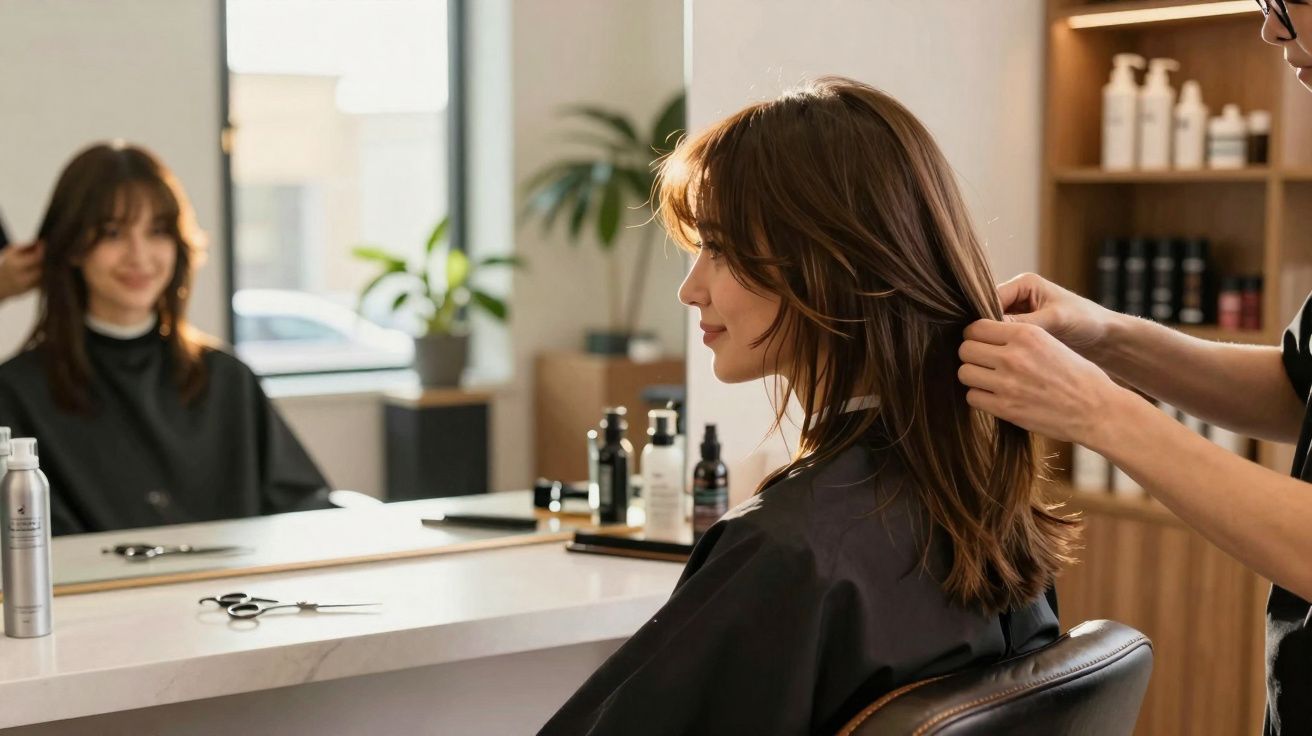
The girl ahead of you in the coffee shop has them. Not the curtain bangs you spent all of 2024 saving to your camera roll, but something gentler and more broken-up - like her fringe has had a proper life rather than being pressed into submission. It shifts when she laughs. It parts, then finds its way back, as if it’s running on its own algorithm.
You catch yourself looking a second too long, trying to label it. Not baby bangs. Not a shag. And definitely not that sleek “French girl” fringe that dominated Instagram for years. This looks like bed hair - only it’s deliberate.
The barista calls her name. She sweeps her hair back, and those tiny, imperfect pieces around her face pick up the light. Under the table, you open your phone and type: “messy new bangs 2026 trend”.
Welcome to shattered fringe.
From polished curtain bangs to lived-in shattered fringe
Curtain bangs had an impressive, almost unbeatable run. They softened faces, disguised dodgy trims, framed cheekbones and made it easy to pretend we’d stepped out of a 1970s film. But after years of symmetry, round-brush technique and blow-dry tutorials, that neat, glossy swoop can start to feel… a bit rehearsed.
Shattered fringe is the scruffier follow-up - and it’s designed to look better the less you try. Instead of a uniform curtain effect, it relies on micro-layers through the front section: little fragments that don’t all finish at the same point. The fringe doesn’t fall into two perfect panels; it lands where it lands, in airy, broken strands that skim brows, cheeks, and sometimes even the jawline.
It’s the kind of fringe that often looks best on third-day hair, not freshly washed day-one hair.
Look at backstage images from early 2026 fashion weeks and it’s hard to miss. It’s on blunt bobs, on long mermaid lengths, and even on thick curls that once treated scissors as an enemy. The shared detail is that “shattered” edge: no hard line, no dense block across the forehead - just scattered, face-framing pieces.
One Paris stylist described it as “a fringe sketched in pencil that keeps smudging”. Rather than carving out a single clean arc, the hairdresser makes tiny vertical snips into the front section so light can pass through. That’s why, in photos, shattered fringe can read like a soft-focus haze around the eyes.
On camera it’s subtle; in real life, it changes the whole feel of your face.
Why shattered fringe is taking over in 2026
There’s a practical reason this cut is everywhere right now. We spent years chasing the flawless blowout: the exact bend from a curling iron, the balanced curtain bang, the just-right swoop. Then real life showed up - humidity, commuting, sofa-working, and the general lack of appetite for spending 25 minutes styling only your fringe.
Shattered fringe is the sensible rebellion. It’s built to tolerate the realities of hair: it separates, it gets a bit greasy at the roots, it lifts on one side and collapses on the other. The shape is designed for movement and “imperfections” instead of fighting them. When you stop trying to control every strand, your natural texture stops being a problem and starts being the point.
It isn’t messy just to be messy. It’s controlled chaos - with structure hidden inside the disorder.
A quick note on upkeep (the part most trends skip)
Shattered fringe tends to be forgiving, but it still benefits from small, regular check-ins. If you want it to keep that light, broken edge (instead of turning into a heavy line), plan a quick trim about every 6–10 weeks, depending on how fast your hair grows and how short you’ve gone around the brows. You don’t need weekly maintenance, but you do need occasional refinement.
It’s also worth remembering that shattered fringe and strong centre partings don’t always get along every day. Some mornings it will want to split; other mornings it will want to sweep. That variability isn’t a flaw - it’s part of what makes it look modern.
How to ask for – and actually wear – a shattered fringe
The first rule: don’t sit down and request “shattered fringe” as if it’s a set item on a salon price list. Your hairdresser can’t read minds. Take at least three reference photos: one on a hair type like yours, one that’s slightly too short, and one that’s a touch longer than you think you want. Then describe how you really wear your hair on an average Tuesday, not in your fantasy routine.
Ask for a soft, piecey fringe with internal layering. Useful words to include are “texture”, “weight removal”, and “no straight lines”. Most stylists will point-cut into the fringe, removing tiny notches so the ends look feathery rather than blunt.
If they reach straight for thinning shears, it’s fine to pause and ask what they’re aiming to achieve first.
The second rule is emotional, not technical: shattered fringe often looks slightly undone on day one. That’s not a mistake - it’s the design. If you’re used to mirror-perfect curtain bangs, your first thought may be, “Have they ruined it?” Give it 48 hours, a couple of face washes, and a bit of dry shampoo at the roots. That’s when the shape tends to settle into itself.
A classic error is going too short “so you can see the shattered effect”. It’s a trap. When those little pieces bounce above your brows, you can accidentally drift into micro-bang territory. Start longer (around cheekbone level), then book a quick tweak a fortnight later if you decide you want more impact.
Let’s be realistic: hardly anyone trims their fringe weekly, no matter what TikTok insists.
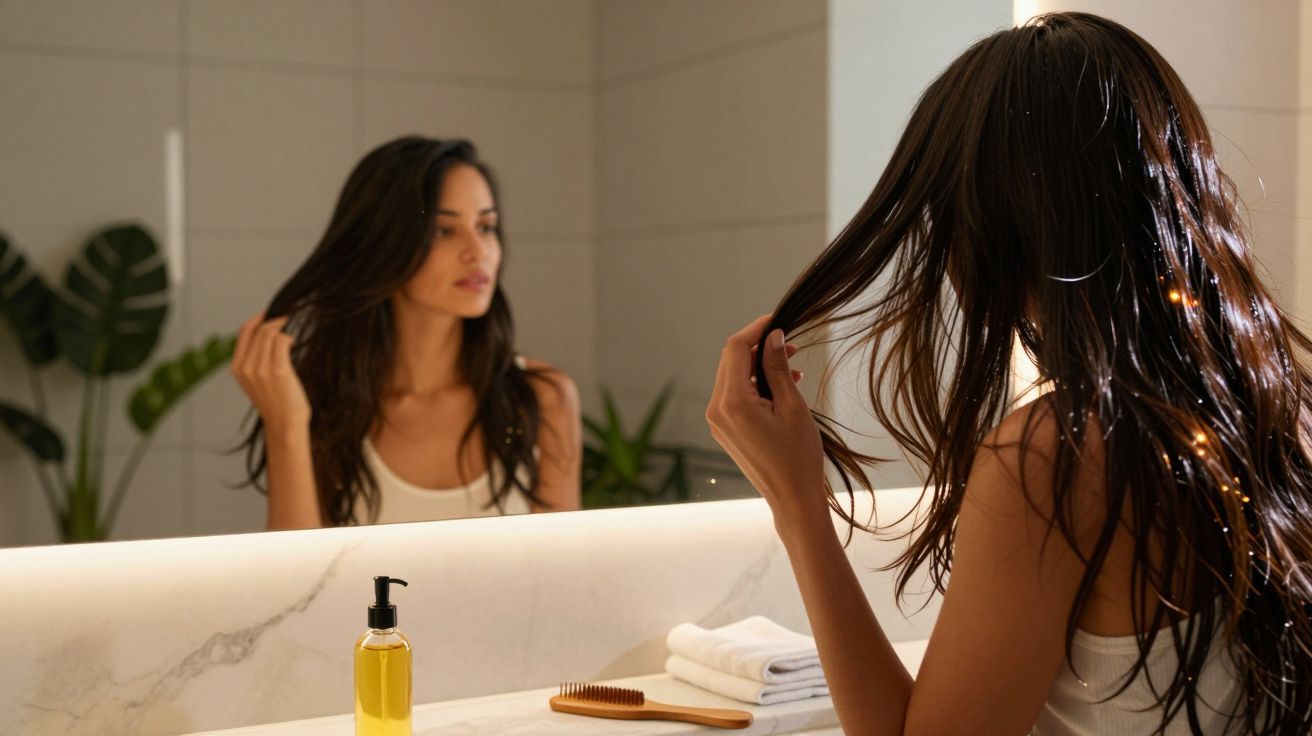
The third rule is everyday styling. Shattered fringe suits low effort - but it likes a small amount of guidance. Put a pea-sized amount of lightweight cream or texturising spray on damp fingertips, then pinch a few random strands forwards, especially through the centre and at the sides. Let it air-dry, or give it a quick blast with a dryer while tipping your head slightly forward.
The aim isn’t neatness. It’s intentional dishevelment.
“Think of shattered fringe as the denim of bangs,” says London hairstylist Mara Ellis. “It looks better when it’s lived in, and you can dress it up or down. The magic happens in the frayed edges, not the straight hem.”
- Ask for: “soft, shattered fringe with internal texture, no blunt line”
- Ideal tools: lightweight styling cream, salt spray, a round brush (reserved for special occasions)
- Best lengths: grazing brows for subtlety, skimming lashes for drama
- Works with: waves, straight hair, loose curls, shaggy bobs, grown-out layers
- Avoid: very heavy, thick fringe lines cut straight across the forehead
Why shattered fringe feels like the most honest hair trend of 2026
Visually, the appeal is obvious. Faces read softer, jaws look less severe, and eyes can appear bigger under those scattered wisps. But it also feels extremely 2026 to embrace a look that doesn’t require a ring light and a 12-step routine just to seem presentable. Shattered fringe quietly says: “I tried, and then I got on with my day.”
There’s confidence in letting people see that your hair moves - that it separates, shifts, and occasionally gets caught on lip gloss. We all know that moment: your once-perfect curtain bangs split down the middle on a sweaty commute and you feel like a wilting influencer. With this cut, that same moment reads like a choice.
Some people will keep their sharp bobs and glass hair, and fair enough. Everyone else can lean into this softer edge - a slightly broken halo around the face that forgives late nights, rushed mornings, and skipped washes.
The real question isn’t “Is shattered fringe trendy?” Trends come and go. The styles that stick are the ones that let you look like yourself - just a bit more awake around the eyes. If curtain bangs always felt like a costume on you, shattered fringe might feel like the version that finally fits.
| Key point | Detail | Value for the reader |
|---|---|---|
| Cut concept | Soft, piecey fringe with irregular lengths and internal texture | Helps you describe clearly what you want at the salon |
| Styling routine | Minimal heat, lightweight cream or spray, finger-shaping while damp | A low-maintenance look that still appears intentional |
| Suitability | Works across most hair types and face shapes, from bobs to long layers | Makes the trend achievable without committing to a full overhaul |
FAQ:
- Does shattered fringe work on very fine hair? Yes - provided the stylist doesn’t take out too much weight. The “shattered” look should come from tiny point-cuts rather than heavy thinning, and keeping it slightly longer helps fine hair avoid looking wispy or stringy.
- Can I get shattered fringe if I have curly or wavy hair? Yes. Ask for it to be cut on dry hair in its natural texture so your stylist can see the true pattern, and keep the length a touch longer to prevent surprise shrinkage above the brows.
- How do I grow out my old curtain bangs into a shattered fringe? Let them grow beyond your cheekbones, then ask your stylist to soften the ends with gentle vertical snips. That keeps the length while breaking up the outline so it stops reading “grown-out curtain” and starts looking “shattered”.
- Will I need to style it every day? You’ll probably adjust it most days, but only in small ways: a bit of water on your fingers, a quick scrunch of product, maybe a 30-second blast with a dryer if it’s flattened overnight. A full blow-dry is optional unless you enjoy it.
- What if I hate it after the first cut? Give it a week, experiment with different partings, and try clipping a couple of pieces back. If you still don’t like it, ask your stylist to blend the shattered fringe into soft face-framing layers - the irregular ends grow out far more gracefully than a blunt fringe line.

Comments
No comments yet. Be the first to comment!
Leave a Comment