
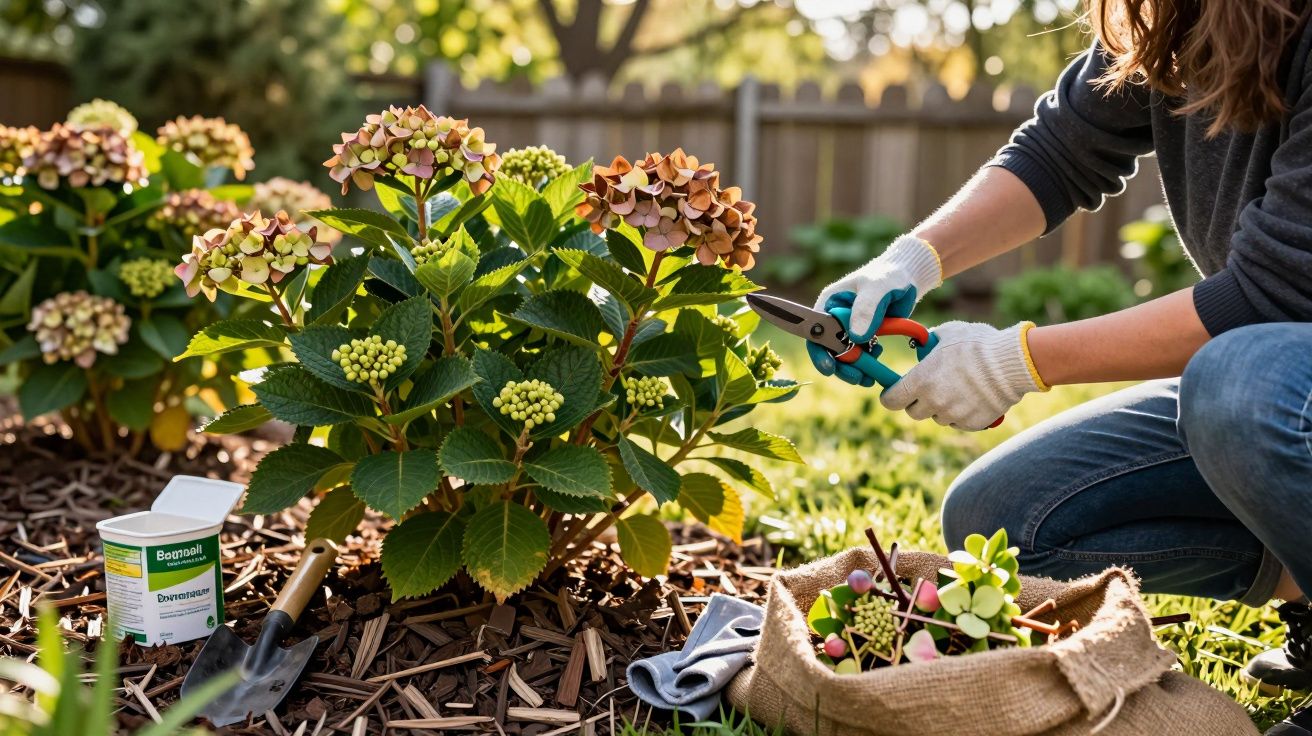
Hydrangeas can look tired and reluctant to flower - but the fix is often surprisingly straightforward.
If you plan a few targeted jobs in early spring, you can effectively “wake” your hydrangeas up. The essentials are: timing your pruning correctly, using the right technique for your hydrangea type, and giving a little extra attention around the root zone. Do that, and pale shrubs can return to dense, colourful flower heads - not just for one summer, but for years to come.
Why hydrangeas suddenly produce hardly any flowers
The classic scenario is a strong, leafy shrub with rich green growth - yet only a handful of blooms. It’s easy to blame a poor summer, too much rain, or “bad soil”. In reality, the cause is very often more specific: pruning at the wrong time (or too hard), nutrient shortfalls, and stress from frost or drought.
Hydrangeas effectively decide between late winter and early spring how generously they will flower in summer.
During this period, buds form and mature. If you cut too much - or cut at the wrong moment - you can unknowingly remove a large proportion of the season’s flowers. The good news is that a clear plan for pruning and aftercare can restore flower power step by step.
The right moment: when to prune hydrangeas in spring
In most UK gardens, the best window is usually from late February to early March. The worst frosts are typically easing, and buds are visibly swelling but not yet opening.
- Don’t cut too early if hard night frosts are still likely.
- Don’t leave pruning until autumn - it can increase cold damage over winter.
- Before making any cut, check both the buds and the condition of the wood.
Use the stems as your guide: plump buds on firm, brown wood usually indicate a safe time to start. Soft, blackened, or heavily frost-damaged shoots should be removed decisively.
Key hydrangea pruning question: does my hydrangea flower on old wood or new wood?
This is the point that most strongly determines success. Not every hydrangea responds the same way to pruning. If you know where the flower buds form, you can avoid accidentally pruning away the entire display.
| Hydrangea group | Flowering habit | Pruning approach |
|---|---|---|
| Garden hydrangea (Hydrangea macrophylla), lacecap hydrangea, mountain hydrangea, oakleaf hydrangea, climbing hydrangea | Flowers mainly on last year’s wood | Light thinning only: remove old flower heads, take out a few of the oldest stems at the base |
| Panicle hydrangea (Hydrangea paniculata) | Flowers on this year’s growth | More robust pruning is fine: shorten stems noticeably |
| Smooth hydrangea such as ‘Annabelle’ (Hydrangea arborescens) | Also sets buds on new growth | Hard pruning possible: cut back to just above ground level |
If you’re unsure, take the cautious route and remove less. With older shrubs, a summer photo can help you see where blooms formed, making it easier to prune correctly the following spring.
Three simple pruning rules for flower-filled hydrangeas
1) Prune garden hydrangeas and lacecap hydrangeas gently
These popular hydrangeas form their flower buds the previous year. A severe spring cut often removes almost all the coming flowers. A light, careful tidy is usually enough:
- Snip off only the faded flower heads, cutting just above a strong pair of buds.
- Remove thin, weak, dead, or clearly damaged stems at the base.
- Each year, take out one to three of the oldest, most woody stems completely to gradually renew the shrub.
This gradual rejuvenation increases light and air within the plant - and, over time, typically leads to more blooms rather than fewer.
2) Cut panicle hydrangeas back more firmly
Panicle hydrangeas bloom on new wood, so they cope well with a bolder approach.
Reduce all stems by roughly one third to one half, cutting just above a pair of outward-facing buds. This encourages a sturdy framework that supports strong, upright flower panicles through summer.
The fewer buds you leave on each stem, the larger and more striking the individual flower heads tend to be.
If you’d prefer more flowers overall (but slightly smaller ones), leave more buds and prune less severely.
3) ‘Annabelle’ and similar smooth hydrangeas can be cut almost to ground level
With well-known varieties such as ‘Annabelle’, bravery is often rewarded. Because these hydrangeas flower reliably on fresh shoots, cutting back to around 20 cm above the ground is perfectly acceptable. This promotes thick, vigorous stems that hold the heavy, rounded blooms more effectively.
Do consider exposure, though: in very windy gardens, it can be sensible to cut a little higher so multiple branches develop and provide extra support.
After pruning: soil care, feeding, and protection
Pruning alone rarely delivers the best result. What you do afterwards strongly affects vigour and flowering.
Clear the base and replenish nutrients
Start by removing anything unhealthy around the root area. Old mouldy or spotted leaves, fallen flower debris, and dead plant material should go into council green waste or general waste - and not onto the compost heap if you suspect fungal problems.
Then apply either a thin layer of well-rotted compost or a dedicated hydrangea feed. These typically provide enough potassium alongside moderate nitrogen - encouraging growth without pushing the plant into soft, overly lush shoots.
Mulch to conserve moisture and support flowering
After feeding, add a loose mulch layer such as bark chips, leaf mould, or chipped prunings. This helps in several ways:
- The soil stays moist for longer.
- Temperature swings around the roots are less extreme.
- Weed germination is reduced, so hydrangeas face less competition.
Mulch is especially valuable for young plants, as their roots haven’t yet reached deeper, more stable moisture.
Water properly and keep an eye on late frosts
Hydrangeas prefer consistently moist soil, but they dislike waterlogging. After pruning and feeding, a thorough watering is worthwhile - particularly if winter has been unusually dry.
On clear nights in March and April, late frosts can damage swelling buds. A light horticultural fleece draped over the shrub can protect buds and tender new shoots. Frost damage often becomes obvious only weeks later, when shoots blacken or shrivel.
Practical tips for consistently strong hydrangeas
Hydrangeas are often described as “temperamental”, but they’re simply quick to show when something isn’t right. A few everyday habits make a noticeable difference:
- Position: Partial shade is ideal; harsh midday sun stresses many varieties.
- Soil: Loose, humus-rich, and slightly acidic suits them best; in very chalky areas many gardeners opt for containers.
- Watering: During hot spells, water less often but deeply, rather than giving frequent small amounts.
- Monitoring: In spring and summer, check for pests such as aphids and for leaf spot early, then act promptly.
Colour changes - such as pink turning to blue - are strongly influenced by soil pH and aluminium availability. Specialist products can steer this, but rapid, repeated changes can do more harm than good. It’s usually better to choose a direction and adjust conditions steadily.
Tool hygiene and clean cuts (often overlooked)
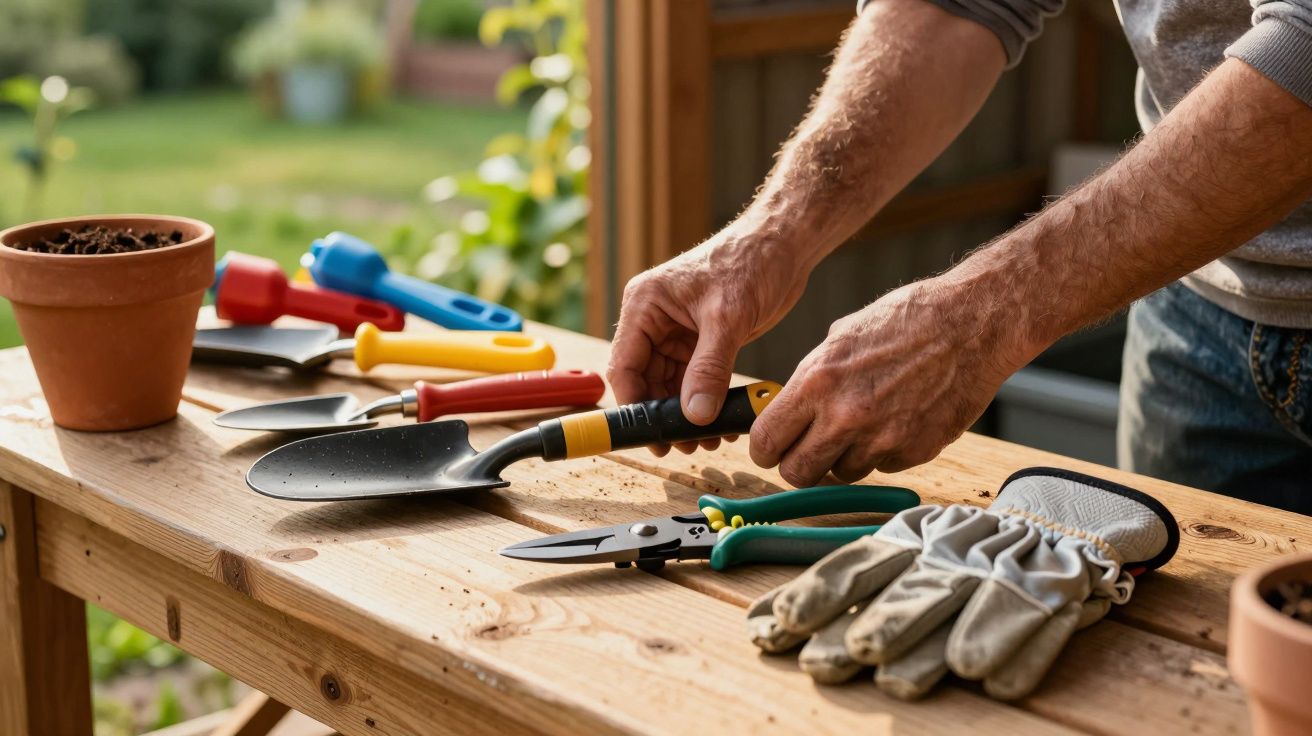
Hydrangeas recover faster when cuts are neat and tools are clean. Use sharp secateurs for thinner stems and loppers for older wood so you don’t crush the branches. If you’re removing any diseased material, wipe blades between plants (or between cuts on the same plant) with disinfectant to reduce the risk of spreading problems.
Also aim to cut slightly above healthy buds without leaving long stubs. Stubs can die back and become entry points for disease, particularly in cool, damp weather.
Container hydrangeas: extra care in spring
If you grow hydrangeas in pots, they dry out much faster and run out of nutrients sooner than those in the ground. Check whether roots are circling the pot; if they are, move up to a slightly larger container with fresh ericaceous compost (or a suitable mix for acid-loving plants). In spring, containers may also need more frequent watering - especially if they’re sheltered from rainfall under eaves.
What many people underestimate: patience and a clear plan
Hydrangeas are long-lived shrubs. A poor pruning decision or a hard frost rarely kills the plant permanently - it usually costs you a season. If you return the next year with consistent, methodical pruning and care, abundant flowering commonly comes back.
The formula is simple: check in late winter, prune wisely in spring, keep soil and water on track - then let the shrubs do what they were bred to do in summer: carry bold, generous flower heads in white, pink, blue, or violet that make the whole garden feel refreshed.




Comments
No comments yet. Be the first to comment!
Leave a Comment