
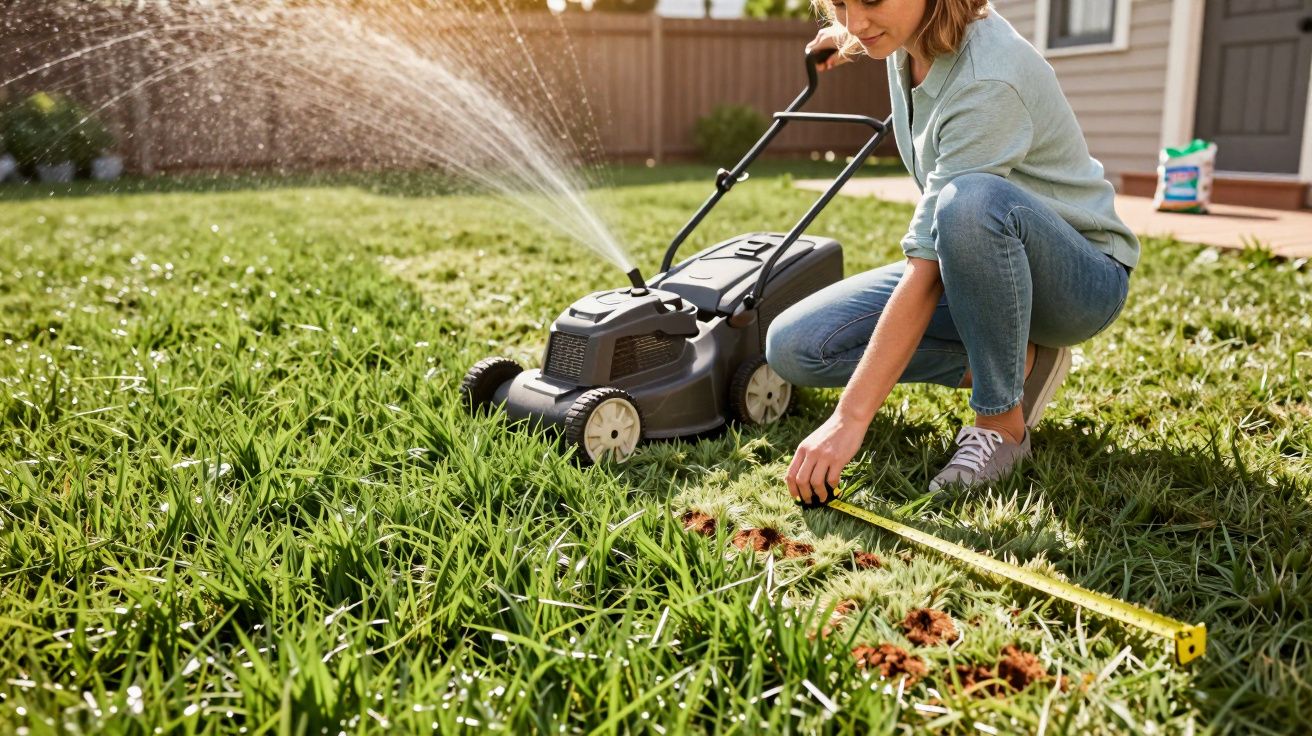
Most people reach first for fertiliser, extra watering or pricey grass seed. Yet the real gamechanger is often sitting on the lawn mower itself: the cutting height adjustment. If you consistently match the cutting height to your lawn type and the time of year, you protect the soil, encourage deeper roots and end up with a tough, richly green carpet instead of a scorched patchwork.
Why cutting height can make or break your lawn
Every blade of grass needs enough leaf area to generate energy for the roots through photosynthesis. Cut too low and you remove those “solar panels”: growth slows, the soil heats up, and gaps open up for weeds and moss to move in.
Rule of thumb: never remove more than one third of the current grass height in a single mow - the well-known one-third rule.
Ignore that rule and you effectively shave the lawn. Gardeners call this scalping: the growth points are damaged, the grass retreats, and bare patches appear. Those thin areas dry out quickly and become perfect launch pads for dandelions, clover and other unwanted guests.
The mowing interval follows the same logic. The faster the lawn grows, the more often the mower needs to come out. During the main growing period, every 4 to 7 days is typical; in spring, when growth can be explosive, you may even mow twice a week - but always with moderate height reductions, never an extreme “buzz cut”.
Never mow wet grass: the underestimated mistake
Wet grass bends, clumps and tends to be torn by the blades rather than cleanly cut. The tips fray, the cut edges dry brown, and fungal diseases get an easy foothold.
- Mow only when the lawn is dry, whenever you can.
- If you have no choice: raise the cutting height slightly and use the grass collection box.
- Don’t trample wet grass flat before mowing, otherwise you’ll leave visible “iron lines”.
- Turn off the mulching function in wet conditions to prevent clumps and rot.
Blade sharpness matters just as much. Dull blades batter grass like a club, leaving ragged tips and a grey-brown haze across the lawn - even if you’ve technically set the “right” cutting height.
Recommended cutting height by lawn type
A hard-wearing family lawn needs different settings from an ornamental front lawn, or a half-shaded patch beneath trees. Use the guide below to choose an appropriate cutting height:
| Lawn type / use | Recommended cutting height |
|---|---|
| Family lawn / play area | 3–5 cm |
| Ornamental lawn (rarely walked on) | 2–3 cm; in hot weather closer to 5 cm |
| Shade lawn | 5–6 cm all year |
| Large, lightly managed grassy areas | 5–8 cm |
The more the area is used, the more valuable a bit of length becomes as a natural “shock absorber”. Ultra-short ornamental lawns tolerate foot traffic poorly and demand intensive maintenance and nutrient supply.
If you know your grass species
Many home lawns are mixtures. If you can identify the dominant grass, you can set the cutting height more precisely:
- Cool-season grasses such as Poa (meadow-grass) are usually happiest at 6–9 cm.
- Fescues tend to prefer 7.5–10 cm and react badly to cutting too low.
- Perennial ryegrass copes well with 5–7.5 cm.
- Warm-season lawns such as Bermuda or Zoysia can tolerate 1.5–5 cm, but they need professional-level care and plenty of sun.
If you don’t know what’s in your seed mix, the safest all-round choice for a typical domestic utility lawn is 3–5 cm. It balances appearance with solid stress resistance.
Seasonal cutting height on your lawn mower: adjust up and down through the year
Your lawn behaves very differently in spring, summer, autumn and winter. Leaving the cutting height fixed all year wastes a lot of potential.
Spring: slightly shorter for a denser sward
In spring, it pays to work at the lower end of your recommended range - without breaking the one-third rule. A modestly shorter cut encourages tillering (the formation of new side shoots from one plant). The lawn thickens visibly and gaps close.
Summer: raise the height to prevent scorching
When longer hot or dry spells arrive, set the mower noticeably higher - at least 5–6 cm. Taller blades shade the soil, reduce evaporation and keep the root zone cooler.
Dropping to 2 cm in midsummer “like a football pitch” can produce straw-like, burned areas - even if you irrigate.
You can often stretch mowing intervals slightly in summer because growth slows. What still matters: never go from “lush and tall” to “scalped” in one pass.
Autumn and winter: ease off carefully
In autumn, you can lower the cutting height again in small steps. Don’t finish the season too low, or the lawn goes into cold weather weakened. Over winter, only a handful of higher cuts are needed - and only when the ground is neither frozen nor waterlogged.
Young or stressed lawns: a special approach for problem patches
Newly seeded lawns and repaired areas are particularly sensitive. The first mow is typically done when the grass reaches 8–10 cm, and you cut back only to 5–6 cm - very cautiously.
If you’re overseeding, a two-stage approach works well: first reduce from roughly 8 cm to 5 cm, then once the young plants are properly established, you can later move from 5 cm to about 3 cm (if your lawn type can handle it). This helps avoid ripping out the still-tender blades.
Returned from holiday to find the lawn knee-high? That’s when the one-third rule acts like a safety net. Do two to three cuts a few days apart, taking off no more than a third each time, rather than trying to force everything down to “utility lawn height” in one brutal session. Once growth reaches around 15–20 cm, it’s often worth using a strimmer or brushcutter first, and only then bringing the standard mower back into play.
Setting cutting height accurately in real life (not just by the dial)
Many mower scales are approximate, and they vary by model. If you want certainty, measure it.
- Place a piece of cardboard on the lawn.
- Mow a short strip at your chosen setting.
- Check the remaining height with a ruler or tape measure.
- Adjust the height lever until you hit your target value.
Alongside that, build in a simple maintenance habit: after 20–25 operating hours, sharpen or replace the blades. Before any adjustment work, the mower must be switched off and secured against accidental starting - whether it’s battery, electric or petrol.
Many “miracle cures” for lawns become unnecessary when the blades are sharp, the cutting height is appropriate and the soil is reasonably dry.
How fertiliser, watering and mowing height work together
Cutting height never acts alone. A very short lawn needs more nutrients and water because it has less leaf area to build reserves. A slightly taller lawn copes better with short dry spells and often manages well with more moderate feeding.
If you cut too low and apply heavy fertiliser at the same time, you push soft, disease-prone growth. Combine that with damp conditions and you practically invite fungal problems such as dollar spot or snow mould. A healthy mid-range cutting height strengthens the lawn’s natural advantage over moss and weeds - without resorting to chemicals.
Useful terms and everyday examples
When professionals talk about tillering, they mean the lawn producing new side shoots from a single plant. The more consistently you mow (moderately, not severely), the more the grass branches and thickens - creating a denser, tougher, more even-looking surface. By contrast, a radical low cut encourages the plant to retreat rather than produce new shoots.
A clear example: two identical gardens. In the first, the owner sets the mower to 5 cm and mows every five to seven days. In the second, the neighbour stubbornly uses the lowest setting and only mows every two weeks. After one summer, garden one has an even, slightly springy green carpet. Garden two shows yellowed areas, bare patches and thick moss along the shady edges - even though both used the same fertiliser.
Two extra habits that amplify the results
Varying your mowing direction (for example, alternating between lengthways and crossways each time) helps prevent ruts, reduces grass lying over in one direction and can make the finish look more uniform - especially on frequently used family lawns.
If you use a robotic mower, the principle stays the same but becomes easier to follow: frequent small cuts naturally respect the one-third rule. Even then, you still need to set a sensible cutting height for the season and keep the blades sharp, because a robot with blunt blades will fray the tips just like any other mower.
If you want long-term improvement, you don’t necessarily need to scarify, overseed immediately or install an automatic irrigation system. An honest check of your cutting height - and the condition of your mower blades - often produces visible changes within a few weeks. Set correctly, the mower stops being just a noise machine and becomes the most important lawn-care tool you own: the difference between ongoing lawn drama and a green summer sofa.





Comments
No comments yet. Be the first to comment!
Leave a Comment