
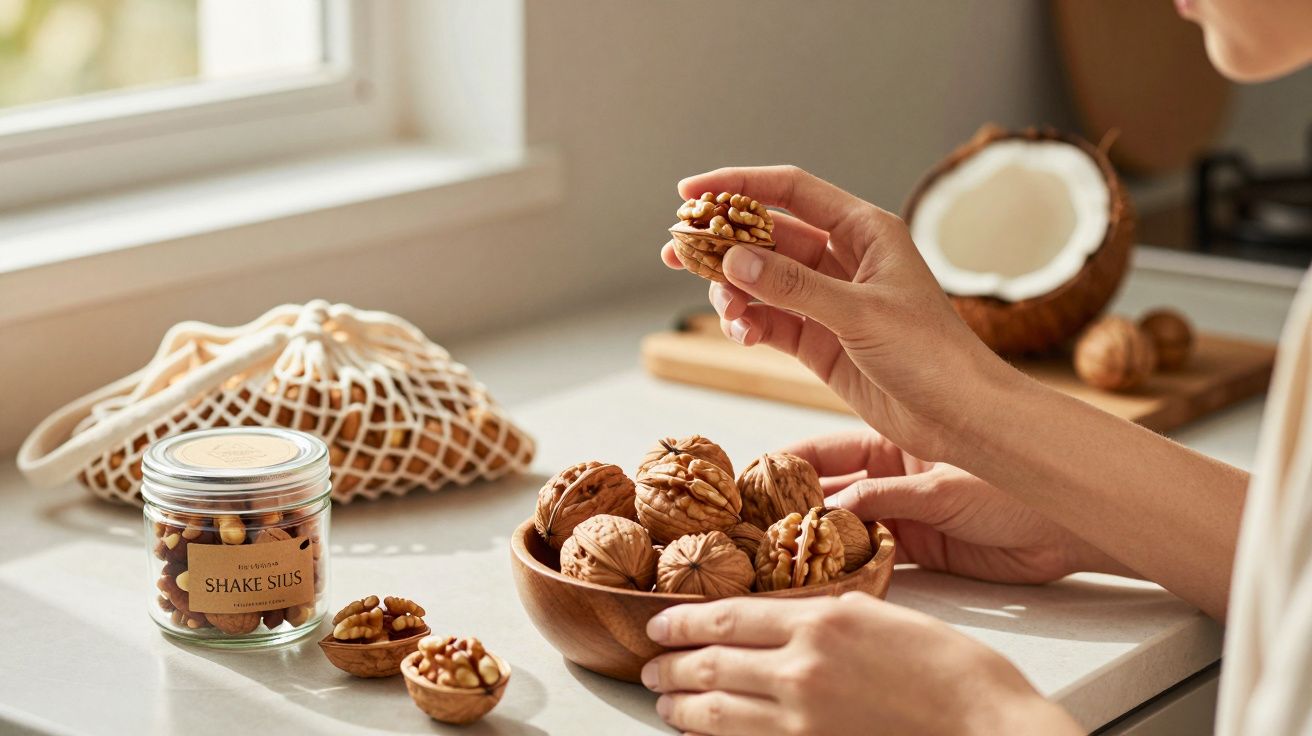
A quick shake tells you whether it’s still good.
Walnuts are widely seen as brain food, a boon for the heart, and a handy snack between meals. What many people don’t realise is that even the most attractive shell can hide a nut that’s gone off - and that can be a genuine health concern. A simple shake test helps you spot suspicious walnuts in seconds, with no specialist knowledge or tools required.
How the shake test works for walnuts
The idea is remarkably straightforward: hold a walnut in your hand and give it a short, firm shake. What you hear can tell you a lot about what’s happening inside - and how fresh the nut is.
Good walnuts sit snugly and solidly in the shell - bad ones rattle loud and clear.
If you hear a distinct clicking or clattering, the kernel is loose inside. That usually means the nut has dried out badly, shrunk away from the shell, or may even be spoiled. A fresh walnut fills most of the shell and barely moves, so when you shake it you’ll hear only a muted, barely noticeable rustle - or nothing at all.
Step-by-step: the walnut shake test
- Hold a walnut in one hand and quickly check the shell.
- Bring it close to your ear.
- Shake it firmly two or three times.
- Listen carefully for rattling versus a soft rustle.
- Set aside any walnuts that rattle; crack open the “quiet” ones and inspect them.
If you’ve bought a whole bag, test several walnuts at random rather than just one. If you find multiple walnuts that rattle strongly, it’s often a sign that a large part of the batch is affected.
Why spoiled walnuts can be dangerous
Walnuts that have spoiled or been stored badly aren’t just a minor quality issue. They can develop moulds that produce aflatoxins - substances among the most powerful naturally occurring toxins known to affect the liver.
Aflatoxins form particularly readily in warm, damp storage conditions. Walnuts kept too long in humid cellars, in containers that don’t seal properly, or in packaging that has split open are especially at risk.
Aflatoxins can damage the liver and are suspected of increasing cancer risk over the long term.
The tricky part is that not every mould problem is visible from the outside. In some cases, fungi and toxins are already present inside while the shell still looks perfectly normal. That’s exactly why the shake test is worthwhile: a very dry walnut that rattles is often a warning sign of age and potential quality issues.
Other ways to spot spoiled walnuts (beyond the shake test)
Alongside the shake test, watch for these red flags:
- Rancid smell: If the nut smells musty, mouldy, or sharply unpleasant, discard it.
- Discolouration: Dark or grey patches on the kernel or on the inside of the shell suggest mould or decay.
- Bitter taste: A normal walnut is mildly astringent but nutty; pronounced bitterness points to spoilage.
- Mealy texture: Crumbly, overly dry kernels are usually old and lower quality.
If any of these signs appear, the walnut belongs in the bin - not in your muesli or cake.
Shake testing other nuts: coconuts are a special case
The shake trick isn’t limited to walnuts. With coconuts, sound matters too - but the meaning is reversed.
A fresh coconut still contains plenty of coconut water. When you shake it, you should hear a clear sloshing sound inside. That’s generally a good sign because it indicates the cavity contains liquid and the flesh is likely still moist.
With coconuts, the more sloshing you hear, the fresher it usually is.
If there’s almost no sound, the coconut may be old or dried out. In some cases, the contents can even be rancid. In that situation, it isn’t worth buying - even if the outer shell looks fine.
How to test coconuts in the shop
- Hold the coconut in both hands and lift it slightly.
- Shake it firmly several times.
- Listen for sloshing noises.
- Leave coconuts with no - or very little - sloshing on the shelf.
Proper storage: how to keep nuts fresh for longer (walnuts included)
Storing walnuts and other nuts correctly reduces the risk of mould and helps prevent aflatoxins from developing in the first place. Because nuts are high in fat, they’re particularly sensitive to heat and moisture.
| Nut type | Recommended storage | Shelf life |
|---|---|---|
| Walnuts in shell | Cool, dry, dark, well-ventilated | Several months |
| Shelled walnuts | Tightly sealed in the fridge | About 4–6 weeks |
| Mixed nut kernels | Airtight, cool, protected from light | Several weeks to a few months |
| Coconut (unopened) | Cool, not overly dry | Several weeks |
Cool larders or pantry cupboards are ideal. On warm kitchen shelves, nuts go stale much faster. Once opened, packs should always be sealed well and kept in the fridge - screw-top jars or airtight tins work particularly well.
Extra storage guidance worth knowing
If you buy a larger quantity, freezing is a practical option: most nuts (including walnuts) freeze well and keep their flavour for longer when stored in an airtight container. Also, keep nuts away from strong-smelling foods such as onions, as they can absorb odours.
Why loose, unpackaged nuts are often the better choice
Buying nuts loose lets you assess them on the spot - how they look, smell, and feel. With walnuts in their shells, you can do the shake test right in the shop. With pre-packed products, you lose that chance, and the nuts may have been harvested earlier and stored for longer.
Unprocessed, unpackaged nuts are also easier to sort through. A few bad ones stand out more quickly and can be removed without throwing away the entire batch.
Health benefits of walnuts - when quality is right
Walnuts provide plenty of unsaturated fats, especially omega-3 fatty acids, along with vitamin E, B vitamins, and important minerals such as magnesium and zinc. This combination may help calm inflammatory processes in the body, support blood vessels, and aid concentration.
However, those benefits only apply if the walnuts are fresh and free from mould. Spoiled or rancid nuts contain degraded fats and may, in some cases, carry mould toxins - turning a healthy choice into a negative one. That’s why a quick quality check is worth doing every time.
Practical everyday tips for handling walnuts
- Buy smaller amounts and use them up promptly.
- Shake-test each new batch and check several walnuts.
- Store kernels in airtight jars in a cool, dark place (or in the fridge for best results).
- Keep strong-smelling foods (such as onions) separate so nuts don’t pick up odours.
- Bin any suspicious walnuts - don’t “use them up” in baking.
For people who eat nuts regularly - in muesli, sprinkled over salads, or as an evening snack - the walnut shake test quickly becomes second nature. It takes only seconds, helps avoid wasting money, and can significantly reduce health risks.
Combine this quick check with a careful look at the shell, plus attention to smell and taste, and you’ll get the best from walnuts: great flavour, valuable nutrients, and peace of mind - with no nasty surprises hidden inside.





Comments
No comments yet. Be the first to comment!
Leave a Comment