
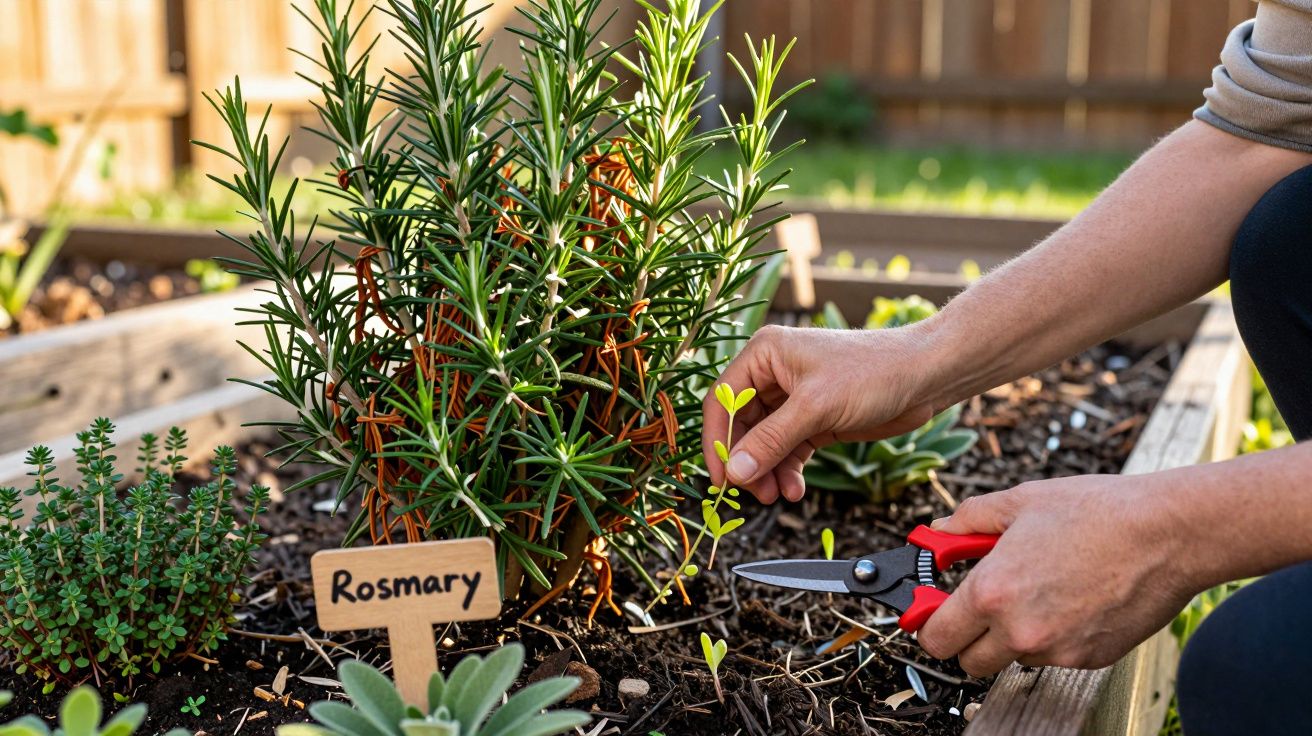
Rosemary needles drying out, tips that look scorched, whole shoots turning brown - it is easy to assume the plant has frozen and is finished. In most cases, that conclusion is wrong. The real mistake is acting too fast: hard pruning or even digging the shrub up often does more harm than the winter did. With a sensible assessment and one simple care tactic, rosemary can get a genuine second chance, especially in March.
Why rosemary turns brown after winter
Rosemary originates from the Mediterranean. It is used to cool nights, but not to prolonged frost combined with wet soil, drying winds and glaring winter sun. In many UK gardens (and across northern Europe), the plant experiences stresses it was never designed to handle.
Typical causes of brown needles in late winter and March include:
- Frost drought: the ground is frozen, so the roots cannot take up water, yet the plant continues to lose moisture through its leaves.
- Waterlogging: particularly in pots, roots often sit too wet through winter and may partially rot.
- Winter sun followed by night frost: shoots thaw during the day and freeze again at night - cells rupture and needles die back.
- Fertilising too late in autumn: soft, young growth fails to harden and is more easily cut back by frost.
- Sensitive varieties: not every rosemary is equally tough; some are better as ornamental plants than as winter survivors.
Brown needles in March usually indicate stress - they do not automatically mean the rosemary is dead.
How to spot genuine frost damage on rosemary - a quick test before you prune
Before you reach for secateurs, take a closer look. The colour of the needles is less important than the condition of the shoots.
Signs that shoots are dead
- Shoots feel soft, glassy or slimy.
- The bark peels off easily or is coming away in patches.
- Under the bark, the wood is no longer green, but brown to black.
- Needles drop off with the lightest touch.
Signs that parts of the plant are still alive
- Needles may be brown, but remain firmly attached to the shoot.
- A small knife cut reveals green tissue inside.
- Browning is often worse on the sun-facing side, while the interior remains greenish.
- Inside the crown there are still plenty of flexible, bendy twigs.
A simple check: lightly scratch the bark with a fingernail or a sharp blade. If you see fresh green beneath, that section is alive. If it is dull brown and dry, you can remove it later.
In March, many rosemary shrubs look dead - then, a few weeks later, they suddenly push new growth from seemingly lifeless wood.
What to do in March (and what to avoid) for brown rosemary needles
The most important principle is to keep calm. March is a transition period: the plant is slowly waking up, while the weather can still swing wildly.
Helpful actions for rosemary now
- Water sparingly: on frost-free days, give a light watering, especially for container plants. The compost should be lightly moist - never soaking.
- Provide wind protection: cold easterly winds dry needles and shoots intensely. Horticultural fleece, a simple board screen, or a spot near a house wall reduces stress.
- Insulate the pot: stand containers on wooden slats and wrap them with coir mats, hessian or polystyrene so the roots do not freeze as deeply.
- Do not fertilise yet: in late winter and early spring, rosemary does not need extra nitrogen. Only feed modestly once you can clearly see new growth.
- Tidy gently: you can carefully remove snapped or completely crisp tips, but avoid cutting back into old wood at this stage.
Spring mistakes that make rosemary worse
- Hard pruning while night frosts are still likely.
- Leaving plants in permanently wet positions or standing pots in saucers full of water.
- Overwintering in warm living rooms - light is insufficient and pests spread more easily.
- Repotting in mid-winter when the roots are already under strain.
The simple trick: let the new growth tell you when to cut back (March rosemary pruning)
The most effective “garden tip” for saving rosemary is timing your pruning correctly. The calendar should not decide - the plant should.
- Wait until no severe frosts are forecast.
- Look for small, fresh shoots developing inside the plant.
- Only then, cut back in stages what is definitely dead.
How to proceed:
- Start on a dry day using sharp, clean secateurs.
- Shorten dried tips back to clearly green wood.
- Remove completely brown, dead branches right down at the base.
- Do not cut the shrub back to a bare stump; keep its basic shape.
The real rescue tactic is to wait until rosemary shows you what is alive - then prune with precision, rather than stripping it back in March.
How hardy is rosemary really? Key varieties compared
Beyond placement and care, the variety strongly influences how well rosemary survives winter. Some selections cope with northern European conditions far better than the standard culinary rosemary.
| Variety | Characteristics | Frost tolerance |
|---|---|---|
| Rosmarinus officinalis | classic culinary rosemary, upright growth | low to medium, only with a dry site |
| ‘Arp’ | very robust garden variety | high, suitable for many gardens outdoors |
| ‘Blue Winter’ | strongly aromatic, relatively resilient | medium to good, sensitive to waterlogging |
| Trailing rosemary | cascading, decorative in walls and pots | low, best for mild regions |
| ‘Veitshöchheim rosemary’ | tested specifically for harsher locations | good, reliable in free-draining soil |
If you want lasting success with rosemary in a border, plan these three factors together:
- Variety: choose robust types such as ‘Arp’ or ‘Veitshöchheim rosemary’.
- Position: sunny and sheltered from wind, ideally near a house wall.
- Soil: sandy, lean and well-drained - slightly too dry is safer than too wet.
Site and soil: prevent brown needles by planting rosemary correctly
Many March problems begin at planting time, because rosemary is placed where perennials might thrive but Mediterranean shrubs struggle. Wet clay, shade and crowded beds are a poor long-term match for this subshrub.
For a healthy, long-lived plant aim for:
- Full sun: at least 5–6 hours of direct sun per day.
- Free-draining soil: lighten garden soil with sand, fine gravel or expanded clay.
- No excess fertiliser: rosemary prefers lean, slightly chalky conditions.
- Space and airflow: allow room around the crown so it dries quickly after rain.
In containers, a blend of herb compost and sand works well. A thick drainage layer of expanded clay or gravel at the base helps prevent waterlogging. Moving the pot close to the house wall in winter also shields it from wind and relentless rain.
Extra protection that helps in harsh spells (without forcing soft growth)
If your garden regularly gets repeated freeze–thaw cycles, add temporary protection rather than “pampering” the plant into weak, sappy growth. A breathable fleece wrapped loosely around the shrub during severe cold snaps reduces wind burn, while still letting light and air through. For border plants on heavy ground, a small gravel mulch around (not piled onto) the base helps keep the crown drier through winter rain.
Hygiene matters as well: disinfect secateurs between plants (or at least after cutting obviously dead material) to reduce the chance of transferring fungal problems into fresh cuts once growth begins.
If rosemary really does die: how to start again - and more robustly
Sometimes a badly damaged shrub cannot be saved. If that happens, it is worth replanting with a better plan:
- Choose a frost-tolerant variety and ask a specialist nursery or garden centre for types proven locally.
- Plant the young shrub in spring in its final position so it can root well before the next winter.
- Prune only lightly in the first few years, allowing a strong framework to develop.
If you prefer a safety net, grow part of your rosemary in a pot. In extreme frost you can move it to a more protected place, such as a bright, cool garage or under a porch roof.
Practical add-on: using rosemary well and pairing it with other herbs
Once your shrub has come through winter, the care effort pays back twice over. Rosemary provides aromatic sprigs for cooking and barbecues, and it can also be used for herbal tea, bath additions or fragrant bundles. When harvesting, cut little and often, and avoid stripping all fresh green growth at once.
In a sunny border, rosemary pairs naturally with other sun-lovers such as thyme, sage and lavender. These combinations look good and create a drier, airier microclimate - helpful against fungal issues and winter wet. With the right mix of position, variety and patience, a brown-looking rosemary in March becomes less a “loss” and more a signal that the correct care window is approaching.






Comments
No comments yet. Be the first to comment!
Leave a Comment