
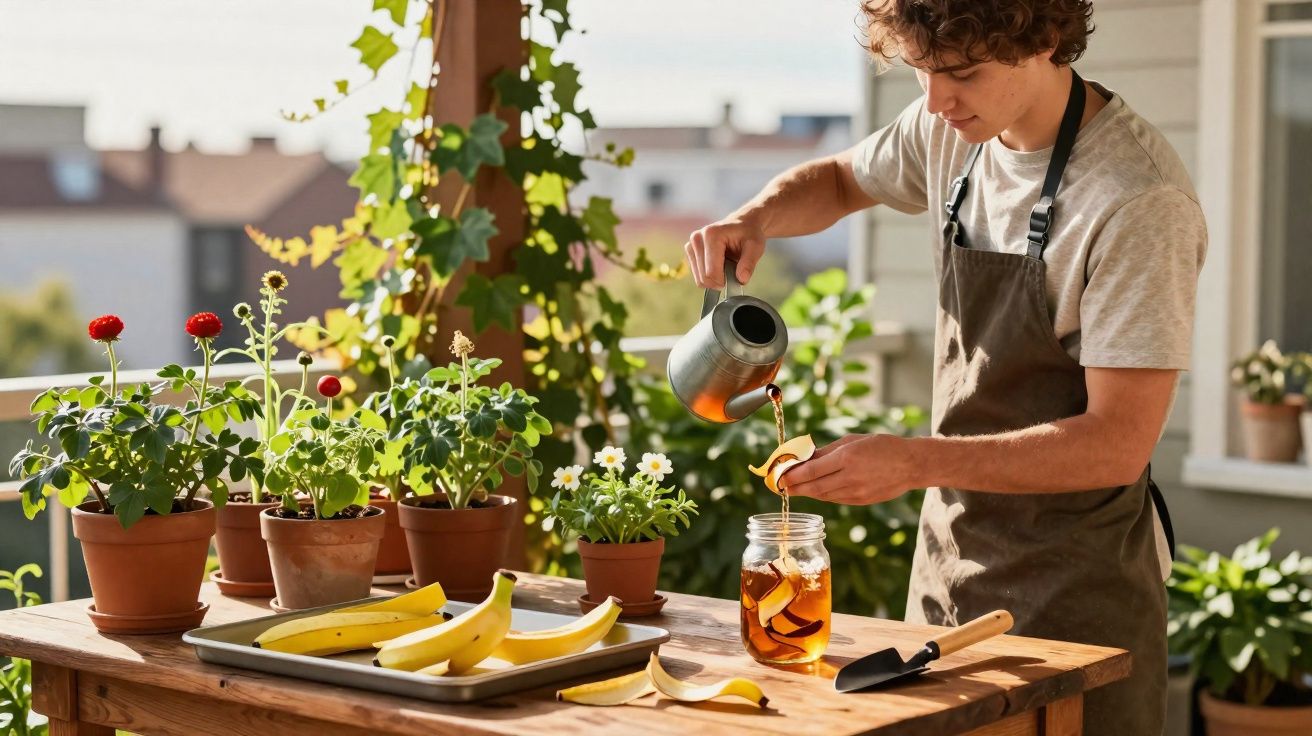
Anyone who enjoys eating bananas knows what usually happens next: the peel is left behind and ends up in the general waste or, at best, the food-waste caddy. Yet that “scrap” can be surprisingly useful for balcony pots, garden beds and houseplants. Experienced gardeners have relied on banana peels as a natural fertiliser for years - provided they’re used in the right way.
Banana peel fertiliser: why banana peels are so valuable for plants
Banana peels are far more than just fibrous cellulose. They contain a good range of minerals, with potassium being the standout. In plants, potassium is a bit like it is in our own bodies: it supports steadiness, resilience and healthy development.
Banana peels provide mainly potassium - a key nutrient for sturdy stems, strong roots and abundant flowering.
Potassium helps plants manage water more efficiently, reinforces cell walls and can make them less prone to disease and pest damage. Banana peels also contribute smaller amounts of magnesium, calcium and trace elements. Over time, these can encourage soil life and help build a looser, more fertile growing medium.
Flowering plants, fruiting shrubs and heavy-cropping vegetables such as tomatoes, peppers and roses are well known “potassium fans”. Used thoughtfully, banana peels can give them a visible boost.
Pesticides, organic bananas and what to do about residues
One concern often comes up straight away: residues on the peel. In many growing regions, conventionally produced bananas are treated heavily, and some of those substances can remain on the skin.
If you want to use banana peels in the garden or on the balcony, organic bananas are the simplest, most relaxed option. Otherwise, wash the peels thoroughly under warm water and scrub them with a brush before processing. You can’t guarantee zero residue, but you can reduce it significantly.
Never push raw banana peels straight into the soil
As tempting as it sounds, tucking a fresh banana peel directly into a bed or plant pot usually backfires. The peel breaks down fairly slowly, can start to rot, and that can invite the wrong kind of attention.
Common issues include:
- Fruit flies and other insects
- Mice or rats attracted by the smell
- Unpleasant odours in pots and containers
- Mould appearing on the compost surface
If you’d like to use banana peels, prepare them first: dry them, compost them, or turn them into a liquid fertiliser. That way, the nutrients end up where you want them - near the roots, not feeding pests.
Banana peels in the compost (including worm composters): the reliable classic
The most straightforward and dependable method is to add banana peels to a compost heap or composter. There, microorganisms and soil creatures gradually break them down.
A quick step makes a big difference: chop the peels into rough pieces. The larger surface area helps them decompose much faster. If you have a worm composter (vermicompost bin), you can add the chopped pieces there as well.
In a worm composter, banana peels turn into nutrient-rich worm castings - a real powerhouse for plant roots.
Once ready, the finished compost or worm castings can be used in several ways:
- Spread as a thin top layer on garden beds
- Mixed into the potting mix for container plants
- Incorporated into the compost when repotting houseplants
The key benefit is slow release: nutrients become available gradually, so plants avoid a sudden “fertiliser shock” and instead receive a steady supply for weeks and months.
Dried banana peels as a slow-release fertiliser (ideal for balconies)
No compost bin? No problem. Banana peels can also be turned into a solid, long-lasting fertiliser that suits everyday life - especially if you garden mainly in pots.
How to make dry fertiliser from banana peels
- Rinse the peels thoroughly after eating to remove residues.
- Slice into strips and lay them out somewhere warm and dry (on a tray, plate or rack).
- Leave until completely dry and brittle - this can take a few days depending on temperature and ventilation.
- Crush or grind the dried peels using a mortar, food processor or blender (fine or coarse, either works).
Mix the resulting flakes or powder into the compost, or work it lightly into the top few centimetres of soil. If you prefer, sprinkle a thin layer around the root zone and water well afterwards.
Dried, crushed banana peels release their nutrients slowly and consistently - perfect for balcony planters and indoor pots.
You won’t see results overnight, but with regular use plants often look more vigorous, develop stronger foliage and flower more persistently.
Liquid fertiliser from banana peels: “banana tea” for your plants
If you’d like a quicker effect, a homemade liquid feed is a popular option - often called banana tea online. The smell takes some getting used to, but many gardeners rate the results.
Instructions for banana peel liquid fertiliser
- Chop 1–2 banana peels into small pieces.
- Put them into a large jar or bottle and cover with water.
- Cover loosely and leave at room temperature for 2–3 days.
- Briefly bring the liquid to the boil to reduce germs, then let it cool.
- Strain out the peel pieces - the liquid fertiliser is ready.
Before use, dilute the concentrate with water at roughly 1:3. You can water with it, or apply it to leaves using a spray bottle.
For houseplants, keep the dose modest and use no more often than every few weeks. Outdoors, roses, tomatoes and other heavy feeders can usually handle banana tea a little more frequently during the growing season.
Where banana peel fertiliser works best - and where it doesn’t
Not every plant responds in the same way. Some thrive with potassium-focused feeding, while others gain little (or can even be pushed into the wrong kind of growth). Here’s a practical overview:
| Plant type | Recommendation for banana peel fertiliser |
|---|---|
| Roses | Very suitable; supports flowering and strong new shoots |
| Tomatoes, peppers, chilli | Well suited, especially during fruit development |
| Fruit trees and berry bushes | Useful when worked into the root zone |
| Flowering balcony plants (geraniums, petunias) | Suitable as an addition to normal feed |
| Foliage-only plants (some houseplants) | Use sparingly; too much can encourage unwanted flowering |
| Succulents and cacti | Generally unsuitable; they prefer very low nutrient levels |
Timing, dosage and soil balance (an extra note for better results)
Banana peels mainly contribute potassium, not a complete nutrient mix. For best results, treat banana peel fertiliser as a supplement, particularly for flowering and fruiting stages, rather than the only feed you ever use.
It’s also worth keeping an eye on how your compost and soil behave. In containers, nutrients can build up more quickly than in open ground. If growth looks lush but weak, or leaf tips begin to brown, reduce feeding and water through with plain water to help flush excess salts.
Practical routines with bananas and plants
Many home gardeners find it easiest to build banana peels into a simple routine. A few tried-and-tested ideas:
- Collect peels and store them in the freezer until you have enough to process a batch.
- Choose one fixed “feed day” each month to make banana tea and water heavy feeders.
- Keep a small jar of dried banana peel powder and mix 1–2 teaspoons per pot into compost when repotting.
If bananas are already part of your weekly shop, this approach cuts down on food waste and can reduce how much you spend at the garden centre - a small but welcome saving when prices are rising.
Combining banana peels with other household helpers
Banana peels aren’t a cure-all, but they pair well with other natural additions. Coffee grounds add nitrogen, while eggshells contribute calcium. Used together, they can form a more balanced, homemade nutrient “cocktail” for many plants, especially in the vegetable garden.
Even so, it pays to watch how plants respond. If leaves suddenly turn yellow or feel soft, the feeding may have been too generous. In that case, fertilise less often and occasionally water with plain water to wash surplus salts through.
With a gradual, test-and-observe approach, banana peels quickly prove their value in everyday gardening - turning a simple kitchen leftover into a genuinely useful aid, and rewarding you with stronger growth and fuller flowering from many flowers, tomatoes and roses.




Comments
No comments yet. Be the first to comment!
Leave a Comment