
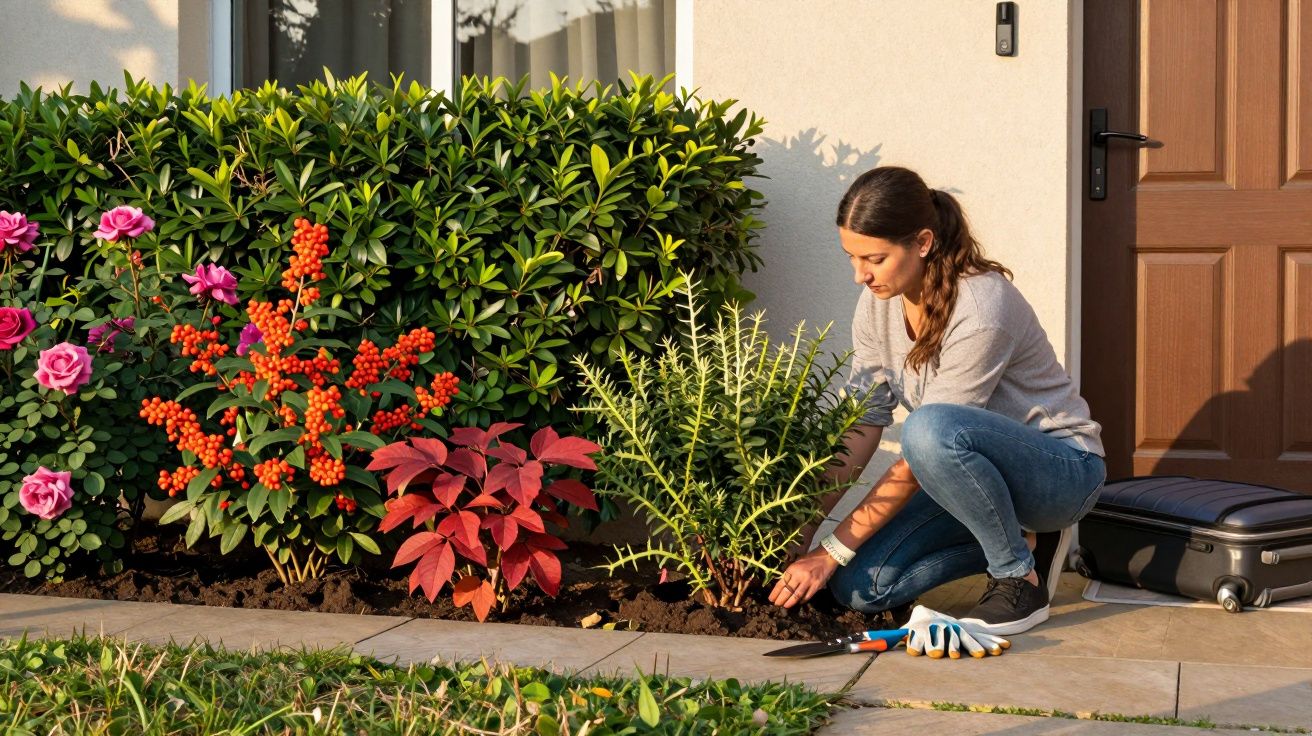
A simple trick borrowed from garden design can make a real difference.
When people think about burglary prevention, they often jump straight to burglar alarms, smart home cameras or a reinforced front door. Yet one of the most overlooked areas is the garden. Planned and planted intelligently, it can become an awkward obstacle course for burglars-without concrete walls or barbed wire-simply by using tough, well-placed plants that are very difficult to push through.
Why thorny plants genuinely deter burglars
Most burglars look for the quick, quiet option: a window that’s easy to reach, a garden with poor visibility, or a fence that’s simple to climb. Anything that creates noise, wastes time or risks injury acts like a natural filter.
The more unpleasant the access route, the less appealing the property becomes to opportunistic offenders.
Dense hedging with serious thorns delivers exactly that. It can:
- slow progress
- cause scratches and minor injuries
- force noisy movement through branches
- leave visible marks on clothing or skin
Combine this with crunching gravel underfoot and you effectively create a passive early-warning system: every step stands out and every movement can be heard. Security advisers have been pointing out for years that well-thought-out planting can significantly reduce a home’s vulnerability to break-ins.
That said, plants are not a replacement for a burglar alarm or quality locks. Think of them as an additional, discreet layer. Neglect can even backfire: tall, overgrown shrubs become perfect hiding places. The guiding rule is simple-keep sightlines clear, prune regularly, and avoid creating easy climbing aids.
The four most effective “defensive plants” for around the home
Four species, in particular, have proved their worth in everyday gardens and can be blended into ornamental planting. They may look harmless at first glance, but they can make access genuinely miserable for an intruder.
Pyracantha (firethorn): the seriously spiky classic
Pyracantha-commonly called firethorn-is a staple in security-conscious planting. It forms a tight mesh of branches covered in long, hard thorns.
- Best placement: as a hedge along a fence line, or directly beneath lower windows
- Spacing: around 0.5–0.7 m between plants
- Typical height: 1.5–2 m with routine maintenance
Its thorns can easily penetrate thin clothing. Anyone trying to squeeze through firethorn is likely to come away with obvious scratches. As a bonus, it’s attractive in autumn, with colourful berries that also provide food for birds.
Barberry: a compact thorn barrier for side passages
Barberry grows dense and tight. Even a single shrub can effectively block a narrow route, because its many small thorns are packed so closely there’s barely a gap.
Common places where it works especially well include:
- side alleys between your house and a neighbouring property
- narrow strips behind garages
- discreet access routes leading to patios
To force a way through, someone has to crouch low or push straight into the shrubbery-slow, noisy and painful. Many varieties also bring colour to the garden, including striking red-toned foliage.
Rosa rugosa: a tough, heavily thorned shrub rose
Rosa rugosa (often sold as Japanese rose or beach rose) is far tougher and more defensive than many ornamental roses in front gardens. Its stems carry numerous strong thorns set close together.
A wide band of this rose beneath easily reached ground-floor windows is particularly effective. Burglars dislike thorns right at the entry point because they restrict movement when climbing in and out.
At the same time, Rosa rugosa offers richly scented flowers and decorative hips. Many homeowners underestimate how neatly beauty and security can be combined here.
Cherry laurel: evergreen screening with a security bonus
Cherry laurel isn’t especially thorny, but it earns its place through sheer density and year-round cover. It blocks sightlines from the street and makes it harder to judge what’s happening behind the boundary.
A thick strip of cherry laurel near large patio doors or floor-to-ceiling glazing can be useful. If someone outside can’t easily tell whether anybody is at home, they’re more likely to hesitate before attempting a break-in.
Pairing screening with thorny “pinch points” creates maximum uncertainty for offenders.
Plant-based home security: how to place thorny plants without making the garden look hostile
No one wants their home to resemble a fortress. A coherent planting plan can add protection without shouting “high security”.
A practical baseline layout could look like this:
- Front boundary (street-facing): low-to-medium cherry laurel, with a layer of gravel underneath to make footsteps audible.
- Side boundaries: a dense hedge of firethorn or barberry, planted at roughly 0.5–0.7 m spacing.
- Under vulnerable windows: a broad strip of Rosa rugosa, arranged so there’s no easy gap to step through.
- Main route to the house: a gravel path combined with motion-activated lights.
One important point: don’t completely hide the entrance itself. The front door should still be visible from the street so neighbours can spot anything unusual.
A further detail many people miss is maintenance access. When you place thorny plants under windows, ensure you can still clean the glass and maintain frames safely-otherwise the planting gets cut back harshly later and the protective effect disappears.
Keep legal distances and safety hazards in mind
If you’re planning hedges near a boundary, it’s wise to consider neighbour law and any property covenants. In many areas, gardeners work to rules of thumb like the following:
| Hedge height | Minimum distance to the boundary* |
|---|---|
| up to 2 m | around 0.5 m |
| above 2 m | often about 2 m |
*Exact requirements can vary depending on local authority guidance, deeds, and any applicable rules in your area. When in doubt, check local information before planting.
Also be sensible about where you put very thorny species. Avoid placing them right next to children’s play areas, pools or heavily used paths-otherwise kids, pets and guests will be the ones who suffer. Keeping a safety buffer around seating areas, sandpits and barbecue spots is a sensible precaution.
Maintenance, combining planting with tech, and common mistakes
For a green barrier to do its job, it needs a little attention. One or two proper pruning sessions per year is usually enough to keep hedges thick-without allowing them to turn into dark hiding places.
A frequent mistake is letting hedges grow too tall and too wide so they completely mask windows. That doesn’t just reduce daylight; it also gives offenders a sheltered workspace behind the foliage where they can force a window out of sight. A better approach is a height that makes access difficult while still allowing visibility from outside.
Planting works best when paired with simple technology:
- motion sensors that illuminate paths and shrubs after dark
- sturdy, clearly visible exterior lighting at entrances
- lockable window handles and tested, security-rated fittings on ground-floor windows
It also helps to avoid leaving valuable items-expensive barbecues, e-bikes or designer garden décor-on display in the front garden. The message should be clear: this home is neither easy to access nor anonymous.
An additional, often overlooked layer is routine and appearance. Timers for indoor lights, promptly collected post, and a lived-in look make the garden’s defensive planting even more effective-especially during holidays when properties are most vulnerable.
Practical examples and extra tips to improve security
A typical scenario is a terraced house with a narrow side passage. Here, just two or three barberry shrubs can make the route so unpleasant that many burglars decide it isn’t worth it. Add gravel underfoot and a motion-sensor light, and the side access becomes a noisy trap for unwelcome visitors.
For detached homes with a large terrace, a mixed approach often works best: cherry laurel as screening towards the pavement, with carefully positioned firethorn or Rosa rugosa at likely entry points. The view from the living room remains pleasant, while potential access routes are quietly “de-risked”.
If you’ve never handled heavily thorned plants, wear robust gloves that protect your forearms and choose sturdy clothing when planting and pruning. Many gardeners underestimate how aggressive the thorns can be during a cut-back.
It’s also worth keeping neighbours in the loop. When people nearby know a garden has been deliberately designed as a defensive zone, unfamiliar activity stands out more quickly. Combined with an alert community, these four plant types can have their strongest effect-no aggressive fencing required, just a garden that looks good and quietly does its job when the family is away.





Comments
No comments yet. Be the first to comment!
Leave a Comment