
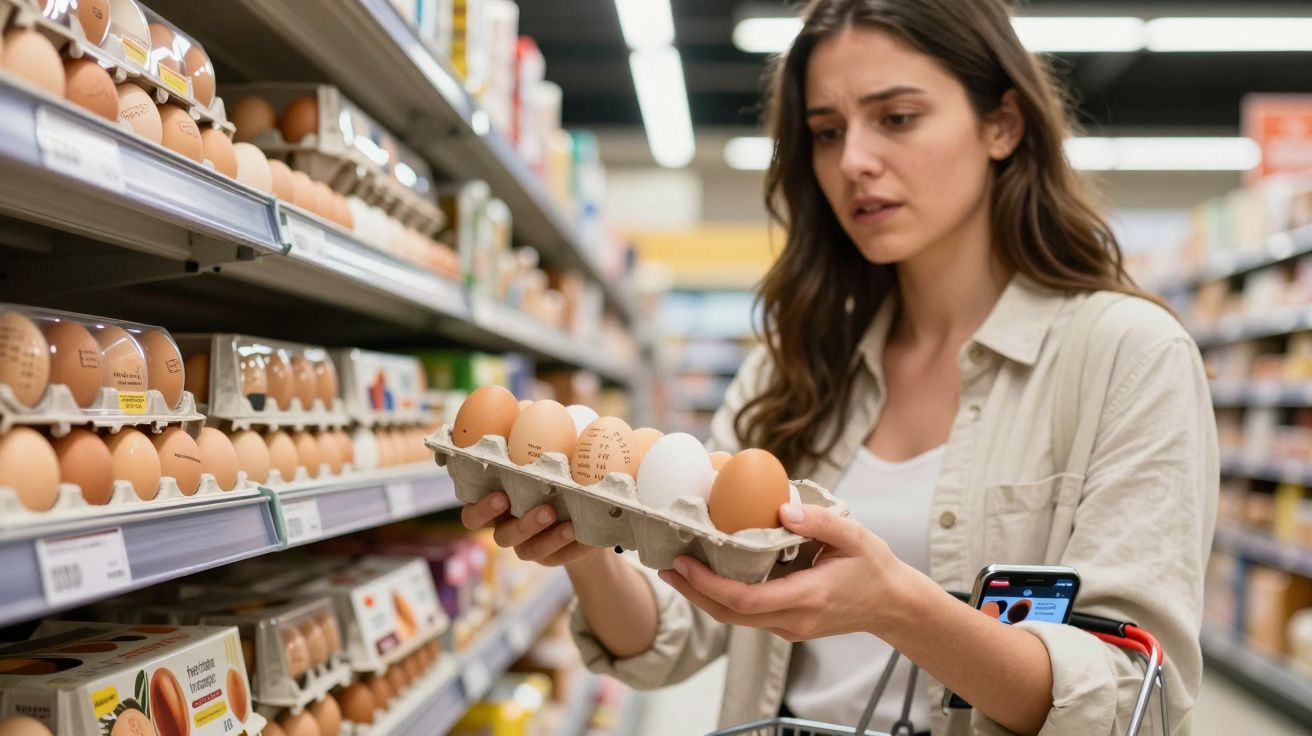
Between the chilled aisle and the checkout, a quiet scam can play out that most shoppers never notice. Expensive organic eggs end up in a budget box, while cheap standard eggs are slipped into premium packaging. If you do not look closely, you can pay a lot more and take home a completely different product from what you believed you were buying.
How shoppers use a simple trick to rip others off
The method is as straightforward as it is brazen. Some people open organic or free-range cartons in the supermarket, lift out the eggs and swap them with cheaper eggs from low-cost boxes. They then buy the “downgraded” cheaper carton-now filled with organic eggs-so they pay less for higher-quality produce. Left behind on the shelf is the apparently premium carton that in reality contains only standard eggs. The next person who picks it up pays the higher price but receives lower-grade eggs.
Exactly this happened when a shopper became suspicious at home. The “premium” eggs looked smaller, and the familiar brand stamp was missing. A quick check of the code printed on the shell confirmed it: these were not the expensive eggs charged at the till, but ordinary standard eggs.
The scam works because many buyers trust the brand and the packaging-and do not check the contents.
According to supermarket staff, it is not a one-off. Rising food prices and the fact that organic eggs can cost around twice as much as caged or barn eggs makes the trick financially tempting for fraudsters-at the expense of honest customers.
Why eggs are increasingly targeted
Eggs are particularly suited to this kind of deception because they:
- often look broadly similar at first glance,
- can be moved easily from one cardboard carton to another,
- have clear price differences depending on the farming method,
- are commonly picked up as an everyday item “without thinking”.
Organic and free-range eggs can quickly cost double compared with eggs from caged systems. The extra cost reflects improved welfare conditions, specific feed and tighter checks. Those price gaps are exactly what makes the scam appealing: anyone who swaps eggs can save several pounds per carton, and unsuspecting shoppers later foot the bill.
There is also a psychological element. Many people rely on recognisable brands and packaging. If the logo and an “organic” certification mark are on the box, the contents are often not questioned. That is precisely the weakness the scam exploits.
The egg code on the shell: your best protection against egg swapping
The most reliable way to spot tampered eggs is printed directly on the shell: the egg code. Every egg sold in the EU carries a marking that indicates the farming method and origin. The first digit is the key detail, because it shows how the hens were kept:
| First digit | Farming method |
|---|---|
| 0 | Organic |
| 1 | Free-range |
| 2 | Barn |
| 3 | Caged |
If you have an organic carton in your trolley, every egg should start with a “0”. If you see a “2” or “3”, something does not add up-there is a strong chance the carton has been swapped.
One glance at the first digit of the egg code is often enough to expose a scam right there at the shelf.
After that, it is worth cross-checking against what is printed on the carton: country of origin, producer number and, in some cases, the brand marking should match what is on the eggs. If the usual brand stamp is missing or the codes clearly differ, leave the carton and, if in doubt, speak to a member of staff.
Other signs of a suspicious carton
Beyond the code, several practical clues can point to a potential swap. Look out for:
- A “disturbed” look inside the carton: eggs sit at odd angles, sizes vary noticeably, some wells are empty or appear to have been “topped up” later.
- Shell colour and texture: premium eggs often look relatively consistent. Strongly mixed tones or very different shell surfaces can indicate a mix from different batches.
- Size compared with the label: many cartons state “Size M” or “Size L”. If several eggs are clearly smaller or larger, the contents may not be what the carton originally held.
- Damaged or creased packaging: crushed lids, torn tabs or unusual marks inside can suggest the box has been opened repeatedly and refilled.
A simple but effective habit is to open the carton at the shelf and look inside. Many shoppers avoid doing this out of routine or convenience, yet it is one of the most effective ways to protect yourself.
How to check a carton in ten seconds at the shelf
A quick routine prevents most manipulation. A practical checklist while you are still in the aisle:
- Open the carton carefully.
- Do a visual check: are all eggs seated properly and do they look reasonably consistent?
- Lift one or two eggs and check the code on the shell-does it start with the correct digit for the farming method you chose?
- Look for printed brand stamps or logos if the producer highlights them.
- Close the lid again and make sure nothing is damaged.
This check takes only seconds, but it can save money and frustration. Anyone who has once paid premium prices for budget eggs usually turns this into a habit.
Trust between supermarket and customer
Egg swapping is not just petty dishonesty. It undermines trust in brands, certification marks and retailers. Many people deliberately pay more for better animal welfare and transparent sourcing. Finding caged eggs in an organic carton feels like a double betrayal.
Supermarkets also face a dilemma. They need to respond to tampering, but they do not want to alienate regular customers with heavy-handed surveillance and warning signs. In some branches, staff now check egg shelves more frequently or remove cartons that look as though they have been interfered with.
What to do if you discover a suspicious carton at home
If you only realise at home that the eggs do not match the premium carton, do not just sigh and use them anyway. Sensible steps include:
- Photograph the egg codes and the carton information.
- Keep the receipt, or include it in a photo.
- Return to the store with the goods and proof of purchase.
- Calmly explain what you noticed and ask for it to be checked.
In many cases, retailers refund the difference or offer a replacement-often because it is in their interest to limit the damage and review their internal processes.
Why it is worth checking the egg code anyway (not just for fraud)
Even without any scam, the egg code provides useful information. Many people routinely choose a “mid-priced” carton without really knowing how the hens were kept. The first digit helps you make a more informed decision.
If animal welfare matters to you, look for “0” and “1”. If price is your priority, you will often find it with “2” and “3”. The more familiar shoppers are with the code, the harder it becomes for scammers to swap eggs unnoticed-because an informed customer base checks more carefully.
A practical bonus: the code also helps at home. If you mix eggs from different cartons in one compartment, the markings let you identify origin and farming method later. That reduces confusion, especially when guests arrive and some people prefer-or avoid-certain farming methods.






Comments
No comments yet. Be the first to comment!
Leave a Comment