
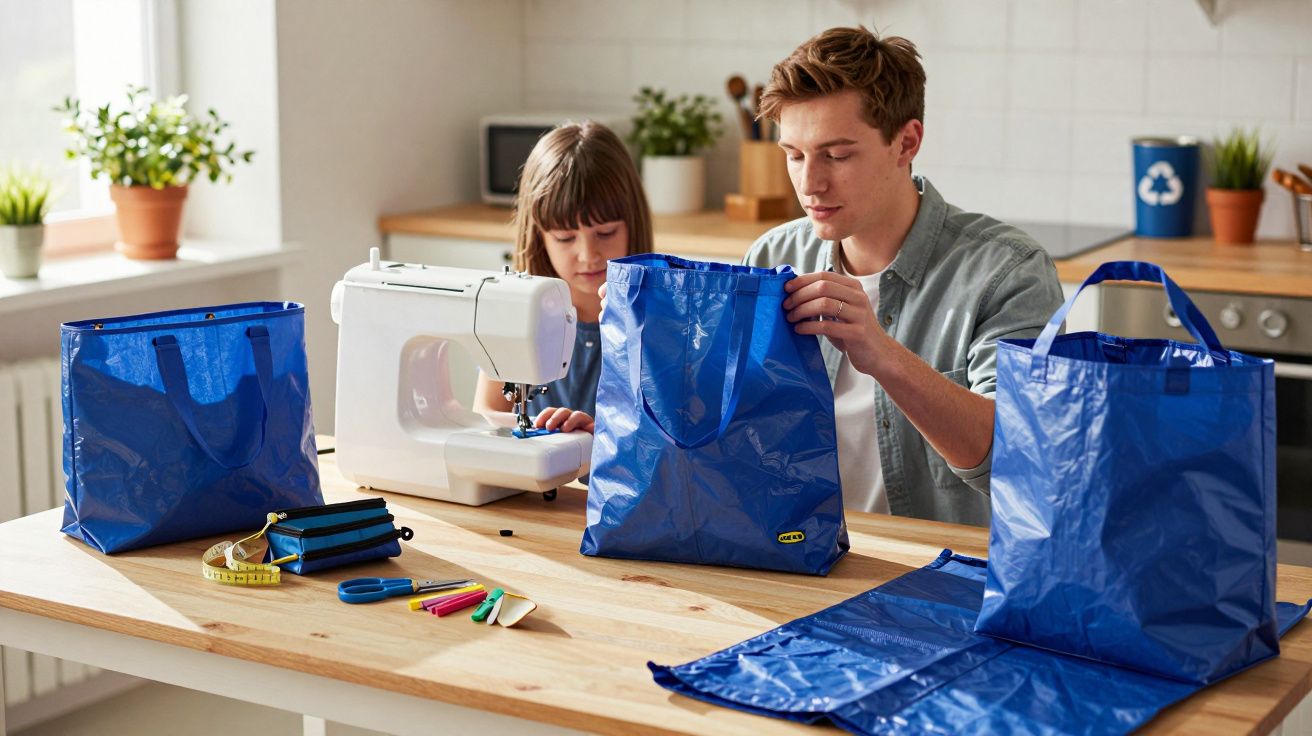
In 2026, they’re suddenly turning into free sewing material-with an unexpected twist.
If you shop at IKEA even occasionally, you almost certainly have a couple at home: the big blue carry bags. They usually end up as a handy hauler in the boot of the car or shoved behind the coat rack. Yet the fabric has far more going for it than transporting water bottles and toilet rolls. With just a few simple steps, these tough bags can be stitched into brand-new everyday essentials-useful, low-cost and impressively hard-wearing.
The 2026 upcycling shift: turning shopping bags into long-lasting everyday essentials
As circular-economy thinking gains momentum in 2026, more households are choosing to reuse what they already own rather than binning it. A former shopping bag can become a rugged picnic blanket, a travel organiser, or a family-sized beach bag that stands up to real life.
The benefits are straightforward: you don’t need to buy or manufacture new material, and the finished pieces often outlast many budget alternatives on the high street. That signature bold blue also adds a punchy accent-especially when paired with contrasting binding or bright zip tape.
Why the blue IKEA bag is perfect DIY material (polypropylene)
The familiar blue IKEA bag is made entirely from polypropylene: a highly durable, non-woven plastic. It’s light, sturdy, splash-resistant and easy to wipe clean with a damp cloth. It copes well with abrasion, dust and moisture, and according to the manufacturer it can comfortably carry up to 25 kg.
Polypropylene from the blue bags combines three qualities you rarely get together: extremely tough, straightforward to sew, and almost indestructible in everyday use.
Unlike many woven fabrics, this plastic doesn’t fray. That means you don’t always need to finish raw edges, which makes it especially beginner-friendly. It’s also firmer than cotton, so pouches, bags and mats tend to hold their shape instead of collapsing.
Using old carry bags intelligently also helps you avoid buying new outdoor fabric or faux leather. That’s kinder to your budget-and better for the planet-because the plastic stays in use longer instead of heading for landfill or incineration.
How to sew polypropylene properly (blue IKEA bag sewing tips)
If you’ve never sewn this material before, you’ll usually only need minor tweaks to your machine setup. Denim needles in size 90 or 100 are a reliable choice because they’re strong enough for the plastic. Set a longer straight stitch (about 3–4 mm) so the seam doesn’t perforate the material too densely.
With the right needle and a long straight stitch, the blue bag can feel almost as easy to sew as cotton.
A standard polyester thread (the sort you’d use for clothing) is perfectly adequate. Because the cut edges don’t unravel, the pieces stay neat-however, the plastic can feel a little scratchy against skin. For that reason, binding with cotton bias binding or strips cut from the bag’s webbing is a smart finishing step, particularly for toiletry bags, blankets and children’s projects.
It’s also worth treating polypropylene like a “no-heat” fabric: avoid hot ironing, and test any pressing carefully (or skip it altogether). When assembling, fabric clips can be more useful than pins, because extra pinholes are permanent in plastic.
Three surprising sewing ideas from the blue IKEA bag
1. Toiletry bag and wet bag for travel (blue IKEA bag DIY)
A go-to first project is a toiletry bag made from the blue material. Start by carefully unpicking or cutting along the seams until the bag opens out into a flat sheet. From that, cut a rectangle to your preferred size.
Insert a zip along the top, then stitch the sides together with a simple straight stitch. Thanks to the water-resistant surface, toothpaste, shower gel and razors stay reliably separated from your clothes-ideal for weekends away, holidays, or a trip to the gym.
The finishing touches are where it gets interesting. If you sew on cotton bias binding or narrow strips made from the blue (or yellow-and-blue) webbing as edging, you get a crisp, industrial look that can feel surprisingly “designer”. Small webbing loops also work brilliantly as a grab handle or as a hanger loop in the bathroom.
Using the same method, you can make a wet bag for damp swimwear. Simply scale the pattern up and deliberately leave enough room for trunks, a bikini or wet T-shirts-so everything else in your beach bag or rucksack stays dry.
2. An XXL beach bag that shrugs off sand and water
Because this material tolerates both weight and moisture so well, it’s excellent for a large XXL beach bag. Begin with a full carry bag and reinforce the base: add a second layer of the same plastic (or a cut-off section) and stitch it securely in place.
If you also topstitch the side seams, the bag stands more upright and doesn’t keep folding in on itself. Inside, a large zipped pocket helps with organisation-sun cream, phone, keys and wallet can be kept together and are better protected from sand.
- reinforced base for towels and drink bottles
- large internal zipped pocket for valuables
- straps topstitched again for heavier loads
- easy to rinse out-ideal for the beach or the lake
The original handles can be strengthened with bold, visible topstitching. It doesn’t just add a streetwear feel; it also makes the bag capable of carrying family kit, a picnic and children’s toys without complaint.
3. A picnic blanket that keeps your trousers dry
For days out in the park, a picnic blanket with a blue polypropylene underside is a practical upgrade. Stitch several opened-out bag panels together to form a large rectangle. On top, add a soft layer-an old bed sheet or unwanted duvet cover works well.
If you want extra comfort, slip in a thin layer of padding, such as an old fleece or a lightweight throw. The result is a three-layer picnic mat: waterproof-ish underneath, comfortable on top, and far nicer to sit on.
Finish the edges with bias binding or strips cut from the bag’s webbing. Add a stitched carry loop and a simple closing tab so the blanket folds into a neat, portable bundle for the car, pushchair or hallway. After lunch, a quick rinse or a wipe with a damp cloth is usually all the underside needs.
What else you can make from handles and offcuts
If you fully dismantle a bag, keep every last piece. The wide webbing handles are perfect for turning into key fobs, hanging loops for towels, or attachment points for carabiners. They also make sturdy loops on rucksacks or even on children’s ride-on toys.
Smaller scraps of the polypropylene sheet are useful for plenty of everyday makes:
- protective covers for notebooks or school exercise books
- a passport cover
- a sunglasses case
- flexible dividers for drawers or storage boxes
For a clean, professional finish, join pieces with raw edges exposed, then cover the seam allowances using bias binding or webbing strips. It creates sharp lines and makes even small items look properly made.
A simple way for beginners-and children-to get into upcycling
For people new to sewing, blue IKEA bag projects are an easy route into upcycling. Minor mistakes barely show, the material costs next to nothing, and the plastic is forgiving if your seams aren’t perfectly straight. Once you’ve made a toiletry bag or a picnic blanket, it’s common to feel ready for bigger ideas-laptop sleeves, bicycle saddle covers, or covers for garden cushions all work well with the same approach.
If you have children, they can get involved too: drawing around pattern pieces, choosing shapes, and picking colour combinations helps build an intuitive sense of how much value you can get from things that might otherwise be thrown away. The best part is that the results are one-offs you’ll recognise instantly at the lido, on the beach or in the park.

Comments
No comments yet. Be the first to comment!
Leave a Comment