
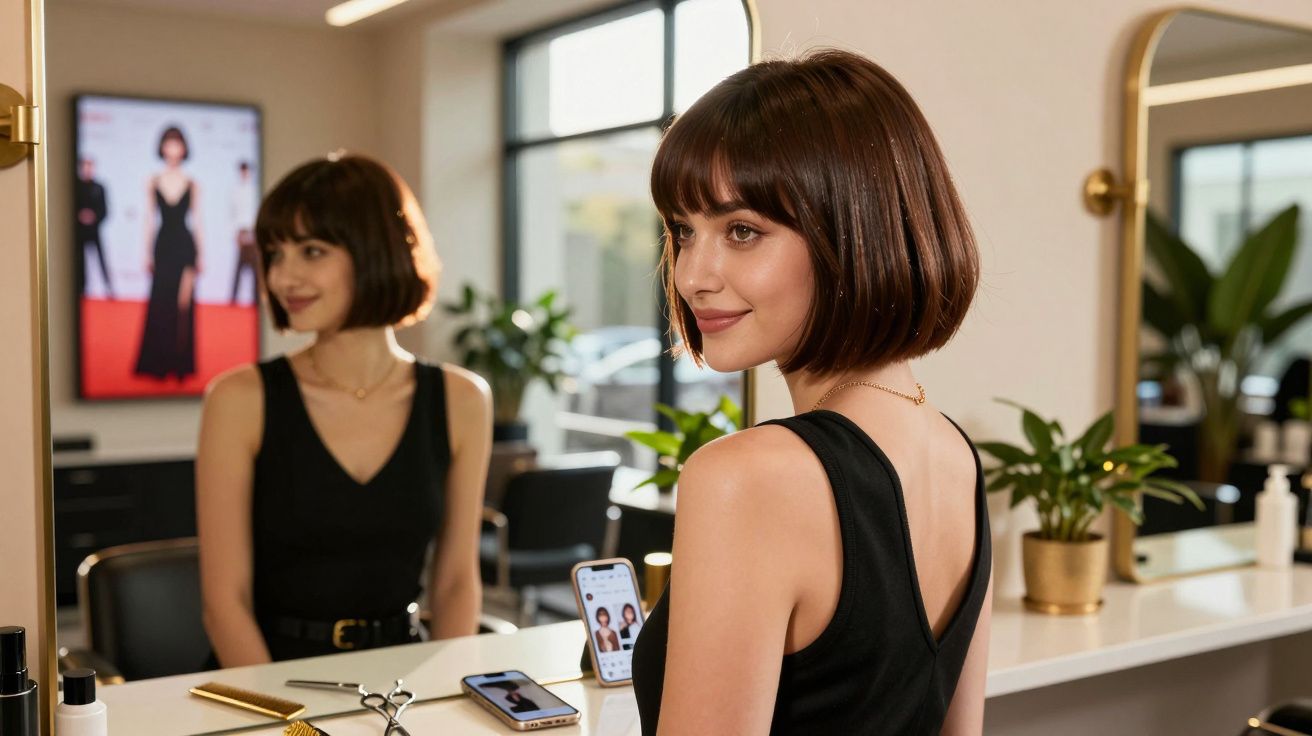
From Zendaya to Margot Robbie, the short bob is everywhere: on red carpets, in advertising campaigns and across Instagram feeds. It might look like an impulsive chop, but it usually follows a recognisable pattern. Celebrities use this compact cut to signal a fresh start, a style shift and a hint of rebellion-without committing to shaving it all off.
Why everyone is suddenly talking about the short bob
The bob isn’t new; it’s a true classic. What’s changed is the length. In 2026, instead of sitting around the shoulders like a long bob, the cut is often taken up to somewhere between the chin and the top of the neck.
The short bob is the compromise between “I want a change” and “I don’t want to reinvent myself completely”.
That’s why the same haircut can feel different from person to person. Zendaya has worn it sleek and high-shine; Margot Robbie tends towards softer movement with light layering; Bianca Balti has shown an ultra-short version on the Sanremo stage with runway-level attitude. Despite the variations, the message lands the same way each time: this face, this woman, this role-something new starts here.
A haircut with history-and a clear message
The bob rose to prominence in the 1920s, when women cut off long plaits as a visible break from restrictive expectations. That sense of independence still sits underneath the style today, even in a completely different era.
When an actress swaps long, flowing hair for a sharp short bob, fans and the media often interpret it almost automatically as a sign of:
- a new film project or career chapter
- the end of a relationship or a reset in private life
- a deliberate move away from a previous image
The impact is bold without being shocking. It’s not a buzz cut and it’s not a neon colour statement. A short bob says, “I’m changing,” without shouting, “Everything is different!”
The short bob as the perfect everyday and red-carpet cut
For anyone living a public-facing schedule, hair has to cope with a lot-an early shoot, midday interviews, and a premiere at night. This is where the short bob excels: it’s highly adaptable, while still looking polished on camera.
One short bob, many styling moods
With a strong base cut, a short bob can be restyled in minutes. The most requested looks in 2026 include:
- Sleek bob: a centre parting, straightened smooth, tucked behind the ears-ideal for events and sharp workwear.
- Soft waves bob: gentle waves that soften the face, great for dates and daytime occasions.
- French-inspired micro-bob: even shorter, grazing the chin or above, with structure and lightly textured ends.
- Curly bob: shaped specifically for natural curls, so the hair looks defined rather than overly puffy.
The key is that the silhouette stays clean in every version. The cut frames the face and draws attention to cheekbones, lips and eyes-exactly what reads well in photos.
The short bob works like a built-in filter: it sharpens your features without hiding them.
Who the short bob can suit particularly well
This isn’t a haircut reserved for supermodels. A short bob cut can work for many face shapes when a stylist customises the details:
- Round face: slightly longer front pieces and a subtle side part help elongate the outline.
- Square face: softer waves and lightly layered ends reduce the look of a strong jawline.
- Oval face: most versions work-from ultra-sleek to deliberately textured.
- Heart-shaped face: a touch more volume around the chin balances a wider forehead.
A good consultation should be bluntly practical: How thick is your hair? How much time do you actually have in the morning? A bob that only behaves after 30 minutes of styling won’t fit every routine.
Social media turns the short bob into a trend engine
In the past, it could take weeks for a celebrity haircut to reach everyday salons. Now a single Reel and a handful of TikToks can do the job overnight. Every new short bob appears instantly in feeds, gets dissected, debated and recreated.
The process is straightforward:
- A well-known person posts their new cut.
- Hair stylists share close-ups and break down the technique.
- Users upload before-and-after clips that encourage others to go for it.
Because a short bob feels lower-risk than dramatic colour experiments or extreme crops, more people are willing to try it. You lose length, but you stay within a comfort zone: you look noticeably different while still looking like yourself.
Less stress in the bathroom: practical reasons behind the trend
Beyond symbolism and glamour, there are everyday benefits that explain why the short bob is winning so much support in 2026:
- Less styling time: shorter hair is quicker to blow-dry, straighten or wave.
- Easier maintenance: split ends and dried-out lengths have less chance to take over.
- More comfortable in summer: a clear neck means less trapped heat.
- Cleaner-looking colour: balayage, glossing and toners often look fresher and more defined on a compact shape.
The short bob isn’t only a fashion statement-it’s a time saver you feel every morning in the mirror.
People who’ve lived with heavy, thick hair often describe the change as genuinely freeing-physically and mentally.
What to ask for in the salon (so your short bob looks expensive, not accidental)
One element often missing from the online “chop” narrative is communication. Bringing clear guidance into the appointment can be the difference between a deliberate short bob and a cut that grows out awkwardly.
Useful things to specify include:
- whether you want the neckline blunt or softly tapered
- how you normally wear your parting (centre, side, or switching)
- if you prefer hair off the face (tuck-behind-ears friendly) or framing pieces
- whether you air-dry often or rely on heat styling
It can also help to discuss your wardrobe and lifestyle. A crisp, graphic bob can look brilliant with minimalist tailoring, while a more textured bob tends to suit relaxed styling and casual dressing-both can be “right”, but they create different impressions.
Risks, common mistakes and how to avoid them
Even with all its advantages, the short bob has pitfalls. A poor short bob stands out more than a poorly executed long bob, because every line is more visible. If you’re unsure, a gradual approach is often safer:
- start with a long bob first, then go shorter if you love it
- bring enough reference photos-including side and back views
- show examples on people with a similar hair texture, not only celebrities
One more practical point: a defined short bob usually needs more frequent trims-around every 6 to 8 weeks. Otherwise it can quickly slip into the uncomfortable “not quite short, not quite long” stage.
How a “tailor-made” short bob actually works
What makes celebrity bobs look so effortless is the level of personal adjustment. Professionals increasingly describe the bob as a made-to-measure cut: the shape, length and styling are built around the person and their real life.
That typically includes:
- Growth-pattern check: where cowlicks sit and how the hair naturally falls
- Contour work: incorporating chin shape, neck length and shoulder line
- Styling reality: a five-minute routine needs a different structure than a full styling habit
For curly hair, it’s worth choosing a stylist experienced with curls, because an overly compact short bob can create an unwanted “triangle” or mushroom effect. For very fine hair, a blunter line can create the illusion of density and make the hair feel fuller.
Why the short bob is likely to stay through 2026
All signs suggest this look won’t vanish in a few months. It nods to the great short-hair moments of the past, but feels more modern, softer and more individual. It also matches a generation that wants change-without locking themselves into something irreversible.
So if you’re considering a reset but don’t want to gamble on a drastic cut, the short bob offers a kind of safe middle ground: visibly different, strong in photographs, and always able to grow out. That combination is exactly why it’s becoming the haircut of 2026-on celebrities and, increasingly, in everyday life.




Comments
No comments yet. Be the first to comment!
Leave a Comment