
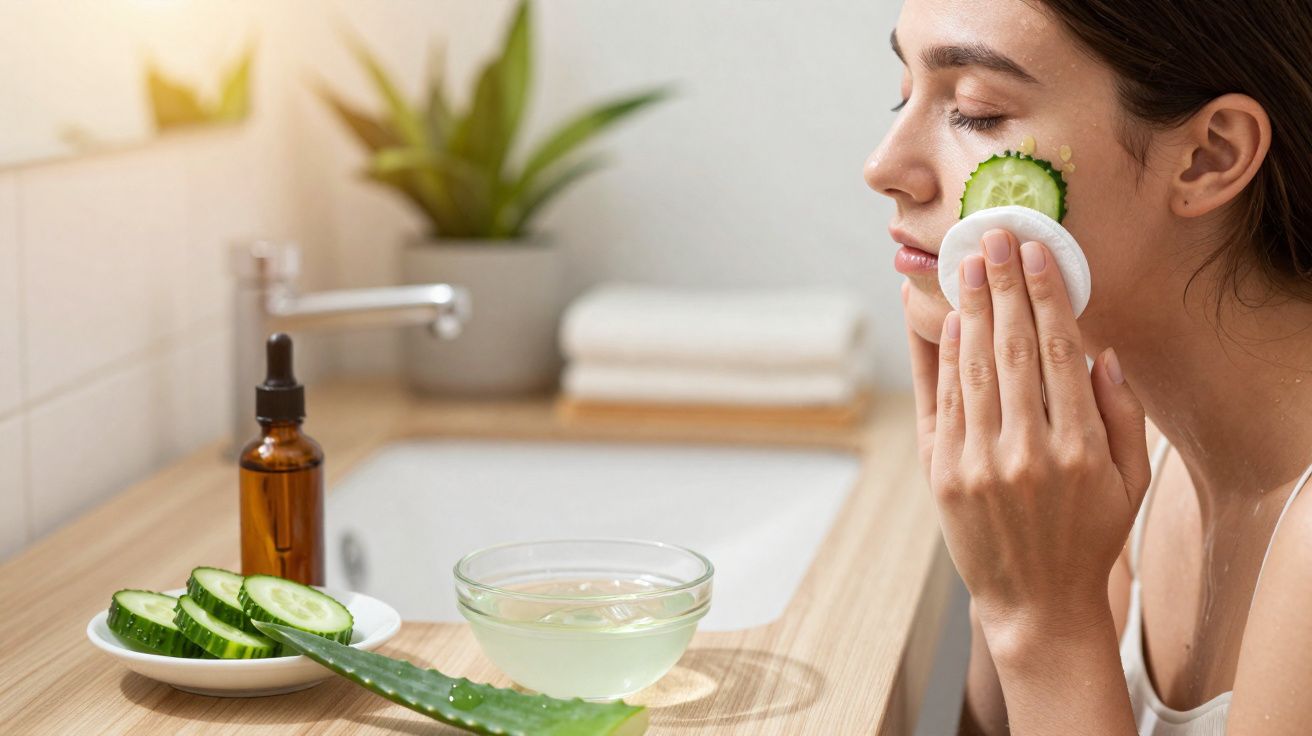
Instead of relying on high-tech serums with grand claims, plenty of people are turning to something far more basic: a bowl, a blender and two everyday plants - cucumber and aloe vera. Blended together, they create a lightweight, calming gel that suits warm weather, sluggish-looking skin and anyone who wants to keep skincare uncomplicated while still looking fresh and well-rested.
Cucumber and aloe vera for simple, cooling skincare
Although cucumber and aloe vera can sound like a wellness cliché, the combination makes practical sense because each ingredient contributes something different.
Cucumber gives an immediate cooling effect. Because it is largely water, it feels like a quick splash of refreshment as soon as it hits the skin. Aloe vera, by contrast, has a naturally gel-like consistency, so it lingers longer and forms a comfortable layer rather than disappearing in seconds.
Cucumber brings the chill; aloe vera holds it on the skin and turns it into a gel you can actually use.
Used together, they form a light gel that spreads easily, absorbs fairly quickly and typically sits well alongside a simple routine. For anyone trying to cut their routine down to a few dependable steps, that ease is a big part of the appeal.
What cucumber really does for your skin
Cucumber’s role in beauty predates social media by a long way - and there is a reason the “cucumber slices on the eyes” image still turns up everywhere.
Fast, surface-level hydration and a more rested appearance
Because cucumber contains so much water, it can give the skin a quick boost of surface hydration. If you use it chilled from the fridge, the cold can also encourage mild vasoconstriction (a slight tightening of surface blood vessels).
Together, that coolness and moisture often makes the face look a little less puffy and a touch more awake. This is most noticeable around the eyes, where morning swelling or post-sleep tiredness tends to show up first.
Relief for skin that feels overheated
Many people find cucumber-based blends soothing when their skin feels hot from warm weather, sun exposure or dry indoor air. A lot of that benefit is simply physical: a thin, watery layer can reduce the sensation of tightness, while evaporation helps bring the surface temperature down.
Cucumber’s strength is not in dramatic change - it is in the quiet comfort it can offer to skin that feels hot, tight or tired.
How aloe vera supports (and improves) the blend
Aloe vera has travelled from traditional home remedy to mainstream skincare staple, largely because its texture is so wearable. The gel forms a soft film that usually feels lighter than oils and less heavy than rich creams.
When you combine aloe vera with cucumber juice or pulp, the aloe helps stop the mixture running down the face or evaporating immediately. In effect, it “holds” the watery cucumber in place and makes the end result feel more like a proper leave-on gel.
Short-term hydration and less post-wash tightness
Aloe vera gel sits lightly on the epidermis (the outer layer of skin), helping reduce that pulled, uncomfortable feeling some people notice after cleansing or after time in wind or air conditioning.
It also contains natural sugars and polysaccharides that can help the skin retain water for a bit longer. The change is gentle rather than dramatic, but it can be noticeable if your cheeks or forehead often feel slightly parched.
How to mix cucumber and aloe vera at home
The method is straightforward and doesn’t require specialist kit. The main goal is to land on a gel that is neither watery nor stiff.
Step-by-step guide
- Wash a fresh cucumber well and, ideally, choose organic; if not, peel it to reduce pesticide residue.
- Grate or blend some cucumber until it releases plenty of liquid.
- Strain it for a smoother gel, or keep a little pulp if you prefer a more mask-like texture.
- Slowly mix in pure aloe vera gel, adding small amounts at a time.
- Stop once you have a soft gel that holds together and doesn’t drip easily off a spoon.
- Keep it in a clean container with a lid in the fridge.
- Use within 2–3 days, and throw it away if the smell, colour or texture changes.
Treat it like fresh food for your face: minimal ingredients, a short shelf life, and best stored in the fridge.
Typical uses in a routine
The cucumber–aloe mix can be used in a few different ways, depending on how thickly you apply it:
| Use | How to apply | When to use |
|---|---|---|
| Quick refresher gel | Apply a thin layer to clean skin and let it absorb | On hot days or after sun exposure |
| Soothing mask | Apply a thicker layer, leave for 10–15 minutes, then rinse | When skin feels tight or looks dull |
| Under-cream booster | Smooth on a light coat before a basic moisturiser | For extra surface hydration without heaviness |
Two added essentials: choosing the right aloe vera and keeping it hygienic
Not all aloe vera gels are the same. For facial use, aim for a simple, fragrance-free gel and avoid formulas heavy in alcohol (which can feel drying) or strongly perfumed blends (which may irritate reactive skin). If you are using gel straight from an aloe leaf, be careful to avoid the yellow latex just beneath the skin of the leaf, as it can be irritating for some people.
Because this is a homemade, water-rich product, cleanliness matters. Always use freshly washed utensils and clean hands (or a small spatula), and don’t top up an old batch with new ingredients. If you have had a cold sore, conjunctivitis or a skin infection recently, it’s better to pause and start again later rather than risk reintroducing bacteria.
Common mistakes that lead to disappointment
Gentle, plant-based mixes are often let down by unrealistic expectations - and cucumber and aloe vera are no different.
A common error is applying a very thick layer and expecting it to perform like a potent overnight treatment. Heavy coats take longer to dry, can feel tacky, and may become irritating if left on for hours, especially on sensitive skin.
Another frequent issue is expecting a single application to transform the face - smoothing wrinkles, erasing dark circles or “fixing” sun damage. Two low-intensity, water-rich plants simply can’t deliver that kind of result.
Think of it more like a glass of water for the skin than anything comparable to an in-clinic procedure.
What results you can realistically expect
With regular use, cucumber and aloe vera usually produce small but pleasing changes: the skin can feel cooler, look slightly more even, and feel smoother to the touch.
Fine dehydration lines may look softer immediately after application - similar to how fabric creases relax when lightly misted with water. This is a temporary cosmetic effect rather than a deeper structural change.
Many people also like how well this gel fits into a lighter routine. In very warm weather it can stand in for heavier creams, keeping skin comfortable while still feeling “barely there”.
Who benefits most from this simple duo
The cucumber–aloe mix tends to suit people who want skincare that feels clean, minimal and refreshing. It often works particularly well for normal to slightly oily skin types that dislike residue and prefer airy textures.
It can also be a helpful stepping stone for teenagers, or for anyone moving away from harsh, foaming cleansers towards more balanced care. The low cost and short ingredient list make it feel approachable compared with multi-step routines.
When to be cautious
Even gentle plants can cause problems for some. If you have reacted to aloe vera, pollen or plant-based cosmetics before, do a patch test first (for example on the inner arm or the side of the neck).
Very dry or mature skin may find the blend too lightweight when used alone. In that case, it usually works better under a richer moisturiser - acting as a hydrating base rather than a full replacement.
Extra context: what “hydration” means in this case
In skincare, hydration refers to increasing water content in the outer layers of the skin. Both cucumber and aloe vera mainly support this kind of superficial hydration, rather than altering oil production or rebuilding deeper skin structures.
That difference is important. If you are dealing with eczema, persistent cracking, severe dryness or recovery after a procedure, you still need tailored advice from a professional. A homemade plant gel can soothe and refresh, but it is not a substitute for medical treatment or specialised barrier-repair products.
Practical scenarios and smart combinations
On a warm summer evening, you can apply the mixture straight from the fridge as a 10-minute mask after cleansing. Used this way, it can help ease the flushed, end-of-day look and rinses off without leaving a heavy film.
If you spend long stretches in air-conditioned offices or on trains, try patting on a thin layer in the morning, then following with a basic moisturiser and sunscreen. That combination can reduce the tight feeling that builds up between commuting and heading home.
The cucumber–aloe mix also pairs well with other gentle basics such as micellar water, a fragrance-free moisturiser and a broad-spectrum SPF. Used as an affordable extra rather than the “hero” step, it adds a small, spa-like moment to the day while keeping expectations realistic.





Comments
No comments yet. Be the first to comment!
Leave a Comment