
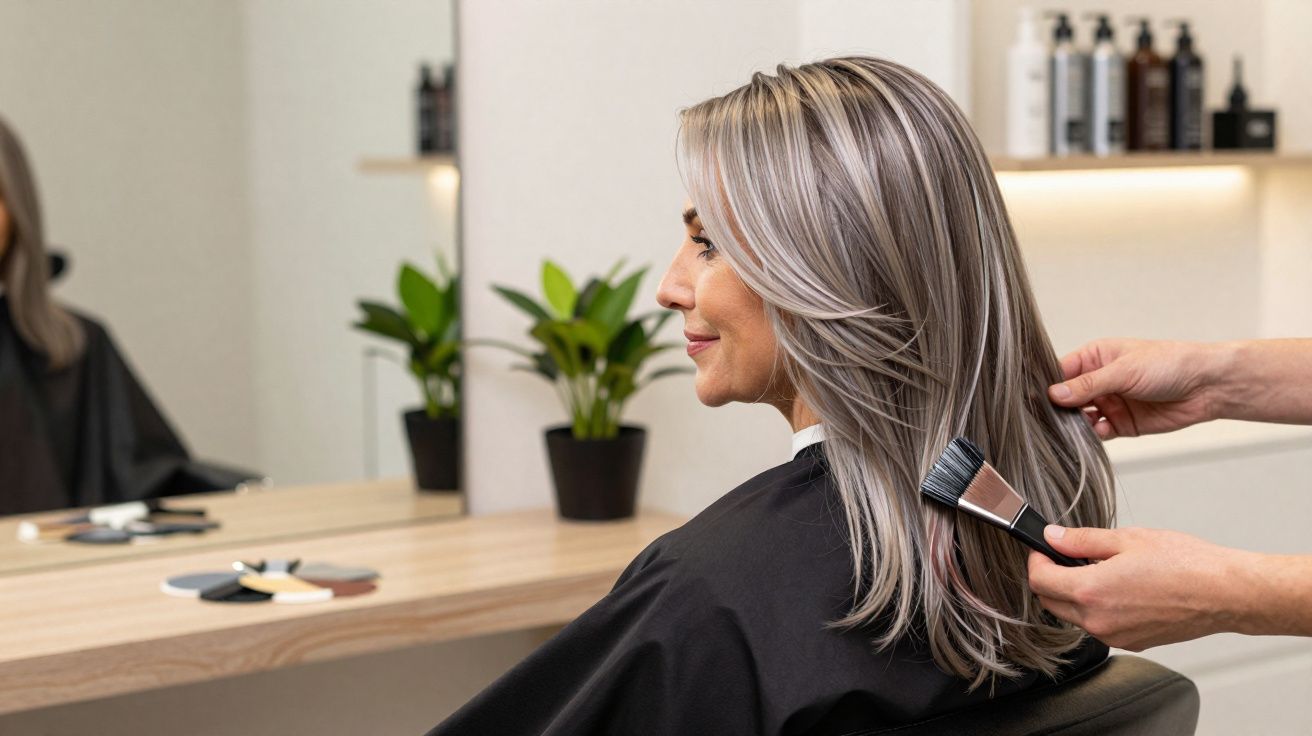
Chic grey hair is enjoying its moment, yet the difference between effortlessly stylish and instantly ageing can be finer than you might think.
As salt-and-pepper hair moves centre stage, colourists are leaning on a smart technique known as reverse colouring. Done well, it boosts shine, adds depth and helps new growth blend in gently-ideal for anyone who refuses to feel like a “mémère” simply because the greys have turned up.
What reverse colouring actually is
Reverse colouring (often referred to as reverse balayage) turns the usual colouring approach on its head. Rather than lightening the hair, your colourist subtly darkens carefully chosen pieces to build dimension and contrast.
Where classic balayage is all about brightening the mid-lengths and ends, reverse colouring uses lowlights-deeper tones-to shape and define naturally grey or white hair.
Reverse colouring complements your grey instead of fighting it, by enriching selected areas so the silver looks deliberate and contemporary.
Most appointments start with a clarifying shampoo to lift product build-up and mineral deposits that can leave grey hair looking dull. After that comes the key step: a toner or gloss, placed with precision through the lengths.
How reverse colouring works on salt-and-pepper hair
On naturally grey or salt-and-pepper hair, the colourist works in very fine sections-more like soft “veils” than bold, chunky slices-and applies a shade a few tones deeper than your current base.
This approach can:
- soften stark white panels around the hairline and front
- add a gentle shadow at the roots to create the look of more density
- introduce contrast so silver strands pop rather than appear flat
- neutralise unwanted yellowing or dull beige tones
Typically, a gloss or toner deepens the hair by only a couple of levels. You won’t leave the salon brunette if you arrived silver. Instead, your grey looks brighter and more multi-dimensional-like you were always meant to have that exact blend.
Why reverse colouring avoids the “granny” effect
The “granny” look people worry about is rarely caused by grey hair itself. More often, it’s triggered by flat, one-note colour and harsh regrowth lines. Reverse colouring tackles both in one go.
Because the toner fades evenly over roughly 8–9 weeks, regrowth tends to blend in rather than showing up as a strong, obvious root line.
That gradual fade prevents the classic problem of bright white roots punching through a darker dye job. Instead, the hair softens between appointments, keeping everything looking modern and lived-in.
Extra depth around the face can be surprisingly flattering, too. Well-placed lowlights behave a bit like contouring-creating the impression of fuller, healthier hair rather than wispy, washed-out lengths.
Who benefits most from reverse colouring for grey hair?
Reverse colouring tends to suit people who:
- are aged 40+ and growing out grey but feel a little “washed out”
- have an uneven mix of white, grey and their natural colour
- are fed up with full-coverage dye yet don’t want a stark, all-over white finish
- want something low-commitment that fades softly
If your hair is very dark with only a handful of scattered greys, your stylist may recommend a different route-such as subtle highlights paired with a gloss-rather than true reverse colouring.
The salon routine: what to expect
A reverse colouring appointment is usually straightforward, although the placement requires real precision.
| Step | What happens | Why it matters |
|---|---|---|
| 1. Clarifying wash | Hair is washed with a deep-cleansing shampoo. | Clears residue so toner applies evenly. |
| 2. Toner / gloss | A demi-permanent colour is painted through fine sections. | Cancels yellowing and adds targeted depth. |
| 3. Processing | Colour processes for a set time, then is rinsed. | Controls how much depth is deposited. |
| 4. Cut & styling | Hair is cut and styled to showcase the tones. | Brings out movement and texture created by the colour placement. |
This is generally quicker than an all-over permanent colour or a full highlights service, as it involves less heavy sectioning and no aggressive lightening.
How long reverse colouring lasts (and when to book again)
The demi-permanent toners and glosses used for reverse colouring offer a useful middle ground: noticeable refinement without long-term lock-in. Most fade in around 8–9 weeks.
That’s why many people book in roughly every two months. If you miss an appointment, you won’t be left with a severe two-tone line-you’ll simply ease back towards your natural grey-and-white blend.
Reverse colouring does require ongoing salon visits, but each one is about subtle adjustments-not redoing everything from the beginning.
Keeping grey and white hair bright at home
Even with the best colour work, grey and white hair often behaves differently to pigmented hair. It can be drier, more porous, and more likely to pick up yellow tones from pollution, heat styling and even hard water from the tap.
The right products for silver shine
Colourists frequently suggest a routine designed specifically for grey or white hair:
- Violet or blue shampoos and masks: used once or twice weekly to counter yellow and brassy warmth
- Deep moisturising masks: formulas featuring argan oil, shea butter or keratin can help soften and strengthen coarse grey hair
- Serums with UV and pollution protection: help shield the cuticle so cool tones stay cleaner for longer
- Weekly oil treatments: applying a lightweight oil from mid-lengths to ends before washing can restore flexibility and softness
Used regularly, these steps support your salon work-helping your silver stay clear and your lowlights keep their depth.
Temporary colour options for playful greys
On days you fancy something more expressive, temporary colour can sit neatly alongside reverse colouring rather than replacing it.
Colour sprays and tinted masks can add a hint of metallic silver, pearly sheen or even soft pastels to grey hair. They usually wash out after a few shampoos, so there’s no long-term commitment.
Think of temporary tints like make-up for your hair: easy to change, low risk, and ideal for trying out a new mood.
Clear glosses-or very lightly tinted glosses-are another good option. They won’t dramatically shift the colour, but they can enhance shine and smoothness so grey looks polished rather than dull.
Key terms colourists use for reverse colouring
Grey-hair language can feel a bit technical. These definitions make consultations easier:
- Lowlights: deeper strands added through the hair to create contrast and dimension (a cornerstone of reverse colouring)
- Toner: a low-ammonia or ammonia-free colour that refines the tone rather than dramatically changing the shade depth; often used to cancel yellow or add coolness
- Gloss: similar to a toner but typically more conditioning, designed to enhance shine and perfect the overall tone
- Patina: a French term some salons use for a final toner/gloss layer that refines the finished colour
Turning up with a few reference photos plus a working grasp of these terms can help you guide the conversation towards a soft, modern finish-rather than a solid, ageing block of colour.
Practical scenarios: is reverse colouring right for you?
Picture two people in their mid-50s. One has a naturally fair complexion and bold white streaks around the face that make her feel a bit drained. By adding cool, smoky lowlights along the parting and beneath the top layer, the contrast is softened and her features look instantly more balanced.
The other person is around 70% grey, but has pockets of dull, slightly yellowed white. A clarifying cleanse followed by a silver-toned gloss brightens those sections, while a few deeper ribbons through the crown create the illusion of thicker hair. In both cases, they still look naturally grey-just cleaner, sharper and nowhere near “mémère”.
Reverse colouring won’t turn back time, and it can’t replace a great cut or proper hair care. For many people embracing salt-and-pepper hair, though, it strikes a sweet spot: respect for natural grey, support from smart salon technique, and a finish that looks current rather than conservative.
Extra considerations before you book reverse colouring
Before committing, it’s worth thinking about two practical factors that can influence results: haircut shape and lifestyle. Grey hair can look more vibrant when the cut creates movement-layers, a soft fringe, or a modern bob can help lowlights and silver pieces show their contrast more clearly. If your cut is very blunt and heavy, the colour can still look lovely, but the dimension may appear more subtle.
It also helps to be honest about how you wear your hair day-to-day. If you heat-style frequently or swim often (especially in chlorinated pools), you may need a stronger at-home routine-particularly a protective serum and occasional clarifying wash-to keep your tone bright and prevent unwanted warmth from creeping back in between salon visits.





Comments
No comments yet. Be the first to comment!
Leave a Comment