
Like many modern beauty crazes, it began with a single image. Kate Middleton stepped out into a grey London morning in a navy coat dress, her expression calibrated to “friendly, but politely distant”. This time, though, the internet wasn’t fixated on the tailoring or the brand label.
It was her hair that stole the frame.
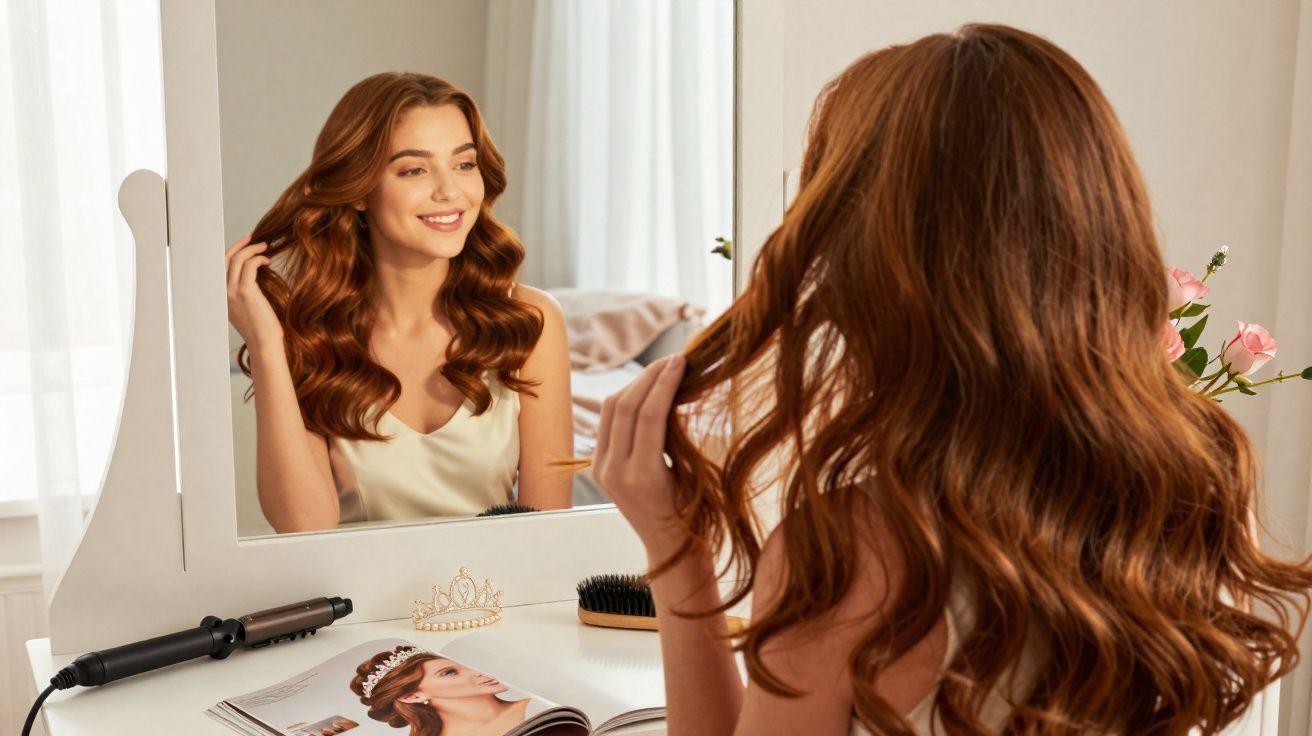
It looked glossy and deep in colour, falling into soft, sweeping curves that managed to seem both effortless and carefully arranged. Not “just left the blow-dry bar”, more “storybook duchess on official duty”.
Within weeks, TikTok had christened it with a neat label: “princess hair.” Hairdressers posted breakdowns of layers and brush angles. Instagram slideshows examined royal portraits like forensic evidence. Overnight, the cultural question shifted from “Where did she buy that coat?” to “How do I get that hair without living in a palace?”
Underneath the curls, something else was building: a quieter return to polish, restraint and a kind of timeless glamour.
What “princess hair” really means in 2026
On the surface, princess hair is easy to describe: long, lustrous lengths, smoothly brushed through, with gentle curl or bend at the ends. It’s hair that appears to float rather than drop. You’ll recognise it on Kate Middleton at a Commonwealth service, on Queen Letizia during a state visit, or on Sweden’s Princess Sofia as she steps out after a gala. Different countries, the same visual language.
What sets it apart is its softness. There are no razor-precise bobs, no wet-look gel, no obvious add-ons begging to be noticed. Instead you get healthy motion, a rounded outline, and a crown that’s sleek without being plastered flat. It signals “not trying too hard” while, in reality, it’s a look with rules.
How Kate Middleton made “princess hair” the royal default
If you trawl through royal photographs, a pattern emerges. Early Kate leaned into heavier volume and chunkier, more 2000s-style curls. Then, around 2019–2020, the look subtly recalibrates: curls relax, layers become softer, and the colour warms into something richer and more dimensional. By 2023, the formula is consistent-long chestnut hair, blow-dried with broad, rounded bends; never poker-straight, never fully “ringlet curly”.
From there, it spreads without fanfare. Denmark’s Princess Mary shifts from structured chignons to gentler waves for daytime engagements. Queen Rania favours polished layers that frame the face while keeping it open. And outside royal circles, high-profile figures such as Amal Clooney and Angelina Jolie drift towards the same understated, princess-adjacent finish. It starts to feel less like one person’s signature and more like an unspoken dress code.
What makes hair “princess” (not just pretty)
The princess hair effect usually comes down to four elements:
- Length that reaches the collarbone or beyond
- Soft, subtle layers (never choppy or over-texturised)
- A smooth blow-dry with rounded ends (or a similar bend created with heat)
- A touchable finish-movement over stiffness, shine over crunch
Colour matters too. The most “royal” versions tend to be rich, multi-tonal brunettes or softly lit blondes that look like natural sunlight, not harsh salon striping.
There’s also a rule that’s rarely said aloud: princess hair must photograph well decades later. No micro-trends like TikTok-fringes or Y2K zig-zag partings. It’s designed to sit comfortably beside a vintage portrait of Grace Kelly without looking dated. That’s the real power move hiding inside the softness.
One more practical truth (especially in the UK): this look only works when the hair is genuinely in good condition. Regular trims to prevent see-through ends, a gloss or toner to keep colour dimensional, and basic scalp care all make the “expensive” finish far easier to achieve-particularly when wind, drizzle and central heating are doing their best to rough everything up.
How to get princess hair at home - Kate Middleton-inspired, palace not required
The foundation of princess hair is the haircut. Ask your stylist for long layers beginning below the cheekbones, with gentle face-framing pieces rather than dramatic contrast panels. The ends should feel full (not wispy), but lightly softened so they bend smoothly instead of flipping out. Think “high-end blow-dry” rather than “teenage layers”.
If you’re growing your hair, aim for collarbone to mid-back length. Any shorter can read more “newsreader”. Much longer can tip into fairy-tale costume territory. For styling, the core technique is either:
- a round-brush blow-dry, or
- a large-barrel curling iron, used mainly from mid-lengths down
The top and crown should stay smooth and controlled, not overly bouncy.
Daily life, of course, doesn’t come with a personal stylist and a perfectly stocked tool drawer. Most people are working with a rushed morning, an ageing hairdryer, and someone in the house asking where their other shoe has gone. Realistically, hardly anyone recreates full princess hair every single day.
So treat it as “princess hair: the low-effort version.” Let your roots air-dry (or rough-dry quickly), then spend five focused minutes on the sections that frame your face. Create a bend away from the face with a large iron or a round brush, then lightly curve the ends elsewhere. Most of what people notice is what’s happening around your cheeks and jawline-not the back.
“Clients assume it’s all about loads of curling because they bring in Kate Middleton pictures,” says London hairstylist Maria Ellis. “But the difference is in the preparation and the finish: healthy ends, a proper blow-dry, and a light touch with products. The hair needs to move when you walk-if it’s stiff, it stops looking royal.”
Prep properly
Use a lightweight heat protectant, plus a volumising mousse only at the roots. Heavy creams through the lengths will weigh down the movement you’re aiming for.Use the right tools
Choose a 32–38 mm barrel or a large round brush. Small barrels create tight curls, which can push the look into pageant territory.Finish the way a royal stylist would
Brush out the bends with a paddle brush or a wide-tooth comb. Add a pea-sized drop of serum only to the ends. A flexible-hold hairspray helps it stay in place while still feeling springy.Don’t fall into the crunchy trap
Hard, lacquered waves work against princess hair. If it feels brittle or sounds crispy, you’ve gone too far.Fit the mood to the moment
For daytime and work, keep the curves understated and the parting neat. For evenings, increase the bend at the ends and add a little more shine.
A helpful routine tweak: wash and style once or twice a week, then protect the shape at night. A silk (or satin) pillowcase and a loose tie-up can keep bends intact for days, which makes the whole look far more achievable than daily heat styling.
Why we’re suddenly obsessed with princess hair
You could say it’s simply another algorithm-friendly trend phrase. Yet the timing is hard to ignore. After years dominated by “I woke up like this” topknots and ultra-sharp, glassy long bobs, there’s something oddly reassuring about hair that looks deliberate, glossy and almost ceremonial. It’s the beauty equivalent of putting proper shoes on again after living in slippers.
There’s a quieter emotional pull too. Princess hair carries a discreet fantasy: being viewed with a particular softness, walking into a room and catching the light in a way that feels flattering-without performing for a camera. Not for likes, not for a selfie; just for the private satisfaction of feeling slightly elevated on an ordinary Tuesday.
Crucially, it’s also adaptable. You don’t need Kate’s exact colour or length for it to work. Naturally curly hair can read “princess” with defined, glossy curls and a gentle side parting. Coily textures can lean into stretched, layered shapes with curved ends, or smooth blow-outs that preserve lift at the roots rather than flattening everything. The template is polish, movement and ease-not one narrow standard.
And the contrast makes it stick. Clothes have gone looser, nails have become bolder, make-up swings between bare-faced minimalism and full glam. Hair, meanwhile, has quietly suggested: let’s do graceful for a while. That may be why searches for Kate Middleton’s hair spike every time she steps out. People aren’t only looking for a tutorial-they’re chasing a feeling.
| Key point | Detail | Value for the reader |
|---|---|---|
| Cut and length | Long layers, softly blunt ends, collarbone to mid-back length | A clear, realistic brief to take to a stylist |
| Styling method | Round-brush blow-dry or large bends from mid-lengths down; smooth crown | Makes the “princess” effect achievable at home with basic tools |
| Finish and feel | Lightweight products, brushed-out movement, never stiff or over-set | Creates a polished look that still suits everyday life |
FAQ
Does my hair need to be long to qualify as “princess hair”?
Not absolutely, but shoulder length or longer makes the silhouette easier. With shorter cuts, prioritise smooth volume at the crown and softly curved ends, rather than blunt, pin-straight lines.Can I have princess hair if my hair is naturally curly or coily?
Yes. Work with your natural texture. Defined curls, layered shaping and moisturised, curved ends all fit the princess aesthetic without needing to straighten.Which hair colour suits this trend best?
Most shades can work. The key is depth and dimension-highlights or lowlights that mimic natural light, rather than flat, single-tone colour. Think “grown-in”, not “freshly painted”.How often do I need to style it like this?
For most people, once or twice a week is plenty. On in-between days, go for loose ponytails, half-up styles or simple clips that keep the overall look soft and polished.Is princess hair high-maintenance?
The cut and the condition of the ends do require upkeep, but the day-to-day routine doesn’t have to be intense. A good blow-dry or set of bends can last several days, especially if you sleep on a silk pillowcase or loosely tie your hair up overnight.



Comments
No comments yet. Be the first to comment!
Leave a Comment