
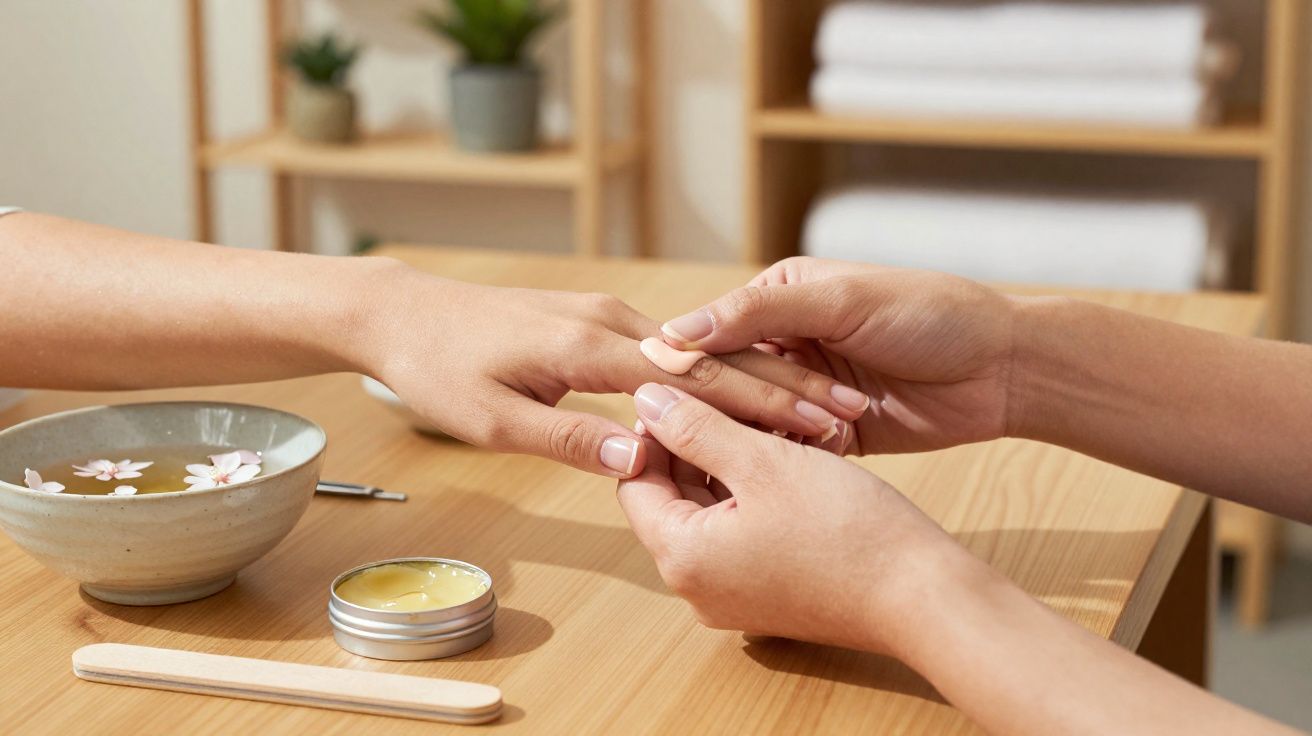
While brightly coloured gel nails and intricate nail art are gradually losing their appeal, a quieter, more polished alternative is stepping into the spotlight: Japanese manicure. It promises strong, glossy nails - with no artificial overlay, no harsh products and no constant salon appointments. Instead of chasing instant impact, it focuses on regeneration.
Japanese manicure: what it really is (and what it isn’t)
A Japanese manicure is less about styling and far more about treatment. Rooted in traditional nail-care rituals from Japan, the nails are polished rather than painted. The aim is to restore the natural nail plate so it looks refined without any colour at all.
At the heart of the method are largely natural ingredients. Commonly used are:
- Beeswax, which forms a protective film
- Keratin-rich components, intended to reinforce the nail structure
- Minerals such as silicon compounds, used to smooth the surface
- Vitamins, which can support dry, brittle nails with conditioning care
The technique centres on a two-stage ritual. First, a nutrient-rich, paste-like treatment is massaged into the cleaned nail plate. Then a fine powder or wax layer is worked in and buffed as a kind of seal. The friction created during polishing produces the signature pearly shine.
A Japanese manicure isn’t a coating that sits on top of the nail - it’s an intensive conditioning process that works within the natural nail itself.
Because of that, the result doesn’t look “applied”. Nails appear pink-toned, softly pearlescent and exceptionally neat - more “naturally perfect” than “just left the nail salon”.
Why the Japanese manicure trend is taking off right now
Many people who have relied on gel, acrylic or other enhancement systems for years are starting to feel the downside: thin, fragile nails, discolouration, and the ongoing cycle of infills. At the same time, there’s a growing appetite for simplicity, fewer chemicals, and beauty treatments that prioritise care over decoration.
A Japanese manicure fits this shift perfectly. It:
- significantly reduces overall product use
- avoids aggressive soaking-off or heavy filing
- works without a UV or LED lamp
- leans on ingredients with a more “natural” profile
For plenty of clients, it becomes a genuine route out of the endless loop of new sets, infills and removal. After years of artificial nails, many use a Japanese manicure as a “rehab programme” to help the nail plate recover.
Japanese manicure step by step: what happens in the appointment
Specific products can vary by salon, but the process usually follows a consistent structure.
1) Nail preparation
The nail professional removes any old product residue, then washes and sanitises the hands. The cuticles are gently pushed back or minimally tidied - without cutting deeply or causing injury. Next, the nails are shaped into a natural outline. Short, softly rounded shapes are often preferred, as they tend to support strength and reduce breakage.
2) Massaging in the conditioning paste
A nutrient paste is applied to the slightly buffed, dry nail plate. It’s worked in carefully using a dedicated polishing tool - often made from deerskin or a very fine buffing block. The motion can stimulate circulation and helps the conditioning ingredients settle into the nail layers.
3) Sealing with powder and polish
In the second stage, a fine powder or wax is applied and buffed in. This creates the well-known, mirror-like sheen. Unlike polish or gel, there’s nothing to chip because there is no true artificial overlay sitting on the nail.
The shine grows out with the nail rather than peeling away - which is exactly why the method is so easy to live with.
Depending on lifestyle, the finish typically remains noticeable for 2–3 weeks. If you wash up frequently or handle cleaning products, wearing gloves will help the sheen last longer.
Japanese manicure compared with gel, BIAB and standard nail polish
| Method | Longevity | Impact on the nail | Look |
|---|---|---|---|
| Japanese manicure | 2–3 weeks of shine; grows out naturally | Low, as there’s no aggressive removal | Natural, pink-pearl |
| Gel / BIAB | 3–4 weeks; requires infills | Medium to high due to filing and removal | Very “perfect”, sometimes quite artificial |
| Standard nail polish | 3–7 days depending on wear | Low, but consider solvents | Wide colour range, glossy or matte |
If you love bold colours, extra length or detailed nail art, the Japanese approach alone may not satisfy you. It’s better suited to anyone who wants understated, well-groomed hands - and who values nail health over statement designs.
Who Japanese manicure suits best
This method is particularly well matched to people with:
- thin, brittle or splitting nails
- nails that have been weakened after years of gel or acrylic
- a sensitive nail bed or a tendency towards irritation
- jobs where prominent artificial nails are impractical
- a minimalist, “clean” style
Pregnant and breastfeeding people often choose this manicure as well, because the products used are typically far milder than many traditional systems. The key factors still matter, though: exactly what the salon uses and how hygienically the treatment is carried out.
At-home care tips: how to keep the finish looking fresh for longer
If you have a Japanese manicure done in a salon, you can support the result at home by:
- massaging nail oil into the nail plate and cuticles regularly
- wearing gloves when cleaning and washing up
- avoiding metal files or harsh buffers that over-buff the surface
- steering clear of acetone-based removers if you apply polish on top
Some brands sell Japanese manicure kits containing paste, powder and a dedicated buffer. If you’re confident with very light pressure, you can achieve a similar look at home. However, heavy-handed buffing can thin the nails further. When in doubt, it’s worth booking your first treatment with a reputable professional so you can see the technique done properly.
Risks to be aware of (even with a “natural” approach)
Although it’s considered gentle, a Japanese manicure isn’t completely risk-free. If your nails are already extremely thin, repeating the polishing stages too often can reduce the nail plate further. Anyone with fungal infections, open areas of skin, or severely inflamed cuticles should avoid polishing of any kind until the area has fully healed.
It’s also important to remember that “natural” doesn’t automatically mean non-irritating. Beeswax and certain botanical ingredients can trigger allergic reactions. Good salons will list all components if asked - and if you’re prone to allergies, raise it clearly before your appointment.
Making Japanese manicure work in everyday life
What’s interesting is how easily a Japanese manicure adapts to different styles. Minimalists tend to wear the pearly shine alone. Others add barely-there details - for example, an ultra-fine French line or a single tiny glitter accent on each hand. That way, the nail plate still benefits from the treatment while the look feels personal.
If you enjoy fashion, you can also use your nails as a calm counterpoint to bold outfits. Next to strong colours, prints or statement jewellery, softly glossy, healthy-looking nails feel surprisingly modern - almost like a “no-make-up look” for the hands.
One more bonus people often mention: they pick or bite their nails less. The even shine and smooth finish make hands feel cared for, which can encourage better habits. In that sense, Japanese manicure becomes more than a trend - it can be a small push towards greater everyday mindfulness.
Extra considerations: choosing a salon and timing your maintenance
Because a Japanese manicure relies on technique as much as products, choosing the right salon matters. Look for clear hygiene practices (fresh files/buffers where possible, properly sanitised tools, clean workstations) and a professional who explains the steps rather than rushing through them. If you have a history of sensitive skin or allergic reactions, ask in advance what ingredients are used and whether a patch test is possible.
For most people, repeating the treatment every 2–4 weeks is plenty. Scheduling it too frequently can lead to over-polishing, especially if you also buff your nails at home. A gentle routine - oil, gloves for household jobs, and minimal abrasive filing - helps maintain the healthy look without putting the nail plate under unnecessary stress.


Comments
No comments yet. Be the first to comment!
Leave a Comment