
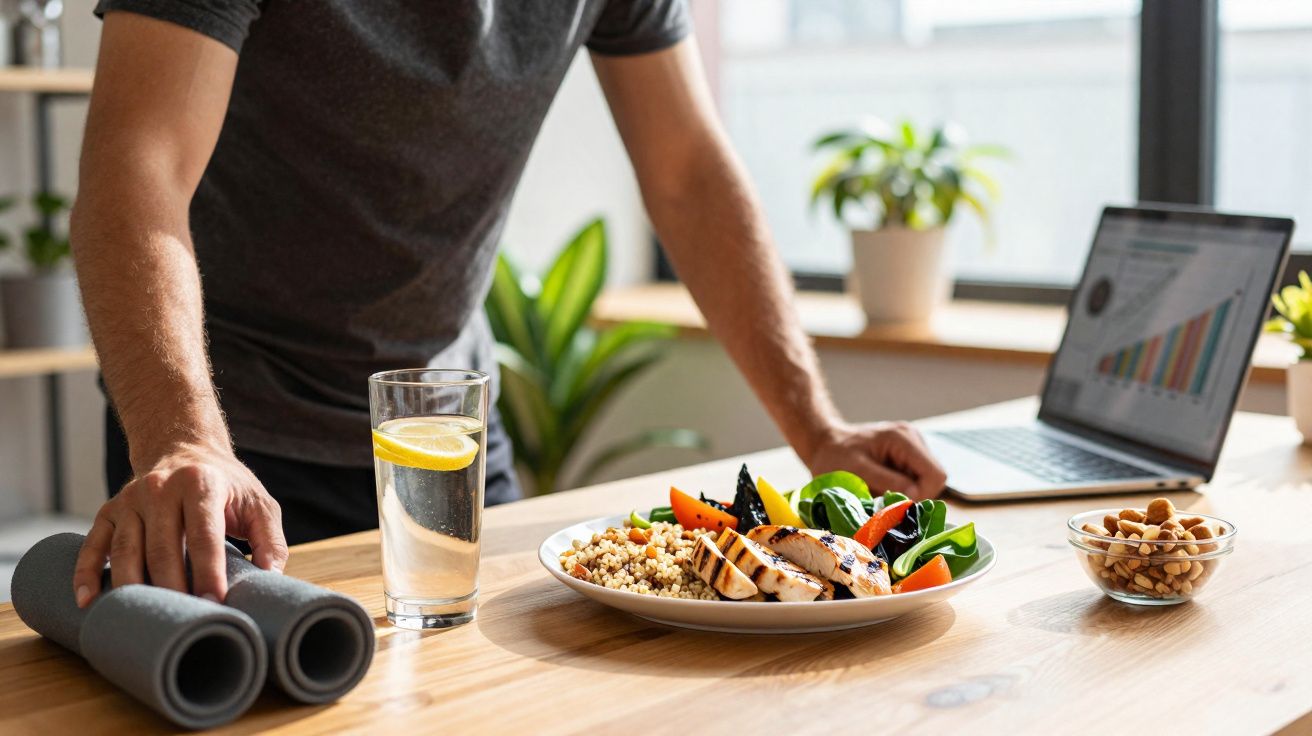
Many people blame the post-lunch crash on poor sleep. More often than not, the real culprit is what was on the plate.
By about 14:00 your head feels heavy, your eyes sting, and even a simple email reads like an exam paper. The midday slump can feel like a mysterious energy thief, but it is usually a straightforward physiological response to lunch. Once you understand how digestion, blood sugar and portion size interact, you can stay noticeably more alert and focused through the rest of the day.
Why your lunch plate decides your concentration
A large, heavy lunch pulls a lot of blood towards the stomach and intestines to organise digestion. That leaves fewer resources elsewhere - including your brain. If you feel as though your mind is full of cotton wool after eating, you are experiencing that exact trade-off.
How blood sugar turns into a rollercoaster (and your brain follows)
After a hearty meal - especially one built around white bread, pasta, sugary foods or oversized sides - carbohydrates enter the bloodstream quickly. Blood sugar rises fast, and the body responds with a strong surge of insulin to bring glucose back down.
The problem is what often comes next: a steep drop after the spike. Specialists refer to this as reactive hypoglycaemia. Your blood sugar falls below your personal “comfortable” level, and your brain is left short of its main fuel. The signs tend to be immediate:
- repeated bouts of yawning
- slower thinking and reduced mental speed
- cravings for sweet snacks or coffee
- a powerful urge to put your head down on the desk
This “food coma” is not a lack of willpower. It is the logical outcome of too much sugar entering the blood too quickly.
What research shows about lunch and alertness
Studies examining performance after meals repeatedly find the same pattern: the larger and more carbohydrate-heavy the lunch, the more reaction time, attention and accuracy tend to drop in the hours afterwards. Particularly problematic are:
- very large portions above 600–700 kilocalories
- lots of refined white flour (baguette, regular pasta, pizza base)
- sweet follow-ups such as desserts, milkshakes or sweetened coffee drinks
In contrast, moderate portions with plenty of vegetables, fibre and a sensible amount of protein usually lead to steadier energy. Digestion runs more smoothly and blood sugar moves in gentle waves rather than extreme peaks.
The ideal lunch: fill the body, keep the mind awake
Why a lighter lunch of up to about 600 kilocalories is often enough
A practical rule of thumb is to keep lunch roughly under 600 kilocalories. That typically keeps the digestive workload manageable - your body still has to work, but it does not have to run an internal construction site. More energy remains available for your brain and muscles.
This does not mean leaving the table hungry. The key is stopping at pleasant satisfaction rather than pushing to the point of feeling overly full. Many people finish everything out of habit, add bread automatically, or take pudding “because it’s there” even though fullness is already arriving.
Learning to stop when you feel comfortably satisfied - not stuffed - can bring back noticeable afternoon energy.
More protein and fibre, fewer fast carbohydrates
What you put on the plate matters at least as much as how much you eat. A reliable structure for an alert lunch looks like this:
- Half the plate: seasonal vegetables, raw or gently cooked
- A quarter of the plate: an easy-to-digest protein source (e.g. chicken, fish, tofu, chickpeas, eggs)
- A quarter of the plate: complex carbohydrates (e.g. brown rice, quinoa, lentils, wholegrain pasta, potatoes with the skin on)
- Extra: 1 tablespoon of a good-quality oil such as olive or rapeseed oil
Fibre from vegetables, wholegrains and pulses slows sugar absorption in the gut. Protein helps prevent cravings and supports longer, steadier fullness. Fats from quality oils can also help stabilise blood sugar and improve absorption of fat-soluble vitamins.
Meals that usually suit the evening better than a workday lunch include:
- greasy sausages, schnitzel-style fried cutlets, double burgers
- enormous plates of refined pasta with creamy sauce
- chips with mayonnaise
- large amounts of white bread or pastries
The best after-lunch routine for staying alert
Ten minutes of movement: why a post-lunch walk is worth it
Many people go straight back to the desk or onto the sofa after eating. That choice often amplifies sluggishness. A better option is to stand up after the last bite and move. You do not need a workout - 10 minutes of brisk walking is enough.
A short walk after eating works like a reset button for digestion, circulation and mental clarity.
Walking activates the leg muscles, improves blood circulation and helps the gut get moving. You also take in more oxygen, which can noticeably support the brain. For many people, a quick loop around the block or even a lap of the office building makes a clear difference to mental sharpness.
Hydration instead of an espresso shock: how fluids support the brain
When tiredness hits, it is tempting to reach for a strong coffee. It can feel helpful in the moment, but it often papers over the basic issue: not enough water and a meal that was too heavy. Even mild dehydration can reduce concentration and affect mood.
A good post-lunch default is a glass of water or a gentle herbal tea. This supports digestion, helps fibre swell properly in the gut, and can reduce the risk of afternoon headaches. Use caffeine deliberately and in moderate amounts earlier in the day, rather than as an emergency tool against the food coma.
Anti–midday slump strategy at a glance
| Measure | When | Expected effect |
|---|---|---|
| Eat a moderate, balanced portion | during lunch | calmer digestion, fewer blood sugar spikes |
| Take a short walk or do gentle movement | straight after eating, about 10 minutes | more oxygen, clearer head, less heaviness |
| Drink regularly | from the end of lunch through the afternoon | better concentration, smoother digestion, steadier performance |
Practical lunch ideas that keep you awake
Three everyday lunch combinations to avoid the canteen coma (Lunch options)
- Office lunch: a large mixed salad with chickpeas, feta or tofu, a handful of wholegrain croutons, and an olive-oil dressing.
- Quick work-from-home meal: oven-baked potatoes with the skin on, quark or hummus, plus raw vegetable sticks and an apple.
- Canteen choice: half a plate of vegetables, a small portion of wholegrain pasta or rice, plus fish or lean meat; skip dessert or swap it for fruit.
If you vary herbs, spices and different vegetables, you can keep meals interesting without overloading your system.
Extra factors: sleep, dinner timing and stress
Sometimes the midday slump still feels strong even after a lighter lunch. In that case, look at the wider picture. Too little sleep, a very late or heavy evening meal, or sustained stress can all magnify the impact of lunch on energy and focus.
Two practical tweaks often help: avoid eating right up to bedtime, and build short movement breaks into the day even when you are busy. A sleep deficit across several nights can make the body more prone to blood sugar swings - and therefore more vulnerable to the food coma after meals.
Another helpful angle is eating pace and timing. If lunch is rushed, the body often gets a sudden, dense load of food, and it is easier to overshoot portion size before fullness registers. Slowing down slightly and aiming for a consistent lunch time can make blood sugar and appetite cues more predictable.
If you regularly notice extreme tiredness, trembling, a racing heart or sweating after meals, seek medical advice. In rare cases, there may be more going on than an unhelpful eating pattern, such as a metabolic issue or an underlying condition.
The main lever remains surprisingly simple: a slightly smaller portion, more vegetables and protein, 10 minutes of movement, and enough water. Just a few days of more deliberate lunches are often enough to turn the afternoon from something you endure into time you can use with a clear head.






Comments
No comments yet. Be the first to comment!
Leave a Comment