
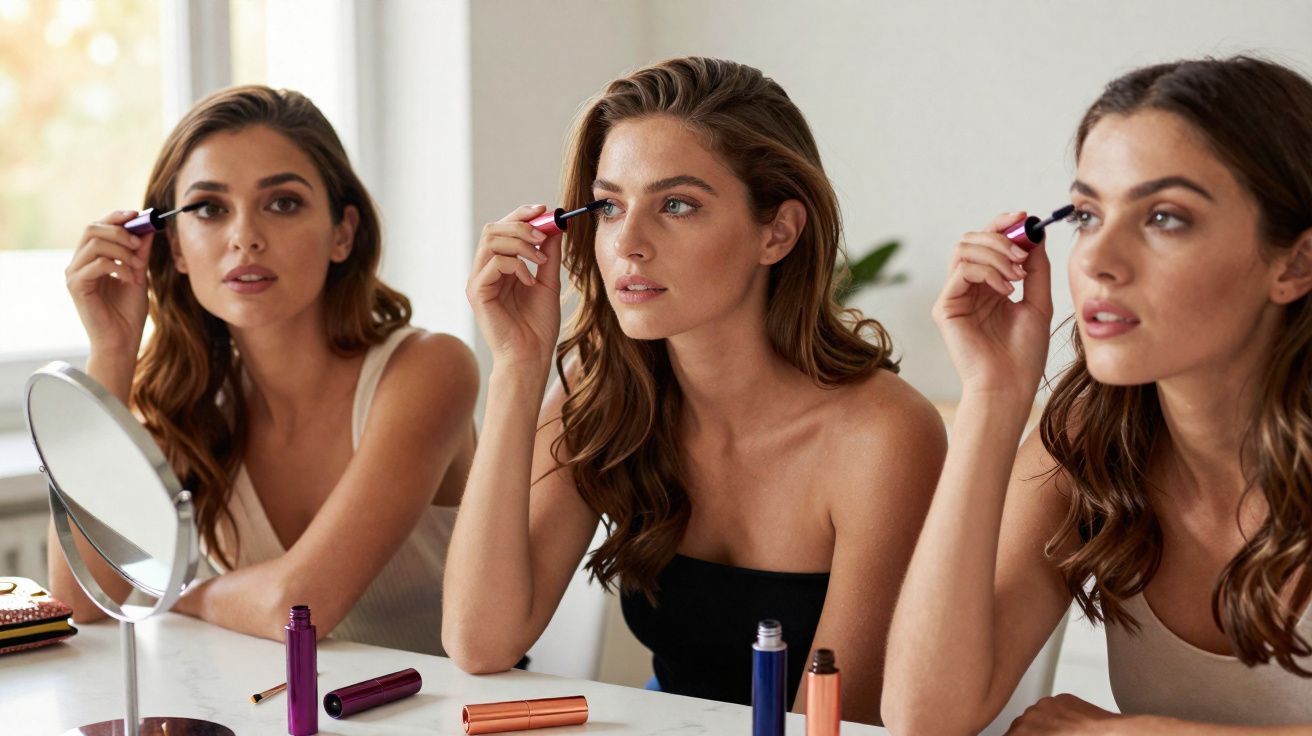
Many people reach for black mascara on autopilot each morning - and by doing so, they often miss the chance to make their eyes look their absolute best.
Depending on your eye colour, the right mascara shade can make your gaze appear softer, brighter, or more intense. When you deliberately play up your natural iris colour, you can often use less eyeshadow and still look like you’ve had your make-up done professionally. The key is choosing contrasts and harmonising tones with intention.
Why mascara colour matters more than you think
Black mascara is seen as the default - almost a compulsory purchase. It suits plenty of people perfectly well, but on light eyes and very fair skin it can quickly look harsh or overly “made up”, even if mascara is the only product you’re wearing. Tinted mascaras, on the other hand, can create a change that’s surprisingly subtle at first: your eyes can look clearer, the whites of your eyes brighter, and your iris more lively.
The right mascara colour does the work for you - it brings out your eye intensity without anyone noticing the “trick”.
Make-up artists tend to work with two simple principles:
- Contrast: shades opposite each other on the colour wheel make each other look more vivid.
- Tone-on-tone: colours from the same family feel more natural and softer, making them ideal for everyday wear.
Brown and dark eyes: almost every mascara colour is a winner
If you have brown or very dark eyes, you’re in a bit of a colour sweet spot. These iris tones can handle both classic and bold shades without tipping into “too much”.
Subtle options for the office and everyday wear
Many people with brown eyes automatically choose black for day-to-day. It works - but it’s far from your only choice. Particularly flattering options include:
- Dark brown: gentler than black, especially on fair skin. Ideal if you want to look polished without it being obvious you’re wearing mascara.
- Chocolate brown with a slight red undertone: emphasises the warm depth of brown eyes.
- Deep anthracite: nearly black but a touch smokier, which suits business looks beautifully.
These shades deepen the lash line, define without overpowering, and work with virtually any outfit. If you’re short on time but still want to look put-together, a good brown mascara often delivers a more effortless result than ultra-black, dramatic lashes.
Bold contrast for evenings and special occasions
With brown or black eyes, you can experiment more freely. These shades are particularly striking:
- Electric blue: creates crisp contrast against a dark iris and can make the whites of the eyes look fresher.
- Deep green: complements warm brown tones while still feeling modern.
- Burgundy or plum: looks elegant and slightly mysterious - and is especially flattering in photographs.
A professional tip to keep coloured mascara from looking costume-like:
Apply one coat of black or dark brown mascara at the roots first, then add the coloured mascara only to the tips.
This keeps the lash line dense and defined, while the colour flashes subtly when you blink - understated, but effective.
Blue eyes: shades that add depth without harshness
Blue eyes naturally stand out. The wrong mascara colour can make them look glassy or overly sharp. The goal is a look that feels intense, yet soft.
Plum, purple and copper - secret weapons for blue eyes (mascara colour)
On the colour wheel, violet sits opposite blue. That’s why these tones are especially flattering:
- Plum: boosts contrast with a blue iris without becoming too dramatic.
- Purple or aubergine tones: make the eyes look awake and current, particularly lovely with a nude lipstick.
- Soft brown or bronze: ideal if black feels too strong, but you don’t want a colourful look every day.
Black mascara can be “too much” on very pale blue eyes paired with fair skin. If you’re unsure, start with dark brown or a mascara that has only a subtle violet sheen rather than full-on colour.
When “blue on blue” works - and when it doesn’t
Blue mascara with blue eyes sounds logical, but it can be tricky. A light blue on light blue eyes can sometimes drain definition and leave the eyes looking flat. Better choices are:
- Dark navy: thickens the lash line much like black, but reads slightly softer.
- Blue on the lower lashes only: keep the top lashes classic and add colour underneath - great for evenings or festivals.
If you need a more serious look at work, brown, anthracite or navy tends to be the safest daytime route, saving the brighter options for after-hours.
Green eyes: the perfect stage for plum and bronze
Green eyes are relatively rare - and that’s exactly why they’re so exciting to enhance with colour. Many people don’t realise how strongly the right mascara shade can amplify gold and emerald flecks in the iris.
Why plum almost always wins on green eyes
Make-up professionals often reach for a plum mascara instinctively when working on green eyes. The gentle red undertone forms a strong counterpoint to green, creating a striking effect:
With plum mascara, green eyes can look more intense, warmer, and almost “lit from within” - without anyone being able to pinpoint why.
If you prefer something more understated, start with:
- Dark brown: soft, easy to wear, and especially flattering on golden-green eyes.
- Bronze or copper: picks up golden reflections in the iris and makes the gaze look warm and radiant.
How green and blue tones can work on green eyes
It’s a common assumption that green mascara with green eyes is overkill - but that’s only partly true. A rich forest green or a very deep emerald can look incredibly alluring, especially in the evening. The key is keeping the rest of your make-up calm: neutral lips, a touch of highlighter, and you’re done.
Equally interesting is deep blue. A dark navy or petrol gives an elegant contrast without overpowering the iris. Neon or turquoise versions are better suited to party or festival looks.
Wearing colour without getting it wrong: simple, practical techniques
Lots of people feel wary of coloured mascara because they don’t want to look “too colourful” or stuck in an 80s throwback. A few easy methods make it far more wearable:
- Colour on the tips only: apply one coat of black or brown first, then brush your chosen colour just through the ends.
- Highlight only the lower lashes: keep the top lashes classic and add colour underneath for a lively but still manageable look.
- Choose shimmer over solid colour: a coloured sheen reads much more subtle for everyday wear than a fully opaque bright shade.
Occasion matters too:
| Situation | Recommended mascara colours |
|---|---|
| Work, interview, meeting | Dark brown, black, navy, anthracite |
| Everyday, university, café | Brown, bronze, plum, navy |
| Dinner, date | Plum, burgundy, deep green, intense navy |
| Party, festival | Electric blue, neon green, coloured tips |
Two extra things that change how mascara colour looks (but people forget)
Lighting and surroundings can dramatically affect how a shade reads. In daylight, a plum or navy mascara may look almost neutral; under warm indoor lighting it can appear deeper and more noticeable. If you’re trying a new mascara colour for the first time, check it in both natural light and indoor light before deciding whether it feels “too much”.
Your skin and hair contrast also plays a role. If your hair and brows are very light, swapping black mascara for dark brown, bronze or navy can make your features look more balanced and less stark - even when your eye colour stays the same.
What else to look for when buying mascara
Shade is only part of the equation. When you’re choosing a mascara, pay attention to:
- Finish: matte looks calmer and more refined; glossy or shimmery formulas draw more attention to the lashes.
- Formula: if your eyes are sensitive, fragrance-free options are often better. If you wear contact lenses, look for guidance on the packaging that it’s suitable.
- Brush shape: dense and large brushes tend to build volume; slimmer, curved brushes usually focus on length and lift.
With coloured mascaras, it’s worth looking at real wear photos. Some shades look bright in the tube but appear much softer on the lashes - and occasionally it’s the other way round.
How to test your perfect mascara colour without wasting money
If you’re not sure where to begin, start with a shade that’s only a small step away from what you already use: blue instead of black for brown eyes, plum instead of brown for green eyes, or bronze instead of black for blue eyes. A useful trick is to apply your usual mascara on one eye and the new colour on the other - the difference becomes obvious immediately in the mirror.
Using this method, many people notice for the first time how much mascara colour changes their overall expression. Often, switching just one product is enough to look fresher in the morning, more defined in the evening, and more striking in photos - without adding a complicated make-up routine.




Comments
No comments yet. Be the first to comment!
Leave a Comment