
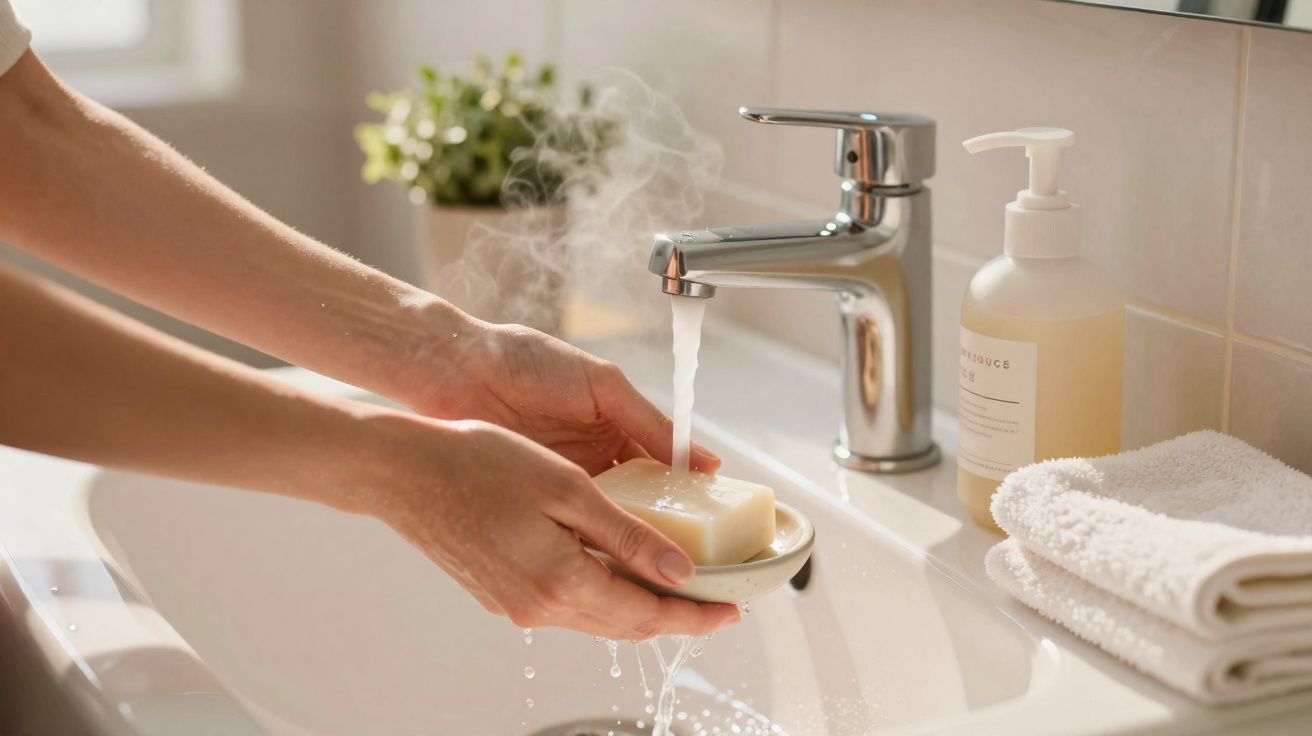
The fix isn’t hiding in the next hand cream - it’s in a small everyday habit at the sink.
Plenty of people moisturise their hands several times a day and still wonder why their skin feels tight, like parchment. Before you trial yet another “miracle” blend from the chemist, it’s worth taking a frank look at how you wash and dry your hands. Often it isn’t a lack of cream that damages skin - it’s what happens in the seconds just before you apply it.
Why your hands keep getting drier even when you use hand cream
When your hands are dry, reaching for the tube is almost automatic. A moment later everything feels softer, there’s a sheen to the skin, and that tight feeling eases - for a few hours. Then you wash your hands again, and the benefit disappears. That’s the heart of the issue.
If you only keep reapplying hand cream, you’re sticking a plaster on the outcome without changing the trigger.
Your skin naturally has a fine protective film made up of oils and moisture. The wrong washing routine strips that film back to nothing again and again. Cream can replace it briefly, but it’s often rinsed off at the very next wash. Over time, this creates a loop that weakens the skin barrier:
- Washing with water that’s too hot or too cold, plus a harsh cleanser
- The protective film is removed, leaving skin rough and prone to cracking
- Hand cream becomes a quick fix that mainly sits on the surface
- The next wash removes the cream and takes more natural oils with it
That “more product, worse skin” pattern only changes when care starts at the hand-washing stage - not at the moisturising stage.
How tap water can quietly damage your skin barrier
Tap water looks innocent: clear, clean, essential for hygiene. Yet for the skin barrier it can be a hidden opponent, especially in hard-water areas where the water contains more limescale-forming minerals.
Minerals from hard water can cling to the surface of the skin. They affect how moisture sits in the outer layer, so your hands can feel dull, rough and tight - sometimes immediately after drying.
The more often you wash your hands, the more often you expose your skin to this “mineral hit”.
You can’t realistically avoid tap water, but you can control how you use it. Two choices matter most: temperature and cleanser.
The 30–35 °C trick for dry hands: choose lukewarm, not hot or icy
Many people assume hot water cleans better. Others use cold water because they’ve heard it “tightens” skin. For hands, both extremes tend to backfire.
What extreme temperatures do to your hands
Very hot water dissolves oils. That’s useful when degreasing a frying pan, but on skin it breaks down the natural lipid film. Your hands may feel “squeaky clean”, yet they often become dry and irritated soon afterwards.
Icy water can seem gentler, but it has its own downsides: blood vessels constrict, circulation drops, and the skin receives fewer nutrients. In cooler months, cold water can also amplify discomfort and sensitivity.
Skin usually prefers what we often avoid: plain, boring, lukewarm water.
The ideal temperature for clean and comfortable hands
Dermatology advice consistently lands in the lukewarm zone: 30 to 35 °C, roughly around body temperature. At this range:
- Water still removes dirt and germs reliably
- The skin’s oil film isn’t completely “melted away”
- Circulation stays steady, so skin is less reactive
In practical terms: turn the hot tap up only until the water feels pleasant but not hot. No stinging, no shock when your hands first touch it - just comfortably neutral.
The real game-changer for dry hands: swap harsh liquid soap for a replenishing soap bar (Syndet)
Temperature is only half of it. The product you wash with is just as important. Many popular liquid soaps and shower gels rely on stronger surfactants (often sulphate-based). They clean thoroughly, but they can take everything with them - including the protective film your hands need.
Why a replenishing wash bar can save your hands
Replenishing soap bars and Syndets (synthetic cleansing bars) are formulated differently. They often include supportive ingredients such as plant oils, shea butter or glycerine. After rinsing, a whisper-thin protective layer can remain, helping the skin barrier recover rather than resetting it to zero.
You can feel the difference: hands don’t squeak - they feel smoother and more at ease after drying.
If you have to wash frequently - for example in healthcare, hospitality, or during heavy house and garden work - this switch can make a dramatic difference. Your skin rebounds more effectively because it isn’t being stripped at every wash.
Liquid soap vs replenishing bar: a quick comparison
| Feature | Conventional liquid wash | Replenishing soap bar / Syndet |
|---|---|---|
| Cleansing | Very strong, often “squeaky” | Thorough, but milder |
| Effect on protective film | Removes it almost completely | Preserves some and adds lipids |
| Feel after drying | Tight, rough, urges you to use hand cream | Smoother, less tightness |
| Waste | Plastic bottle | Often paper packaging |
The overlooked hazard at the sink: drying your hands the wrong way
The moment you turn off the tap, the stress on your hands isn’t necessarily over. The next common mistake happens when you reach for the towel. Many people rub vigorously, as if polishing a pan.
What vigorous rubbing does to skin
Water softens the outer layer of skin, making it more fragile. If you then scrub with a towel, you create tiny micro-damages. You won’t see them clearly, but they build up quickly in day-to-day life:
- Redness
- Fine cracks
- Rough patches on knuckles and between fingers
If your skin is already sensitive - or you’re also using disinfectant frequently - you can notice within days that your hands react more and more.
Pat, don’t scrub: the drying technique that protects the skin barrier
The fix is straightforward and doesn’t take longer: pat dry instead of rubbing. Place your hands in the towel and press gently. A few soft presses are enough to remove most moisture.
Hands that are consistently patted dry feel noticeably less stressed by the end of the day than hands that are rubbed.
Don’t ignore the gaps between your fingers. Moisture often lingers there, and warmth plus sweat can increase irritation - and in the worst case encourage small areas of inflammation.
Spring, the garden and the workshop: peak season for dry, overworked hands
As soon as the days turn milder, many of us head outdoors: digging beds, planting, fixing things on the patio. It’s great for your mood, but it can be tough on your hands.
Moving between a heated home and cooler outdoor air forces blood vessels to keep adapting. Add soil, wood, metal and tool handles - materials that soak up skin oils like a sponge - and hands often feel dull and rough after a session. Even with gloves, it’s common to notice the change.
On these days, gentle consistency matters even more: lukewarm water, a replenishing cleanser, patient massaging rather than scrubbing, and then patting dry. That way, a few hours in the garden doesn’t leave you feeling as if you’ve been handling sandpaper.
Two extra factors that can worsen dry hands (and how to manage them)
Alcohol-based hand sanitiser is invaluable in many settings, but repeated use can intensify dryness because it evaporates quickly and can pull moisture with it. Where appropriate, alternate sanitiser with a proper wash using lukewarm water and a replenishing bar, and keep a fragrance-free hand cream nearby for targeted support after heavy sanitising periods.
Gloves can also be a double-edged sword. Protective gloves reduce contact with irritants, but long wear can trap heat and sweat, softening skin and increasing sensitivity. For longer jobs, consider breathable options where safe, change damp gloves promptly, and make sure hands are fully dry (including between fingers) before putting gloves back on.
Why you’ll suddenly need less hand cream
When you truly adjust these three levers - temperature, cleanser, and drying technique - many people notice a surprise within a few days: the hand-cream tube stays closed for longer. Not because moisturising is pointless, but because the baseline need drops.
The best hand cream is the one you reach for less often because your skin barrier stays stable.
A good hand cream then becomes what it should be: backup support after intense garden work, after a long office day handling lots of paper, or in winter when dry central heating draws moisture out of everything. It works far better when the skin’s starting condition is already good.
A practical bonus follows: fewer products, less waste, fewer chemicals sitting on your skin - and a sink area no longer crowded with half-used tubes. Once you rebuild your washing routine with intention, you quickly realise that soft hands depend far less on miracle products than on a few consistently gentle habits at the basin.






Comments
No comments yet. Be the first to comment!
Leave a Comment