
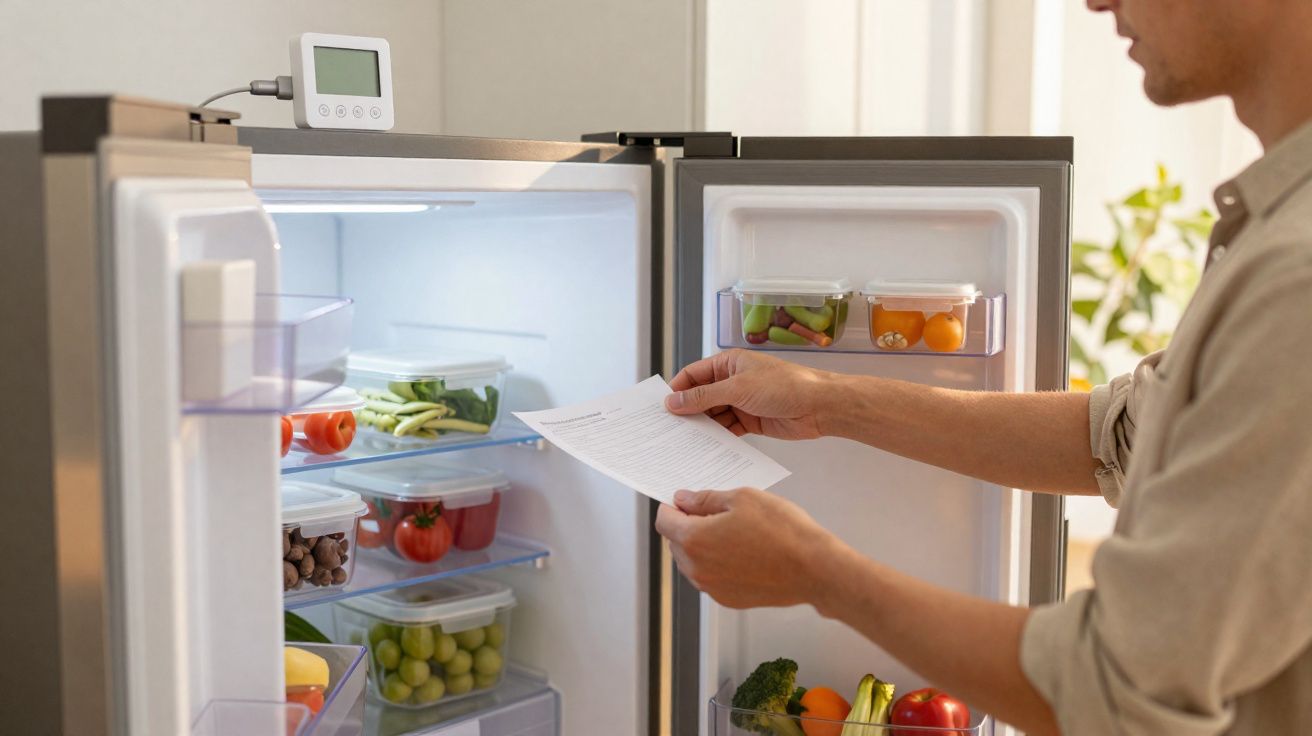
It’s easy to miss the simplest tricks for making a fridge last longer.
In the past few years, the cost of household appliances has risen and most households have felt the squeeze. Getting a few extra years out of a refrigerator now delivers a real return: fewer inconvenient failures, lower running costs, and a delayed replacement that can easily sit in the mid‑market price bracket. A small set of routine tweaks can reduce compressor strain, cut electricity consumption, and slow day‑to‑day wear.
Keep a constant temperature to protect the compressor
A compressor wears more quickly when the temperature inside the cabinet repeatedly rises and falls. For most homes, a sensible target is 4°C (39°F) for the fridge section and −18°C (0°F) for the freezer. Setting the thermostat even 1°C colder than necessary can increase energy use by about 6%. Hot leftovers and frequent door opening both trigger extra cooling cycles, and those extra starts and longer run-times can take years off the appliance.
Set the fridge to 4°C and the freezer to −18°C. Minimise temperature swings - stable temperatures mean less work for the motor.
Daily habits that keep the temperature steady
- Use a basic fridge thermometer and position it around the middle shelf.
- Let cooked food stop steaming before it goes in, then move it into shallow containers so it cools quickly.
- Reduce “grazing”: collect what you need and open the door once, rather than repeatedly.
- Don’t cram bulky packaging onto the top shelf if it traps warmer air near the thermostat area.
- If the fridge is underfilled, add bottles of water to create thermal mass that helps buffer temperature changes.
Clean condenser coils and vents to reduce heat build-up
When condenser coils are coated in dust and fluff, the fridge struggles to dump heat. If lint builds up behind or underneath, efficiency can drop dramatically: the compressor runs longer, the outer casing runs hotter, and even the electronics can suffer from the extra heat. A straightforward clean roughly every six months using a vacuum cleaner or soft brush usually solves the problem.
- Switch off and unplug the fridge before you start.
- Pull it out carefully and find access via the rear or the bottom kickplate.
- Vacuum the coils and the surrounding floor area; use a soft brush for stubborn debris.
- Take care not to bend copper pipework or snag any sensor wiring.
Ten minutes with a brush can prevent an overheated compressor - and avoid a repair bill that often runs into three figures.
Positioning: give it space and keep it away from heat sources
A fridge placed next to heat has to work against physics. If it’s squeezed beside an oven, a radiator, or a sunny window, it can consume up to 20% more energy. Many manufacturers recommend leaving at least 10 cm (4 in) of clearance at the back and sides so air can circulate properly around the condenser.
Allow around 10 cm of space around the cabinet, keep it out of direct sunlight, and don’t park it beside ovens or hobs.
Small layout changes that make a big difference
- Fit slim spacers so the appliance can’t be pushed tight to the wall.
- If a cooker sits directly beside it, add a simple reflective heat shield.
- Adjust the front feet slightly so the doors naturally self‑close and the seals stay pressed shut.
Keep door seals (gaskets) airtight
Door gaskets slowly degrade, collect grease and grime, and can start letting cold air escape. Leaks mean longer compressor run-times and more condensation. A worn seal can waste around 60 kWh per year, which is enough to show up on your electricity bill. The good news: replacement gaskets are usually affordable, and many people can fit them without a call-out.
| Symptom | What to do |
|---|---|
| Door springs open or doesn’t sit flush | Level the cabinet and wash the gasket with warm water and bicarbonate of soda |
| Moisture around the door frame | Look for splits; replace the seal if it has gone stiff or is cracked |
| Ongoing musty odour | Clean residue from the folds, then dry the gasket thoroughly |
A quick test for a leaking seal
- Trap a sheet of paper in the closed door and pull gently; if it slides out easily, the seal isn’t gripping well.
- Test all the way round the door to identify weak spots.
Don’t overlook ice - even with “no frost” models
Ice behaves like insulation. Once frost is thicker than 3 mm, heat transfer drops and the fridge has to run longer to achieve the same cooling. Even frost‑free systems can benefit from an occasional reset: twice a year, switch the appliance off, let any ice melt naturally, then dry the cabinet before powering back up. This also helps cleanliness and reduces stress on the fan and evaporator.
If ice exceeds 3 mm, the motor runs longer for the same cold. A six‑monthly defrost keeps performance crisp.
Protect the electronics from voltage spikes
Many modern fridges depend on control boards. Surges caused by storms or overloaded circuits can damage these components. A filtered, surge‑protected extension lead (rated for large appliances) costs roughly the same as a family takeaway, and it can prevent a much more expensive repair. It may also reduce nuisance tripping when the compressor starts.
Choose a surge protector rated for high‑load appliances - it’s inexpensive insurance for the most costly circuit board in the fridge.
Five core actions for longer fridge lifespan (and what they typically save)
| Action | Time needed | Typical impact |
|---|---|---|
| Set 4°C / −18°C and add a thermometer | 5 minutes | Cuts energy use by a few per cent and reduces wear |
| Vacuum coils and keep vents clear | 10–15 minutes | Restores efficiency where losses can reach double digits |
| Create 10 cm clearance and avoid heat sources | 15–30 minutes | Can reduce consumption by up to 20% in poor placements |
| Clean or replace door gaskets | 10–60 minutes | Saves about 60 kWh/year and reduces condensation |
| Add a surge‑protecting strip | 5 minutes | Lowers the risk of control-board failure and smart‑model data loss |
Extra checks that can add years to your refrigerator
Loading and airflow
Don’t block the cold‑air vents along the back wall. Leave gaps so air can circulate around items. Keep dairy away from the door shelves, where temperatures fluctuate more. Place heavier items on the lower shelves to increase thermal stability inside the cabinet.
Level, noise, and vibration
Vibration can rattle pipework and gradually loosen connections. Make sure the fridge is level and, after cleaning, pay attention to any new buzzing or humming. A slight forward tilt can help doors close under their own weight.
Water filters and drains
If you have an ice maker or chilled‑water dispenser, swap filters on schedule so the system stays clean. Should you notice water collecting beneath the salad drawers, check for a blocked defrost drain. A turkey baster filled with warm water is often enough to clear it.
When repair beats replacement
A practical rule of thumb: if a repair quote is less than half the cost of a comparable new model and the fridge is under 10 years old, repairing is usually the better option. Do compare modern energy labels, though - replacing a very old, inefficient unit can still be worthwhile in a busy household with heavy daily use.
Two additional routines most people forget
Interior hygiene affects performance more than you might expect. Wipe spills promptly (especially sugary liquids), because sticky residue can encourage mould, odours, and blocked air channels. A quick monthly clean with warm soapy water, followed by thorough drying, helps maintain consistent airflow and keeps food storage more hygienic.
If you’re away for a few days, use any holiday/eco setting your model offers, or slightly reduce the intensity of cooling while still keeping food safe. Avoid switching the fridge off if food remains inside, and don’t overpack just before you leave - both can lead to temperature instability and unnecessary compressor run-time.
Food safety and power-cut tips
At 4°C, bacterial growth slows significantly, helping protect ready‑to‑eat foods. A separate thermometer is useful for confirming the display is accurate. During a power cut, keep the door closed; a full freezer typically stays at safe temperatures for about 48 hours. If you’re unsure, check the coldest item in the centre and avoid refreezing meat that has thawed and is leaking juices.
Planning for the next decade
Put a small label inside the fridge noting two dates: the last coil clean and the last gasket check. Set a six‑monthly reminder on your phone. These small habits keep the compressor cooler, reduce stress on the electronics, and maintain safe food temperatures - and the best sign it’s working is that your fridge becomes quiet, uneventful, and easy to forget about.






Comments
No comments yet. Be the first to comment!
Leave a Comment