
Ice, hunger and battlefield chaos have long been cast as the chief reasons for Napoleon’s disastrous Russian campaign.
Fresh genetic evidence now suggests the more decisive enemy may have been microscopic.
More than 200 years after the retreat from Moscow, modern ancient DNA analysis is steadily revising one of Europe’s best-known military catastrophes-redirecting attention away from dramatic engagements and punishing cold towards the infections that surged through the ranks of the Grande Armée.
The typhus legend, tested in the laboratory
For decades, many histories have presented a single medical culprit: epidemic typhus, spread by lice, supposedly tearing through Napoleon’s army and turning the 1812 invasion into a rolling mass grave.
There were reasons the idea took hold. Diaries and period medical notes described intense fevers, rashes and delirium. Later investigations of mass burials across Eastern Europe reported body lice and even genetic traces of Rickettsia prowazekii, the bacterium responsible for epidemic typhus.
For years, typhus was treated as the unseen “Russian general”-defeating Napoleon where cannon and cavalry could not.
The explanation also felt neatly inevitable: an enormous force, cramped quarters, poor hygiene and a harsh winter-conditions perfectly suited to lice-borne illness. Over time, the story became so dominant that it was rarely challenged in earnest.
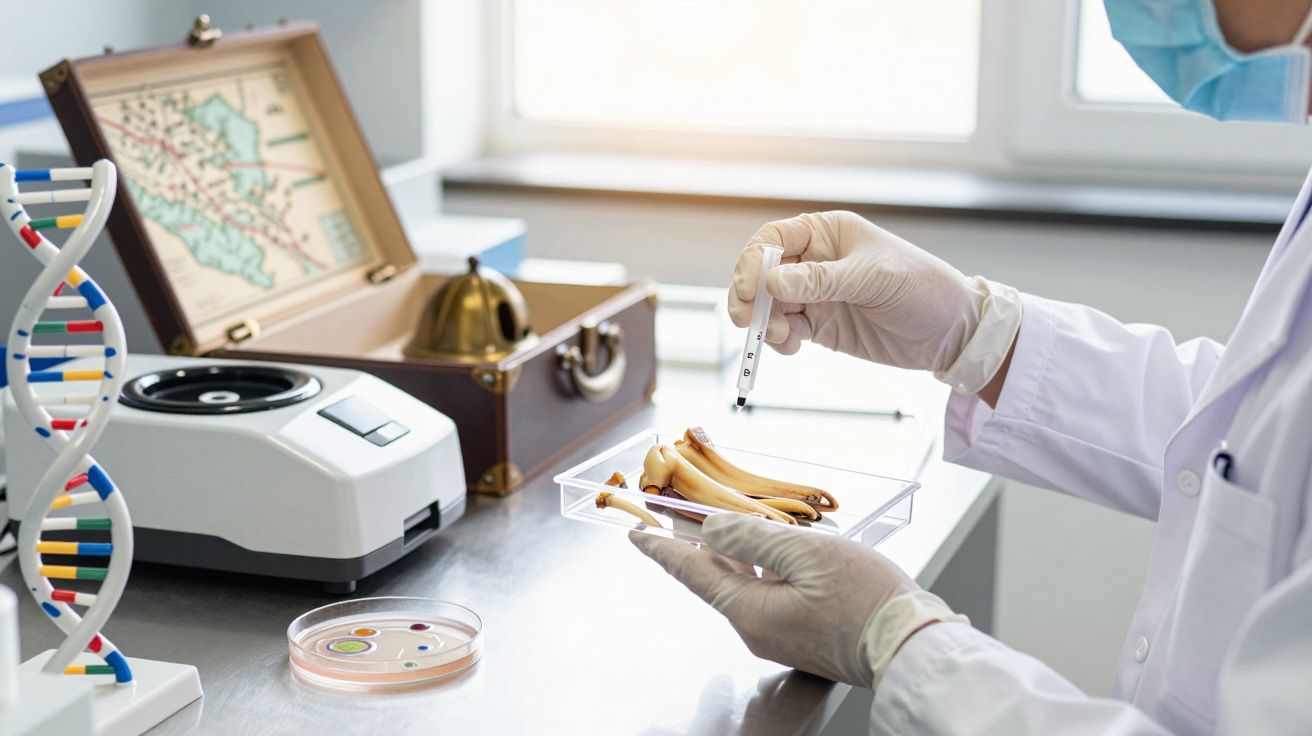
That changed with research published in Current Biology in October 2025, which used modern DNA techniques on the teeth of French soldiers who did not survive the campaign.
Napoleon’s 1812 retreat: thirteen teeth and two unexpected suspects
The researchers examined remains linked to the chaotic French withdrawal through Vilnius, in present-day Lithuania. From 13 sets of teeth, they recovered minute fragments of preserved DNA and screened them for pathogen signatures-seeking evidence of infections present before death.
The first result was striking: they found no sign of epidemic typhus. The expected genetic markers of Rickettsia prowazekii were absent.
The soldiers were not dying from the famous typhus outbreak that so many historians have highlighted; they were contending with other infections entirely.
Instead, the analysis pointed to two different pathogens:
- Salmonella enterica - associated with typhoid fever, a serious intestinal infection
- Borrelia recurrentis - a louse-borne bacterium that causes relapsing fever
Both can produce high fever, profound fatigue and abdominal distress. To an 1812 clinician working without germ theory-guided by observation, touch and inference-these illnesses could easily have appeared “typhus-like”.
Typhus and typhoid fever: similar names, different diseases
A major source of confusion lies in terminology. The study highlights a long-running historical muddle between two distinct conditions with frustratingly similar-sounding names: typhus and typhoid fever.
| Disease | Main cause | How it spreads | Key features |
|---|---|---|---|
| Typhus | Rickettsia prowazekii | Body lice | High fever, rash, severe weakness |
| Typhoid fever | Salmonella enterica (Typhi) | Contaminated food and water | High fever, stomach pain, diarrhoea or constipation |
Typhoid fever was not clearly established as a separate disease until the late 19th century. In Napoleon’s era, doctors often used labels loosely, sometimes applying “typhus” to any prolonged, dangerous fever-especially when accompanied by stomach symptoms.
That linguistic haze helped later writers lock in the wrong diagnosis. Eyewitnesses saw fever, lice, collapse and mass graves; subsequent accounts often supplied “typhus” as the obvious answer, even where today’s genetic evidence indicates a more complicated blend of infections.
How bacteria helped unravel an empire
This revision does not absolve Napoleon. The 1812 campaign remains a classic case of overreach: around 600,000 men pushed across vast distances with unreliable supply lines, limited sanitation and almost no understanding of infectious disease transmission.
The new findings imply the Grande Armée endured a damaging combination of typhoid-like illness and relapsing fever, striking troops already weakened by hunger and cold. Vomiting, diarrhoea and recurring bouts of fever would have drained strength precisely when long marches and constant Russian pressure demanded maximum endurance.
Rather than a single, dramatic epidemic, the Grande Armée may have been worn down by a relentless churn of infections-turning retreat into rout.
Relapsing fever, spread by lice, thrives where people are crowded together and hygiene is collapsing. Typhoid-type infections, meanwhile, spread readily through food and water contaminated by human waste-an almost unavoidable risk during a retreat in which latrines, clean wells and proper cooking were rare luxuries.
Russia’s scorched-earth strategy-destroying stores and withdrawing rather than offering decisive battles-forced the French to forage in devastated territory. With too little fuel, undercooked food and polluted water, microbes had ideal conditions to spread.
The limits of genius against germs
Napoleon’s operational brilliance could not outmanoeuvre basic biology. Many soldiers lacked adequate winter clothing and received care from medical services that could not explain, prevent or properly treat infections.
Cold still mattered: low temperatures can impair immunity, slow recovery and make hygiene even harder. Frostbite and pneumonia added to the toll. Yet the DNA evidence suggests disease was not merely a footnote to winter-it was a central force hollowing the army from the inside.
The larger lesson is that famous defeats are often less about a single turning point and more about cumulative strain: logistical misjudgements, environmental pressure and-here-bacteria thriving amid deprivation.
How ancient DNA analysis brings lost epidemics back into focus
The scientific advance rests on ancient DNA analysis, which treats teeth as small biological archives. Teeth can preserve traces of pathogens circulating in the blood close to the time of death.
In practice, researchers drill into a tooth, collect powdered dentine and sequence whatever genetic fragments remain. Specialised software then compares those fragments with reference genomes to identify matches, even when the DNA is heavily degraded.
For historians, this turns symptom-based conjecture into genetic evidence of which microbes were actually present.
Similar methods have already reshaped arguments about the Black Death, early tuberculosis and unexplained war-time mass burials. Applied to Napoleon’s soldiers, the technique replaces a simplified tale of “Russian winter and typhus” with a more medically precise account.
A further implication is methodological: results drawn from 13 sets of teeth are powerful but not definitive. Different burial sites, units, stages of the campaign or local sanitary conditions could yield different pathogen profiles. Wider sampling across the invasion route could show whether Vilnius reflects a broader pattern or a particularly hard-hit bottleneck during the retreat.
There is also an ethical dimension to this work. Studying human remains from mass graves requires careful stewardship, clear permissions and respect for the dead-particularly when new technologies can extract intimate biological information from individuals who never consented to scientific examination.
Why the findings matter beyond Napoleon
Pinpointing which diseases afflicted historical armies helps epidemiologists model how infections behave under extreme stress. Crowded refugee camps, besieged cities and ad hoc field hospitals can reproduce many of the same drivers seen in 1812: poor sanitation, malnutrition and exhaustion.
If typhoid fever-type infections and relapsing fever flourish in those conditions, modern response planning can be sharper. Clean water provision, effective waste management, safe food handling and lice control are basic interventions-but they can prevent the sort of cascading illness that helped cripple the Grande Armée.
Key terms that reshape the 1812 narrative
Two phrases sit at the centre of this updated interpretation: relapsing fever and typhoid fever.
Relapsing fever, caused by Borrelia recurrentis, arrives in cycles. A soldier might be desperately ill for days, then improve, only to crash again-an unpredictable pattern that undermines care, marching and combat readiness.
Typhoid fever, often contracted through food or water contaminated with faecal matter, can cause prolonged fever, abdominal pain and sometimes intestinal bleeding. Before antibiotics, it could kill slowly through dehydration and organ failure-dragging down not only individuals but whole formations.
When both circulate at once, as the Vilnius teeth suggest, the combined impact on a stressed army can be catastrophic: confusion, slower movement, rising desertion and collapsing morale.
Rethinking famous defeats through microbes
Napoleon’s Russian failure is not unique. In many pre-modern conflicts, disease killed more soldiers than enemy weapons. Dysentery, cholera, malaria and typhoid shaped outcomes from the Crusades to the American Civil War.
To picture the operational effect, imagine a modern training exercise in which, overnight, a third of participants become feverish, dehydrated and delirious. Courage and tactics matter far less when units cannot even hold formation.
As more graves from past wars are analysed, historians expect further corrections to long-held assumptions. Commanders may appear less like pure strategists-or simple bunglers-and more like figures whose plans were continually distorted by bacteria and viruses operating out of sight.
That shift does not diminish the drama of the retreat from Moscow. If anything, it adds a sharper edge: alongside burning cities and cavalry charges, tiny organisms-indifferent to glory-were quietly steering the course of history.
Related reads highlighted alongside the study
The article’s coverage appeared alongside a selection of other recent science and news items, including reports on:
- France’s Rafale said to be leading the race for a fourth European aircraft deal against America’s F-35
- Analyses of Hadrian’s Wall latrines suggesting Roman soldiers lived with disruptive gut parasites 1,800 years ago
- Research indicating cats can develop a dementia-like condition comparable to Alzheimer’s
- White rocks on Mars supporting the idea of a tropical climate 3 billion years ago
- Deer in the United States found disfigured by a virus, after earlier reports involving rabbits and squirrels
- The Princess of Wales, Catherine (Kate Middleton), appearing at the Festival of Remembrance, accompanied by Prince George and without Prince William
- Evidence that the Moon’s gradual drift away from Earth is changing day length and tidal patterns
- A “bloody tears” Virgin Mary mystery revisited, with DNA analyses producing unexpected conclusions






Comments
No comments yet. Be the first to comment!
Leave a Comment