
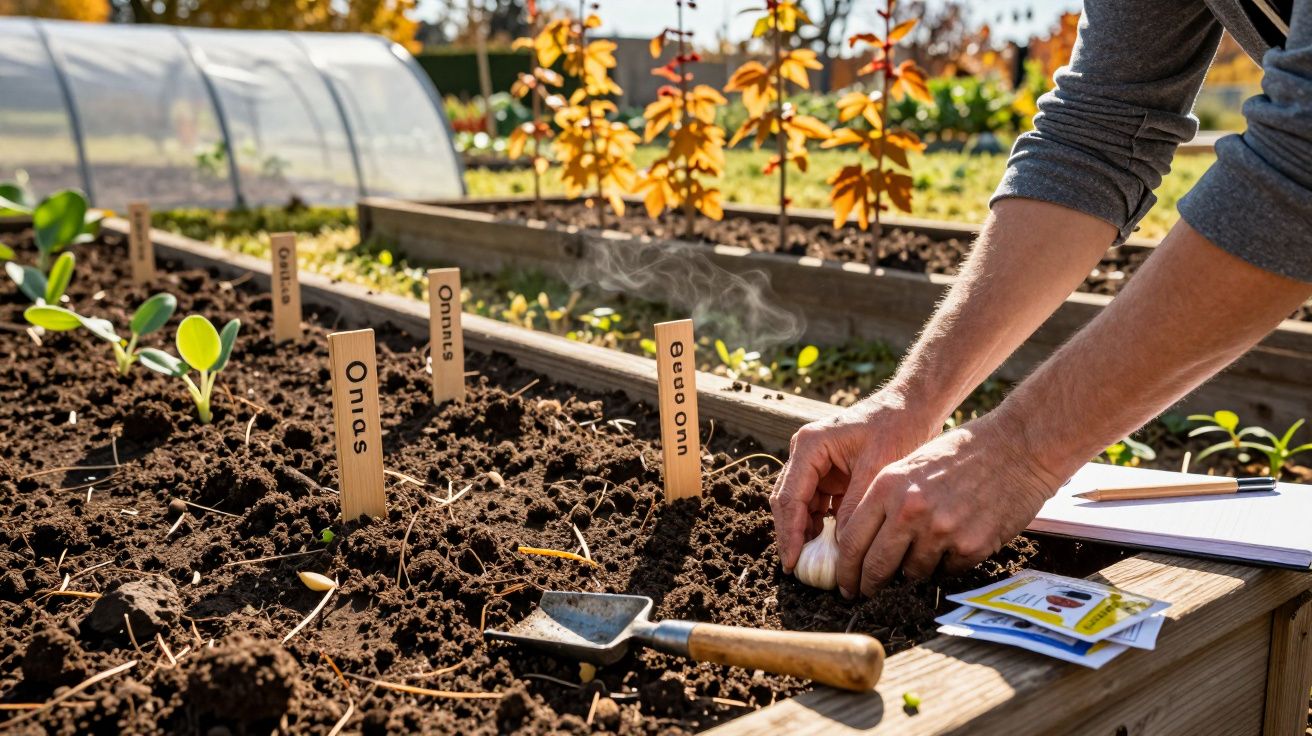
As daylight hours slip away and the ground begins to chill, borders that felt worn out in September can still be primed for the year’s very first pickings. Treating early October as a second, quieter “spring” allows home gardeners to establish garlic, onions, broad beans and soft fruit so they can surge into action as soon as winter starts to ease.
Why autumn sowing can transform your whole growing year
Autumn work in the garden can look like nothing more than clearing up-pulling out spent crops, bundling canes and sweeping leaves. In reality, the soil is often in a better state than it was in midsummer: it retains warmth, holds moisture more evenly and is less prone to baking hard. That combination gives new roots an easy start rather than a struggle.
October’s hidden advantages: soil warmth, steadier moisture and fewer pests
In much of the UK, early October soil temperatures remain friendly to root development. The surface cools first, but around 10–15 cm down the ground is typically still mild and consistent-exactly what roots prefer. Instead of dealing with scorching heat and repeated drying, plants can explore steadily and build a resilient foundation.
Planting in autumn shifts the plant’s effort into roots while top growth slows, so it concentrates on structure rather than soft foliage.
Autumn rain also tends to be more reliable than summer watering. Moisture penetrates the soil profile more evenly, helping seeds, sets and bulbs avoid the cycle of drought followed by heavy watering. Weed germination usually drops, and many insects become less active as nights lengthen-meaning less competition, fewer setbacks and reduced early stress.
Moving the calendar forward for earlier meals
Sowing or planting in October is not about forcing rapid growth. It is about banking time. Roots continue to occupy the soil through winter, even when little is visible above ground. When light levels climb in late February and March, these plants respond quickly, drawing on energy stored in bulbs or developed root systems.
That head start often turns into harvests weeks-sometimes months-earlier than standard spring sowings: garlic bulbs swell sooner, broad beans can flower before peak aphid pressure, and soft fruit bushes push strong, well-anchored canes ready to carry the first berries of early summer.
Planning an autumn garden that feeds two seasons
Getting October sowing right is less about doing more, and more about doing key jobs at a calmer time of year. Two focused sessions in early autumn can replace an over-crowded, frantic spring.
Designing beds for rotation, double cropping and healthier soil
Because garlic, onions and shallots are all alliums, they should not be grown in the same spot year after year. Rotating with legumes, brassicas or leafy crops helps reduce disease build-up and keeps yields reliable.
Treat each bed as a two-stage plan: an autumn-to-spring crop, followed by a summer or autumn follow-up.
A typical pattern might be autumn garlic followed by courgettes, or overwintering onions followed by climbing French beans. Early harvests free space right when tender plants need planting out, rather than forcing you to keep them pot-bound.
A quick soil check that makes autumn sowing easier (added)
Before you plant, it is worth assessing drainage and structure. If your soil puddles after rain, consider a raised bed or a slight ridge so winter wet can run off. Alliums in particular resent waterlogging. Where soil is very acidic, a light application of garden lime (following the packet guidance) can help bring conditions closer to neutral, which suits most vegetables and improves nutrient availability.
Garlic: the standout choice for early harvests
If you only make room for one autumn crop, garlic is hard to beat. It thrives in small spaces, needs minimal attention and rewards you with bold flavour while shop bulbs can still taste flat after long storage.
Garlic and October autumn sowing: choosing the right type
Not every garlic variety behaves well when planted ahead of winter. Choose cultivars sold specifically for autumn planting. In UK catalogues you will often see hardy softneck (often white or purple) and hardneck types selected to cope with repeated frosts.
These cloves break dormancy gradually: they send roots down while the clove above stays compact and tough. That balance matters because garlic that pushes too much leaf before hard frosts can get scorched at the tips and lose strength.
A straightforward planting routine for bigger, better bulbs
Garlic is dependable if you stick to a few fundamentals. Split each bulb into individual cloves and plant only the largest, firmest ones. Reject any clove that feels soft or shows mould.
- Set each clove point-up, about 3–4 cm deep.
- Allow 10–15 cm between cloves, with 20–25 cm between rows.
- Pick a free-draining site rather than heavy, waterlogged ground.
Garlic hates sitting in wet soil. Raised beds or gently ridged rows help shed excess rain and reduce rot. At this stage you do not need to overdo compost: too much nitrogen can encourage weak, sappy growth instead of dense bulbs.
Low-effort care from winter through to lifting time
Once planted, garlic mostly wants peace. Water only if autumn turns exceptionally dry, then let winter rainfall do the work. A thin mulch of straw, leaf mould or shredded bark helps suppress weeds, buffers temperature swings and keeps the soil surface in good condition.
Well-rooted garlic planted in autumn often comes ready in late May or early June, noticeably ahead of spring-planted bulbs.
When the leaves begin yellowing from the tips and roughly a third have faded, lift the bulbs carefully with a fork. Dry them somewhere airy and shaded. The early harvest then opens the bed for a second crop such as courgettes, French beans or fast salad leaves.
Onions and shallots: dependable companions for October beds
While garlic often steals the spotlight, autumn-planted onions and shallots provide the backbone of early-summer cooking. They work in borders, raised beds and large containers, sitting quietly through cold spells.
Selecting varieties for a reliable early yield
Seed suppliers and garden centres usually stock overwintering sets or dedicated cultivars that cope with low temperatures better than standard maincrop onions. Many traditional yellow onions and a wide range of red or bronze shallots perform well when planted early to mid-October in milder areas, or a little earlier where winters arrive fast.
| Crop | When to plant | Typical harvest |
|---|---|---|
| Autumn garlic | Late Sept – mid Oct | Late May – June |
| Overwintering onions | Sept – Oct | June – early July |
| Autumn shallots | Oct | June |
| Autumn-sown broad beans | Oct – early Nov | Late May – June |
Planting steps that prevent rot and keep sets strong
Onion and shallot sets look hardy, but they can rot quickly in compacted or saturated soil. Loosen the top 15–20 cm, remove stones and rake level. In wet gardens, forming shallow ridges improves drainage through winter.
- Space sets 10–15 cm apart for onions, and 15–20 cm for shallots.
- Push each set in so only the tip sits at, or just below, the surface.
- Water lightly once, then leave them alone unless conditions stay very dry.
A light mulch can protect the surface from heavy rain and winter crusting, but keep it thin so emerging shoots are not smothered.
Guarding against frost heave, damp and opportunistic visitors
Cold alone rarely kills established sets, but repeated freeze–thaw can lift shallow bulbs out of the ground. After sharp frosts, check and gently firm any that have risen. Netting over low hoops can deter birds, which sometimes pull at young shoots more out of mischief than hunger.
In most winters, it’s excess moisture-not low temperatures-that causes overwintering failures. Prioritise drainage before adding fleece.
To reduce fungal issues, avoid watering during mild winter periods. A breathable mulch and an open, sunny position help foliage dry quickly once growth restarts in spring.
Broad beans and soft fruit: early-season wins for the whole household
Autumn planting is not just for bulbs. Broad beans and soft fruit bushes also benefit hugely from settling in before winter fully takes hold.
Broad beans: earlier flowers and fewer aphids
Broad beans sown in early October typically send down roots, form a small tuft of leaves, then pause above ground. This compact habit often overwinters well, particularly with hardy varieties sold for autumn sowing.
Spacing is more important than many people realise. Sow seeds about 5 cm deep, 20 cm apart in double rows, with 25 cm between the two rows. Grown this way, plants brace each other against wind and create a solid, resilient block.
When seedlings reach 10–15 cm, pull a little soil up around the base (“earthing up”). This anchors plants against winter gales and protects the crown. In most areas, watering can wait until spring unless autumn is unusually dry.
By late spring, these plants often flower before the major aphid build-up, so pod set is stronger and the crop stays cleaner than later sowings. Harvest can begin up to two months earlier than spring-sown beans, changing what’s possible in the kitchen in the first part of June.
Raspberries, currants and gooseberries: planting soft fruit for long-term returns
Bare-root soft fruit bushes, typically sold from late autumn into early spring, are ideal for planting while the soil is still warm and moist. Roots can spread into the surrounding ground while top growth remains largely dormant. When temperatures rise, plants respond with balanced, sturdy new shoots rather than the stressed surge that can follow late planting.
- Incorporate well-rotted compost or manure before planting.
- Plant at the same depth as in the nursery (use the soil mark on the stem as a guide).
- Water deeply once, then mulch with bark, straw or leaf mould.
Raspberries work well along fences or bed edges where they won’t compete with main vegetable rows. Currants and gooseberries suit corners that get sun for part of the day. Even in a small garden, this arrangement helps avoid shade falling onto garlic and onions while still setting you up for bowls of berries as early summer arrives.
Keeping an eye on winter pests (added)
Autumn-planted beds can attract hungry visitors looking for an easy meal. Mice may disturb newly planted cloves, and in some areas alliums can be affected by pests such as allium leaf miner. Using fine mesh where this is a known issue, keeping the bed tidy, and avoiding thick, damp mulches directly against stems can reduce problems without heavy interventions.
Simple protections and habits that make autumn sowing smoother
You do not need to turn the garden into a maze of plastic to succeed. A few reusable tools-horticultural fleece, low hoops and cloches-can add a little warmth and reduce wind scorch, especially in exposed gardens or colder regions where small seedlings are more vulnerable.
Keeping notes on planting dates and harvest windows (on paper or your phone) pays off quickly. You will spot which beds stay wet, which varieties cope best with hard frosts, and where birds or voles cause recurring trouble. Small adjustments-altering spacing by a few centimetres, changing mulch type, or switching cultivars-often bring noticeably better results the following year.
Related reads and handy household ideas
- Storing aluminium foil in the freezer has become a reliable household trick that more people are adopting.
- Research highlights possible benefits of ending clock changes for heart health and weight management.
- Psychology sheds light on why emotional reactions do not always match what is happening in the present.
- Psychology suggests people who clean as they cook, instead of leaving it all until the end, often share eight distinctive traits.
- A gardener explains how earthworms improve soil and may indirectly support human immune health via microbes.
- Forget expensive creams: a homemade approach to support collagen and soften the look of wrinkles after 60.
- Cleaning professionals are divided as a simple method for removing limescale from an electric kettle-without vinegar or soap-goes viral.
- The most unpleasant part of your home you probably never clean, plus a cleaning expert’s tip.
Autumn sowing in October does more than produce food. It makes winter feel purposeful: beds are no longer empty and inert, but quietly at work-cloves, sets, seeds and roots preparing the first meals of spring while much of the garden still appears asleep.





Comments
No comments yet. Be the first to comment!
Leave a Comment