
Stepping out of a hotel shower, the air often feels cool and clean-almost like there’s no smell at all. You won’t usually hear a plug-in diffuser buzzing away, and you’re rarely hit with a heavy, synthetic fragrance. That “quiet” freshness is typically the result of practical routines focused on moisture, microbes and the right materials, and many of those habits work just as well in an everyday home.
Why hotel bathrooms don’t actually “smell of anything”
If you ask hotel housekeepers what they’re aiming for, the answer is often surprisingly consistent: the bathroom should smell of nothing. That absence of odour is treated as proof that damp, stagnant water smells and body odours have been removed rather than masked with perfume.
Neutral air, not a strong perfume, is the real signature of a well‑kept bathroom.
In practice, hotels concentrate on three fundamentals: get wet textiles out quickly, stop biofilm building up on surfaces and in drains, and bring humidity down fast after every shower. Any fragrance is usually an afterthought-if it appears at all-and tends to be used sparingly.
The quiet science behind hotel-style bathroom freshness
Most hotel chains don’t depend on fancy “air chemistry” in bathrooms. Instead, they prevent smells by removing the conditions that create them in the first place-mainly lingering moisture and the microbial growth that follows.
Dry air beats any spray
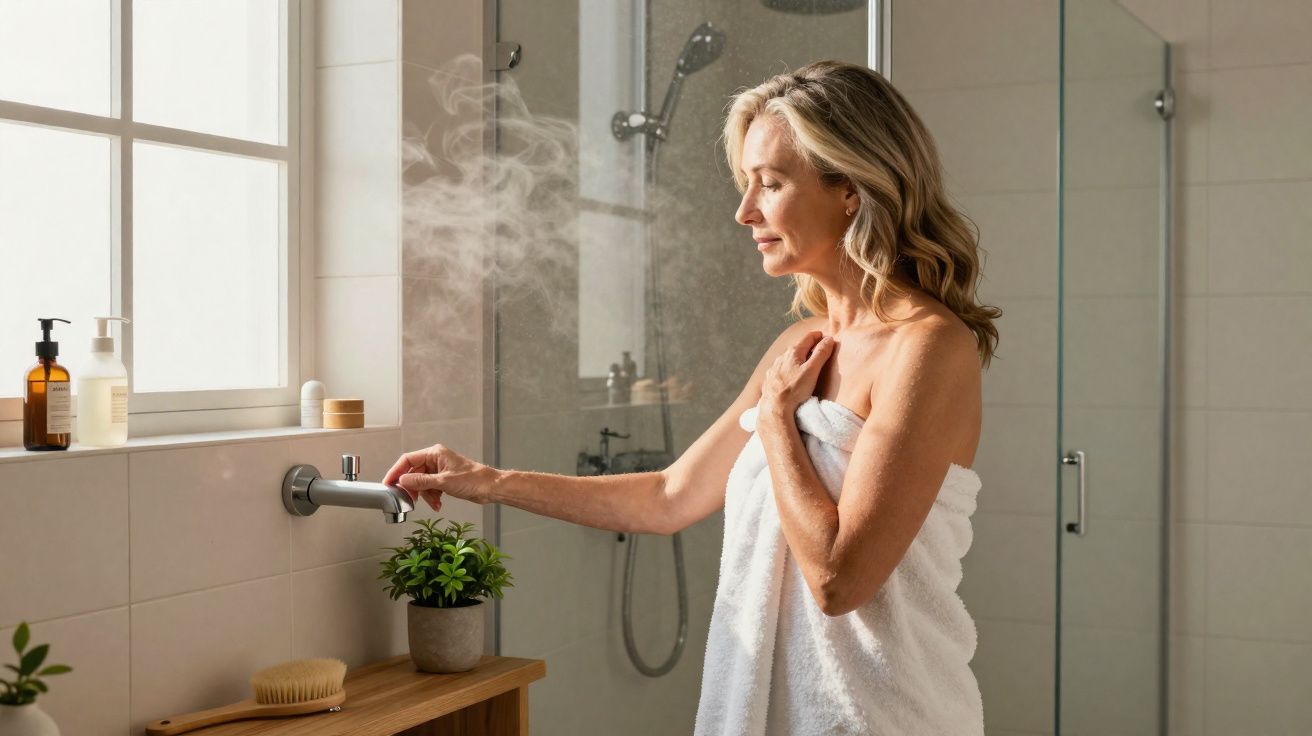
Unpleasant bathroom smells tend to rise and fall with humidity. After a hot shower, steam hits cooler tiles, mirrors and ceilings and turns into condensation. Those droplets then support mould spores and bacteria, especially along grout lines and in corners.
- With a window: open it wide for 5–10 minutes after showering and leave the door slightly open to create a short, strong cross-draught.
- Without a window: run the extractor fan for 15–20 minutes and keep doors to other rooms open to help airflow.
- A low-cost digital hygrometer makes it obvious when humidity sits above 60% for too long.
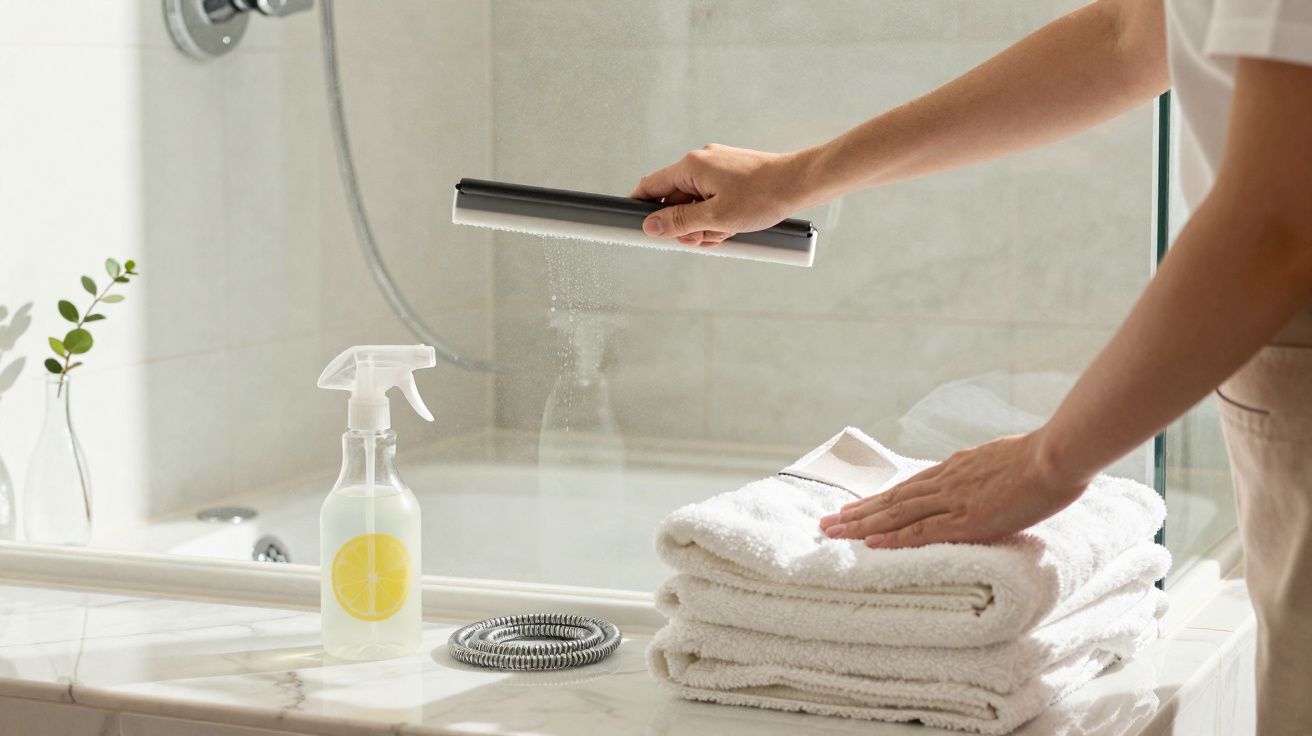
Hotels also rely on simple kit such as squeegees. Pulling water off tiles and shower glass immediately after use can drastically reduce surface moisture, leaving fewer damp areas for microbes to settle into.
Extra hotel-style tip (often missed at home): keep the extractor fan itself clean. A fan clogged with dust shifts far less air, so humidity stays high even if it’s running. Wiping the cover and clearing visible dust (with the power off) can restore performance.
The war on invisible biofilm
Inside drains, on shower curtains and across grout, bacteria and fungi can create thin, stubborn layers known as biofilm. Biofilm grips surfaces, shrugs off quick wipe-downs, and can release that subtle “old water” smell many people associate with a neglected bathroom.
Hotel cleaning schedules are designed to break this layer frequently. That usually means regular scrubbing using mildly acidic or alkaline solutions, rather than leaving it for occasional “big” cleans with harsh products.
The textile rule: why towels are public enemy number one
In many homes, the biggest source of bathroom odour isn’t the toilet-it’s the laundry left hanging in the room.
Towels, bath mats and dressing gowns behave like moisture reservoirs. They hold water deep in the fibres, and the warm air produced by showers creates an ideal, cosy microclimate for bacteria. Those bacteria don’t just exist quietly; they generate volatile compounds that your nose interprets as “damp” or “musty”.
A single damp towel can act like a slow‑release diffuser for bad smells in a small bathroom.
Hotels handle this decisively: used towels are removed quickly, while clean replacements arrive properly dry and fluffy after high-temperature washing and powerful tumble drying. Housekeepers generally won’t leave a stack of slightly damp fabric behind the door or draped over a radiator.
How to copy the hotel approach at home
- Hang used towels outside the bathroom, on a heated rail, or in a well-ventilated hallway.
- Replace thick cotton bath mats with faster-drying options and wash them on hot cycles.
- Swap family towels more often than feels necessary, particularly in winter.
- Wash towels at 60°C where the fabric label allows; it helps reduce the bacteria responsible for odour.
If you don’t have a balcony or garden, even a foldable drying rack in a bedroom with the window open is usually better than leaving wet textiles in a steamy bathroom all day.
Surfaces, grout and the quiet role of vinegar
Tiles, silicone joints and grout lines gradually collect soap film and skin oils. Over time, those thin layers hold moisture and tiny organic particles that feed microbes. That’s often when a faint “wet changing room” smell appears-even when the bathroom looks tidy at first glance.
A simple 1:1 mix of household vinegar and water in a spray bottle (used on non-stone surfaces) can help cut through that film and slow mould. Quick daily or weekly habits usually matter more than rare, exhausting scrubbing sessions.
- Spray shower walls and grout after use, wait a couple of minutes, then wipe dry.
- Keep vinegar away from marble, limestone or slate; use pH‑neutral cleaners on natural stone.
- Never mix vinegar with chlorine-based products, as dangerous fumes can be produced.
By limiting film build-up, these small steps make future cleaning easier and keep the room smelling more like nothing at all.
Natural helpers hotels and cleaning pros actually use
Plenty of professional cleaners still lean on a handful of basic ingredients that reduce odour instead of trying to overpower it.
| Product | Main purpose | Practical note |
|---|---|---|
| Baking soda | Neutralises odours, helps clear deposits in drains | Rinse with hot water, not boiling |
| Lemon | Adds a light scent and helps lift limescale film | Use on taps and tiles; avoid prolonged contact with metal |
| Vinegar solution | Slows mould growth and breaks down soap residue | Keep away from natural stone and never mix with bleach |
| Activated charcoal | Absorbs background odours in small spaces | Replace every few weeks for best results |
Practical drain routine for home bathrooms
Hotel guests rarely stay long enough for traps to dry out, but at home it can become a hidden source of odour. If the water in the trap (siphon) evaporates, gases from the sewer side can drift back into the room.
- Tip about 120 ml of baking soda into a smelly drain and follow with hot water.
- If the odour remains, run the tap or shower for a few seconds to refill the trap.
- For drains that are used very rarely, a thin layer of cooking oil on top of the water slows evaporation.
Bathroom bins respond to the same logic. Putting about 5 ml (a teaspoon) of baking soda in the bottom and regularly wiping the lid and rim helps prevent smells building up between rubbish collections.
Hidden culprits hotels always check
When a hotel housekeeper notices an odd smell, the troubleshooting usually follows a familiar order-and it translates neatly to domestic bathrooms too.
- Drains: check for hair caught in strainers and confirm there’s still water sitting in traps.
- Toilet base: look for tiny leaks or a slight wobble that can allow odours to escape.
- Bin: wash the container itself and clean under the lid; changing the liner alone isn’t enough.
- Shower curtain: launder it routinely or switch to a quick-dry fabric version.
- Washing machine: clean the detergent drawer and rubber door seal, and run an occasional hot maintenance cycle.
- Air circulation: don’t cram storage units tight against outside walls, where moisture can accumulate unseen.
Another hotel-minded material check: mould can start where sealant fails. If silicone is peeling or cracked, moisture gets behind it and smells can persist no matter how much you clean the visible surface. Re-sealing when needed can prevent long-term damp problems.
Subtle scent instead of clouds of aerosol
Hotels that choose to use fragrance tend to keep it understated. The aim is a background suggestion of cleanliness, not an obvious “ocean breeze” or “vanilla” blast.
Fragrance should feel like an accent, not like a desperate attempt to cover something up.
Low‑key ways to add a pleasant note
- Leave a good-quality scented soap bar out in the open; it releases a gentle aroma and refreshes slightly with each use.
- Use short bursts from a small candle before guests arrive-provided it is never left unattended.
- Make glycerine soaps with a few drops of essential oil so you can control both the strength and ingredients.
People with pets, asthma or migraine often find strong essential oils overwhelming. Hydrosols (water-based plant distillates) can provide a softer scent with less intensity-though even then, a little usually goes a long way in a small bathroom.
Turning hotel bathroom habits into a home routine
For a busy household, a “hotel-level” bathroom can sound unrealistic. In reality, many hotel habits take only a few minutes once they’re turned into routine.
Fifteen focused minutes a week often does more for bathroom air than shelves full of fragranced products.
A straightforward weekly checklist could include: squeegeeing tiles and glass, emptying and rinsing the bin, checking drains, washing or rotating towels and mats, and giving the room a proper airing after a day of hot showers.
Guest bathrooms need extra attention because they often sit unused. Running water in the basin and shower every few days keeps traps filled. For rarely used drains, a teaspoon (about 5 ml) of oil slows evaporation so sewer gases remain sealed out.
Why this matters beyond pleasant smell
A bathroom that smells fresh does more than impress visitors. Lower humidity and less biofilm typically mean fewer mould spores and reduced dust mite levels, which can ease symptoms for people with allergies or asthma. Regular high-temperature towel washing also reduces the number of bacteria and fungi that come into contact with skin.
There’s a financial benefit too. Targeted ventilation and moisture control can protect grout, silicone and paint from premature damage, helping to avoid renovation costs. Better fan use-or a dehumidifier-can also cut the risk of damp patches inside walls, a problem that often stays hidden until black mould appears.
If you rent an older property with weak extraction, a small plug-in dehumidifier or a stronger, timer-controlled fan may deliver better results than constantly buying fragrance refills. The overall hotel approach points to a wider mindset shift: think like a building engineer, not a perfume designer.
The same principles apply beyond bathrooms, especially in small city flats and shared houses: remove moisture quickly, keep textiles dry, clean where water lingers, and only then add a light scent if you still want one. The room won’t smell like a “holiday resort”-but the air will feel clearer, and that near-invisible freshness is exactly what good hotels try to achieve.

Comments
No comments yet. Be the first to comment!
Leave a Comment