
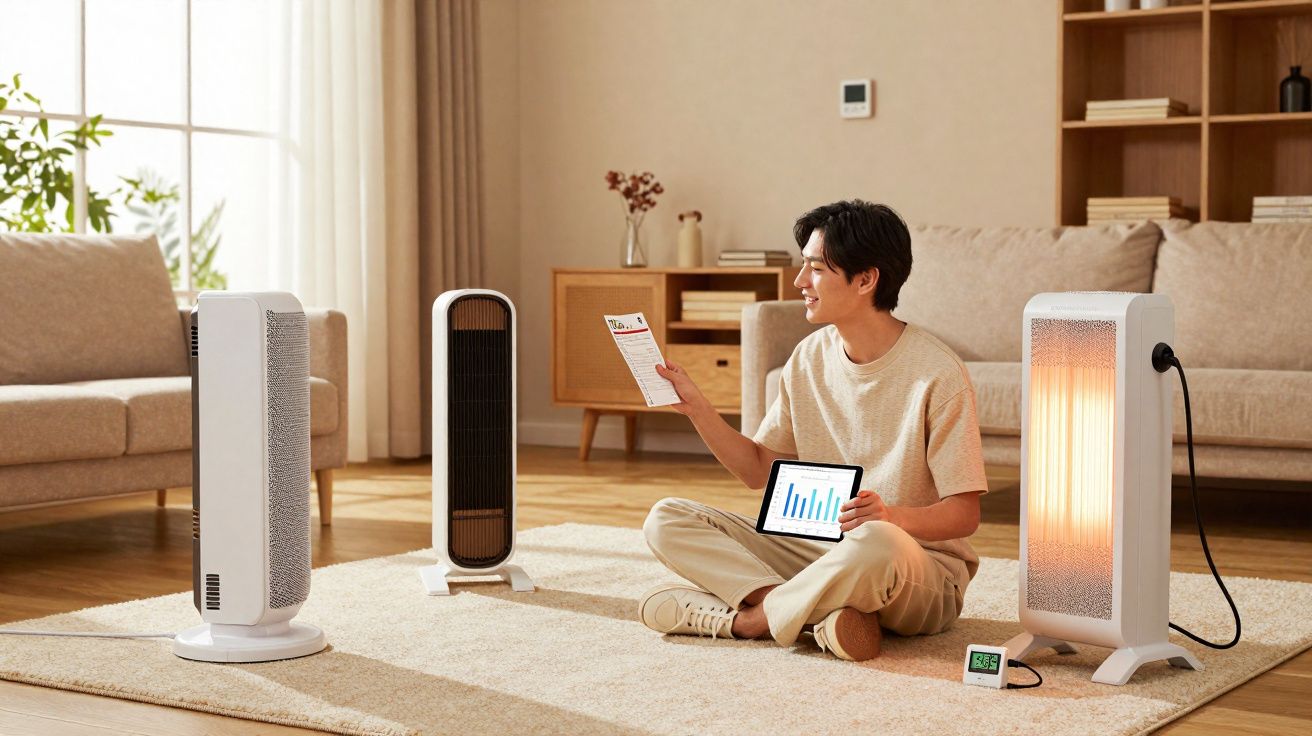
From rattly fan heaters tucked under a desk to tidy oil‑filled radiators parked in the lounge, space heaters don’t all behave the same-either in how they warm you or in what they do to your bills. If you know how each design produces heat, and where it genuinely makes sense, you’re far more likely to get a comfortable winter without an unpleasant surprise when your energy statement arrives.
Why households lean on backup heating (and why it shouldn’t replace central heating)
A space heater is best treated as backup heating, not a full substitute for a central system. The point is precision: you raise the temperature where you are, rather than heating the whole property for the sake of one occupied room.
- Local heat: warm the bedroom, home office or bathroom instead of the entire house.
- Fast comfort: many backup heaters start to feel warm within seconds or a few minutes.
- Short‑term savings: rather than turning up the main thermostat, you can lift one room to a sensible comfort level.
Used in a single, occupied room, a well‑chosen space heater can cut overall gas or electric use, not raise it.
The real challenge is choosing the technology that gives that extra comfort while keeping electricity or fuel consumption under control.
The main types of space heaters (and how each one makes heat)
On the high street and online, most space heaters fall into five common groups: fan heaters, electric convectors, radiant panels, oil‑filled radiators, and portable gas or paraffin stoves. Each family creates heat differently, which is why their comfort and running costs can vary so much.
Fan heater: instant warmth, pricey over long sessions
A fan heater forces air over a heated element and pushes that warm air into the room almost immediately. That’s why they’re so often used in bathrooms or under desks.
Strengths
- Extremely quick warm‑up.
- Lightweight, compact and easy to carry between rooms.
- Useful for very small spaces or very short bursts.
Weaknesses
- High electricity draw while it’s running.
- Fan noise is hard to ignore.
- Can struggle to warm a larger room evenly.
A quick blast before a shower on a freezing morning is where it shines. Run for hours each evening in the living room, though, and it’s among the most expensive options.
Electric convector: straightforward comfort, not a standout for efficiency
Electric convectors warm air that rises through the heater, setting up a natural circulation around the room. They’re commonly wall‑mounted or freestanding and usually come with a simple thermostat.
Strengths
- Simple to fit and operate.
- Provides reasonably even warmth in a medium‑sized room.
- Thermostat control helps prevent uncontrolled use.
Weaknesses
- Takes longer to feel warm than a fan heater.
- Energy use can be moderate to high depending on settings and insulation.
- Feels underpowered in draughty or poorly insulated rooms.
It’s a sensible, no‑fuss answer for a spare room or occasional use, but it doesn’t win on efficiency alone.
Radiant panel: comfortable, targeted heat when the room is well sealed
Radiant panels (often described as infrared) work differently: they warm people and surfaces more directly, instead of focusing mainly on heating the air. It’s similar to how sunshine can feel warm even when the air is cool.
Strengths
- Soft, comfortable warmth without a gust of hot air.
- Can be economical in a closed, well‑insulated room.
- Typically slim and discreet, so it suits modern décor.
Weaknesses
- Higher upfront cost than many basic heaters.
- Less effective in open‑plan layouts or very leaky rooms.
- Not as instantly “hot” as a fan heater blast.
Radiant panels shine in small, insulated rooms where you want a soft, stable temperature for several hours.
Oil‑filled radiator: slow to start, steady and often the most balanced option
Oil‑filled radiators use electricity to heat sealed thermal oil inside metal columns. The oil stores heat and then releases it gradually, which is why the warmth feels stable rather than spiky.
Strengths
- Gentle heat that continues even after switching off.
- Very quiet-close to silent.
- Thermal inertia reduces rapid on‑off cycling and helps avoid wasted electricity.
Weaknesses
- Slow to warm up from cold.
- Heavier and bulkier than fan heaters.
- Usually costs more than entry‑level models.
They’re well suited to long evenings in the lounge or a home office you use every day: you tolerate the slower start because the heat stays comfortable and doesn’t disappear the moment you turn the dial down.
Gas or paraffin stove: high output, but needs more care and ventilation
Portable gas or paraffin stoves are still used where insulation is poor or electricity access is limited-think workshops, garages and outbuildings.
Strengths
- Strong heating power even in cold, draughty spaces.
- Not reliant on the mains, helpful in rural areas or during power cuts.
- High heat output for the size of the appliance.
Weaknesses
- Needs careful operation and regular maintenance.
- Produces combustion gases and moisture, so ventilation is essential.
- Running costs depend on fuel prices and can rise sharply in winter.
In a well‑insulated flat, they’re rarely an everyday choice; they make more sense for specific conditions and short, practical use.
At‑a‑glance comparison of the main heater types
| Heater type | Warm‑up speed | Comfort level | Energy use trend | Typical price range | Best‑fit use case |
|---|---|---|---|---|---|
| Fan heater | Very fast | Average, can feel “draughty” | High while running | Low | Short bursts in small rooms (e.g. bathroom) |
| Electric convector | Moderate | Decent | Moderate to high | Low to mid | Occasional heating in a medium‑sized room |
| Radiant panel | Moderate | Very good, even warmth | Reasonable in insulated rooms | Mid to high | Soft, steady heat in insulated living spaces |
| Oil‑filled radiator | Slow | Excellent, stable | Efficient over long sessions | Mid | Long evenings or all‑day heating of one room |
| Gas/paraffin stove | Fast | Good | Moderate to high (fuel‑dependent) | Variable | Temporary heat in poorly insulated or off‑grid spaces |
So which space heaters usually deliver the best balance of efficiency and savings?
In expert testing and everyday use, two categories repeatedly land in the “best overall” zone for modern homes: oil‑filled radiators and radiant panels. They’re not always the cheapest to buy, but over months of regular use they often work out cheaper to run than the budget alternatives.
For long, daily use in a single room, an oil‑filled radiator or a good radiant panel usually beats a cheap fan heater on both comfort and energy spend.
There’s a practical reason. A fan heater tends to encourage full‑power running because the comfort comes as a blast and disappears quickly. With an oil‑filled unit or radiant panel, the warmth feels smoother, the thermostat cycles more calmly, and you’re less likely to keep turning the setting up.
A quick bill simulation
Imagine a 1,500‑watt heater used for four hours a day across 30 days. If it ran flat out the whole time, that would be 180 kWh for the month. At £0.30 per kWh, that works out at £54.
- With a fan heater left on maximum most of the session, you could end up close to the 180 kWh figure.
- With an oil‑filled radiator that cycles on and off thanks to its thermal inertia, real‑world use may drop to roughly 120–140 kWh for similar comfort.
That 40–60 kWh gap can reduce the monthly cost by about £12–£18, which can meaningfully offset the higher purchase price within one or two winters.
Key tips to run backup heating without throwing money away
Picking the right product is only part of the equation; the way you operate it has just as much impact.
- Match power to room size: a 2,000‑watt heater in a tiny bedroom may cycle excessively and waste energy.
- Close doors and tackle draughts: even basic window sealing strips can improve comfort and shorten running time.
- Let the thermostat do the work: aim for a realistic target (around 18–20°C in living areas) and resist constant manual boosts.
- Use timers: built‑in or plug‑in timers stop heaters running overnight or in empty rooms.
- Keep safe clearances: leave space around the heater to reduce fire risk and allow proper air circulation.
Extra considerations: safety, controls and where you place the heater
Whatever the technology, positioning matters. Putting a heater beneath a window or beside a persistent draught makes it work harder for the same comfort. If you can, address the draught first, then use the heater to maintain temperature rather than fight heat loss.
It’s also worth looking for practical controls: a clear thermostat, an eco setting, and (where appropriate) a timer. For electric models, a tip‑over cut‑out and overheat protection are important. For gas or paraffin stoves, good ventilation and carbon‑monoxide awareness are non‑negotiable-use a suitable carbon‑monoxide alarm and follow the manufacturer’s guidance.
Jargon worth unpacking: thermal inertia and radiant heat
Two terms crop up frequently when comparing space heaters and their running costs: thermal inertia and radiant heat. They may sound technical, but they connect directly to comfort and consumption.
Thermal inertia is a heater’s ability to store warmth and release it slowly. Oil‑filled radiators (and some heavier radiant designs) have higher inertia: once they’re up to temperature, they stay warm for a while even after you switch them off, which can reduce how often they need to draw full power.
Radiant heat directs energy towards people and surfaces rather than relying only on warming the air. If you’re sitting still at a desk or on a sofa, radiant heat can keep you comfortable with a slightly lower air temperature-often cutting consumption without making the room feel chilly.
Practical scenarios: which heater fits which situation?
In a small, well‑insulated studio, a modest radiant panel with a reliable thermostat can keep the space comfortable without sending costs through the roof. It delivers even warmth and preserves floor space.
In a semi‑detached house with family members working from home, using an oil‑filled radiator in the office-and another in the main living area-can be a smart way to focus heat only where it’s needed. That approach can also allow the central heating to run at a lower baseline temperature.
In a draughty garage used for weekend DIY, a gas or paraffin stove may still be justifiable, provided ventilation is adequate and carbon‑monoxide precautions are in place. The short, intense heating pattern suits fuel‑burning appliances, while the main home can rely on cleaner, more controllable electric heat.
The most efficient heater isn’t a single magic model-it’s the one that matches your room, your habits and your insulation level.






Comments
No comments yet. Be the first to comment!
Leave a Comment