
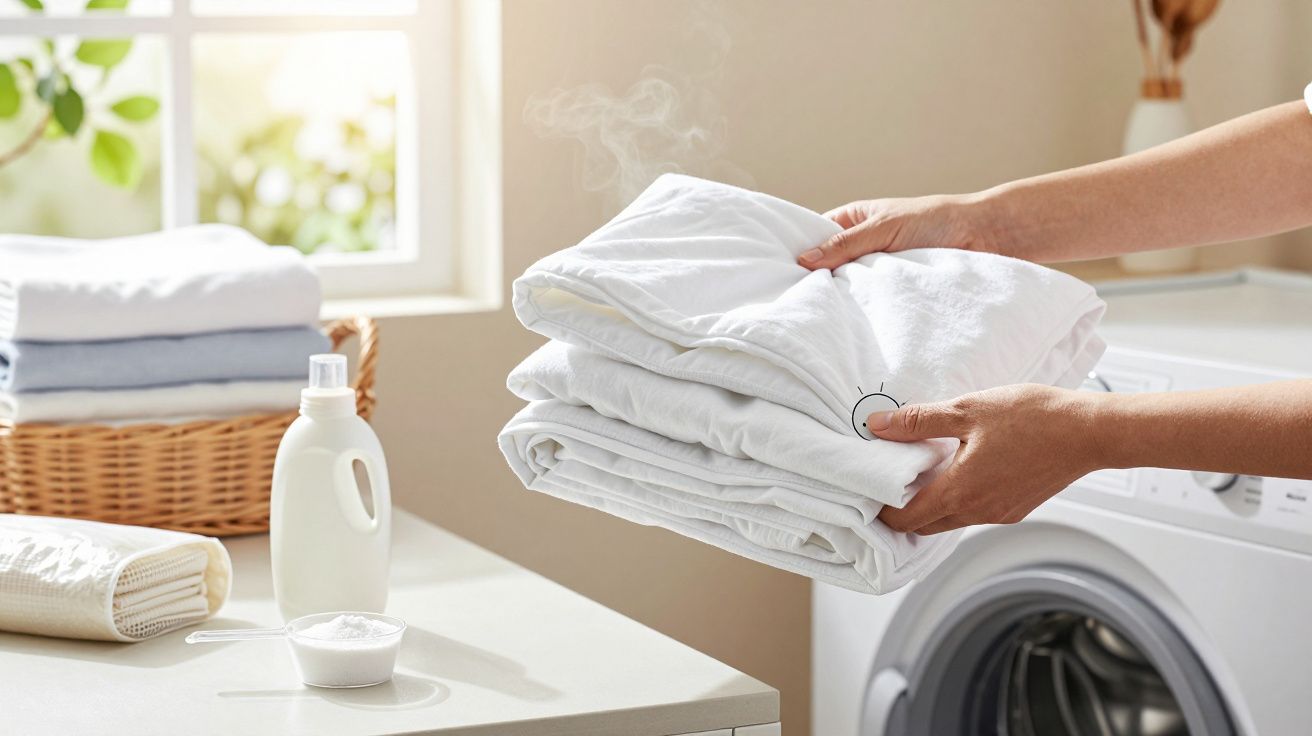
Fresh, warm, properly clean - or so she assumed. A fortnight later she was absent‑mindedly clawing at tiny red bumps on her arms and, at 1 a.m., searching “why do my sheets smell a bit off?” while her partner snored contentedly beside her.
In the bluish glow of her phone, one line caught her eye: “You might be washing your sheets at the wrong temperature.” She paused. The wrong temperature? Surely “hot” always beats “cold”? Her gran believed in a near‑boiling wash. TikTok insists cool eco cycles are the responsible choice. And the care label on her cotton duvet cover offers only a handful of cryptic symbols that may as well be hieroglyphs.
Somewhere between habit, half‑remembered family wisdom and modern eco‑guilt, plenty of us are missing the mark - and our beds are quietly giving us away.
The big sheet-washing myth most people never question
Ask ten people how they wash their bed sheets and you’ll hear ten different answers, each delivered with full confidence. One person swears by a 90°C “blitz”. Another refuses to go above 30°C to “protect colours and the planet”. Someone else hits whatever programme is already selected and hopes for the best.
Underneath it all sits an unspoken idea: higher heat must mean cleaner, safer, more hygienic. Or, at the other extreme, that low-temperature eco cycles are the enlightened, grown‑up choice. Both sides can sound a touch smug. In reality, our laundry routines often reflect what we grew up with, not what actually works with modern fabrics, modern detergents, and the microscopic passengers living in the fibres.
The uncomfortable truth is this: the most common error usually isn’t washing “too cold” or “too hot”.
It’s failing to match the temperature to what’s actually going on in your bed.
What’s really in your bed (and why temperature matters)
Look at real life, not the ideal. In one UK survey, almost 40% of people admitted they don’t change their sheets weekly. Many quietly push it to two, three, even four weeks when life gets busy. We all know the friend who says, proudly, “I just air them out - they’re fine.”
Then add what builds up: sweat from warm nights, shed skin cells, body oils, make‑up, fake tan, pet hair, pollen, and the occasional splash of tea or wine. Even in the bed of a very “clean” person, researchers regularly find dust mites, bacteria, and traces of faecal matter. Yes - genuinely.
A viral TikTok trend showed people soaking their bedding in the bath and watching the water turn brown. It’s sensational, of course - but it’s also a glimpse of what your 30°C “quick wash” may be leaving behind. The sheets looked fine when they came out. The bath suggested otherwise.
Now imagine all of that being sloshed around at 30°C with a dash of bargain detergent. The surface might smell of lavender. Deeper in the weave, it’s a different story. That one temperature choice can quietly affect your sleep, your skin, and even how long your bedding stays pleasant.
Here’s the more rational bit: temperature isn’t just a comfort setting - it’s chemistry. Lower temperatures can shift light sweat and everyday dust, especially with today’s detergents. But many microbes and allergens are more stubborn. They tend to need higher heat, the right detergent boosters, or a combination, so they don’t keep thriving in your pillowcases.
The “too hot” problem (and the lukewarm danger zone)
There’s a catch in the other direction as well. Repeatedly washing delicate fibres at very high temperatures can roughen them, dull colours and weaken elastic. That crisp “hotel” feel disappears sooner, and you end up replacing sheets more often. So “scorch it all” isn’t the miracle solution either.
The real trouble spot is the lazy middle: lukewarm washes that are neither hot enough to properly deep-clean, nor cool and gentle enough to treat fragile fabrics with care. That’s where musty smells hang around, skin issues can flare, and sheets start ageing badly while never quite feeling truly fresh.
So it isn’t simply “hot or cold?”. The better question is: what does your bed need this week?
Sheet-washing temperature: what actually makes sense for your bed sheets
For standard cotton bed sheets, the most dependable sweet spot is typically 40–60°C, depending on how you live. That’s the range where hygiene and fabric care finally meet in the middle. For most healthy adults with no major allergies, a 40°C wash with a good‑quality detergent is often enough when you’re changing sheets weekly.
If you’ve been unwell, you sweat heavily, you sleep nude, pets climb onto the bed, or you’ve stretched your sheet-changing beyond a week, then moving up to 60°C becomes far more sensible. At that point you’re giving bacteria and dust mites much less opportunity to linger. It’s not punishment‑level heat - it’s targeted cleaning.
Think of 60°C as a “reset button” wash. Not every time, but when you genuinely need a deeper refresh. A common mistake is treating every wash the same, regardless of season, how the sheets feel, or who has been sleeping there.
How low-temp eco cycles and quick washes can backfire in real life
Picture a grey Wednesday in Manchester. A mum of two scrolls through the settings while a toddler tugs at her leg. “I press the one that takes the least time,” she shrugs. “The 30°C quick wash. I need them dry before bedtime.”
She’s not unusual. Laundry is rarely a sacred ritual; it’s a background task squeezed between work emails and the school run. Each extra degree and every extra minute can feel like an indulgence. So people choose the “eco” option, stick to 30°C, and rely on detergent to do the heavy lifting.
The problem is that many quick, low‑temperature cycles are designed for lightly soiled clothes - not bedding that has absorbed days or weeks of sweat and skin. That’s why sheets can smell acceptable when they come out warm, then develop a faint musty note as they cool. The smell isn’t mysterious. It’s residue and microbes that never fully shifted.
Dermatologists see the knock‑on effects quietly and often. People arrive with “unexplained” body acne across backs and shoulders, eczema flare‑ups, or an irritated scalp. One of the dull-sounding questions that can be surprisingly revealing is: “How often do you change and wash your bed linen - and at what temperature?” The question is mundane. The answers rarely are.
From a microbiologist’s perspective, your bed is a warm, slightly damp, nutrient‑rich habitat. Bacteria thrive. Dust mites feed on skin cells. Lower temperature washes can remove surface grime, but some microbes and allergens may remain - especially if you cram the drum full or skimp on detergent.
And the boil wash brigade isn’t entirely in the clear either. Regular 90°C cycles on modern cotton blends, elastane trims and decorative finishes can warp fibres, wreck elastic, and encourage pillows and duvets to clump. You get a short‑term sense of sterility, but your bedding wears faster, pills sooner and feels harsher.
The real skill is reading three straightforward clues - fabric type, how dirty the sheets truly are, and who has been sleeping in them - and then setting the temperature deliberately rather than running on autopilot. It sounds minor. Over a year of nights, it quietly influences comfort, health and cost.
How to fix your sheet-washing temperature mistake (without making laundry your personality)
Start with a simple principle: match the heat to the story of the week. If it’s been a normal, not‑too‑sweaty run of nights, 40°C with a decent detergent and a drum that’s full (but not rammed) is usually enough for standard cotton.
Had a heatwave, night sweats, illness, or you’ve pushed sheet-changing “one more week”? That’s your prompt to go to 60°C - especially for pillowcases, which collect face oils, make‑up residue and hair products. Treat pillowcases as the front line where your skin meets fabric.
For delicate materials such as linen, bamboo blends, or anything labelled “silk”, stay nearer 30–40°C and choose a longer, gentler cycle with a mild detergent rather than relying on brute force heat. The point is conscious choice, not letting the default button decide.
Let’s be honest: nobody does this perfectly every week. Most of us have stretches where the laundry basket wins. That’s often when people panic, throw everything into one giant mixed load at one temperature, and just try to get it done.
Try a small shift in priorities. If time is tight, wash the items that touch bare skin most - at the right temperature - rather than washing everything together on an average setting. Your sheets and pillowcases matter more than that extra hoodie.
A few quiet habits can also make any temperature less effective:
- overfilling the drum so water can’t circulate properly
- underdosing detergent “to save money”, so it can’t do its job
- defaulting to short cycles meant more for freshening than deep cleaning
The result often looks clean and smells fine, yet never feels properly reset.
“A washing machine isn’t a magic box,” says a London-based textile care specialist. “It’s a tool. If you always use the same programme, you’re not cleaning - you’re just agitating.”
Practical cheat sheet
- For weekly cotton bed sheets: 40°C cycle, drum full but not overstuffed, good-quality detergent.
- For sweaty weeks, illness or allergies: 60°C wash for sheets and pillowcases to reduce bacteria and dust mites.
- For delicate fabrics (linen, bamboo, silk blends): 30–40°C, gentle detergent, longer cycle, line‑dry where possible.
- If you’re acne‑prone or have sensitive skin: change pillowcases more often than sheets.
- After washing: allow the machine to complete its full spin so sheets dry faster and don’t sit damp, encouraging odours.
That’s the quiet power move: treating the washing machine like something you actively “drive”, not just a white box that gets loud for an hour.
Two extra changes that make the temperature work harder
Drying is the often‑missed partner to washing. If sheets sit damp in the machine for even a couple of hours, they can pick up that sour, musty smell even after a perfectly chosen 40°C or 60°C cycle. Dry promptly, and if you’re air‑drying indoors, aim for good ventilation so moisture doesn’t linger in the room (or in the fibres).
It’s also worth remembering that machines themselves can harbour residue. Detergent build‑up and damp seals can create smells that transfer back onto “clean” bedding. An occasional maintenance wash (following your machine manufacturer’s guidance) and a quick wipe around the door seal can help your chosen temperature and detergent deliver the freshness you expect.
Why this tiny temperature tweak lingers in your life
Most domestic mistakes don’t arrive as one big catastrophe. They seep in gradually: a bedroom that smells slightly stale, waking with a scratchy throat, the low‑level irritation of sheets that look clean but feel a bit… tired. And, yes, that flicker of guilt when you change the bed and realise you’ve lost track of how long it’s been.
Adjusting your routine isn’t about joining a perfect‑home cult. It’s about being realistic about how you live, then choosing a setting that fits. Hotter when life gets sweaty and chaotic. Cooler and gentler when fabrics need looking after. And, most of the time, something in the middle that actually does the job.
One day - probably on an ordinary Sunday - you’ll pull the duvet cover from the wash and notice it smells genuinely clean even when it’s cold, feels soft rather than worn thin, and your skin stops complaining at night. That isn’t a Pinterest-worthy transformation. It’s simply life running a bit more smoothly in the background.
We spend roughly a third of our lives in bed, wrapped in whatever choices we made at the washing machine last week. Once you notice that, the temperature dial stops being a shrug and starts feeling like a quiet kind of control - not loud, but unmistakable when you slide into bed and your body relaxes without quite knowing why.
Key points at a glance
| Key point | Detail | Why it matters to you |
|---|---|---|
| Match the temperature | 40°C for “normal” weeks; 60°C for sweat, illness, allergies | Cuts microbes and odours without ruining your sheets |
| Watch the fabric type | Cotton tolerates more; delicate materials at 30–40°C | Extends the life of your bedding and keeps it comfortable |
| Avoid the “same for everything” habit | Don’t run the same cycle for every load | Delivers a genuinely clean, better-feeling bed |
FAQ
How often should I really wash my bed sheets?
Ideally once a week for most people, particularly if you sweat at night or sleep nude. Two weeks is the upper limit where many households start noticing more odour, dust mites and skin irritation.Is washing sheets at 30°C ever enough?
Yes - for lightly used bedding, delicate fabrics, or as a top-up between deeper washes. Choose a longer cycle and a good detergent, and don’t overload the drum so water and detergent can circulate properly.Do I need to boil wash my sheets to kill germs?
Not usually. For normal domestic use, 60°C is generally enough to significantly reduce bacteria and dust mites, particularly with an effective detergent. Regular 90°C washes can damage fibres and are rarely necessary.What temperature is best if someone has been ill?
Use 60°C for cotton sheets and pillowcases, wash separately from other laundry if possible, and dry thoroughly. This gives you a solid hygienic reset without wrecking your bedding.Are eco low-temperature cycles bad for hygiene?
Not automatically. They can work well for lightly soiled clothes and certain fabrics. They’re simply less suitable for heavily used bedding that hasn’t been changed in a while. Use them thoughtfully rather than as a one-size-fits-all setting.





Comments
No comments yet. Be the first to comment!
Leave a Comment