
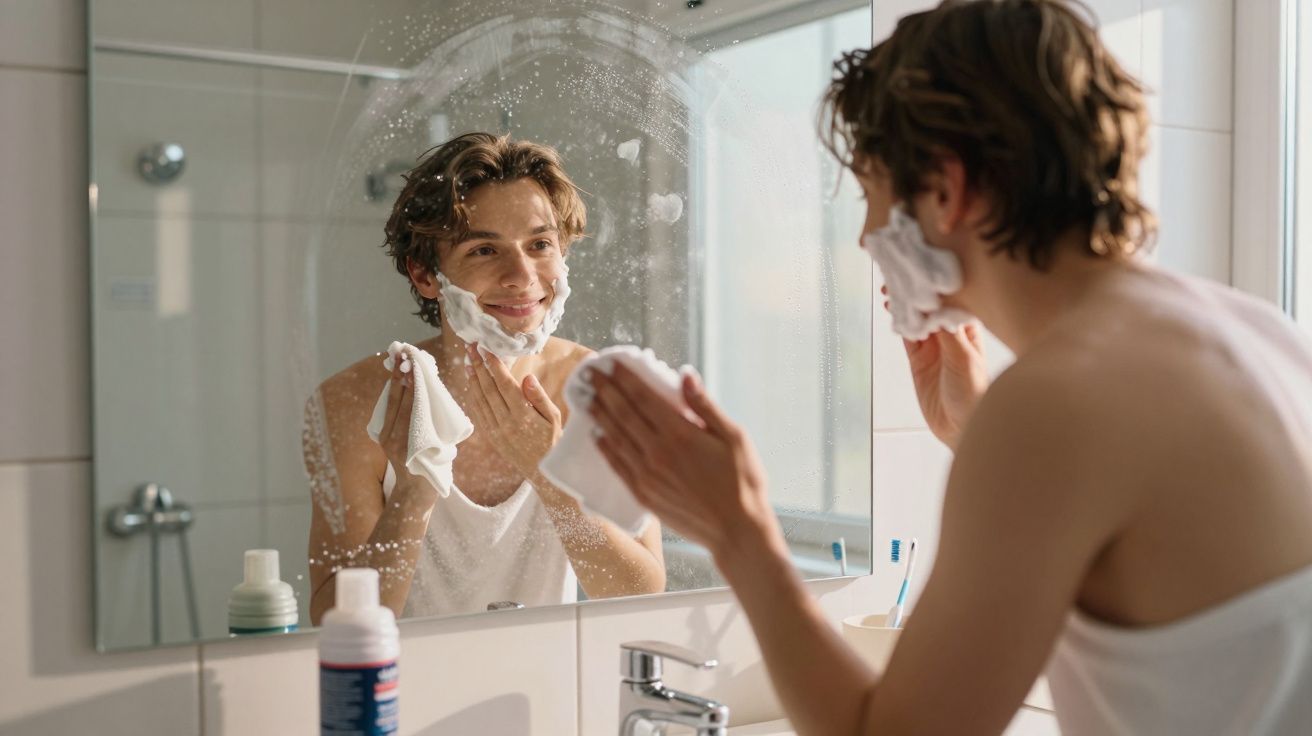
Steam-laden bathrooms, misted mirrors and towel streaks feel like part of everyday life in many households - yet one ordinary bathroom item can quietly change that.
If you want a clear bathroom mirror after a hot shower, the answer may already be sitting by the basin. Rather than buying specialist anti-fog sprays and wipes, plenty of people are relying on a familiar staple that costs pennies per use and takes only moments to apply.
The cheap anti-fog trick hiding in your bathroom
The unlikely hero is plain shaving foam (or shaving cream). It is not a specialist glass product and not a car-care polish - just the same foam many people already use for shaving faces, legs or underarms.
Shaving foam contains surfactants and emulsifiers that can leave a very thin, invisible layer on glass. That film encourages moisture from condensation to spread out as a smooth sheet, instead of forming countless tiny droplets that scatter light and create that cloudy mirror fog effect.
Rubbing a small amount of shaving foam onto your mirror and buffing it off creates a temporary anti-fog shield that can last days or even weeks.
Although the method has recently taken off on social media, it echoes long-standing practices used by swimmers, motorcyclists and skiers, who apply similar film-forming solutions to goggles and visors.
Why shaving foam works against mirror fog
A mirror fogs when warm, humid air hits a cooler surface. Water vapour then condenses into microscopic droplets that cling to the glass and distort what you see.
The ingredients in shaving foam alter the way water behaves on the mirror. Instead of beading up into droplets, the moisture spreads into an ultra-thin, almost invisible layer. The water is still there, but it does not disrupt reflections as much.
It is the same basic idea as washing-up liquid reducing surface tension on greasy plates, helping water sheet and run off more evenly. The principle is not unique to shaving foam - foam just happens to be convenient, inexpensive and generally safe for most standard glass mirrors.
How to keep your bathroom mirror clear with shaving foam
The technique is straightforward, but getting the details right affects both how long it lasts and how spotless the mirror looks afterwards.
Step-by-step guide for shaving foam anti-fog
- Begin with a dry mirror: Make sure the glass is fully clean and completely dry, with no streaks or soap residue.
- Use only a little: A pea-sized amount of shaving foam is usually plenty for an average mirror panel.
- Spread it evenly: With a soft, dry cloth or a sheet of kitchen roll, apply the foam in thin, overlapping circles across the glass.
- Buff until it disappears: Keep polishing until the mirror is fully clear again, with no visible white film left behind.
- Pause briefly: Allow a minute for the layer to settle before you start the shower.
Done well, the mirror often stays clear throughout a hot shower - and sometimes for several showers - depending on humidity and how well the room is ventilated.
How long does it last?
Performance differs from one bathroom to another. In a well-ventilated space, a single application can remain effective for more than a week.
In a small bathroom with no window where steam builds quickly, you may need to repeat the process every few days. You may also have to reapply after you thoroughly clean the mirror with glass cleaner, because strong cleaners can remove the protective film.
As a rule of thumb, reapply shaving foam once the mirror starts fogging noticeably again during showers.
Is shaving foam better than anti-fog spray?
Purpose-made anti-fog sprays are formulated for durability and can work extremely well. However, they often come with trade-offs, including higher cost, more chemical ingredients and extra plastic packaging.
| Option | Cost per application | Longevity | Main downside |
|---|---|---|---|
| Shaving foam | Very low | Days to weeks | Needs reapplication and careful buffing |
| Anti-fog spray | Higher | Weeks to months | More chemicals and packaging waste |
| Doing nothing | None | None | Constant fog, wiping and streaks |
For many homes, the biggest attraction is that shaving foam is already on the bathroom shelf - meaning you avoid buying another single-purpose product.
Turning a multipurpose item like shaving foam into an anti-fog tool cuts clutter and avoids yet another bottle under the sink.
Tips, warnings and common mistakes
Choose the right product
Most standard white shaving foams do the job well. Gel versions can also work, but they typically require more buffing to prevent smears.
Very heavily fragranced products or those with added oils can leave streaks or greasy-looking marks, so a plain, basic foam is usually the safest bet.
Avoid these frequent errors
- Using too much foam, which can leave milky patches and takes longer to polish away.
- Applying it to a damp mirror, which weakens the film and reduces how long it lasts.
- Wiping the mirror with a wet towel straight after showering, which can remove the protective layer.
- Using strong glass cleaners immediately afterwards, which can strip the coating.
Extra practical advice (often overlooked)
If you are struggling with streaking, switch to a clean, dry microfibre cloth and buff in small circles, then finish with long, straight strokes. Also consider doing a quick patch test in a corner first - especially if the mirror is unusually old, tinted or has any special finish.
Other ways to fight fog in a steamy bathroom
Shaving foam is not the only option. Some people prefer diluted washing-up liquid, a bar of soap rubbed lightly on the glass and then buffed, or commercial anti-fog wipes. Each approach relies on the same underlying principle: leaving a microscopic film behind.
Ventilation is still one of the most effective supports. Running an extractor fan, opening a window slightly (even just a few centimetres), or leaving the bathroom door ajar after showering reduces humidity and helps prevent fog on every surface - not only mirrors.
When this trick might not be enough
In very compact bathrooms with poor airflow and very hot, powerful showers, even a good anti-fog film can be pushed to its limits. The mirror may stay clearer for longer, but a faint mist can still appear when steam peaks.
In that case, layering strategies tends to work best: treat the mirror with foam, run the fan during the shower, and avoid aiming the showerhead directly at the wall with the mirror if it is close by.
Practical scenarios where a clear mirror really matters
For many people, this is more than a convenience tweak. Anyone who shaves right after a hot shower benefits from a clear reflection, as do contact lens wearers who need to see clearly without waiting for the room to cool.
Parents often value a fog-free mirror during hectic mornings: one person can shower while another helps a child brush their teeth or sorts hair, using a mirror that shows faces instead of a haze of steam.
Understanding the limits and risks
Shaving foam is usually fine on standard glass mirrors, but it is sensible to check manufacturer guidance before using it on delicate or specially coated surfaces. Certain premium mirrors with anti-mist coatings may not react well to additional products.
While shaving foam is designed for short skin contact and rinsing, a mirror can accumulate residue over time. An occasional deeper clean with a proper glass cleaner helps prevent a dull build-up and keeps the reflection crisp.
There is also a minor slip hazard if foam drips onto tiles or worktops. Wipe up any spills immediately to avoid slick spots, especially in homes with children or older adults.
Beyond mirrors: where else this trick can help
The same shaving foam approach can be used carefully on some other glass or plastic surfaces, such as car side mirrors or the inside of a shower screen. However, do not smear it on windscreens or anywhere it could compromise visibility while driving.
For sport, swimmers and skiers often still choose purpose-made anti-fog products for goggles and helmets because they are tested for clarity and safety. Shaving foam may seem like a money-saving substitute, but any residue on small lenses can blur vision if overapplied.
Used sensibly, though, this everyday bathroom staple is a simple way to manage steam in the place it is most irritating: the mirror you face first thing in the morning and last thing at night.
Related reads
- Empty egg shelves as a wake-up call: why dodging the hard questions about animal welfare, neighbourhood nuisance and genuine self-sufficiency before putting chickens in your garden is selfish, short-sighted and likely to spark conflict
- A budget war machine: China reveals a mysterious tank that is unsettling Western capitals
- Why overthinking is often associated with a strong sense of responsibility
- Paris and Berlin weigh up dropping their joint fighter jet project in favour of a “combat cloud”, stoking fears of a fractured Europe on defence
- Hairstyle after 70: the “trixie cut” is the youth-boosting short style for spring
- A decision under fire as the maritime agency approves a wind farm beside a protected marine reserve, prompting claims of greenwashing, cosy ties with energy giants and a betrayal of local fishermen
- The comeback of this kitchen splashback is divisive - but loaded with meaning
- Heavy snow is expected to intensify into a disruptive winter storm tonight, as experts warn of unnecessary flight cancellations and media-driven panic




Comments
No comments yet. Be the first to comment!
Leave a Comment