
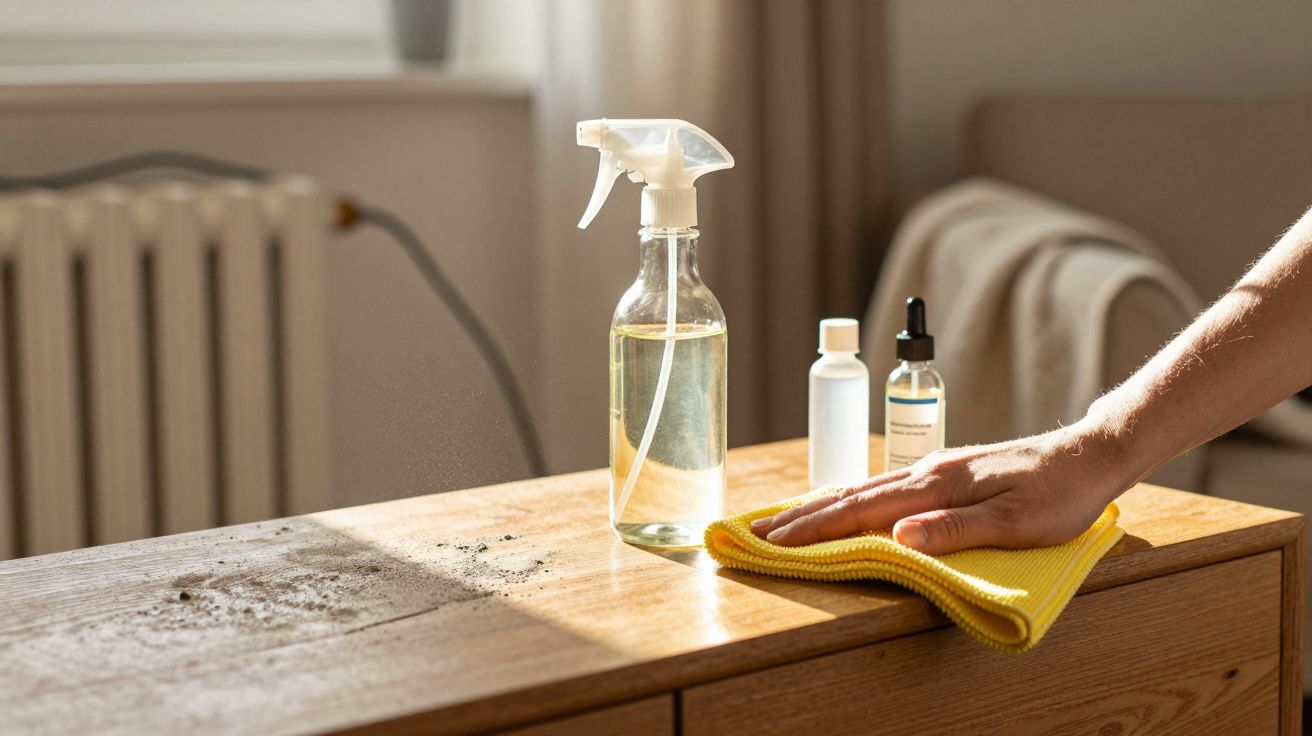
Every shelf is gleaming, the hoover is back in the cupboard… and yet within 48 hours a flat grey veil is sitting on the furniture again.
In plenty of homes, this is not just mildly irritating housekeeping trivia. When dust returns that quickly, it affects how a room looks, how the air feels, and even how often you end up reaching for allergy tablets.
Why household dust seems to reappear almost overnight
Household dust is not simply “a bit of dirt”. It is a mix of clothing and textile fibres, shed skin, pet hair, outdoor pollution, soot, and minute cooking residues.
In warm homes with relatively dry air, these particles can remain suspended for hours. A door slamming, someone walking through, or even sitting down on the sofa stirs the air and sends the same particles back into circulation.
That grey film on your sideboard is often yesterday’s dust, merely shifted and resettled somewhere else.
It is easy to blame a busy road, messy children, or a moulting pet. Often, though, the real driver is less obvious: how you clean and which tools you rely on.
The tools that quietly turn furniture into a dust magnet
Cotton cloths and classic feather dusters look innocent enough, but they are a common reason dust seems to “come back” at speed.
- A dry cloth can drag along the surface, build static, lift dust into the air, then deposit it elsewhere.
- Low-cost synthetic dusters can act like tiny catapults, flicking particles loose without actually retaining them.
- Glossy silicone polishes can leave a faint greasy film that grabs every new speck drifting past.
That high-gloss finish may feel rewarding on day one, but it often creates a slightly sticky layer that encourages dust to cling. Many sprays also release volatile compounds that can aggravate sensitive airways, particularly in smaller rooms with limited ventilation.
Shiny does not always mean clean; some polishes turn your furniture into an electrostatic billboard for dust.
The anti-dust trio for household dust control: damp microfibre, white vinegar and glycerine
The most noticeable improvement usually comes from one simple swap: replace a dry duster with a lightly damp microfibre cloth.
Microfibre is made from extremely fine synthetic threads that create countless tiny hooks. Those hooks capture particles and hold them, rather than launching them back into the air.
Used slightly damp, microfibre also reduces static on the surface. With less static, fewer particles are attracted straight back to the area you have just cleaned.
The basic homemade anti-dust spray
You only need tap water and plain white vinegar. White vinegar helps cut light grease, lifts old polish residue, and can reduce static.
| Ingredient | Proportion |
|---|---|
| Warm water | 4 parts |
| White vinegar | 1 part |
Pour the mixture into a spray bottle. Spray it onto the microfibre cloth (not directly onto the furniture).
Wipe from top to bottom, turning the cloth as soon as a section looks grey. This keeps dust trapped rather than smeared onto the next shelf.
The cloth should be damp, not dripping; excess liquid can harm wood and can streak glossy finishes.
Glycerine: a light shield against future dust
For a longer-lasting effect, many professional cleaners add a small amount of vegetable glycerine. When highly diluted, it leaves a very thin, near-invisible film that makes dust less likely to stick.
At home, mix:
- 1 litre of water
- 1 tablespoon of vegetable glycerine
Apply sparingly with a clean cloth every 2–4 weeks to sealed wood and laminate. Avoid raw, untreated timber and genuine antique finishes, which may react badly to moisture or any coating.
Test on an inconspicuous area (such as the back edge) first. If it dries evenly and does not feel greasy, you can proceed with the rest of the surface.
Hidden dust factories: radiators, textiles and poor airing
The furniture itself is not always the main culprit. Several less visible areas constantly “feed” the dust cloud in your living room.
Radiators and cables: the dust blowers
Radiators draw air through their fins as they heat. That airflow pulls in fluff and hair, then pushes it back into the room whenever the heating cycles on.
Behind televisions, routers, extension leads and other electronics, cable coils collect the same soft grey fluff you find under beds and sofas.
Once or twice each month, when the radiators are cold:
- Put a slightly damp cloth or an old towel on the floor beneath the radiator.
- Use a thin brush or a washable anti-static duster between the fins to loosen dust.
- Wash (or bin) the towel so the particles leave the room rather than circulating again.
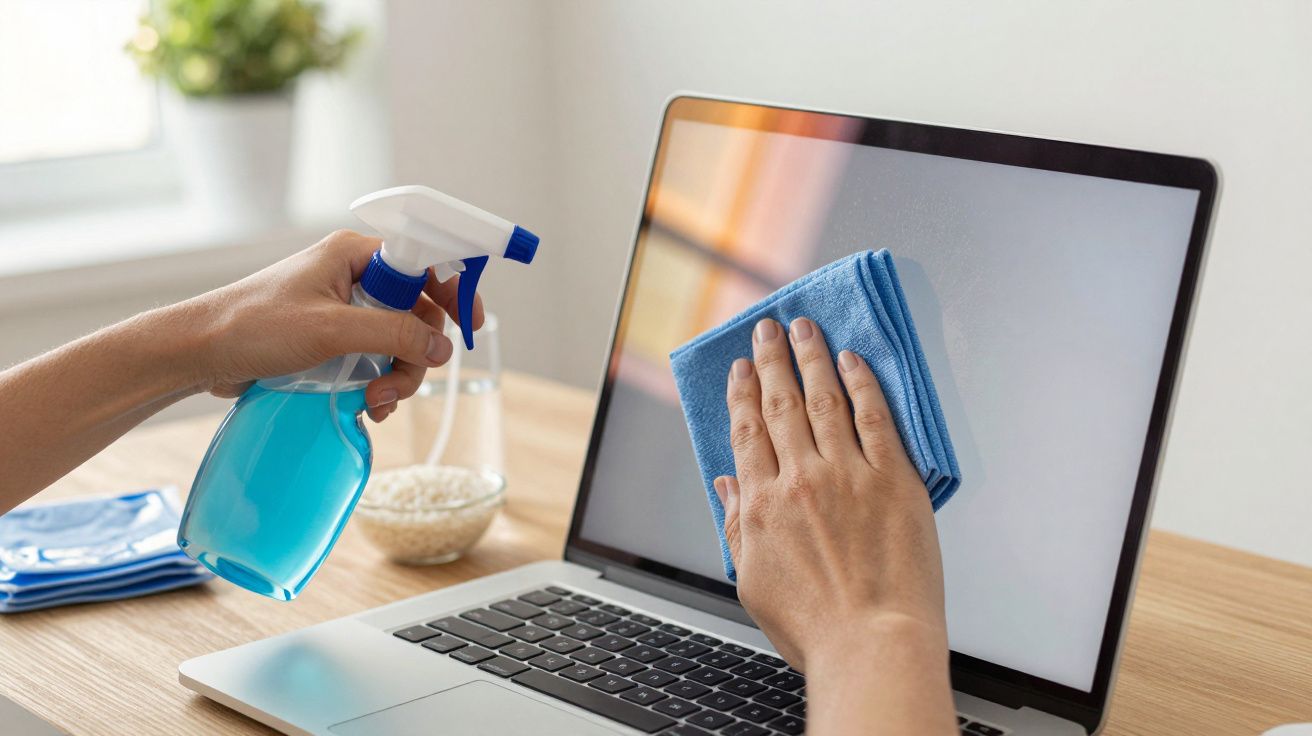
For cable clusters, switch off at the wall first, then wipe cables using damp microfibre. This reduces static and helps release dust that has clung on.
Textiles: your biggest dust reservoir
Soft furnishings behave like sponges for particles. Curtains, cushions, lampshades and upholstered headboards hold dust all day, then release it with movement.
Textiles do not merely collect dust; they redistribute it whenever you brush past them or open and close curtains.
Once a week, vacuum these areas with the brush attachment:
- Curtains and blinds, particularly the top pleats where dust sits undisturbed.
- Cushions and throws, both sides.
- Fabric lampshades and padded headboards.
Afterwards, air the room for around 10 minutes by opening windows wide. The aim is to let newly disturbed particles escape rather than settle straight back down.
Smart routines that slow the grey veil
The order you clean in can make a visible difference. If you vacuum first, the hoover’s airflow can lift light particles into the air, which then land on surfaces you have already wiped.
A more effective sequence is:
- Air the room for 5–10 minutes.
- Dust high areas with damp microfibre (tops of cupboards, shelves, picture frames).
- Wipe mid-level surfaces and electronics.
- Finish with floors: vacuum, then mop if needed.
This way, anything that drops while you dust ends up on the floor, where you remove it once and for all.
Laundry habits matter too. Over-drying clothes in a tumble dryer, or neglecting to clean the filter, can release fibre fluff back into your home. Empty filters regularly and, where possible, dry clothes outdoors or in a well-ventilated area to cut that source significantly.
Two extra levers: humidity and filtration (often overlooked)
Dry air helps dust stay airborne for longer, so managing indoor humidity can reduce how much of it keeps floating around. As a general comfort guide, many households find a moderate humidity level (often around 40–60%) makes the air feel less harsh and can reduce static build-up on surfaces. If your home is very dry in winter, a small humidifier used sensibly can help-just keep it clean to avoid adding other irritants to the air.
Filtration also makes a difference. If you use a vacuum cleaner, a well-fitted HEPA filter (where compatible) can reduce the amount of fine dust that is blown back into the room. Likewise, changing HVAC or air-purifier filters on schedule prevents them from becoming a source of recirculated particles.
What this means for allergies and sensitive lungs
For anyone with asthma, hay fever or dust mite allergies, that 48-hour dust layer is more than a cosmetic annoyance. Each pale film can contain allergens that trigger coughing, sneezing and itchy eyes.
By switching to damp-dusting and dealing with hidden dust zones, you remove more particles each time you clean. This reduces the overall “allergen load” in the home.
A small change in tools can translate into fewer flare-ups for sensitive airways, particularly in bedrooms and main living spaces.
There is also a chemical angle. Many glossy furniture sprays add fragrance and solvents to indoor air. Replacing them with a simple white vinegar-and-water mix can reduce exposure to compounds that some people find irritating.
Putting it all together in everyday life
Picture a typical flat: a living room with a large TV, radiators beneath the windows and a soft rug; a bedroom with a fabric headboard and heavy curtains. No matter how often you clean, dust seems to return every two days.
In week one, you replace the duster with damp microfibre and the white vinegar mix, vacuum the tops of curtains, clean the radiators and wipe down cable clusters. You are not doing more work-you are simply using different tools and targeting the real dust sources.
Many people find that by week two or three, the “need” to dust eases. Surfaces can look clean for four or five days rather than two. Allergy symptoms may also soften slightly, especially first thing in the morning.
Dust will never vanish completely, but with microfibre, white vinegar, and (optionally) glycerine, fewer particles are free to swirl, settle, and cling straight back again. The home feels lighter, the air seems clearer, and cleaning stops feeling like an endless loop.
Related reads (as shown alongside this article)
- First lawn cut in March: the exact height you must respect, centimetre by centimetre, or risk ruining your grass
- Light line colour is the biggest hair trend for spring–summer 2026
- Varsity bob: the must-have blunt bob trend for 2026
- Lawn buried under leaves: this cordless Mountfield tool with batteries included saves your back
- Stop buying anti-fog sprays: this bathroom staple keeps your mirror clear after every shower
- Bad news for a retiree who lent land to a beekeeper: he has to pay agricultural tax “I’m not making any money from this”, a story that divides opinion
- “It’s his season of love”: if robins are singing in your garden, here’s what it really means
- With its 337 metres and 100,000 tonnes, the largest aircraft carrier on Earth rules the oceans





Comments
No comments yet. Be the first to comment!
Leave a Comment