
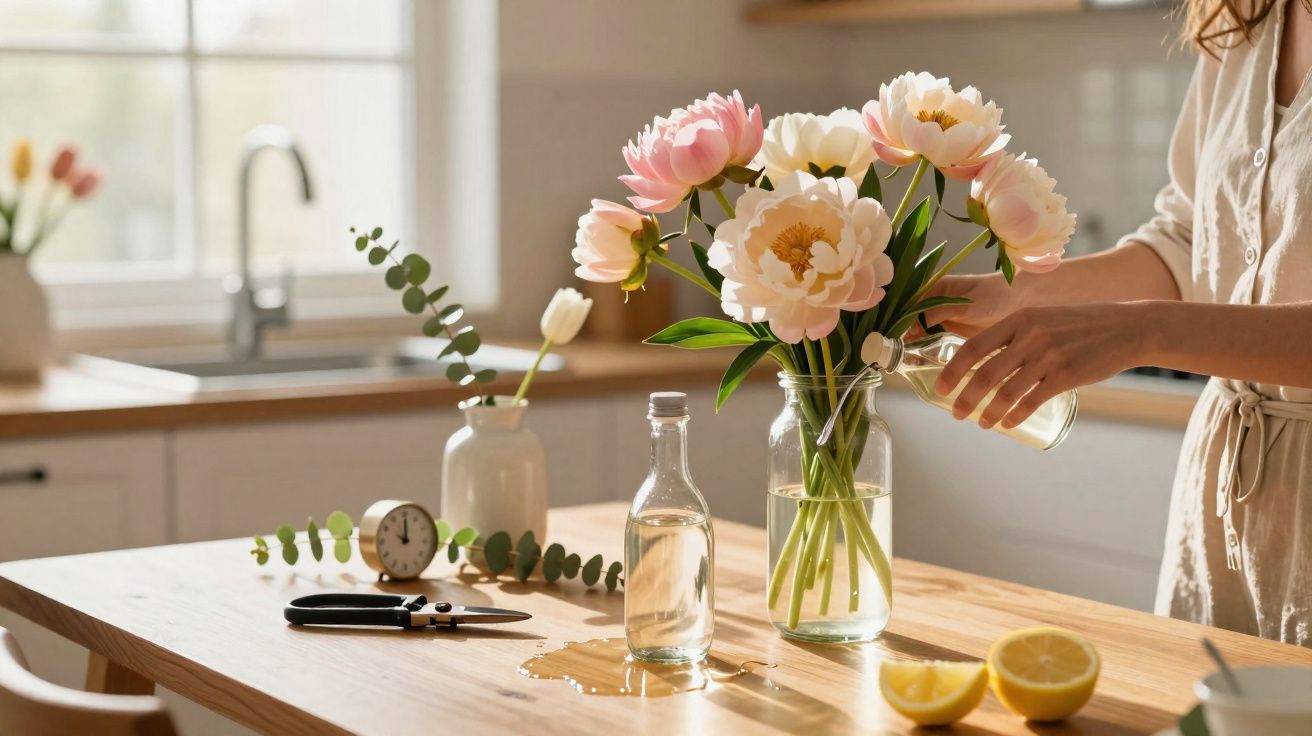
It may not be the florist’s fault at all. It could be the water coming out of your tap.
Most of us have come to expect the same pattern: supermarket roses sag by about day four, and daisies aren’t far behind. But one small change at the sink can keep a bunch looking good for several more days - sometimes even close to an extra week - without buying specialist additives or following any fussy routine.
The quiet kitchen ingredient that changes everything
The fix isn’t exotic, and it certainly isn’t a branded product. It’s ordinary white vinegar - the same kind you might add to a salad dressing or use when descaling a kettle.
In very small quantities in vase water, white vinegar nudges the pH to be more acidic. That one shift slows bacterial growth and helps the cut ends of the stems stay open so they can keep taking up water.
Used in the right dose, white vinegar can extend the life of many cut flowers by up to twice their usual span.
Put simply, flower stems function much like narrow drinking straws. As microbes build up in untreated tap water, they collect inside those “straws” and restrict the flow. Once that happens, the flower can’t draw up enough water - heads start to droop, petals crumple, and colour dulls sooner.
Those little florist “flower food” sachets typically do three jobs at once: they add an acidifier, a gentle disinfectant, and a small amount of sugar. On its own, vinegar covers the first two roles. It makes the water cleaner and more acidic - essentially what many commercial mixes are designed to achieve, just without the marketing.
How to use white vinegar for longer-lasting bouquets
This approach is quick - comfortably under two minutes - which makes it realistic to repeat each time you bring flowers home.
Step-by-step guide from tap to table
Start with the vase itself. Scrub it using hot, soapy water and rinse well afterwards. Any residue left from an old arrangement can introduce bacteria straight into the fresh water.
Then cut the stems back. With sharp scissors or a knife, trim them on a slight angle. The angled cut gives more surface area for water uptake and stops the stem end sealing itself against the vase base.
Remove any leaves that would end up under the waterline. Leaves sitting in water break down quickly, which boosts bacteria and can turn the vase cloudy within a day or two.
Now prepare the water-and-vinegar mix:
- Use cool water for tulips, ranunculus, and most spring flowers.
- Use room-temperature water for roses, chrysanthemums, carnations, and mixed bouquets.
- Add white distilled vinegar at roughly 1 tablespoon per litre, or 1 teaspoon per 250 ml (about 1 cup).
- Swirl the water so the vinegar disperses evenly before you put the stems in.
Stick to white distilled vinegar. Flavoured, cloudy, or coloured vinegars can stain petals, cloud the water, or change its chemistry unpredictably.
After arranging the stems, keep an eye on the water level and top it up as needed. If it drops too low, air can be drawn into the base of the stem, which may disrupt water uptake. Every two days, tip out the old water, rinse the vase, snip a few millimetres off each stem, and remake the same vinegar solution.
What really happens inside that vase
The first 24 hours matter most. Newly cut stems drink quickly at the start, and when the water is clean and slightly acidic, the vessels inside the stem tend to stay open for longer.
With standard tap water, bacterial levels can climb sharply by day three. You’ll often see cloudy water, notice a mild odour, and find the stems feel slick. That slippery coating is a microbial biofilm on the stem surface, and it blocks the tiny channels that carry water up to the flower head.
Vinegar interferes with that cycle. The acetic acid makes conditions less favourable for many bacteria, slowing their multiplication. As a result, the water remains clearer, stems are less slimy, and the flowers hold their firmness and colour for extra days.
Clean, slightly acidic water keeps petals plump, stems firm, and colours richer far beyond the usual midweek wilt.
There’s a behavioural knock-on effect too. When flowers keep going, you’re more inclined to change the water because they feel “worth” the effort. When they decline quickly, the vase starts to feel like clutter rather than something enjoyable, and you’re less likely to maintain it.
Which flowers love vinegar – and which ones do not
Different varieties respond differently, and sometimes simply adjusting the amount makes all the difference.
| Flower type | Vinegar advice | Reason |
|---|---|---|
| Roses, chrysanthemums, carnations, alstroemeria, daisies | Use full vinegar ratio | Sturdy stems respond well to acidified, cleaner water |
| Tulips, lilies, gerbera | Use full ratio, but keep in cool spot | Benefit from acidified water and lower temperatures |
| Sweet peas, very delicate meadow flowers | Halve the vinegar dose or skip | High acidity can stress fragile tissue |
If you’re dealing with particularly delicate stems, try a simple test: place one or two in a small vase with the vinegar mix and keep the rest in plain water. Watch them over several days, then tweak the ratio next time based on what you see.
Common mistakes that shorten vase life
Vinegar can help a lot, but a few common habits will still cut a bouquet’s life short if you don’t avoid them.
- Overdoing the dose: If you pour too much, the water can become overly acidic, leading to scorched-looking petals or droopy stems.
- Mixing with bleach: Never combine vinegar and bleach - together they produce harmful fumes. Use one or the other, not both.
- Using metal vases that corrode: Acidified water can react with certain metals, which may add unwanted compounds to the water and stain or mark the container.
- Parking flowers next to fruit: Fruit releases ethylene gas as it ripens, which speeds ageing in many flowers.
- Ignoring temperature: A bouquet placed in strong sun or above a radiator will decline quickly, no matter how carefully you treat the water.
The combination of vinegar, clean glass, trimmed stems, and a cooler night-time spot can add several extra days to most arrangements.
Why florists rarely mention vinegar
Florists generally provide sachets instead. They’re neat, branded, and easy to add on to a higher-end bunch. Vinegar, on the other hand, looks too ordinary to sell.
There’s also an element of consistency. A pre-measured packet tends to deliver predictable results across lots of customers, while the vinegar in home cupboards can vary in strength and, more importantly, in how much people actually pour. Suggesting vinegar means relying on customers to measure carefully and not overdo it.
Even so, when sachets are running low, many florists discreetly use acidified water in the background. The underlying method is common; it’s just presented differently.
How this one habit shifts your whole flower routine
When bouquets last longer, they stop feeling like a guilty indulgence and start to feel like an everyday part of the home. A £5 or $7 bunch that holds on for nine or ten days feels like sensible value rather than a fleeting impulse purchase.
You might also find you’re happier to buy mixed seasonal stems more often and play with colours and textures, because you trust they won’t collapse after three days. That can subtly change the atmosphere of your living space across the week.
Practical scenarios to try at home
Try a straightforward comparison over a weekend. Put half a bunch of supermarket roses in plain tap water, and the other half in a vinegar mix using the recommended ratio. Keep both vases together, away from direct sunlight and fruit bowls, and take one quick photo each day.
By day five or six, many people can see the difference: clearer water and firmer petals in the vinegar vase. By day eight or nine, the gap is often unmistakable. Running this small home “trial” once can help you fine-tune for your particular tap water, room temperature, and the vinegar level that suits your flowers.
Another practical use: if you’re having guests on a Friday and want flowers that still look presentable into the following week, start with vinegar, re-trim the stems every two days, and move the arrangement somewhere cooler overnight. Those modest steps accumulate and help the bouquet last longer.
Key terms worth knowing
Two bits of flower-care vocabulary are worth recognising. pH describes whether water is acidic or alkaline; white vinegar lowers the pH, which discourages many bacteria. Turgor is the internal pressure that keeps petals and leaves looking firm. When stems can’t pull up enough water, turgor drops and the flower starts to look limp.
Vinegar doesn’t “feed” flowers in a nutritional sense. Instead, it protects the water conditions so the remaining energy in a cut stem can go towards opening buds and keeping its shape for as long as possible.





Comments
No comments yet. Be the first to comment!
Leave a Comment