
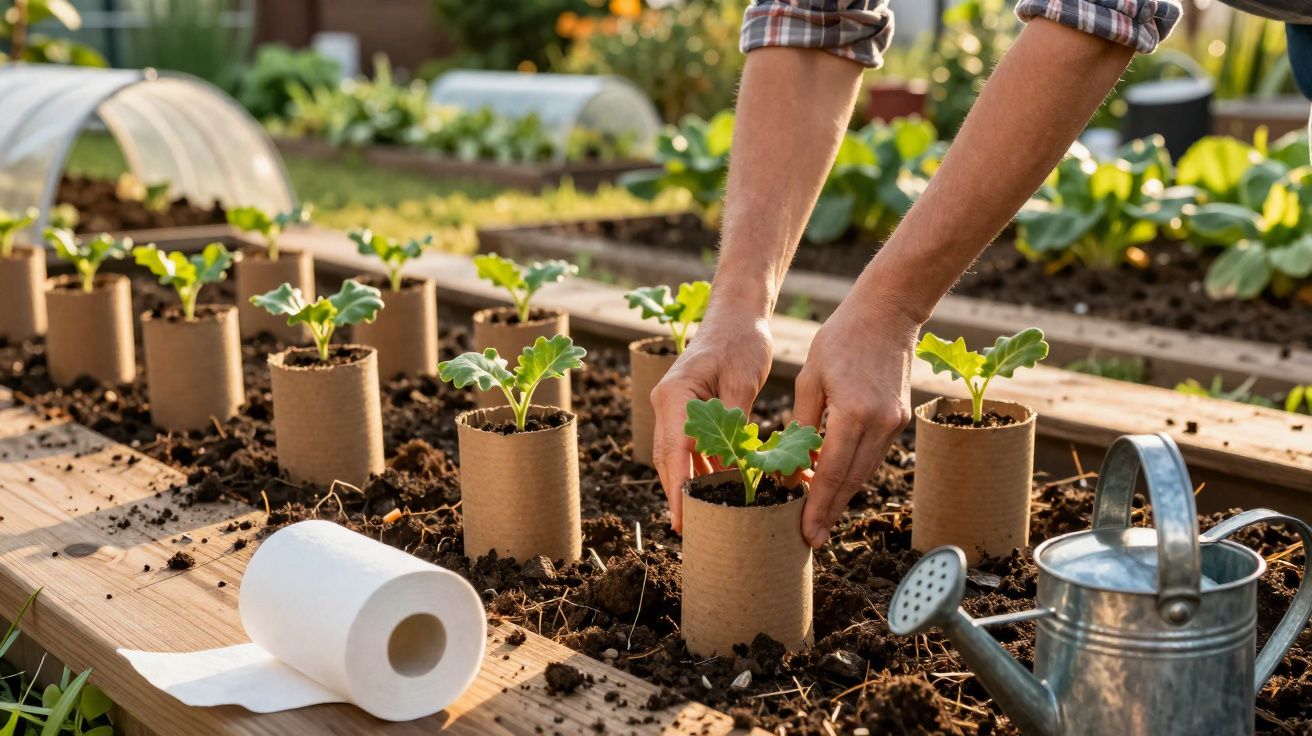
When night-time frost and hungry slugs are on the prowl, a humble household leftover is often enough to stop young plants being wiped out.
In spring, many hobby gardeners spend good money on polytunnels, cloches and specialist fleece to protect delicate seedlings. At the same time, a free “tool” is being tossed in the bin almost everywhere without a second thought: the cardboard tube from a toilet roll. That unremarkable cylinder is currently causing a stir in British and international gardening communities - and it can make the difference in a veg bed between bare soil and a bumper harvest.
Why toilet roll tubes suddenly become worth their weight in gold in spring
As soon as the days start getting longer, plenty of people head straight back out into the garden. Tomatoes, lettuce, peas, courgettes or marigolds are meant to get into the bed as early as possible. Yet this is also when the risks peak: late frosts, sharp temperature swings and slugs can be brutal on young plants.
“A single frosty night or a slug attack can destroy months of prep work and anticipation in just a few hours.”
That is exactly where the cardboard tubes come in. They are made from thin card that:
- breaks down slowly in the soil,
- lets water through,
- takes the edge off wind at ground level,
- reduces sudden temperature changes,
- creates a physical barrier against slugs.
Experienced gardeners describe it as creating a tiny “micro-house” around each plant. The area right at the soil surface stays calmer, less windy and slightly warmer. The seedling spends less energy coping with stress and more on building roots and leaves.
How to protect young plants outdoors with toilet roll tubes
The simplest option works directly in the bed. All you need is a few empty tubes and a sharp knife or a pair of scissors.
Step-by-step guide for the vegetable patch
- Plant tomatoes, lettuce, kohlrabi or flowers as normal into the prepared bed.
- If needed, cut a short slit down the length of the toilet roll tube so it’s easier to fit around the stem.
- Place the cylinder around the plant and bring it together to form a loose ring.
- Push the bottom edge 2–3 cm into the soil until the tube stands firmly.
- Make sure no leaves are trapped between the cardboard and the soil.
This creates a collar around the stem. It slows crawling slugs and keeps the coldest air right at ground level a little further away from the plant. If late frosts are forecast, you can take it one step further.
Extra protection on critical nights
When the weather app shows temperatures close to freezing, a simple “layering” around the cardboard ring can help:
- add a thin layer of straw or hay around the tube,
- if a hard frost is predicted, loosely drape horticultural fleece over the plants as well,
- remove the fleece in the morning so nothing goes mouldy and the plants get light.
The toilet roll tube also stops the fleece from sitting directly on fragile leaves and damaging them through rubbing. At the same time, the sensitive root zone stays a bit better insulated.
Turning toilet roll tubes into free seed-starting pots
Even before plants move outdoors, the cardboard can be put to good use. Many gardeners now turn the tubes into small seed-starting pots that can be planted out in one piece.
“The big advantage: you not only save money on plastic pots, you also reduce stress on the roots when transplanting.”
Starting seedlings indoors or in a cold frame
Here’s how to turn empty tubes into small, biodegradable plant pots:
- Cut the tube in half (or into smaller sections) if you want shorter pots, or keep it full height for deep-rooting plants like peas.
- Make four small slits at one end and fold the resulting “flaps” inwards to form a base.
- Stand the tube in a tray or box so it stays upright and excess water is caught.
- Fill with loose seed compost, firm it gently, and sow your seed.
- Keep the compost evenly moist, but not soaking wet, so the cardboard doesn’t soften too quickly.
After three to four weeks, you should have sturdy young plants. Then you plant the entire “pot” - roots and all - into the bed. There’s no need to knock the plant out, which reduces root breakage and establishment problems.
Cardboard tubes as a natural weed brake and mini tunnel
If you collect a lot of tubes, you can use them in even more ways. In the veg garden they work not only as plant collars, but also as a targeted barrier.
Protective rings against aggressive weeds
Especially around individual young plants - such as pumpkins, courgettes or sunflowers - a cylinder pushed deeper into the soil suppresses grass and weeds right beside the stem. This creates a clear radius where the crop can get going without competition for water and nutrients.
For particularly sensitive or slow-growing types, you can even slot two tubes together to double the height. That way, the plants stay longer in a “safe shaft” until they are strong enough to grow beyond it.
Small tunnels for direct sowing in the bed
If you like sowing straight into the bed, you can cut tubes lengthways and use them as small half-round tunnels over a short drill. This works, for example, with:
- radishes,
- carrots,
- cut-and-come-again lettuce,
- coriander or chives.
The half-cylinders give seedlings a little protection in the first few days from wind and from birds. As soon as the shoots reach the “roof”, remove the cardboard pieces or slide them to the side and continue using them as a mulch cover.
From bin to compost: toilet roll tubes as food for earthworms
If the tubes in the bed gradually go soft or fall apart, that isn’t a problem - it’s another advantage. In composting, cardboard is considered a “brown” material with a high carbon content. It balances kitchen scraps and grass clippings, which are more “green” and nitrogen-rich.
“Shredded toilet roll tubes add structure to a compost heap and encourage earthworms to get to work.”
It’s best to cut or tear the leftovers into smaller pieces and layer them with other organic material:
- vegetable peelings,
- dried leaves,
- coffee grounds,
- grass clippings (in thin layers),
- crushed eggshells.
The cardboard pieces soak up excess moisture and help stop compost turning into a smelly, airless mass. Over the months, this becomes humus-rich compost that feeds your beds with nutrients the following year.
Common mistakes and the method’s limits
As straightforward as the trick sounds, there are a few points to keep in mind:
- Use only unprinted tubes: brightly printed card may contain inks you don’t want in the vegetable patch.
- Avoid constant waterlogging: if plants are permanently sitting in water, the cardboard collapses too fast and can go mouldy.
- Don’t underestimate slugs: very persistent species may still make it over the barrier in time - the tube helps, but it isn’t a cure-all.
- Watch ventilation: in very hot weather, tall cardboard rings around tiny plants can trap heat. Shorten or remove them in good time.
Even with these limits, the benefit is significant - especially for gardeners who want to start early without investing in expensive kit.
Who benefits most from using toilet roll tubes
In particular, three groups tend to get the most out of this approach:
| Gardener type | Benefit of cardboard tubes |
|---|---|
| Balcony and patio gardeners | Free seed-starting pots, less plastic, easy handling in trays and containers |
| Allotment gardeners with lots of beds | Fast frost and slug protection for sensitive crops without major investment |
| Self-sufficiency growers with compost | Extra “brown” material, better compost structure, a closed loop in the garden |
If you have children at home, you can also make it into a fun activity: collecting tubes, making pots, sowing seeds - turning cardboard into a small garden project that introduces youngsters to growing veg and circular thinking along the way.
Practical tip: which plants benefit most
Reports from gardeners suggest some crops respond particularly well to cardboard protection:
- Tomatoes and peppers: sensitive to sudden temperature drops and wind when young.
- Lettuces: a favourite slug snack, benefiting from both the barrier and the microclimate.
- Peas and beans: deep starter pots made from tubes support strong root development.
- Marigolds, cosmos, zinnias: delicate young plants that can easily topple in the wind.
If you begin in early spring, a few dozen saved tubes can help secure an entire bed. After the first season, many people find they never want to throw these cardboard cores away again.
Ultimately, this simple idea shows how a supposed waste product can become a versatile garden helper with minimal effort. A quick look in the bathroom bin is all it takes - and the next frosty night or slug wave becomes far less daunting.



Comments
No comments yet. Be the first to comment!
Leave a Comment