
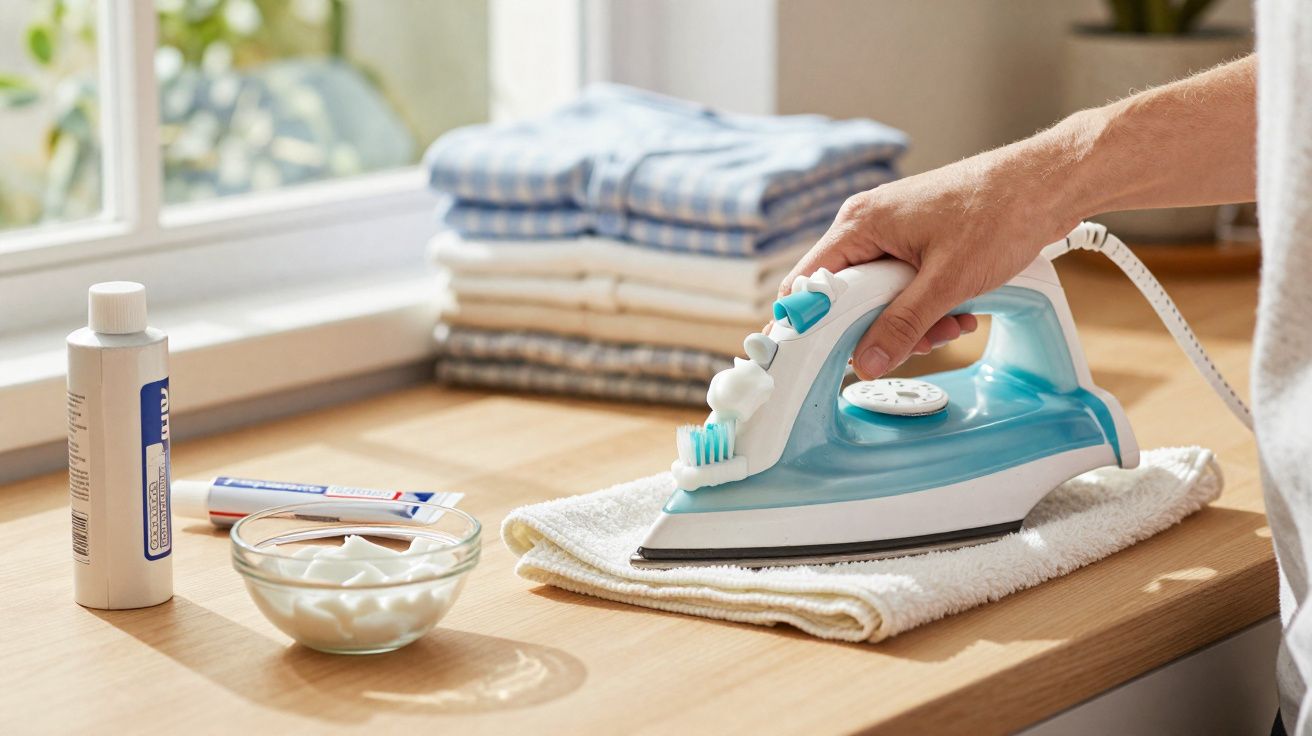
It starts catching, dragging and threatening your white shirts - and the solution is probably already in your bathroom cabinet.
Most irons don’t give up overnight. Instead, performance drops bit by bit. Starch gets baked on. Synthetic fibres melt onto the plate. Hard water dries into chalky specks. Clearing that build-up is a quick job, doesn’t require specialist chemicals, and it protects your clothes far better than harsh cleaners ever will.
Why harsh chemicals backfire
Bleach, laundry detergent and strong descalers can sound like the fastest route to a clean soleplate. But on a heated plate they’re often a recipe for trouble. Powerful oxidisers can eat into protective coatings. Detergent residue can turn tacky once it’s warmed. Some formulas even etch metal or stain ceramic finishes. The result may not appear immediately - later it shows up as extra drag, phantom marks, or odd brown droplets landing on your best cotton.
The hidden cost on clothes
If a product leaves any film behind, the iron stops gliding smoothly. Drag increases, friction goes up, and heat sits in one place for longer. Fabrics scorch more quickly. Tiny scratches then hold onto lint and create streaks. One wrong move is enough to ruin a silk blouse or leave a mark on dark suit trousers.
"Skip bleach, oven cleaner, scouring powders, and steel wool. They scratch, pit, or leave films that transfer to fabric under heat."
The quick paste that actually works
A mild paste you can mix at home lifts cooked-on residue quickly and for next to nothing. It takes moments to make, and the method is basically apply, wait, then wipe.
What you need
- 1 tablespoon (15 ml) baking soda
- 1 tablespoon (15 ml) white, non-gel toothpaste
- A splash of warm water
- A soft cloth or non-scratch sponge
- Cotton buds and a wooden toothpick/cocktail stick (optional, for steam holes)
"Mix a thick paste, spread on a cold soleplate, wait five minutes, wipe clean. That’s the whole playbook."
How to apply it, step by step
- Switch the iron off at the plug, unplug it, and allow it to cool completely. Pour out any water in the tank.
- Combine the baking soda and toothpaste with a little warm water. You’re aiming for a peanut-butter-like consistency.
- Work the paste over the soleplate using small circular motions. Try not to push paste into the steam vents.
- Let it sit for roughly five minutes so it can loosen starch, dye residue and melted fibres.
- Wipe everything away with a clean, damp cloth until the plate feels smooth and slick. Use cotton buds for edges and grooves; a toothpick/cocktail stick can lift stubborn bits without scratching.
- Buff dry with a microfibre cloth. Warm the iron briefly and glide it over a scrap piece of cotton to polish the surface. Fire a few steam bursts, then empty the tank again.
Why this combo works
Baking soda adds gentle alkalinity, helping lift acidic residue and reduce odours. White toothpaste contains ultra-fine silica abrasives plus mild surfactants, which break down grease without stripping coatings. Warm water softens the build-up so the paste can release it more easily. Used with a soft cloth, this approach is kind to stainless steel, ceramic and non-stick soleplates.
"The paste gives controlled micro-abrasion. It removes buildup while keeping the soleplate smooth, which protects fabric at ironing temperature."
Maintenance, energy, and safety gains
A clean soleplate slides more easily, so you press with less force, reduce the chance of shine marks, and finish faster. Better heat transfer also helps the thermostat cycle more efficiently, which can trim electricity use during long ironing sessions. Keeping on top of build-up also postpones replacements and cuts the risk of sudden brown spitting caused by mineral-heavy steam.
Set a simple care schedule
- After using lots of starch, give the soleplate a quick wipe with a damp cloth once it’s cooled.
- Use the baking soda–toothpaste paste every 10–15 uses, or whenever the drag starts again.
- If you notice white flakes or brown spotting, inspect the steam holes and consider your water quality.
When stains need more targeted fixes
Different marks come from different causes, so matching the remedy saves time and avoids unnecessary damage.
| Problem | Likely cause | Safe fix |
|---|---|---|
| Sticky, amber streaks | Starch or sugar build-up | Use the paste method. Wipe warm, not hot, for faster lift. |
| Shiny grey patches | Melted synthetic fibres | Lift edges with a wooden toothpick, then paste and wipe. |
| White specks or crust around holes | Limescale from hard water | Swab holes with cotton buds dampened in distilled water; if needed, use a light 1:1 mix of distilled water and white vinegar on the bud, then rinse with plain water and dry. Do not soak the soleplate. |
| Brown drips during steam | Minerals and fabric dye residues | Perform a tank flush (details below) and clean the soleplate with the paste. |
What about the water tank and steam vents
Water with lots of minerals can clog the vents and carry staining through the steam system. If your manufacturer approves it, do a simple flush: fill the tank with half distilled water and half white vinegar, heat to full steam, then steam into a sink for five minutes. Refill with distilled water and steam again to remove any vinegar. Some manufacturers warn against acidic solutions, so check your manual first. If you’re unsure, run two tanks of distilled water only and do it more frequently.
"Use distilled or demineralized water if you notice white flakes on dark fabrics. It prevents limescale before it bakes on."
Common pitfalls to avoid
- Don’t clean the soleplate while the iron is hot or still plugged in.
- Don’t scour with steel wool, razor blades or powdered abrasive cleaners.
- Don’t push paste deep into the steam holes; it can harden inside.
- Don’t leave acidic liquids sitting on aluminium-based plates; keep contact brief, then rinse.
- Don’t store the iron with water in the tank; minerals settle and can stain.
Small tweaks that make pressing easier
For delicate items, use a pressing cloth to prevent shine and any “ghost” transfer. Set the temperature according to the care label rather than habit. Begin with heavier fabrics and then reduce the heat for lighter weaves. If you iron regularly, a silicone soleplate cover can reduce sticking and add an extra safety layer, particularly on synthetics.
If the iron is far gone
If the soleplate is badly pitted or the coating is flaking, it won’t truly recover. You may still squeeze out a few more months by cleaning it regularly and using a pressing cloth, but it’s sensible to start planning for a replacement. When buying a new one, prioritise a ceramic or high-grade stainless soleplate, a dedicated calc-clean function, and a pointed tip that makes it easier to work around buttons.
"Five minutes with a gentle paste beats hours of wrestling with a sticky iron and stained clothes. Keep it simple and consistent."
Quick extra: If you use starch often, mist it lightly and let the fabric dry for a minute before pressing. That helps the starch set more evenly and means less residue ends up on the iron. For travel irons, pack a small bottle of distilled water; a clean burst of steam helps keep dress shirts crisp straight from the suitcase.





Comments
No comments yet. Be the first to comment!
Leave a Comment