
The couple are smitten the moment they see it in the showroom. It’s Pinterest-perfect: flat slab fronts, no visible grips, the sort of kitchen you expect in a high-end hotel suite or a glossy design magazine. Then she asks one straightforward question: “Do you cook every day?”
Silence. They look at each other. A small, awkward laugh.
Two months later, the same couple walk back into the studio - this time scrolling through photos on their phone. Oily fingerprints everywhere. Tiny dents where doors were pushed instead of pulled. A toddler’s face pressed against a push-to-open drawer.
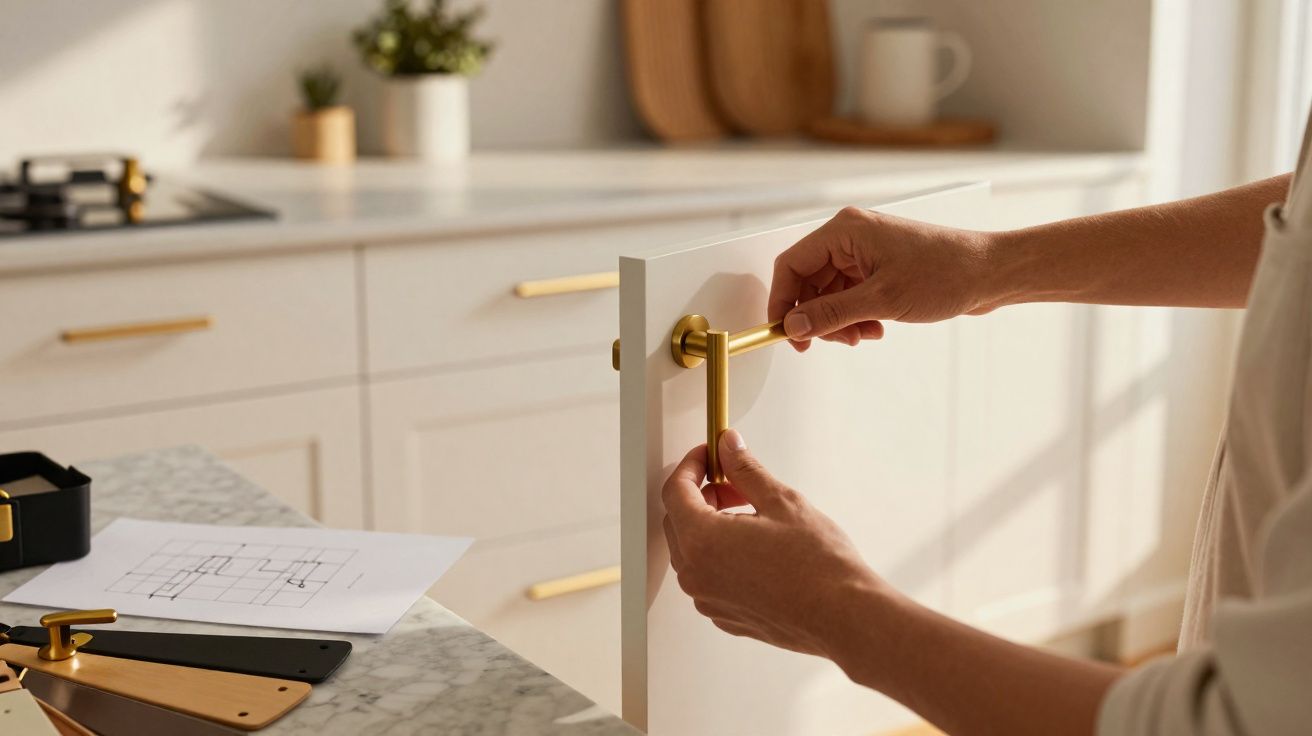
“We want handles,” they say. “Real ones.”
Something is quietly changing inside our kitchens.
Why handleless cabinets are losing their shine
Handleless cabinets had a real moment. They offered clean lines, uninterrupted surfaces, and a kind of future-facing calm. For years, they were the default choice for anyone trying to recreate that “architect-designed” look at home: no visual clutter, no bits sticking out, just glossy planes catching the light.
Then everyday life arrived - wet hands, heavy pans, and children who slam doors.
Designers began hearing the same complaints on repeat: chipped edges on push-to-open fronts, mechanisms that stop behaving, and constant wiping of marks along the top edges where people instinctively grab. The minimalist ideal didn’t collapse dramatically; it just started to feel slightly irritating.
And that’s how trends usually fade: not with a backlash, but with small, relentless annoyances.
In one London renovation, a family installed a full wall of handleless cabinetry. The images looked incredible. Half a year later, the cabinet maker returned to tweak it. A few doors had dropped by a millimetre. The push-to-open concept worked on paper, but the hinges needed recalibrating once daily use and weight took their toll.
“We cook a lot,” the owner admitted. “We’re always in here. I’m pressing with my elbow, my hip, the back of my hand. It’s just… fiddly.”
In the end, they fitted slim black pulls on the doors and drawers they used constantly - the bin, the main pan drawer, the coffee station. It was a compromise, but it said everything. The kitchen had to adjust to their habits, not demand that they adjust to it.
Retailer surveys tell the same story in more matter-of-fact language. Across several kitchen reports, homeowners routinely rank “easy to clean” and “easy to open with messy hands” above a “minimal look”. It sounds minor, yet it reshuffles the entire order of what makes a kitchen feel good every day.
The reasoning is almost too obvious. Our hands aren’t always clean, dry, or free. We pull with fingertips, knuckles, even wrists. We’re balancing hot pans, a buzzing phone, and a child demanding attention. In that real-world context, a solid handle isn’t the enemy of good design - it’s a reliable point of contact when everything else is hectic.
There’s also the hidden price of extreme minimalism. Handleless setups often depend on extra components: runners, profiles routed into the carcass, electric openers. More hardware means more potential failures over ten or fifteen years. A classic metal pull is straightforward engineering. It simply… stays there and works, day after day.
Fitters tend to know this without making a fuss about it. Ask what they’d install in their own home and you’ll often get the same understated verdict: “Handles. Proper ones.”
The quiet power of a really good handle
This return isn’t about reverting to chunky knobs on every door. It’s about choosing handles the way you’d choose decent shoes: they should suit the way you actually move. What’s coming back is the properly designed pull, placed exactly where your hand expects it to be.
Picture a deep drawer with a long bar handle right on the edge. One hooked finger and it slides open. No pushing, no finding the magic spot. On a tall larder door, a vertical pull running nearly the full height lets children grab low while adults reach higher.
A small technique designers use more now is to combine handle types within the same kitchen. Discreet integrated edge pulls on upper units that aren’t used much; more robust, tactile handles on the heavy-working drawers below. Visually, it still reads as calm and cohesive. Physically, it becomes far easier to live with.
This is where many homeowners get caught out: they fall for a handle on a moodboard rather than in their palm. A thin, elegant pull looks serene in a styled photo. Then it’s Tuesday at 7 p.m., you’re yanking open a drawer full of pots, and that delicate bar is biting into your fingers.
In practical terms, comfort deserves the same attention as style. Soft, rounded edges beat razor-thin profiles. A touch of projection helps keep your knuckles off the cabinet front. In a busy family kitchen, darker finishes tend to disguise fingerprints better than polished chrome.
On a human level, it’s also about effort. We don’t register the details that quietly work. We absolutely notice the ones that resist us twenty times a day. Handles are touched more than almost any other object in your home; they quietly educate your senses about how your space treats you.
“The hardware is like a handshake,” says one interior designer. “You feel straight away if the kitchen likes you back.”
We don’t often say it explicitly, but most people recognise the relief of a good grip. On a cold morning, your hand wants something certain - not a guessing game. At the end of a long day, you don’t want to push, tap, and wait for a mechanism to respond. You just want to pull.
- Test handles in store: pull them as though they’re heavy, not delicately.
- Imagine greasy fingers, rushed mornings, and guests who don’t know your system.
- Pick one “hero” handle and repeat it where the work is toughest.
- Keep upper cabinets visually lighter; let lower drawers do the heavy lifting.
- When you’re torn, let function win quietly.
From silent detail to new design statement
The most interesting turn is that handles aren’t merely being accepted again - they’re being showcased. Rather than hiding them, designers are treating hardware as an intentional accent: matt black bars on oak, brushed brass against deep blue, leather loops on soft white.
On social media, some of the most-saved kitchen posts now include bold, straightforward hardware. It’s not loud; it’s simply there. A run of sturdy pulls across a large island communicates immediately: this is a kitchen that gets used. This is where real life happens.
For many people, that brings a quiet sense of permission. Your home doesn’t need to behave like a showroom. It can look like somewhere pasta water boils over, children slam drawers, and someone leans on the breakfast bar after a long day.
After years of hyper-curated, filtered interiors, this move towards visible, practical details feels oddly refreshing. A handle is honest. It says plainly what the room is for.
There’s a generational angle too. Younger homeowners, dealing with steep renovation costs, tend to prioritise things that last and can be repaired. If a touch-latch fails or a motorised opening system breaks, you’re calling out a technician. If a handle loosens, you reach for a screwdriver. Let’s be honest: nobody gets genuinely excited about hauling out the toolbox for a motorised rail that’s packed in.
At a deeper level, this small choice in hardware reflects something bigger: a desire to live in spaces that aren’t just attractive on a screen, but kinder to our bodies, routines, and mess. We rarely design for “perfect” weeks. Life shows up as layers of chaos, noise, and unexpected visitors.
Handles, in their unassuming way, make room for that reality. They say: come in carrying shopping bags, with sticky fingers and in a rush. This kitchen can handle you.
So when you hear someone say, “Goodbye handleless cabinets,” it isn’t a crusade against minimalism. It’s a quiet vote for something else: everyday comfort that doesn’t have to be concealed. A small piece of metal that makes the whole space feel more human.
| Key point | Detail | Why it matters to you |
|---|---|---|
| Return of handles | Practical pulls are replacing fully handleless fronts in real-life kitchens | Helps you choose fittings that age well with daily use |
| Mixing systems | Combining discreet grips with strong handles on key cabinets | Offers a balance of clean lines and genuine ergonomics |
| Handles as accents | Hardware used as a design feature, not hidden away | Gives you an easy way to add personality without rebuilding the kitchen |
FAQs:
- Are handleless cabinets going “out of style”? Not overnight, but the momentum is easing. Many new kitchens now mix slim profile solutions with visible handles in high-use zones, swapping pure minimalism for day-to-day comfort.
- Do handles make a kitchen look less modern? Not if the form and finish are well chosen. Slim, linear pulls in black, stainless steel, or brass can look just as contemporary as handleless fronts - with far better usability.
- Are handleless kitchens harder to keep clean? Often, yes. You end up touching the fronts more, so fingerprints build up along the edges. A proper handle concentrates contact in one spot and is faster to wipe.
- Can I add handles to an existing handleless kitchen? In many cases, yes. A skilled joiner can drill and fit new hardware, sometimes filling old profile channels or adjusting doors so the final look feels deliberate rather than improvised.
- What’s the best type of handle for a busy family kitchen? Choose sturdy bar pulls or D-shaped handles with rounded edges, enough clearance for your fingers, and a finish that disguises smears. Try them in person - your hand will know quickly.




Comments
No comments yet. Be the first to comment!
Leave a Comment