
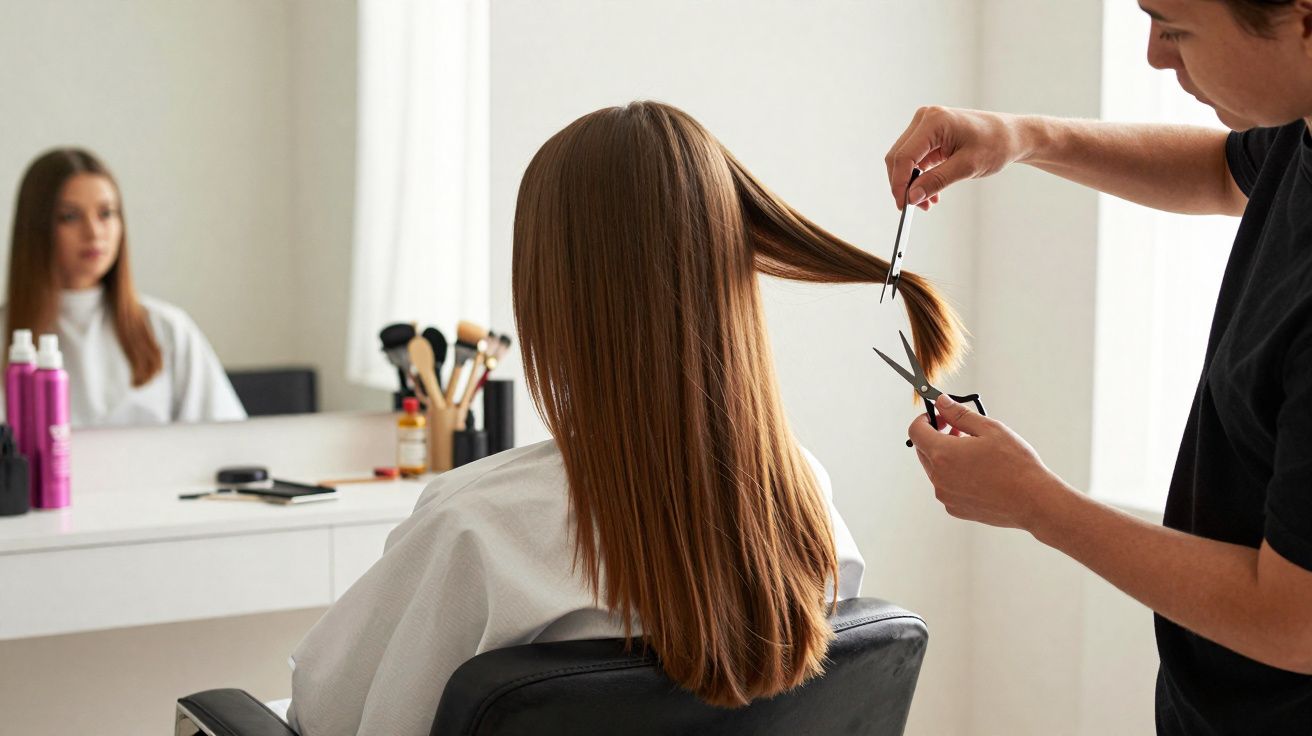
The woman in the mirror looks… fine. Her hair is sleek, glossy, technically “healthy”. Still, it somehow reads as flat and slightly stiff - like an image that never quite finished buffering. She scrubs at the roots, tips her head upside down, mists on dry shampoo. Within two minutes, it settles right back into the same motionless curtain.
At the salon, she catches herself repeating the line hairdressers know by heart: “I want more movement, but I don’t want to lose length.” Her stylist gives a knowing smile. It isn’t really about the products. It’s about the haircut.
A handful of well-placed snips can make hair feel alive again.
The haircut that brings “stuck” hair back to movement
When stylists say hair “has no movement”, they’re often describing the same look: lengths that drop straight down, ends that stick together, and a shape that feels weighty at the bottom. Hair can be straight, wavy or curly and still refuse to bounce when you walk or turn your head.
The first check is the perimeter. Does the cut finish in one blunt, unbroken line? If so, the answer is usually straightforward: it needs a softly layered silhouette. Not the obvious, choppy steps associated with the early 2000s, but subtle, blended layers that remove weight in targeted areas so the hair can shift and swing again.
Take Léa, 32, who went into a Paris salon after months of defaulting to the same low ponytail. Her hair was long, shiny and pin-straight - yet it behaved like a heavy drape. “I style it and thirty minutes later it’s dead,” she told her stylist. The diagnosis was instant: a one-length cut was dragging everything down, particularly around the jawline and collarbone.
Her stylist proposed a long, layered cut that sat just below the shoulders, plus discreet face-framing pieces. No big loss of length. No dramatic fringe. Simply soft layers placed where her hair naturally wants to bend. When she left, the change wasn’t loud - but someone might have assumed she’d spent ages with a curling iron. For the first time in months, her hair actually moved as she walked.
Why does this approach work so well? It’s down to geometry. When every strand is the same length, the hair “stacks” at the hem, creating a dense, heavy line that gravity happily reinforces. Movement needs air - space between strands. By taking out a small amount of weight in strategic zones (beneath the top layer, around the face, a touch through the back), stylists create tiny pivot points that let the hair swing.
This isn’t about thinning the whole head, which can cause frizz or wispy ends. It’s about quiet structure: lighter where you want lift, fuller where you need stability. That’s why two people can request “layers” and leave with completely different outcomes.
How stylists cut for movement hair (and what to ask for)
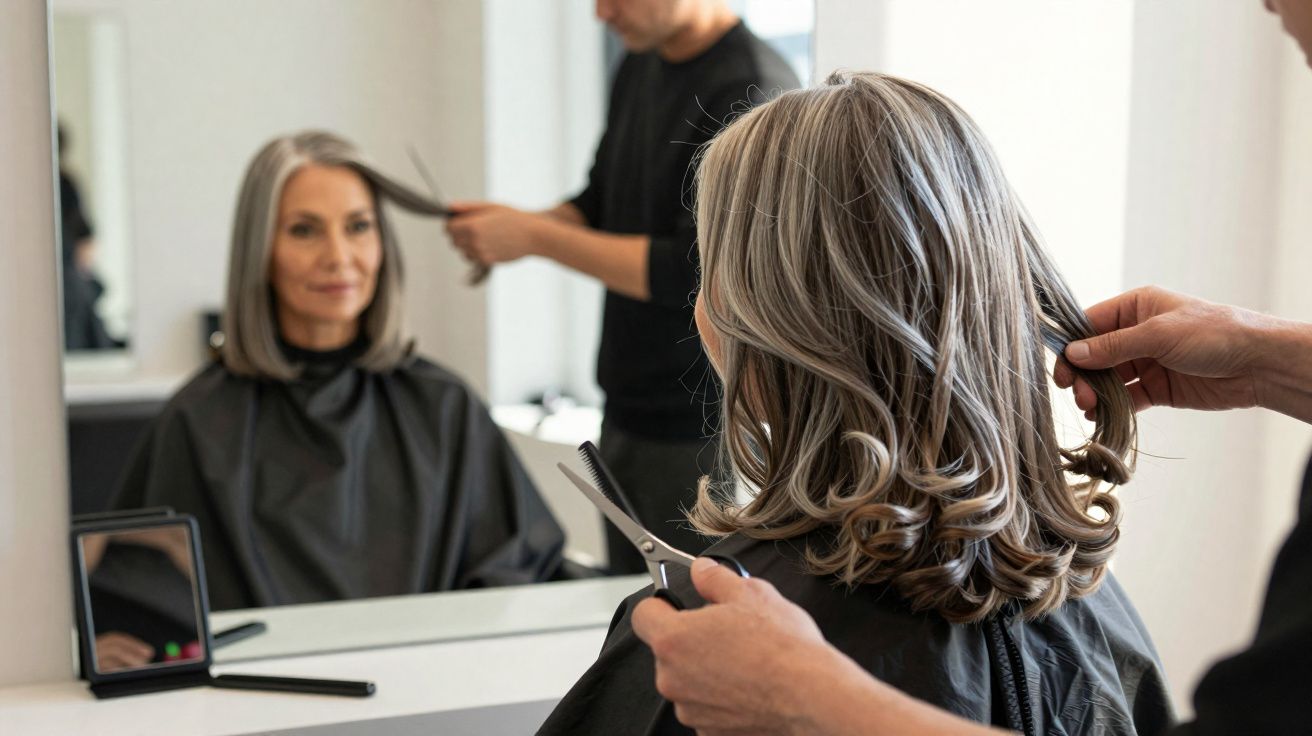
For hair that won’t naturally shift, many stylists steer clients towards a long or mid-length layered cut with invisible graduation. Put simply: you keep the length, but change the internal framework. The upper layers sit slightly shorter, the lower layers remain a touch longer, and the front is softened so the hair doesn’t sit in a solid block.
In the chair, the helpful phrase isn’t “Do whatever you want.” It’s more like: “I’d like more movement and softness, without losing too much length. Can we add blended layers and lightness around the face?” A skilled stylist will gauge what’s possible based on your density and texture. They may even cut some sections on dry hair to see how it truly falls day to day - not just when it’s wet, combed and stretched.
Where people often feel let down is when they ask for movement, the scissors come out… and everyday hair still looks the same. Usually, that means the layers were too cautious or positioned poorly. One frequent error is adding layers only at the very ends, which can weaken the outline without lifting the roots. Another is putting very short layers on top: it can look buoyant for a fortnight, then turns into an awkward, fluffy phase.
Stylists who genuinely specialise in natural movement tend to watch what your hair does when you shake your head, sweep it back, or let it fall forward. They study the crown, your natural parting, and the stubborn cowlick you’ve battled since childhood. Movement is individual. The best cut works with your growth patterns instead of forcing an entirely new one.
“Movement doesn’t come from styling tricks first, it comes from the architecture of the cut,” explains Ana, a London-based stylist known for soft, wearable haircuts. “If the base is too heavy or too blunt, you can spend an hour with a curling iron and it’ll still drop flat in two hours. I’d rather cut once, well, and let the hair do the work.”
- Ask for “soft layers”, not “thinning” – Thinning can leave frizz and gaps. Layers define the shape and release movement.
- Bring images of hair in motion – A short video clip communicates more than a still screenshot of “perfect” waves.
- Explain your routine – Whether you blow-dry, air-dry, or tie it up daily affects where movement should be built in.
- Be realistic about upkeep – Most people aren’t restyling from scratch every single day.
- Book micro-adjustments – A light tidy every 8–10 weeks helps the structure stay fresh without reinventing the cut each time.
Living with a movement cut day to day
When the shape is right, getting ready usually becomes simpler. Hair designed for movement often settles well after a quick rough-dry - or even a straightforward air dry - especially if your stylist has worked with your natural texture rather than against it. Many people find they need fewer products, because the haircut itself creates the form. A small amount of cream, a touch of salt spray, and it already reads as “done”.
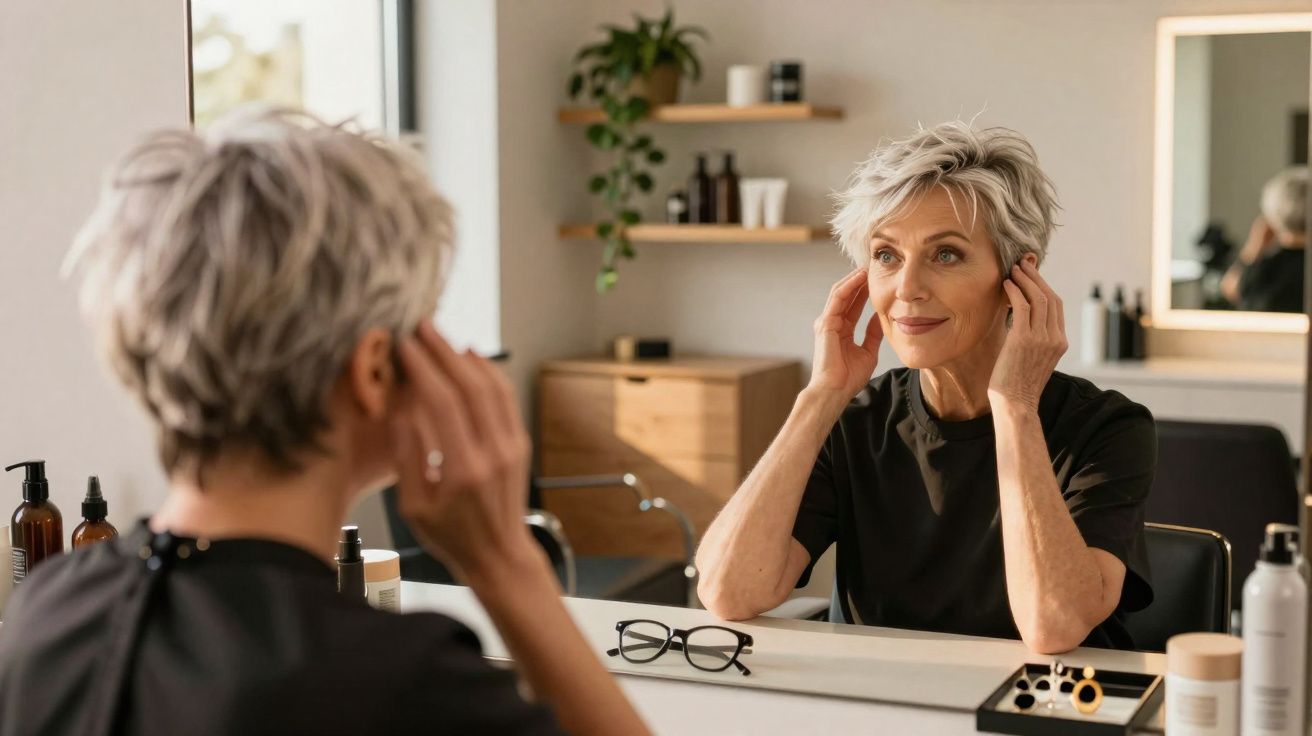
There’s a mental shift too. When your hair starts to swish as you walk, or when a loose section naturally tucks behind your ear, you can feel more like yourself in the mirror. The aim isn’t perfectly sculpted waves like you see on Instagram. It’s getting rid of that helmet sensation - the feeling your hair is merely “there”, not part of you.
| Key point | Detail | Value for the reader |
|---|---|---|
| Choose layered structure | Soft, blended layers rather than a one-length cut | Encourages natural movement while keeping length |
| Use the right vocabulary | Ask for “movement”, “soft layers” and “face-framing” | Clearer communication with your stylist and better results |
| Adapt to your routine | A cut planned around how you truly wear and style your hair | Easier hair to manage day after day |
FAQ:
Question 1 My hair is very straight. Can a cut really create movement without styling tools?
Answer 1 Yes, up to a point. A well-executed layered cut can add softness, gentle curves around the face and a bit of swing through the ends. You may still prefer a quick blow-dry or a light product, but it will sit with more shape than a blunt one-length cut.Question 2 Will layers make my fine hair look thinner?
Answer 2 Poorly positioned layers can, especially if too much weight is removed from the ends. However, subtle, long layers that stay mostly on the surface can create the impression of more body, because the hair won’t collapse into one flat sheet.Question 3 How often should I trim a movement-focused cut?
Answer 3 Most stylists recommend every 8–10 weeks for mid-length to long hair. If your hair grows quickly or loses shape fast, you might prefer 6–8 weeks - but you can request “maintenance only” rather than a major change each time.Question 4 Is this type of cut suitable for curly or wavy hair?
Answer 4 Yes - provided you see a curl-aware stylist. Curls thrive on movement, as long as layers are cut with the curl pattern and shrinkage in mind. Many curl specialists cut on dry hair so they can observe how each curl sits before deciding where to remove weight.Question 5 What do I show my hairdresser if I’m scared of a bad layered cut?
Answer 5 Gather 3–4 photos where the hair matches yours in texture and length, and where you can clearly see movement rather than just styling. Explain what you like in each image: “the pieces around the face”, “the lightness at the ends”, “the way it moves when she turns her head”. That’s usually more useful than referencing a celebrity cut.



Comments
No comments yet. Be the first to comment!
Leave a Comment